Chinese
 français
 Deutsch
 italiano
 español
 português
 Nederlands
 日本語
日本語 한국의
한국의




- Home
- >
- Ball Mill
- >
- Planetary Ball Mill
- >
- Oil Seal Mute Planetary Laboratory Ball Mill
Categories
Hot Products
Loading...
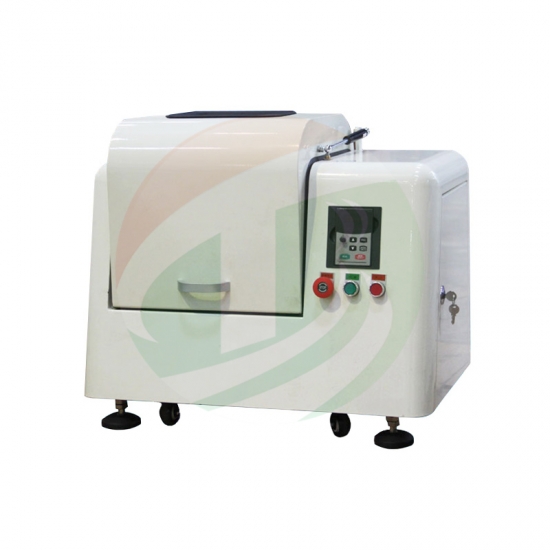
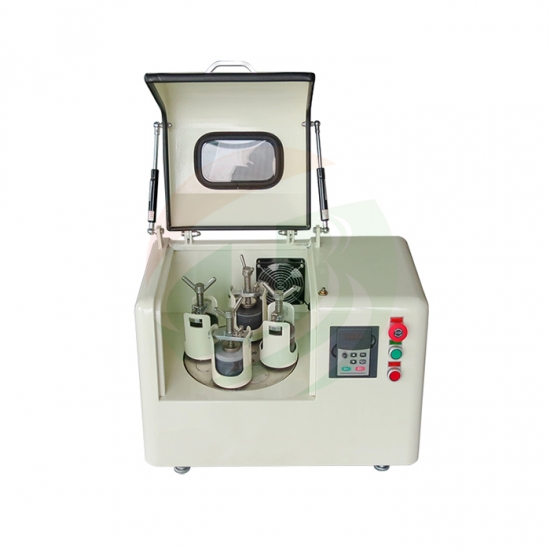
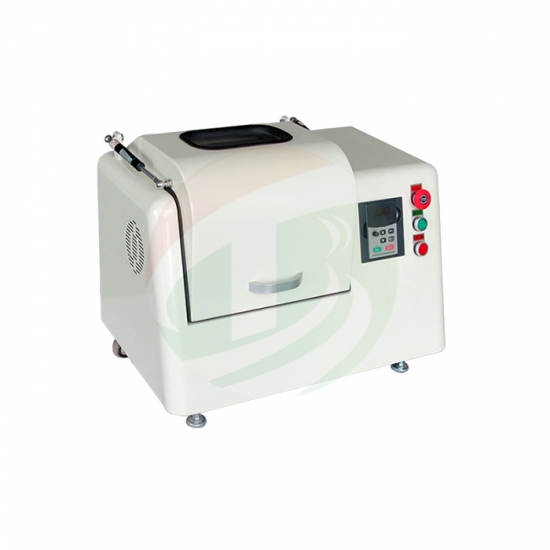
Oil Seal Mute Planetary Laboratory Ball Mill
Brand:
TOB NEW ENERGYitem no.:
TOB-YXQM-0.4Lorder(moq):
1Payment:
L/C,T/Tproduct origin:
Chinashipping port:
XIAMEN
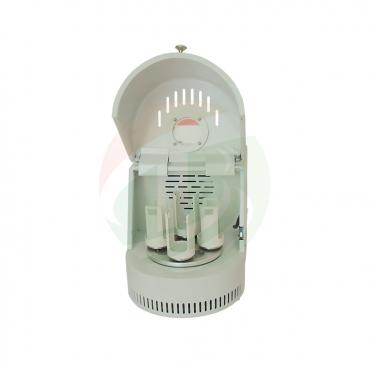
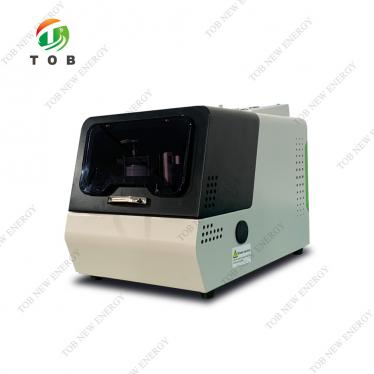
Oil Seal Mute Planetary Laboratory Ball Mill TOB-YXQM-0.4L for Battery Material Research
Product Overview and Ideal Applications
A planetary ball mill is a laboratory grinding instrument that uses the planetary motion of grinding jars to mill, mix, homogenize, disperse, and mechanically alloy powders. The TOB-YXQM-0.4L is a compact, oil-seal-mute planetary laboratory ball mill designed for universities, research institutes, and enterprise laboratories that need rapid batch grinding to colloidal fineness.
In normal sample preparation, the feed material is usually smaller than 1 mm, solid particles are generally no more than 3 mm, soil samples may be up to 10 mm, and the minimum output particle size reaches 0.1 μm. The mill is also suitable for mechanical alloying, blending, homogenization, and dispersion, which makes it a general-purpose powder processing tool for battery materials, ceramics, metals, polymers, and other advanced materials research.
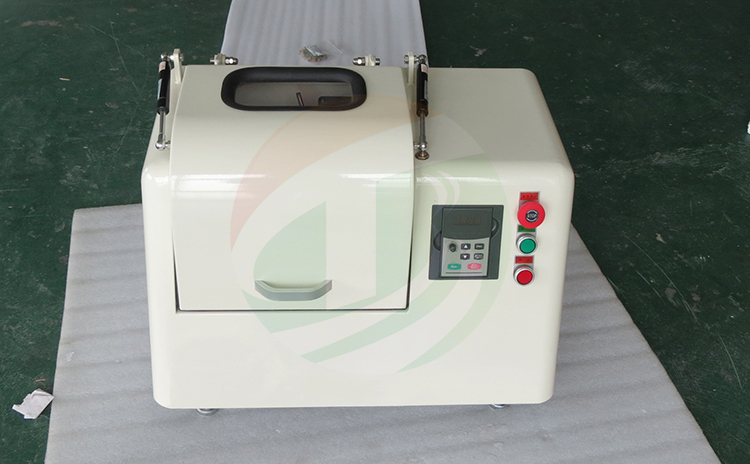
Three features distinguish the TOB-YXQM-0.4L: a gear oil seal that increases service life and reduces noise; support for dry, wet, and vacuum grinding; and a 0.4 L-class platform that accommodates 50-100 ml grinding jars. The unit runs on AC110V/220V 50/60Hz power with a total power of 0.55KW and can operate continuously for up to 72 hours.
Ideal for:
- Battery cathode and anode precursor powder grinding for coin-cell and pouch-cell sample preparation.
- Solid electrolyte powder processing for all-solid-state battery research.
- Mechanical alloying of metal powders and oxide mixtures in materials science laboratories.
- Blending and homogenization of active materials, conductive carbon, and additives at laboratory scale.
- Universities and research institutes that require quiet, long-duration milling with reproducible results.
Where the Planetary Ball Mill Fits in Battery Material R&D
In battery research and pilot development, powder preparation is one of the first process steps before slurry mixing and electrode coating. The TOB-YXQM-0.4L is used in the powder preparation and sample preparation stage, typically after material synthesis and before particle-size analysis, slurry formulation, or cell assembly.
- Cathode and anode precursor grinding:Oxide precursors, lithium sources, and conductive additives can be milled or blended into a uniform powder batch before electrode slurry preparation.
- Solid electrolyte processing:Oxide, sulfide, or polymer-based solid electrolyte powders can be ground and homogenized with controlled jar and ball materials to reduce contamination.
- Mechanical alloying:The planetary motion provides repeated impact and friction that can alloy or refine metal and oxide mixtures for laboratory evaluation.
- Sample preparation for analysis:Ground powders can be used for SEM, XRD, particle-size distribution, BET surface area, and tap-density measurements.
- Wet and dry process flexibility:The mill supports dry grinding for brittle powders and wet grinding for finer particle-size control, depending on the material and the target application.
Process best practices:
- Keep the tank charge at no more than one-third of the jar volume; the specification states 16 ml material for a 50 ml jar and 33 ml material for a 100 ml jar.
- Match the jar and ball materials to the sample chemistry to avoid contamination; the jar-and-ball match table marks best matches with ● and acceptable matches with ▲.
- Reduce coarse feed to the specified sizes before milling: crispy material below 10 mm, other solids below 3 mm, and typical samples below 1 mm.
- For vacuum or cryogenic grinding, select the customized configuration because the standard model supports dry, wet, and vacuum grinding modes with vacuum/cryogenic options available on customized models.
How the Planetary Ball Mill Works
The TOB-YXQM-0.4L uses the classic planetary motion principle. Grinding jars are mounted on a rotating sun disc, and each jar also rotates around its own axis. The combination of revolution and rotation produces a complex path for the grinding balls inside the jar. Under the 1:2 speed ratio between revolution and rotation, the balls impact the sample, shear against the jar wall, and compress material between colliding balls, breaking particles down to colloidal fineness.
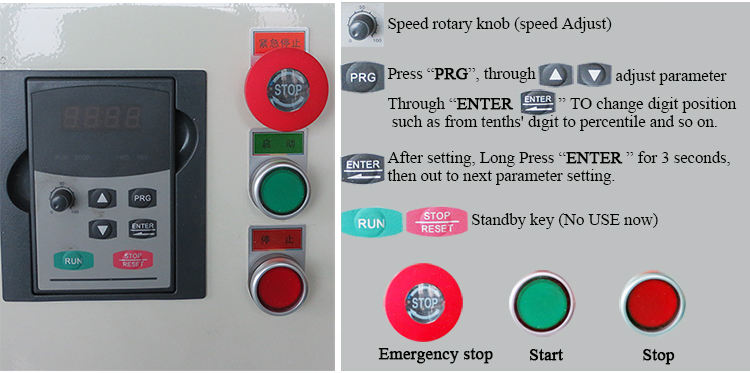
For the 0.4L model, the revolution speed is 0-450 r/min and the rotation speed is 0-900 r/min. The user can set the speed within this range, and the series also provides a continuous working timer of 1-999 minutes and a positive/negative reversing timer of 1-99 minutes. Reversing the jar direction periodically improves mixing uniformity and prevents material from collecting at one side of the jar during long runs.
The gear oil seal is the key mechanical feature of the oil-seal-mute design. The gear train is sealed with oil, which reduces mechanical noise and extends the service life of the drive system compared with conventional open-gear designs. Because the drive is sealed, the mill can be used for extended continuous operation, with a maximum continuous working time of 72 hours.
The mill supports dry, wet, and vacuum grinding. Dry grinding is suitable for brittle materials; wet grinding uses a liquid medium to reduce agglomeration and achieve finer particles; vacuum grinding requires a customized configuration according to the specification. High-energy alloying grinding is supported, and cryogenic grinding is also available as a customized option.
Key Engineering Characteristics of TOB-YXQM-0.4L
-
Gear Oil Seal Mute Processing
The gear oil seal increases service life and reduces noise. The specification lists the voice processing technology as oil seal mute processing, which is the main design advantage for laboratory environments where long milling runs are common. -
Colloidal Fineness Output
The minimum output particle size is 0.1 μm. The practical feed limits are specified as samples usually below 1 mm, solid particles generally no more than 3 mm, and soil samples up to 10 mm, with crispy material below 10 mm. -
Dry, Wet, and Vacuum Grinding Modes
The standard unit supports dry, wet, high-energy alloying, and vacuum grinding; vacuum and cryogenic grinding require customized models. This flexibility covers most laboratory powder-processing workflows. -
Wide Jar and Ball Material Selection
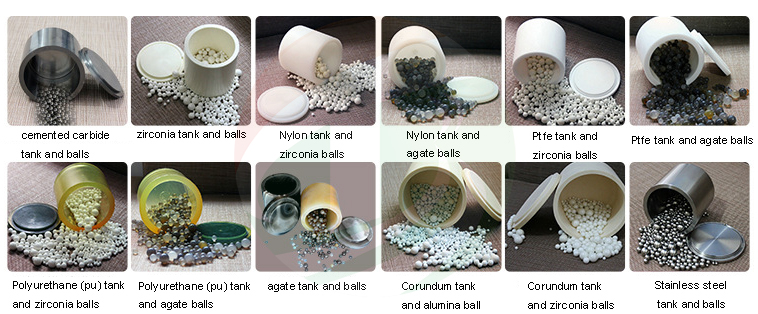
Metal jars include 304 stainless steel and cemented carbide (YG8); nonmetallic jars include ceramic/corundum/alumina, zirconia, and agate; polymer jars include nylon, polyurethane, and PTFE. Ball media include stainless steel, ceramic/corundum/alumina, zirconia, agate, and cemented carbide. -
Controlled Tank Charge
The maximum charge is no more than one-third of the jar volume. For a 50 ml jar, the specified single-tank fill quantity is 16 ml of material; for a 100 ml jar, it is 33 ml. -
Long Continuous Operation
The maximum continuous working time is 72 hours. The series includes a continuous working timer of 1-999 minutes and a positive/negative reversing timer of 1-99 minutes. -
Compact Benchtop Footprint
The TOB-YXQM-0.4L measures 600 × 400 × 500 mm and weighs 60 kg, making it suitable for university, research institute, and enterprise laboratories with limited bench space.
Technical Specifications
| Parameter | Specification |
|---|---|
| Model | (Oil Seal Mute) Planetary Ball Mill TOB-YXQM-0.4L |
| Source voltage | AC110V/220V 50/60HZ |
| Total power | 0.55KW |
| Warranty | One year limited with lifetime support |
| Voice processing | Oil seal mute processing technology |
| Ball milling tank volume | 50-100ml |
| Milling tank materials |
Metal material: 304 stainless steel, cemented carbide (YG8) Nonmetallic material: ceramic/corundum/alumina, zirconia, agate High polymer material: nylon, polyurethane, ptfe |
| Ball mill medium | Stainless steel, ceramic/corundum/alumina, zirconia, agate, cemented carbide |
| Max charge of tank | No more 1/3 of the volume |
| Filling materials size | Crispy material is less than 10 mm, other less than 3 mm |
| Single tank fill quantity |
50ml tank with 16ml material 100ml tank with 33ml material |
| Output material size | Min 0.1um |
| Grinding mode | Dry/wet/high-energy alloying grinding/vacuum/cryogenic grinding, last two model need customized |
| Max continuous working time | 72 hours |
| Revolution speed |
Revolution: 0-450r/min Rotation: 0-900r/min Speed ratio: 1:2 |
| Dimension | 600*400*500mm |
| Weight | 60kg |
Model Range Comparison
| Model | 0.4L | 1L | 4L | 12L | 20L | 40L | 60L | 100L |
|---|---|---|---|---|---|---|---|---|
| Revolution Speed (r/min) | 30-460 | 30-670 | 30-400 | 30-280 | 30-220 | 30-200 | 30-185 | 30-185 |
| Rotation Speed (r/min) | 60-920 | 60-335 | 60-800 | 60-560 | 60-440 | 60-400 | 60-370 | 60-370 |
| Motor Power (KW) | 0.55 | 0.75 | 0.75 | 1.5 | 3 | 3 | 4 | 7 |
| Frequency Control Power (KW) | 0.55 | 0.75 | 0.75 | 1.5 | 3 | 3 | 4 | 7 |
|
Continuous Working Timer (min) |
1~999 |
|||||||
|
Positive and negative reversing time (min) |
1~99 |
|||||||
Commonly Used Jar Types
| Jar Type | Specification (Volume L) | |||||||||
|---|---|---|---|---|---|---|---|---|---|---|
| Agate | 0.05 | 0.15 | 0.25 | 0.3 | 0.4 | 0.5 | 1 | 2 | / | / |
| Stainless Steel | 0.05 | 0.1 | 0.25 | 0.35 | 0.5 | 1 | 4 | 5 | 8 | 10 |
| Ceramic | 0.1 | 0.25 | 0.5 | 1 | 4 | 5 | 10 | / | / | / |
| Nylon | 0.25 | 0.3 | 0.4 | 0.5 | 1 | 4 | 5 | 10 | ||
| PU | 0.25 | 0.5 | 1 | 2 | 4 | 5 | 7 | 12 | 16 | / |
| Corundum | 0.5 | 1 | 4 | 5 | 10 | / | / | / | / | / |
| Zirconia | 0.5 | 1 | 2 | 4 | 5 | 8 | 10 | / | / | / |
| PTFE | 0.5 | 1 | 2 | 5 | 8 | 10 | 12 | / | / | / |
| Alloy | 0.5 | 1 | 4 | 5 | / | / | / | / | / | / |
Jar and Ball Match
| Jar/Ball | Agate (Jar) | Ceramic (Jar) | Stainless Steel (Jar) | Nylon (Jar) | Steel (Jar) | Alumina (Jar) | Alloy (Jar) | Zirconia (Jar) |
|---|---|---|---|---|---|---|---|---|
| Agate (Ball) | ● | |||||||
| Ceramic (Ball) | ▲ | ● | ||||||
| Stainless Steel (Ball) | ● | ▲ | ▲ | |||||
| Nylon (Ball) | ▲ | ● | ||||||
| Steel (Ball) | ● | ▲ | ||||||
| Alumina (Ball) | ● | ▲ | ||||||
| Alloy (Ball) | ● | |||||||
| Zirconia (Ball) | ▲ | ● |
● means best match effect ▲ means matchable
Common Grinding Issues and Practical Troubleshooting
| Problem | Possible Cause | Recommended Action |
|---|---|---|
| Excessive noise during milling | Loose jar clamping, worn drive components, or overfilling the jar | Check jar fixing before each run, keep the tank charge at no more than one-third of the jar volume, and confirm the oil seal mute drive is maintained per the manual. |
| Output particle size is not reaching 0.1 μm | Feed size too large, milling time too short, speed too low, or incorrect jar/ball match | Reduce feed to the specified sizes (typical below 1 mm, other solids below 3 mm, crispy material below 10 mm), increase speed within 0-450 r/min, extend the run within the 72-hour limit, and use the correct jar/ball combination. |
| Sample contamination | Jar and ball materials not matched to the sample chemistry | Use the jar-and-ball match table; ● indicates the best match effect and ▲ indicates a matchable combination. |
| Material sticking to the jar wall | Overfill, excessive moisture, or no reversing cycle | Use the specified single-tank fill quantity (16 ml for 50 ml jar, 33 ml for 100 ml jar) and enable the positive/negative reversing timer of 1-99 minutes. |
| Overheating during long runs | High speed, dry grinding of heat-sensitive material, or blocked cooling path | Reduce speed, use wet grinding where applicable, and verify that the drive and jar area have adequate airflow; the maximum continuous working time is 72 hours. |
| Vacuum or cryogenic grinding not available | Standard model supports dry/wet/vacuum modes; vacuum and cryogenic configurations are customized | Contact TOB to configure the customized vacuum or cryogenic grinding model for your application. |
Recommended Operating Parameters
The following values are starting points based on the specification and common laboratory practice. Optimize them for your specific material, jar, and target particle size.
| Parameter | Recommended Value / Range | Notes |
|---|---|---|
| Tank charge | No more than 1/3 of jar volume | Specified maximum charge; 50 ml jar with 16 ml material, 100 ml jar with 33 ml material. |
| Ball-to-material ratio | About 4:1 to 8:1 by volume | Starting point; adjust based on material hardness and target fineness. |
| Revolution speed | 200-300 r/min for most oxide powders | Within the specified 0-450 r/min range; rotation follows the 1:2 speed ratio. |
| Milling time | 30 minutes to several hours | Start short, check particle size, and extend up to the 72-hour maximum if needed. |
| Reversing cycle | 1-99 minutes per direction | Use reversing to improve mixing uniformity and reduce wall sticking. |
| Grinding mode | Dry for brittle powders; wet for finer grinding | Vacuum and cryogenic grinding require customized models. |
| Jar/ball selection | Match jar and ball materials to the sample | Refer to the ●/▲ match table to minimize contamination. |
Why Choose TOB-YXQM-0.4L Over a Conventional Laboratory Mill
| Feature | TOB-YXQM-0.4L | Conventional Laboratory Mill |
|---|---|---|
| Motion principle | Planetary revolution and rotation with 1:2 speed ratio | Often single-axis rotation or vibration only |
| Noise control | Gear oil seal mute processing technology | Varies; open gear drives are often louder |
| Grinding modes | Dry, wet, high-energy alloying, vacuum; cryogenic customized | Often dry and wet only |
| Output fineness | Min 0.1 μm per specification | Depends on design and media |
| Jar and ball materials | Metal, ceramic, polymer, and carbide options | Often limited to one or two material families |
| Continuous operation | Up to 72 hours with reversing timer | Varies; long runs may be limited |
| Model range | 0.4L to 100L series | Often a single fixed size |
The practical value of the TOB-YXQM-0.4L lies in its oil-seal-mute drive, planetary high-energy motion, wide jar/ball material selection, and flexible dry/wet/vacuum grinding capability for laboratory-scale powder research.
Engineering FAQ
Q1: What is the maximum feed size for the TOB-YXQM-0.4L?
The specification states that sample diameter is usually less than 1 mm, solid particles are generally no more than 3 mm, soil allows 10 mm, and crispy material is less than 10 mm while other materials are less than 3 mm.
Q2: Can the mill grind battery cathode and anode materials?
Yes. The planetary ball mill is a general-purpose laboratory grinder used for battery material powder processing, including precursor grinding, conductive additive blending, and solid electrolyte powder homogenization. Select the jar and ball materials according to the match table to minimize contamination.
Q3: How much material should I load into the jar?
The maximum tank charge is no more than one-third of the jar volume. The specification gives a single-tank fill quantity of 16 ml of material for a 50 ml jar and 33 ml for a 100 ml jar.
Q4: How do I avoid sample contamination?
Match the jar and ball materials to the sample chemistry. The jar-and-ball match table uses ● for the best match effect and ▲ for matchable combinations. For example, an agate jar works best with agate balls, and a zirconia jar works best with zirconia balls.
Q5: Does the standard unit support vacuum and cryogenic grinding?
The mill is suitable for dry, wet, and vacuum grinding, and supports high-energy alloying grinding. Vacuum and cryogenic grinding require customized models, so contact TOB to configure the unit for those modes.
Q6: How long can the mill run continuously?
The maximum continuous working time is 72 hours. The series includes a continuous working timer of 1-999 minutes and a positive/negative reversing timer of 1-99 minutes.
Ready to add a quiet, high-energy planetary ball mill to your battery material laboratory? Request a quotation for the TOB-YXQM-0.4L with your preferred jar and ball materials, or ask our engineers for a recommended starting milling recipe for your powder.
tob.amy@tobmachine.com | +86 181 2071 5609
You May Also Need
- Liquid Nitrogen Planetary Ball Mill — A planetary ball mill configured for cryogenic grinding. Complements the TOB-YXQM-0.4L when heat-sensitive materials must be milled at low temperature.
- High Energy and High Speed Planetary Ball Mill — A higher-energy planetary mill for mechanical alloying and faster particle-size reduction. Suitable for applications that require more impact energy than the standard 0.4L unit.
- Laboratory Roller Ball Mill — A roller-type ball mill for gentle, continuous milling of larger batches. Complements the planetary mill when low-shear mixing or scale-up is needed.
If you are interested in our products and want to know more details,please leave a message here,we will reply you as soon as we can.

 subscribe to us