Chinese
 français
 Deutsch
 italiano
 español
 português
 Nederlands
 日本語
日本語 한국의
한국의




- Tabless Cylindrical Battery Manufacturing Guide
- China Power Battery Market Report 2026 H1: Six Trends Reshaping Battery Equipment Demand
- Turnkey Solid-State Battery Lab Setup Guide
- Conductive Materials for Lithium Batteries: CNT vs Graphene Guide
- Step-by-Step Guide to Partnering with a Sodium-Ion Battery Technology Developer in China
Lithium-ion Battery Winding Process Guide
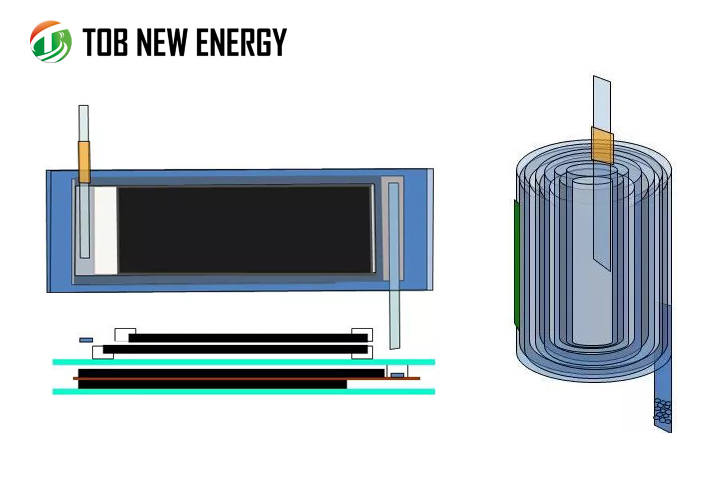
A large amount of experimental data shows that the quality of jelly roll has a significant impact on the electrochemical performance and safety performance of the final finished battery. Based on this, we have sorted out some important focuses and precautions in the winding process of lithium-ion batteries and formed the "Lithium-ion Battery Winding Process Guide". We hope to avoid incorrect operations in the winding process as much as possible, so as to manufacture lithium-ion batteries that meet quality requirements.
|
1. Material confirmation |
Potential risks |
|
It is necessary to confirm whether the length, width and thickness of the electrode meet the process standards |
Poor jelly roll coverage, size does not meet requirements |
|
It is necessary to confirm whether the length, width and thickness of the diaphragm meet the design specifications |
Jelly roll size does not meet requirements, finished battery performance affected |
|
It is necessary to confirm whether the type and size of the winding needle meet the process requirements |
Battery deformation, jelly roll size does not meet requirements |
|
It is necessary to confirm whether the termination tape meets the process requirements |
Jelly roll thickness and appearance unqualified |
|
|
|
|
2. Parameter confirmation |
Potential risks |
|
It is necessary to confirm whether the winding speed meets the process requirements and record it |
Electrode broken and battery deformation |
|
It is necessary to confirm whether the tension of the positive and negative electrodes is too large and record it |
Electrode broken and battery deformation |
|
It is necessary to confirm whether the tension of the diaphragm is too large and record it |
Battery deformation |
|
|
|
|
3. Confirmation of the appearance and size of the jelly roll |
Potential risks |
|
It is necessary to confirm whether the inner and outer layers of the jelly roll are aligned |
Internal short circuit, poor packaging |
|
It is necessary to confirm whether the height of the tab glue meets the design requirements |
Poor packaging, unqualified size |
|
It is necessary to confirm whether the height, width and thickness of the jelly roll meet the process standards |
Cannot be put into the shell, unqualified appearance, finished battery size exceeds the standard |
|
It is necessary to confirm whether the tab margin and center distance meet the design requirements |
Poor packaging, unqualified size, affecting use |
|
It is necessary to confirm whether there is a possibility of contact between the negative electrode and the aluminum-plastic film layer |
Al layer is corroded, battery leakage, flatulence |
|
Disassembling the battery, it is necessary to confirm whether the end position of the electrode is correct |
Unqualified size, internal short circuit |
|
When disassembling the battery, it is necessary to confirm whether the diaphragm and the negative electrode, and the negative electrode and the positive electrode are completely covered |
Low capacity, lithium deposition, internal short circuit |
|
Disassembling the battery, it is necessary to confirm whether the positive electrode, negative electrode, and diaphragm are wrinkled |
Poor battery interface, lithium deposition |
|
Disassembling the battery, it is necessary to confirm whether the first fold of the positive electrode and the negative electrode are broken or transparent |
Large battery internal resistance, low capacity |
|
Disassembling the battery, it is necessary to confirm whether there is contact between the exposed Al foil and the negative electrode material |
Poor safety performance |
 subscribe to us