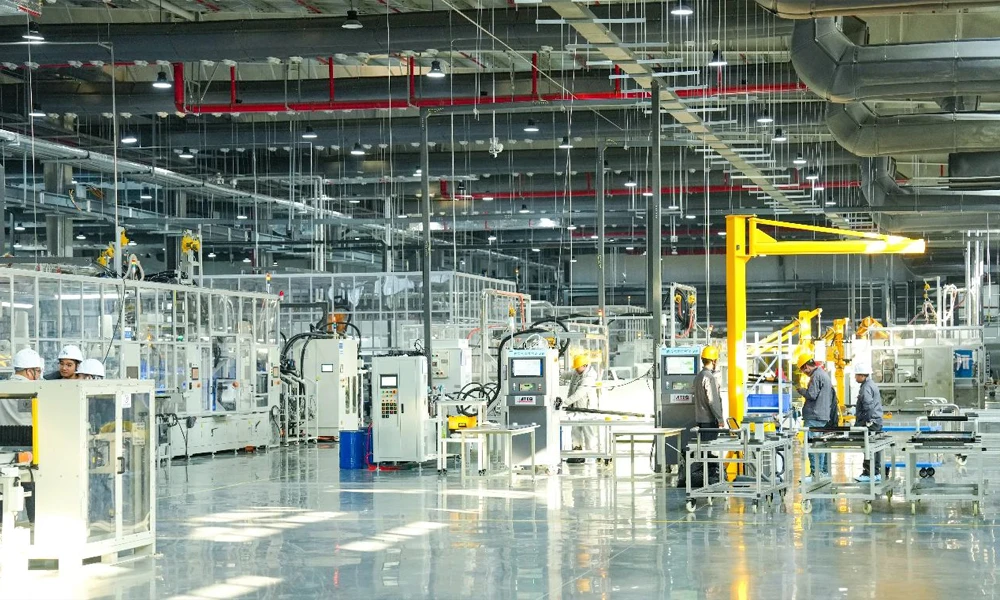
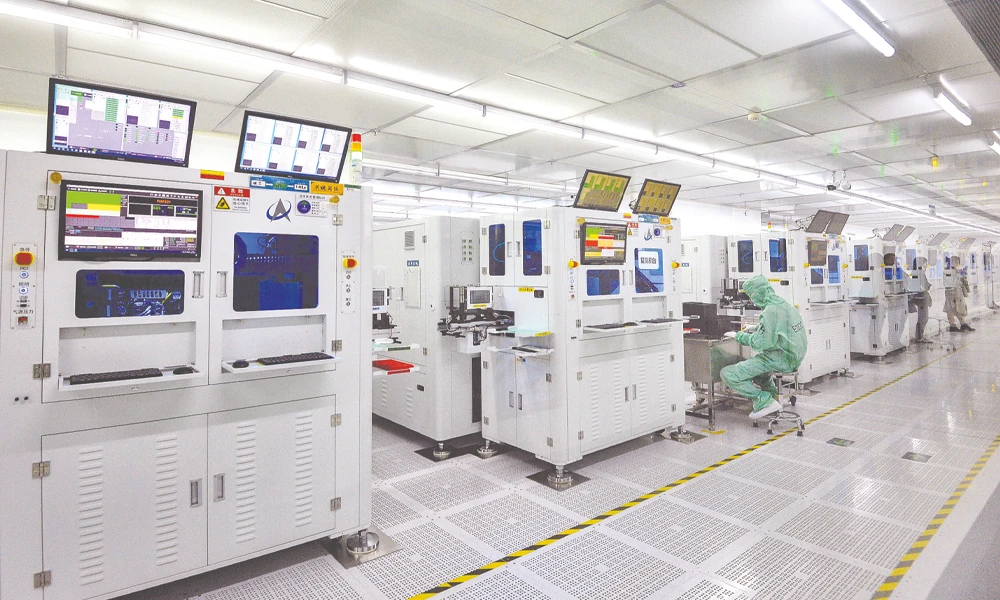
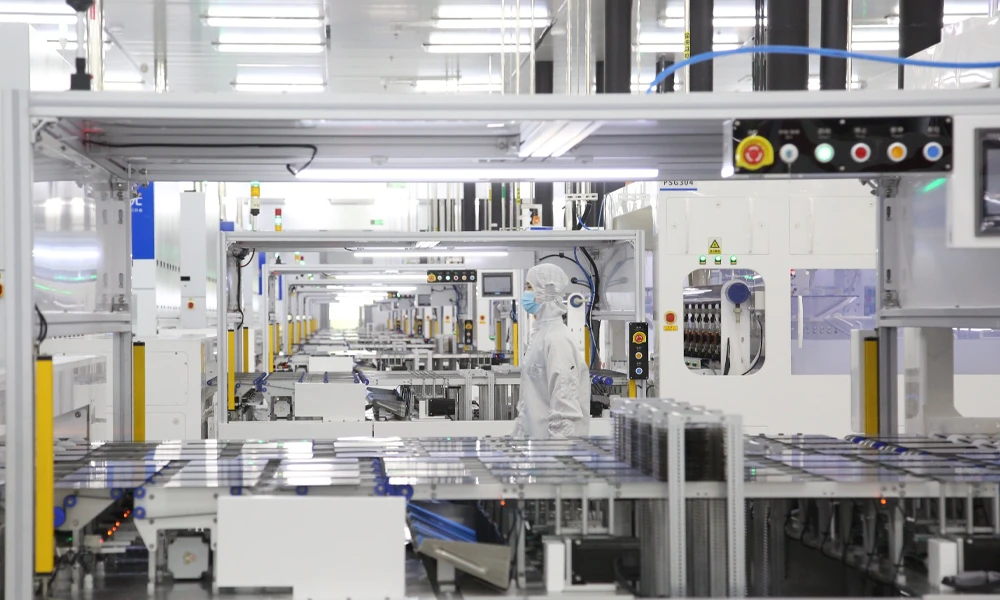
battery machine and materials solution

Corporate History

With battery-engineering roots dating to 2002 and incorporation in 2012, TOB NEW ENERGY has completed transactions with more than 8,000 customers worldwide, including over 200 customers for complete line projects spanning laboratory, pilot and production lines. Explore the company’s development year by year.

Era 04 · 2022–2026

Platform Scale, University Partnerships, and Next-Generation Battery Systems

TOB NEW ENERGY marked its 10th anniversary in 2022 and entered the engineering phase for solid-state and sodium-ion batteries. Strategic cooperation with Central South University, a production-scale warm isostatic press, and TÜV Rheinland supplier capability verification followed, completing a platform spanning laboratory lines, pilot lines, and gigawatt-scale factories. By 2026, the cumulative number of customers with completed transactions exceeded 8,000, including more than 200 customers for line projects spanning laboratory, pilot and production lines.

2026

Deeper Engineering, Independent Third-Party Verification, and AI-Era Platform Collaboration

TOB NEW ENERGY Deepening Engineering Support and Technical Leadership

TOB NEW ENERGY deepened its engineering support while introducing independent third-party verification and establishing new technical partnerships. Academic citations of TOB equipment and materials reached an all-time high of 113 papers worldwide.

  1. Academic recognition: In 2026, 113 papers cited or used TOB products, including publications in leading journals such as Nature Communications and Applied Catalysis B. Institutions and researchers included the Institute of Process Engineering, Chinese Academy of Sciences; the University of Groningen in the Netherlands; and the team of German battery researcher Martin Winter.
  2. Certifications and intellectual property:
    • Passed the TÜV Rheinland on-site supplier capability assessment in July 2026. The assessment covered manufacturing infrastructure, quality management, R&D capabilities, and export readiness, with the findings available for independent online verification.
    • Added four CE certifications: a spin coater, dip coating machine, and helium leak detector on 2026-07-30, and a polymer battery aluminum-laminated-film forming die-cutting machine on 2026-09-03.
    • Trademark: Obtained a U.S. trademark registration certificate for TOB, US Reg. No. 8,350,946, on 2026-07-21.
    • Management systems: Renewed ISO 9001:2015 certification on 2026-04-08, followed by ISO 14001:2015 and ISO 45001:2018 renewals on 2026-08-25.
    • Certification: Completed the TÜV and SGS dual supplier capability certification.
  3. Technical solutions and trade shows: Presented a complete solid-state battery laboratory solution at CIBF 2026 in Shenzhen, with live demonstrations of solvent-free electrode coating, multilayer stacking, and airtight packaging inside a dry room.
  4. Global channel network: Launched a global distributor program offering three cooperation models—regional exclusivity, agency, and project registration—supported by training, marketing resources, and 24-hour after-sales service.
  5. AI and knowledge engineering: Hosted the Alibaba AI team for company-wide AI application training and launched pilot programs for AI-assisted analysis of equipment operating data and the organization of technical knowledge. TOB NEW ENERGY continued publishing in-depth technical columns and engineering guides to advance the standardization of battery manufacturing processes.
  6. Compliance support and global delivery capabilities: Supported customers in meeting the retired-battery management requirements of the Ministry of Industry and Information Technology's Announcement No. 20 of 2026. With more than 12 years of overseas market experience, TOB NEW ENERGY established global delivery capabilities covering laboratory lines, pilot lines, PACK production lines, and battery production lines.
  7. Key customers and research partners: the Paul Scherrer Institute, Los Alamos National Laboratory, Shanghai Jiao Tong University and Tongji University.

Representative citing papers: ACS Omega, Advanced Materials, Advanced Science (DOI-verified)

2025

Platform Scale, University Partnerships, and Next-Generation Battery Systems

TOB NEW ENERGY Building the Global Battery Manufacturing Ecosystem

TOB NEW ENERGY developed into a full-chain battery manufacturing platform, spanning turnkey production lines, pilot systems, advanced materials, and technical solutions from laboratory scale to gigawatt-scale factories. The company was cited in 107 papers during the year and established industry-university partnerships in sodium-ion and solid-state batteries.

  1. Academic recognition: In 2025, 107 papers cited or used TOB products, including publications in Nature Communications and Advanced Science. Institutions included Imperial College London, the Faraday Institution, and the team of Ouyang Minggao at Tsinghua University.
  2. Certifications and intellectual property: Added three CE certifications—two for planetary dispersers on 2025-04-16 and one for a ball mill on 2025-09-19.
    • Certification: Completed the TÜV and SGS dual supplier capability certification.
  3. Strategic university-industry cooperation: Signed a strategic cooperation agreement with Central South University and Professor He's team on August 21, 2025, to conduct research on lithium-ion, sodium-ion, and solid-state battery materials from 2025 to 2028. Targets include energy density ≥400 Wh/kg, rate capability ≥1000C, cycle life ≥10,000 cycles, and high safety. TOB NEW ENERGY also became an industry-university-research base of Central South University and began operating a joint university-enterprise laboratory to support graduate internships and training.
  4. Solid-state battery process equipment: Launched a warm isostatic press for solid-state cell densification, positioned after hot pressing and before pre-sealing in the process flow. The equipment is now in mass production.
  5. Trade shows and dry-room solutions: Introduced sealed dry cabinets and dry-room solutions at CIBF 2025 and showcased battery solutions spanning laboratory to factory scale.
  6. Production line and laboratory acceptance: Completed factory acceptance testing for a pilot-line coating machine in September and installation and commissioning of prismatic battery pilot-line equipment in November. TOB NEW ENERGY also completed acceptance of coin-cell laboratory equipment in July and installed pouch-cell laboratory equipment in September.
  7. International delivery: Delivered a 4 GWh automated production line in Europe covering both pouch and prismatic cell formats.
  8. Industry and technical exchange: Participated in the International Meeting on Battery Research and Solid-State Ionics (IMBRS 25) and hosted a Korean agent for business discussions.
  9. Key customers: EXIDE and TRYDAN TECH, together with research partners King Saud University and University College London.

Representative citing papers: ACS Omega, Advanced Materials, Advanced Science (DOI-verified)

2024

From Laboratory Lines to Pilot Production for World-Class Battery Programs

TOB NEW ENERGY Serving World-Class Battery Research and Manufacturing Programs

TOB NEW ENERGY became a supplier to leading next-generation battery developers in the United States, Europe, and Asia while expanding its digital management systems. The company was cited in 101 papers during the year, including experimental work by teams at leading Chinese universities on dry electrodes and lithium-deposition characterization.

  1. Academic recognition: In 2024, 101 papers cited or used TOB products, including three published in Nature Communications. Institutions and authors included the team of Ouyang Minggao at Tsinghua University, Huazhong University of Science and Technology, and the Quanfeng Dong research group.
  2. Certifications and intellectual property:
    • CE certifications: Added 47 CE certificates from 2024-01 to 2024-08, primarily in two batches issued on 2024-05-14 and 2024-05-15. They covered coating machines; roll presses, including hydraulic roll presses; slitting and sheet-cutting machines; winding machines; can insertion, grooving, and sealing machines; tab laser welders and ultrasonic welders; electrolyte filling machines; shaping machines; heat-shrink machines; gloveboxes; vacuum ovens and electrode vacuum-drying equipment; planetary mixers and planetary dispersers; filtration machines; NMP solvent recovery and treatment systems; and battery sorting machines. Together, these certificates formed a complete CE compliance portfolio spanning electrode manufacturing, cell assembly, and testing.
    • Patent: Added one patent certificate—ZL 2023 2 3465538.3, ‘A Forming Device for Producing Lithium-Battery Composite Films,’ granted on 2024-07-16.
    • Certification: Completed the TÜV and SGS dual supplier capability certification.
  3. Key customers and global presence: Became a supplier to ONE in the United States, Fraunhofer IWS in Germany, IM3NY, FREYR, and MORROW, expanding TOB NEW ENERGY's global presence in battery R&D and pilot-scale production. Research partners during the year included RIKEN, the Chinese Academy of Sciences, Yonsei University, McGill University, Xiamen University, Sichuan University, and Volkswagen.
  4. Pilot-line project delivery: Successfully completed a pouch-cell pilot-line project in Asia in December 2024 and delivered a 20 MWh pouch-cell pilot line in Europe covering cell assembly through formation testing.
  5. Production line and laboratory project execution: Completed on-site inspection and acceptance of pouch-cell production-line equipment. TOB NEW ENERGY also shipped prismatic-cell equipment, pouch-cell equipment, and lithium-ion battery materials for multiple laboratory R&D projects.
  6. Digital management: Launched an ERP management system project, extending digital management into project execution.
  7. Technical management team development: Appointed Neil Zhao as Technical Director in May and Science Wang and Pinery Gong as Principal Engineers in September.

Representative citing papers: Advanced Energy Materials, Advanced Materials, Applied Surface Science (DOI-verified)
2023

Advanced Battery Systems, Global Pilot Lines, and a Rapidly Expanding Patent Portfolio

TOB NEW ENERGY Deepening Global R&D Partnerships

TOB NEW ENERGY advanced its work in next-generation battery systems and solid-state battery development while expanding its intellectual property portfolio and quality management systems. The company was cited in 88 papers during the year, and a Nature Portfolio review cited TOB NEW ENERGY as a source of sodium-ion battery capacity data.

  1. Academic recognition: In 2023, 88 papers cited or used TOB products, including a Nature Portfolio review and papers in PNAS and Matter (Cell Press). Institutions included MIT, with Ju Li, the University of California San Diego, and Oak Ridge National Laboratory.
  2. Certifications and intellectual property:
    • Management systems: Completed four certifications concurrently on 2023-03-11—renewal of ISO 9001:2015 quality management system certification, first obtained in 2013; IATF 16949:2016 automotive quality management system certification; ISO 14001:2015 environmental management system certification; and ISO 45001:2018 occupational health and safety management system certification.
    • Patents: Added five patent certificates, all held personally by founder Huang Zhengyao as the patent owner and therefore founder-owned patents: ZL 2022 2 3206725.5, ‘A Lamination and Stretching Mechanism for Lithium-Battery Films,’ and ZL 2022 2 3378736.1, ‘A Roll-Forming Machine for Lithium-Battery Dry-Electrode Films,’ both granted on 2023-04-18; ZL 2023 2 0007759.7, ‘A Feeding Structure for Lithium-Ion Battery Film Production,’ granted on 2023-06-16; ZL 2022 3 0781031.0, ‘Battery Case (Round),’ granted on 2023-05-05; and ZL 2022 3 0775678.2, ‘Battery Case (Prismatic),’ granted on 2023-03-10.
    • Trademarks: Completed ten trademark registrations during the year, covering TOB, TOB NEW ENERGY, TOB ENERGY, TOB MACHINERY, TOB BATTERY, TOB MACHINE, and the company's graphic trademark, with certificates issued from January through December 2023.
    • CE certification: Added one CE certification for a spray dryer on 2023-11-08.
    • Corporate credit and honors: Obtained eight corporate credit certificates on 2023-03-13, covering corporate credit rating, creditworthiness rating, trustworthy supplier, model enterprise for ethical business practices, trusted enterprise for quality and service, contract-honoring and creditworthy enterprise, service-focused and creditworthy enterprise, and quality-focused and creditworthy organization. Two individual honorary certificates—Honest Entrepreneur and Honest Manager—were awarded on the same date.
    • Certification: Completed the TÜV and SGS dual supplier capability certification.
  3. Key customers: Served Solid Power in the United States, Cellforce, Lyten in the United States, Venkor, SES, Mootek, IBC, and IISC, strengthening TOB NEW ENERGY's position in next-generation battery development. Research partners during the year included NASA, Oak Ridge National Laboratory, the Massachusetts Institute of Technology and the University of Edinburgh.
  4. Overseas pilot and production-line projects: Completed a dry-electrode supercapacitor production line in North America, delivered over the 2021–2023 project period with equipment, production processes, and materials. TOB NEW ENERGY also delivered a 60138 supercapacitor pilot line in Southeast Asia over the 2022–2023 project period, including a complete equipment set, testing systems, and materials.
  5. Expansion in sodium-ion technology: Introduced dedicated sodium-ion battery materials and sodium-ion polymer research laboratory equipment, and published an analysis of a tenfold increase in sodium-ion production capacity.
  6. Industry exhibitions and volume supply: Participated in the 15th China International Battery Fair and supplied a high-volume order of lithium-ion battery materials.
  7. Founder's academic publication: The founder's peer-reviewed paper on thermal runaway caused by lithium-ion battery overcharging was published in Science-Technology Innovation and Productivity, Vol. 44, No. 6, 2023.

Representative citing papers: ACS Omega, Advanced Energy Materials, Advanced Materials (DOI-verified)

2022

A Decade of Growth: 10th Anniversary, Patent Portfolio, and Next-Generation Battery R&D

TOB NEW ENERGY 10th Corporate Anniversary

In 2022, its 10th anniversary year, TOB NEW ENERGY advanced sodium-ion, solid-state, lithium-sulfur, and lithium titanate batteries, along with dry-electrode technology and manufacturing capabilities. The company was cited in 92 papers during the year, including two published in Nature Communications.

  1. Academic recognition: In 2022, 92 papers cited or used TOB products, including two published in Nature Communications. Institutions included the MEET Battery Research Center at the University of Münster, Monash University in Australia, and CSIRO.
  2. Certifications and intellectual property:
    • Patents: Added fifteen patent certificates during the year, granted in a concentrated period from 2022-01-07 to 2022-02-01. These were the same batch of utility model patent applications submitted together in August–September 2021 and were not fifteen additional applications beyond those recorded as filed in 2021. The patents covered a large battery raw-material mixer and supporting feeding device; a compact laboratory coating machine and lithium-battery coating machines with continuous feeding and liftable heating devices; lithium-battery electrode calendering machines and associated dust- and iron-removal devices; lithium-battery sheet cutters and cutting devices; battery electrode winding machines; battery sealing machines and sealing devices; and battery sorting machines and anti-blocking sorting devices. Together, they formed a patent portfolio spanning electrode manufacturing through cell packaging.
    • CE certifications: Added thirteen CE certifications covering an edge-folding machine on 2022-07-04; a winding machine on 2022-07-21; a cutting machine; two battery sorting machines; two battery safety testing systems; a spot welder on 2022-09-02; a sealing machine on 2022-10-22; a hot press and glovebox on 2022-11-23; and two electronic balances on 2022-11-22.
    • Other qualification: Project certification for a die-cutting machine, Project No. PEKFZ202201080599, dated 2022-01-08.
    • Certification: Completed the TÜV and SGS dual supplier capability certification.
  3. 10th anniversary milestone: Celebrated TOB NEW ENERGY's tenth anniversary. The company was incorporated on November 18, 2012.
  4. Pilot and laboratory line development: Assembled a 60138 cylindrical supercapacitor pilot line and completed installation of a customer's 18650 laboratory line. During the year, TOB NEW ENERGY also completed installation and commissioning of a customer's cylindrical battery production line, followed by the commissioning and production launch of 18650 laboratory and pilot lines.
  5. Overseas delivery and customer acceptance: Delivered supercapacitor production-line equipment and battery testers to an overseas customer, and hosted a customer for on-site inspection of lithium-battery equipment in December.
  6. Next-generation battery R&D: Advanced R&D in sodium-ion, solid-state, lithium-sulfur, and lithium titanate batteries, as well as dry-electrode technology.
  7. Key customers: RIVIAN, ACC, and NORTHVOLT, together with the French National Centre for Scientific Research (CNRS) as a research partner.

Representative citing papers: Advanced Materials, Applied Surface Science, Applied Thermal Engineering (DOI-verified)

Era 03 · 2017–2021

Global Pilot-Line Delivery and Full-Process Patent Portfolio

Supercapacitor production lines in Europe, laboratory lines shipped to Israel and Australia, and pilot-line installations across Asia and Europe marked this period. In 2021, the company filed 15 utility model patent applications in a single batch, covering the full cell manufacturing process from mixing and coating to winding and sorting. The cumulative number of customers with completed transactions exceeded 5,000.

2021

Rapid Growth in India and Full-Process Patent Filings

TOB NEW ENERGY Achieves Strong Business Growth in India

In 2021, TOB NEW ENERGY achieved strong business growth in India, where it had established multiple battery production lines, pilot lines, and laboratory lines. During the same year, the company filed 15 utility model patent applications in a single batch, covering the complete electrode manufacturing process.

  1. Academic recognition: In 2021, 65 papers cited or used TOB, including publications in ACS Applied Energy Materials. Institutions included the MEET Battery Research Center at the University of Münster, France's CNRS, and Singapore's A*STAR.
  2. Certifications and intellectual property: Seven new CE certifications were obtained during the year, covering a coating machine (2021-04-08), formation and capacity grading cabinet (2021-06-08), roll press (2021-06-23), transfer mixer (2021-06-28), stacking machine (2021-07-20), ball mill (2021-09-01), and vacuum filtration machine (2021-12-01).
    • Certification: Completed the TÜV and SGS dual supplier capability certification.
  3. Certifications and intellectual property: Fifteen utility model patent applications were filed in a single batch in August and September 2021, covering the full electrode manufacturing chain: mixing and material feeding, coating, calendering, slitting, winding and film formation, sealing, and sorting.
  4. Other major events: Multiple battery production lines, pilot lines, and laboratory lines were established in India, driving strong business growth in the market.
  5. The North American dry-electrode supercapacitor production line project was launched (January 2021–January 2023), representing an early large-scale dry-electrode project.
  6. Work continued on the Southeast Asian 18650 and 26650 cylindrical cell production line project (2018–2021), which entered the handover stage.
  7. A complete set of laboratory coating, calendering, slitting, and testing equipment was delivered to a customer's battery factory, together with NMP, CNT, and electrolyte materials.
  8. The equipment portfolio was expanded with a touchscreen battery mixer, high-speed planetary ball mill, 1100°C muffle furnace, and laboratory glove box.
  9. The customer portfolio continued to move upmarket, with international companies including Japan's DAIKIN among the year's key customers, and research partners including Washington State University.
  10. Corporate social responsibility: A donation was made to support relief efforts following the Henan floods in July 2021.

Representative citing papers: Advanced Materials, Applied Surface Science, Batteries (DOI-verified)

2020

Scaled Cell Production, Global Pilot-Line Delivery, and Operations Expansion

TOB NEW ENERGY Establishes an 18650 Cell Production Line

In 2020, TOB NEW ENERGY established a complete 18650 cell production line for a customer in Southeast Asia, continued to provide technical support and materials across multiple continents, and opened a new operations base.

  1. Academic recognition: In 2020, 52 papers cited or used TOB, including publications on Nature Portfolio and in ACS Applied Materials & Interfaces. Institutions included Germany's Fraunhofer IPA and the Indian Institute of Technology Delhi.
  2. Certifications and intellectual property: Seven new certifications were obtained: CE certifications for a spot welder, roll press, oven, and viscometer (2020-01-08); CE certifications for a vacuum mixer and coating machine (2020-09-22); and the Alibaba Gold Plus Supplier Assessment certification for the e-commerce platform (2020-09-08).
    • Certification: Completed the TÜV and SGS dual supplier capability certification.
  3. Other major events: A complete 18650 cell production line was established and commissioned for a customer in Southeast Asia, with ongoing technical support and material supply provided.
  4. Installation and commissioning of a lithium-ion battery pilot-line project in India were completed in February.
  5. A complete pouch-cell laboratory line was delivered to Brazil and accepted at the customer's site in May.
  6. Five containers of pouch-cell equipment were shipped to Europe in June, followed by the delivery of a four-station glove box in September.
  7. A complete set of supercapacitor pilot-line equipment was supplied, while a cylindrical battery production line project advanced.
  8. The battery materials portfolio was expanded with aluminum-laminated film, high-voltage electrolyte, and electrode materials for customer R&D projects.
  9. The company moved to a new office in June, expanding its operations base to support continued growth.
  10. Key customers and research partners: Stanford University and the Technical University of Munich.

Representative citing papers: ACS Omega, Advanced Materials, Batteries (DOI-verified)

2019

Research Collaboration and Pilot-Line Delivery Across Three Continents

TOB NEW ENERGY Establishes a Partnership with IIT Bombay

In 2019, TOB NEW ENERGY established a research partnership with IIT Bombay and delivered supercapacitor, cylindrical battery, and pilot-line equipment to customers in India, Europe, and China.

  1. Academic recognition: In 2019, 25 papers cited or used TOB, including publications in ACS Applied Materials & Interfaces and Chemistry of Materials. Institutions and authors included Jan D. Miller of the University of Utah and the MEET Battery Research Center at the University of Münster.
  2. Certifications and intellectual property: Three new certificates were obtained: CE certification for a sealing machine (2019-06-19), CE certification for a high-temperature vacuum atmosphere furnace (vacuum chamber) (2019-08-16), and ISO 9001:2015 quality management system certification (2019-12-06).
    • Certification: Completed the TÜV and SGS dual supplier capability certification.
  3. Other major events: A comprehensive partnership was established with IITB (Indian Institute of Technology Bombay), covering battery laboratory lines and battery design research.
  4. Acceptance of the ARCI supercapacitor testing line in India was completed in August, followed by battery equipment installation at ARCI in December.
  5. An 18650 cylindrical battery laboratory line was established in September.
  6. Lithium-ion battery manufacturing equipment and an oil-heated continuous roll press were installed in Europe from November to December.
  7. A large cylindrical cell pilot line was delivered to LOG 9 in India; during the same period, a pilot line was established for a customer in China.
  8. Work continued on the Southeast Asian 18650 and 26650 cylindrical cell production line project (2018–2021).
  9. A new purchase order was received from A123 in April. Key customers for the year included TESLA, Mercedes-Benz, A123, ABC Battery, C-MET, ARCI, and Gegadyne Energy, together with research partners the Russian Academy of Sciences, Moscow State University, Seoul National University, the University of Pennsylvania, the University of Oxford, The University of Manchester and Heidelberg University.
  10. Overseas delivery and after-sales capabilities were expanded as Kevin Li joined the company to support on-site commissioning for international projects and build the after-sales service network.

Representative citing papers: ACS Omega, Batteries, Chem (DOI-verified)

2018

European Pouch-Cell Production Lines, New Materials, and Continued Global Expansion

TOB NEW ENERGY Pouch-Cell Production Line in Europe

In 2018, TOB NEW ENERGY established multiple lithium-ion pouch-cell production lines for international customers, supplying all equipment and materials while expanding its materials portfolio and geographic delivery footprint.

  1. Academic recognition: In 2018, 17 papers cited or used TOB. Institutions included the University of Stuttgart, Technische Universität Berlin, the Gwangju Institute of Science and Technology, and the University of California, San Diego.
  2. Certifications and intellectual property: Four new CE certificates were obtained, covering spot welders (two certificates, 2018-03-10) and battery sorting machines (two certificates, 2018-09-12).
  3. Other major events: Multiple lithium-ion pouch-cell production lines were established in Europe, with all equipment and materials supplied.
  4. The Southeast Asian 18650 and 26650 cylindrical cell production line project was launched (January 2018–January 2021).
  5. A battery pilot line was delivered to a customer in India in December, and battery R&D laboratory equipment was delivered to a customer in Thailand in August, advancing the company's presence in both South and Southeast Asia.
  6. The research customer network expanded to universities and research institutions including the Australian National University in March.
  7. NCM811 cathode material was introduced, while the supply portfolio was expanded to include graphite anode material, separators, aluminum foil, and electrolyte.
  8. In-house equipment R&D advanced with the completion of a new hot-roll press design and an expanded laboratory product line.
  9. The delivery footprint expanded to Norway, Belgium, Türkiye, Iran, and Qatar; key customers and research partners for the year included Saturn, the Max Planck Society, the University of Cambridge, Imperial College London and the University of the Western Cape.

Representative citing papers: Electrochimica Acta, Journal of Power Sources, Science (DOI-verified)

2017

Two European Supercapacitor Production Lines, CE Certification, and Entry into Sodium-Ion Materials

TOB NEW ENERGY Establishes Two Supercapacitor Production Lines

In 2017, TOB NEW ENERGY established its first and second supercapacitor production lines, built a product compliance framework, and made an early move into sodium-ion battery materials.

  1. Academic recognition: In 2017, seven papers cited or used TOB. Institutions included the Indian Institute of Technology Delhi and the University of California, San Diego.
  2. Certifications and intellectual property: Ten CE certificates were obtained during the year, covering a roll press, battery sealing machine, hydraulic crimping machine, battery winding machine, spot welder, aluminum-laminated film forming machine, oven, vacuum mixer, coating machine, and electrolyte diffusion chamber, establishing the company's product compliance framework.
  3. Other major events: The company's first and second supercapacitor production lines were established in Europe, opening a new business line beyond lithium-ion battery equipment.
  4. A collaboration was initiated with IIT in India on battery laboratory equipment in January, further expanding the research customer network.
  5. Hard carbon material for sodium-ion batteries was introduced in October, establishing an early position before sodium-ion technology became a mainstream industry topic.
  6. Battery laboratory lines and battery manufacturing equipment were delivered to customers in Rehovot, Israel, and France.
  7. The customer base expanded to Arpitech in Sri Lanka, extending the company's international footprint across Asia and Europe; key customers and research partners for the year included Arpitech (Sri Lanka), IIT Mumbai, BMW, Princeton University, the Russian Academy of Sciences, the University of Toronto, the University of Kansas and the University of Munich.

Representative citing papers: Electrochimica Acta, Journal of The Electrochemical Society, Materials (DOI-verified)

Era 02 · 2012–2016

From Incorporation to the First Overseas Pilot Lines

XIAMEN TOB NEW ENERGY TECHNOLOGY Co., Ltd. was incorporated on November 18, 2012. Within four years, the company delivered a pilot-scale production line to India, established a battery pack equipment factory in Shenzhen, and began supplying battery pack equipment and materials to Apple, Samsung, and SKC. The cumulative number of customers with completed transactions exceeded 2,000.

2016

Battery Pack Equipment Manufacturing and Broader Product Coverage

TOB NEW ENERGY Established a Battery Pack Equipment Factory in Shenzhen

In 2016, TOB NEW ENERGY established a battery pack equipment factory in Shenzhen and began working with Apple, Samsung, and SKC as an equipment and materials supplier. Its product scope expanded from cell manufacturing to battery pack and EV battery equipment, while deliveries of pilot-line manufacturing equipment continued during the year.

  1. Academic Citations: In 2016, five papers cited or used TOB, including a paper published in Nano Energy. The institutions and authors included Central South University, Jan D. Miller of the University of Utah, and Ying Shirley Meng of the University of California, San Diego.
  2. A key piece of cell assembly equipment received approval for access to the EU market: the company's grooving machine obtained CE certification, completing a compliance requirement for full-line deliveries to European customers.
  3. The company established its own battery pack equipment factory in Shenzhen, creating in-house manufacturing capacity for battery pack equipment and extending its product scope from cell manufacturing equipment to battery pack manufacturing equipment.
  4. The company established equipment and materials supply relationships with Apple Inc (Lab), Samsung, and SKC, entering the supply chains of leading global brands as a supplier of battery pack equipment and battery materials. TEEMP was another key customer during the year.
  5. The company expanded into the South Asian and East Asian markets in parallel, delivering battery equipment in batches to customers in India and battery materials in batches to customers in South Korea. Its export mix shifted from individual equipment purchases to batch supply.
  6. The company initiated the development of EV battery equipment projects and held commercial discussions with an Italian customer regarding an EV battery project, extending its product focus from consumer battery equipment to traction battery equipment.
  7. The company published a technical study for customers on pouch battery factory processes, systematically covering process routes, process windows, and line configurations for electrode manufacturing and cell assembly. This provided a basis for customers building their own cell production lines and expanded the company's offering from equipment supply to integrated process and full-line solutions.
  8. In December, the company completed the delivery of a batch of pilot-line manufacturing equipment, maintaining its delivery schedule for overseas pilot-line and laboratory-line projects.

Representative citing papers: Journal of Power Sources, Materials (DOI-verified)

2015

Expanding Laboratory-Line and Pilot-Line Supply Across Three Continents

TOB Expanded Laboratory-Line and Pilot-Line Supply Across Three Continents

In 2015, the company continued to deliver laboratory lines and pilot lines to universities, research institutes, and battery developers in India, Europe, North America, and Asia. Its laboratory-line and pilot-line business progressed from a single-market breakthrough in 2014 to parallel deliveries across three continents.

  1. Laboratory-line and pilot-line deliveries covered Asia, Europe, and North America. More than 20 complete-line projects were delivered during the year to more than ten countries, including India, the United States, Israel, the Czech Republic, Malaysia, and Thailand. The overseas business moved from the single delivery of its first pilot line to parallel delivery across multiple markets.
  2. The customer base developed into three categories: universities, national research institutes, and battery developers. During the year, the company deepened cooperation with key customers including GLOBAL and Pastiche Energy. Laboratory lines supported materials and cell process research, while pilot lines supported process scale-up and product validation. Customers evolved from equipment purchasers into process-development partners.
  3. The company established turnkey delivery capabilities, advancing from individual equipment supply to complete-line delivery configured around each customer's process route. The scope covered electrode manufacturing—mixing, coating, calendering, slitting, and film forming—as well as cell assembly—winding/stacking, sealing, and sorting—and supporting laboratory test equipment.
  4. The company standardized its overseas engineering service system. Factory acceptance testing, on-site installation, commissioning, operator training, and after-sales support were formalized as standard processes and deployed with complete-line projects at customer sites in India, Europe, and North America, improving control over delivery schedules and quality for intercontinental projects.
  5. Process support was moved to an earlier project stage. The company provided customers with process-window parameters, line layouts, and equipment selection plans, supporting universities and research institutes in progressing from laboratory formulation validation to pilot-scale production and strengthening the company's technical role during early-stage process development.
  6. The export supply chain and manufacturing system supported parallel deliveries across multiple locations. The Xiamen manufacturing base's component supply chain, incoming inspection processes, and manufacturing documentation—including equipment specifications, commissioning procedures, and operating manuals—ensured consistent equipment specifications and spare-parts supply across intercontinental deliveries.
2014

R&D Expansion and the First Overseas Pilot-Line Delivery

TOB Established Its In-House Technology Research and Development Team

In 2014, TOB NEW ENERGY expanded its in-house technical and R&D teams and upgraded its factory production equipment to meet customer requirements. During the year, it delivered its first complete overseas pilot line, advancing from individual equipment supply to complete-line delivery.

  1. The company's “TB” trademark was registered in December 2014, establishing a proprietary brand identity for consistent use in overseas markets.
  2. The company expanded its in-house technical and R&D teams by establishing independent R&D and process engineering functions in Xiamen and adding positions in electrode processes, mechanical design, electrical control, and automation. Key members had previously held technical and management positions at battery and materials companies in China and abroad. R&D transitioned from a production-dependent function to an independent organizational unit.
  3. The company defined its in-house development priorities and established a path for commercializing R&D results. It conducted proprietary design work for key electrode manufacturing and cell assembly processes, developing integrated process and equipment capabilities for mixing, coating, calendering, slitting, and winding/stacking. R&D results were applied directly to customer projects, shortening the cycle from solution design to equipment delivery.
  4. The company upgraded production equipment at its Xiamen manufacturing base, including precision machining, assembly, and commissioning stations. It expanded complete-machine commissioning and in-house validation capacity, reducing line manufacturing and acceptance cycles and increasing the number of complete-line projects that could be undertaken concurrently.
  5. The company delivered its first complete overseas pilot line to India, covering engineering design, manufacturing, factory acceptance testing, shipment, on-site installation and commissioning, and operator training. This established a replicable model for overseas complete-line delivery and directly enabled laboratory-line and pilot-line supply across three continents in 2015.
  6. The international customer portfolio advanced during the year, with key customers including 3M (USA), IIT Delhi, IIT Bombay, and PT ASTRA OTOPARTS. Customers included a major North American materials company, leading Indian institutes of technology, and a Southeast Asian manufacturing group, while customer profiles and project complexity both increased.
  7. R&D and manufacturing formed a closed-loop system. The in-house R&D team worked directly with the manufacturing system to establish an iterative cycle of R&D equipment models, validation at customer sites, and batch manufacturing, providing the organizational and capability foundation for product-line expansion and subsequent scaled delivery.
2013

From Incorporation to an Operating Battery Equipment Manufacturer

TOB Transitioned from Incorporation to an Operating Battery Equipment Manufacturer

The company was incorporated on November 18, 2012. As TOB NEW ENERGY's first full year of operation, 2013 marked the transition of its Xiamen business from a registered entity to an operating battery equipment manufacturer and established the operational foundation for its first complete overseas pilot line in 2014.

  1. The company obtained its first management system certification, ISO 9001, establishing a formal quality management system in its first full year of operation. This became the basis for the quality, environmental, and occupational health and safety management systems that the company has continued to maintain and renew.
  2. The company completed its first full year of equipment manufacturing, establishing an operating cycle covering order intake, engineering design, assembly, factory acceptance testing, and shipment that remains in use today.
  3. The Xiamen manufacturing base became operational, with assembly stations, tooling, electrical and dry-area facilities, and an incoming inspection station for components before assembly.
  4. The company formed its initial engineering, production, and after-sales teams with members who had previously held technical positions at battery and materials companies in China and abroad.
  5. The company defined its first-generation product range, covering the electrode manufacturing chain—mixing, coating, calendering, slitting and film forming, winding, sealing, and sorting—together with supporting laboratory test equipment.
  6. The company established a component supply chain, incoming inspection processes, and manufacturing documentation—including equipment specifications, commissioning procedures, and operating manuals—creating the capability to manufacture the same equipment model repeatedly to the same specifications.
  7. The company designed an engineering service model covering factory acceptance testing, on-site installation, commissioning, operator training, and after-sales support, which was subsequently carried into overseas markets.
  8. The company began overseas customer development and export preparation, leading to the delivery of its first complete pilot-scale production line to India in 2014.
  9. The company began working with key customers including Future Hi-Tech, establishing an overseas customer base in its first full year of operation. From the outset, the business was positioned as an internationally oriented battery equipment manufacturer.
2012

XIAMEN TOB NEW ENERGY Established

XIAMEN TOB NEW ENERGY TECHNOLOGY Co., Ltd. Was Established

On November 18, 2012, XIAMEN TOB NEW ENERGY TECHNOLOGY Co., Ltd. was incorporated in Xiamen by co-founders Tobey Chen and Dr. Dany Huang. The founding team brought battery engineering experience dating back to 2002 into the new company, covering pouch, cylindrical, and large prismatic cell types. From its establishment, the company focused on battery equipment and materials and began with overseas customers.

  1. On November 18, 2012, XIAMEN TOB NEW ENERGY TECHNOLOGY Co., Ltd. was incorporated in Xiamen as an independent legal entity.
  2. Tobey Chen and Dr. Dany Huang co-founded the company, forming a founding team centered on battery engineering and industrial operations.
  3. The founding team brought battery engineering experience dating back to 2002, covering pouch, cylindrical, and large prismatic cell types. From its establishment, the company had process knowledge and equipment engineering capabilities across all three cell types rather than starting as a new manufacturer without prior experience.
  4. The company recruited team members who had held key technical and management positions at leading battery and materials companies in China and abroad, forming its initial technical and operations organization.
  5. Amy Wang joined as Marketing Director and Supply Chain Director. Market development and the supply chain system were established in parallel from the company's inception, creating an initial dual-function structure combining marketing and supply chain management.
  6. In its founding year, the company served key customers including SKC (USA), establishing its overseas customer base and international business orientation from the outset.
  7. The company's establishment consolidated the founding team's previously distributed battery engineering experience into an operating enterprise capable of delivering equipment and materials. Starting with overseas customers and process capabilities across all cell types, it established the corporate, team, and customer foundations for its first full year of operation in 2013, the delivery of its first complete overseas pilot line in 2014, and subsequent expansion in overseas markets.
Era 01 · 2002–2011

A Decade of Battery Engineering by the Founding Team

Before the company was established, the founding team was already designing cells and building battery factories. Beginning with pouch-cell materials in 2002, the team went on to work with cylindrical and large prismatic aluminium-case cells. The process know-how accumulated over this decade, together with patents that have been widely cited, laid the foundation for TOB NEW ENERGY's subsequent development. The cumulative number of customers with completed transactions exceeded 1,000.

2011

Building a Battery Equipment Factory: From In-House Machines to Full Production-Line Capabilities

Continuing the shift towards equipment development that began in 2010, the founding team started building a battery equipment manufacturing factory in 2011. Equipment previously developed in-house for the team's own cell R&D was standardised into complete, deliverable systems, with assembly, commissioning and process validation organised across three product lines: pouch, prismatic and cylindrical cells. Cell design, manufacturing processes and equipment engineering converged during the year, providing TOB NEW ENERGY with a complete product portfolio and engineering foundation ahead of its establishment in 2012.

  1. Construction began on a battery equipment manufacturing factory, with assembly, commissioning and trial-operation areas organised around three product lines: pouch, prismatic and cylindrical cells. This created a complete processing–assembly–commissioning–process validation loop and transformed the equipment business from an R&D initiative into a physical manufacturing operation.
  2. Experimental equipment developed in-house over the previous eight years for the team's own cell R&D was standardised into a series of machine models covering the principal processes of mixing, coating, calendering, slitting, winding and stacking, packaging, electrolyte filling, formation, and sorting and inspection. Drawings, bills of materials and work instructions were also standardised.
  3. A pre-delivery trial-operation and process-validation system was established. Each machine first completed a small production run in-house using real slurry and electrode sheets; delivery proceeded only after throughput and stability were confirmed, raising the delivery standard from “able to operate” to “able to produce reliably.”
  4. The process and equipment teams began working as one, creating a development workflow in which process requirements defined equipment specifications and equipment precision, in turn, expanded the process window. Design standards for modularity, format changeover and ease of maintenance were also established and later became the common design language across the company's equipment portfolio.
  5. The team advanced in-house production of core components for key processes including tension control, tab welding, packaging and sealing, electrolyte metering, and cell sorting. This reduced reliance on purchased standard components and enabled the equipment to accommodate different customer cell specifications and process routes.
  6. Mass-production experience from the three stages—pouch cells (2002–2004), cylindrical cells (2005–2006) and large prismatic aluminium-case cells (2007)—was used as an input for equipment design. Leakage, swelling, consistency and temperature-rise issues previously encountered on the team's own production lines were incorporated into equipment design conditions and acceptance standards.
  7. The team developed the concept of complete small-scale laboratory lines for battery companies, expanding from individual machines to laboratory-line combinations configured around the cell development process. This formed the prototype for the later laboratory-line and pilot-line businesses.
  8. Mechanical, electrical, process and after-sales functions were expanded, and delivery procedures were established for equipment installation, commissioning and operator training. The team evolved from “engineers who understood cells” into “an equipment engineering team that understood production lines.”
  9. Significance: In 2011, the team established the pathway from cell processes to equipment manufacturing. When TOB NEW ENERGY was founded in 2012, the team therefore possessed both an understanding of battery processes and equipment manufacturing capabilities.
2010

Strategic Shift to Battery Equipment: Systematic Development of Laboratory Equipment

TOB's Large Prismatic Cell Engineering and the Path to Xiamen

In 2010, the team's focus shifted from cell manufacturing to battery equipment development. It systematically developed laboratory equipment for pouch, prismatic and cylindrical cells, configuring expandable equipment combinations around the cell manufacturing process. Meanwhile, two patented technologies developed during the cell-design stage—a high-power lithium-ion cell and a pressure-adjustable safety valve—continued to be cited by subsequent patents and became important inputs for equipment design.

  1. Shift in focus: R&D resources were redirected from cell product lines to battery equipment development, repositioning the team from a cell manufacturer to a supplier of battery processes and equipment.
  2. Laboratory equipment was developed for pouch, prismatic and cylindrical cell formats. Configured as expandable combinations around the cell manufacturing process—mixing, coating, calendering, slitting, winding and stacking, packaging, electrolyte filling, formation, and capacity grading and inspection—the equipment could be expanded process by process from laboratory scale to pilot and mass production as the process matured.
  3. Two patents created during the team's cell-design stage—the high-power lithium-ion cell (CN101425605B) and the pressure-adjustable safety valve for lithium-ion cells (CN101399324B)—continue to be cited by subsequent patents.
  4. Issue lists covering pouch-cell sealing leakage and gas swelling in 2003, cylindrical-cell consistency and high-rate temperature rise in 2005–2006, and electrolyte filling and wetting for large aluminium-case cells in 2007 were converted item by item into technical specifications and acceptance criteria for laboratory equipment.
  5. The equipment platforms for all three cell formats were unified, allowing the same machine frame and control system to accommodate pouch, prismatic and cylindrical cells. This reduced format-change costs and enabled customers to validate multiple cell formats with one set of laboratory equipment.
  6. A process-adaptation method for equipment was established: process windows were first validated on the team's own trial-production line using self-built or modified equipment, after which the machine design was finalised for delivery, with equipment and process parameters handed over together.
  7. Internal mechanical-design and electrical-control capabilities were developed, creating an independent development chain from cell processes to equipment structures and from equipment structures to control logic, without relying on generic machines from external equipment suppliers.
  8. Market entry approach: Complete equipment and process solutions were offered to domestic battery companies for laboratory and trial-production applications, differentiated by the team's positioning as “an equipment supplier with hands-on cell manufacturing experience.”
  9. Significance: Equipment development extended the team's capabilities from cells to production lines, directly leading to the construction of the equipment factory in 2011 and the establishment of TOB NEW ENERGY in 2012.
2009

Cylindrical Batteries for E-Cigarettes and Bluetooth Headsets Enter Mass Production

In 2009, the team completed the transition to mass production for two small cylindrical batteries developed in 2008. Daily output of cylindrical e-cigarette batteries reached 100,000 units, while Bluetooth-headset batteries achieved stable small-batch production of 10,000 units per day. Small cylindrical batteries became the year's principal product focus, and the team established the manufacturing and quality systems required for production at this scale.

  1. Cylindrical e-cigarette batteries entered mass production, reaching daily output of 100,000 units and becoming the year's largest product line by volume.
  2. Bluetooth-headset batteries entered small-batch mass production at 10,000 units per day, serving demand from miniature consumer electronics such as mono Bluetooth headsets.
  3. Production-line takt time was reconfigured around the targeted daily production scale. Winding, sealing, electrolyte filling, formation and sorting workstations were separated according to bottleneck processes, and line capacity was progressively increased through equipment-count planning and process balancing.
  4. A consistency-control system was established for small cylindrical batteries: online control of electrode dimensions and winding tension, precise electrolyte metering, capacity and internal-resistance grading after formation and capacity grading, and self-discharge screening to eliminate latent micro-short-circuit risks. Mass-production quality became statistically manageable and traceable.
  5. Three manufacturing challenges for small cylindrical batteries were resolved: sealing leakage through optimisation of the seal structure and gasket fit; tab welding through consistent miniature weld spots; and control of micro-volume electrolyte filling and wetting. This established the process foundation for higher subsequent output.
  6. Dedicated equipment was built in-house for small cylindrical batteries, including automatic winding, automatic sealing, automatic electrolyte filling, and automatic inspection and sorting machines. Developed in response to real mass-production requirements, these machines became direct prototypes for the later battery equipment business.
  7. Market applications expanded: e-cigarettes and Bluetooth headsets were both fast-growing consumer-electronics categories at the time. Their differing requirements for battery size, capacity and safety led the team to define cell specifications and safety designs separately for each application scenario.
  8. Mass-production process specifications and operating standards were established for small cylindrical batteries, converting parameters developed during the R&D stage into replicable manufacturing documentation to support subsequent production-line replication.
  9. Significance: Mass-production experience at this scale gave the team its first complete command of the interrelationship among product, process, equipment and quality, providing all of the real-production inputs needed for the shift to equipment development in 2010.
2008

Developing Batteries for E-Cigarettes and Bluetooth Headsets as Two Cell-Design Patents Take Shape

TOB Developing Batteries for E-Cigarettes and Bluetooth Headsets

In 2008, the team developed small cylindrical batteries for two emerging consumer-electronics applications—e-cigarettes and Bluetooth headsets—and researched dedicated production equipment for them. During the same period, two cell-design patents, covering a high-power lithium-ion cell and a pressure-adjustable safety valve for lithium-ion cells, entered the application process in succession, systematically consolidating the team's cell-structure design capabilities.

  1. Development of cylindrical e-cigarette batteries: The team improved high-current discharge capability and cycle stability in a miniature cylindrical format to meet the pulse-discharge characteristics of e-cigarettes, while addressing consistency and safety in small cells.
  2. Development of Bluetooth-headset batteries: Cell design and packaging structure were optimised for miniaturisation, low self-discharge and long storage life, balancing capacity, size and safety within an extremely limited space.
  3. Dedicated equipment was researched for the two types of small cylindrical batteries. Adapted machine models were developed for miniature winding, precision sealing, micro-volume electrolyte filling, and automatic inspection and sorting, translating cell-design requirements for dimensional precision into requirements for equipment positioning repeatability.
  4. CN101425605B, covering a high-power lithium-ion cell using lithium nickel cobalt manganese oxide, was filed on 1 November 2007. This cell-design patent has been cited 17 times to date.
  5. CN101399324B, covering a pressure-adjustable safety valve for lithium-ion cells, was filed on 25 September 2008 and has been cited 13 times to date. The patent complemented the large aluminium-case battery developed in 2007.
  6. Experience from developing small cylindrical batteries was applied back into equipment design. Requirements for precision and stability in sealing, welding and electrolyte filling were implemented item by item in equipment structures, establishing the practice of “first make the cell, then make the equipment.”
  7. Market application: Small cylindrical batteries entered the consumer-electronics supply chain, with development and validation organised around device manufacturers' requirements for size, capacity and safety.
  8. Process system: A development workflow was established from material evaluation and cell design through sample trial production and reliability validation. Cell-design experience and patented technologies were codified as the team's internal design standards.
  9. Significance: Small cylindrical batteries opened a new market direction in consumer electronics, while the equipment research and patent portfolio simultaneously laid the groundwork for mass production the following year and the shift to the equipment business two years later.
2007

Developing Large Prismatic Aluminium-Case Batteries with Individual Cell Capacity of 100 Ah

In 2007, the team shifted from small consumer batteries to the development of large prismatic aluminium-case batteries, achieving an individual cell capacity of 100 Ah—a relatively high-capacity specification that could be developed in the market at the time. The material systems covered both NCM111 and lithium iron phosphate (LFP), with natural and artificial graphite used for the anode. Individual cell energy density reached 200 Wh/kg, and the target markets were electric motorcycles and electric logistics vehicles.

  1. Large prismatic aluminium-case batteries were developed with an individual cell capacity of 100 Ah, a relatively high-capacity specification that could be developed in the 2007 market. This extended the team's product portfolio from consumer batteries into traction batteries.
  2. Two material systems were advanced in parallel: the NCM111 ternary route for energy-density and power requirements, and the lithium iron phosphate (LFP) route for cycle life and safety. The anode used a blend of natural and artificial graphite to balance cost and rate performance.
  3. Individual cell energy density reached 200 Wh/kg.
  4. To manage internal pressure and gas generation in large prismatic aluminium-case batteries, the team designed a pressure-adjustable safety valve (CN101399324B, filed in September 2008), providing a controlled pressure-release path under abnormal operating conditions.
  5. Manufacturing challenges unique to large-capacity cells were overcome: thickness uniformity in wide-web electrode coating; winding and assembly of large electrode assemblies; control of electrolyte volume and wetting time; and gas generation and shaping during formation. None of these issues had arisen with the earlier small batteries.
  6. Corresponding equipment was built or modified in-house for the 100 Ah large-format cells, including wide-web coating, large-diameter winding, case welding, high-volume electrolyte filling and formation equipment. Equipment capabilities were scaled in step with cell dimensions.
  7. Cell-design capabilities were extended by transferring the design methods used for high-rate cells in 2006—including tab structure, current collectors and current distribution—to large-capacity cells, improving temperature rise and uniformity during high-current charging and discharging.
  8. Target market and product definition: Individual cell specifications and pack configurations were defined for electric motorcycles and electric logistics vehicles. For the first time, the team designed cells around vehicle applications rather than consumer-electronics applications.
  9. Significance: Development of the 100 Ah large aluminium-case battery added the large prismatic route to the team's existing pouch and cylindrical formats, creating a parallel technical portfolio for consumer and traction applications.
2006

Cylindrical Batteries Enter Volume Production: Daily Capacity Reaches the Tens of Thousands and a 30C High-Rate Design Is Realised

TOB's First High-Rate Lithium-Ion Cell Patent and Move into Cylindrical Cells

In 2006, cylindrical batteries moved from the laboratory into mass production. Within six months, daily output increased from 1,000 to 30,000 units, while manufacturing yield remained above 90%. During the same period, the team increased the cell discharge rate to 30C, kept battery surface temperature below 70 °C, and filed a national invention-design patent. Cylindrical batteries began entering supply chains for applications including power tools and laptop computers.

  1. CN1819321A, “A High-Rate Lithium-Ion Battery,” was filed on 6 March 2006, with Mr. Huang named as a co-inventor.
  2. The application disclosed measured discharge curves at 7C, 10C and 12C in eight figures.
  3. The patent application has since been cited by 11 subsequent patents.
  4. Cylindrical batteries moved from the laboratory into mass production, with daily output increasing from 1,000 units at the laboratory stage to 30,000 units within six months. Manufacturing yield remained above 90%.
  5. Cell rate capability reached 30C, while battery surface temperature was kept below 70 °C during high-rate discharge.
  6. A paper on battery rate design was presented at an international forum, sharing the design methods and measured data for high-rate cells.
  7. The mass-production line was built and brought into stable operation. Winding, sealing, electrolyte filling, formation and sorting were separated into distinct processes; capacity was ramped up through equipment-count planning, process balancing and tooling standardisation, with yield control implemented at every process step.
  8. Cylindrical batteries entered supply chains for applications including power tools and laptop computers, making the team a battery supplier for these markets. Their high-rate capability directly matched the high-current requirements of power tools.
  9. Earlier work had focused on pouch-cell material development (2002–2006); the team then moved into cylindrical cells, completing the transition in technical route from pouch to cylindrical formats.
  10. Significance: The combination of daily capacity in the tens of thousands, 30C high-rate performance and mass-production yield gave the team large-scale consumer-battery manufacturing capabilities and established a reusable production-line and quality-management model for subsequent product lines.
2005

Cylindrical Cell Development: Four Models and Energy Density of 170 Wh/kg

In 2005, the team shifted from pouch to cylindrical cells, developing four models—14500, 14650, 18650 and 26650. The material systems combined NCM111 and lithium iron phosphate (LFP) with natural and artificial graphite anodes, achieving an energy density of 170 Wh/kg. At the same time, Sanyo, Panasonic, Samsung, E-One Moli Energy (Molicel), and China's BAK Battery and Lishen were all advancing cylindrical-cell technologies. In this field, the team resolved three critical issues—sealing leakage, energy density and consistency—and met mass-production requirements.

  1. Cylindrical batteries were developed in four models—14500, 14650, 18650 and 26650—creating a cylindrical product range from small to medium sizes.
  2. The material systems followed both NCM111 and lithium iron phosphate (LFP) routes, with natural and artificial graphite used for the anode. Energy density reached 170 Wh/kg.
  3. Sealing leakage was a key focus. The team worked simultaneously on seal structure, gasket fit, and the pressure–time curve of the sealing equipment, and established a seal-integrity testing method that moved leakage control from post-production sorting into the manufacturing process itself.
  4. Consistency was improved by controlling electrode dimensional accuracy, winding tension, electrolyte volume and formation conditions, narrowing the distribution of capacity, internal resistance and self-discharge among cells of the same specification to levels suitable for mass production.
  5. Mass-production requirements were met: The process was finalised for stable batch production, and the production line, tooling and standards were prepared for the capacity ramp-up in 2006.
  6. Competitive landscape: The principal international cylindrical-battery manufacturers at the time were Sanyo, then the market-share leader, Panasonic, Samsung and E-One Moli Energy (Molicel); Chinese peers included BAK Battery and Lishen. The team differentiated itself through multi-model coverage and flexibility in material systems.
  7. Equipment capabilities: The team built and modified equipment in-house for cylindrical-cell winding, sealing and electrolyte filling, incorporating process-parameter requirements directly into machine design. This “process–equipment integration” approach continued to be used thereafter.
  8. Technical-route expansion: Cylindrical cells were added to the pouch-cell work of 2002–2004, giving the team command of the materials, structures and manufacturing processes for two mainstream cell formats.
  9. Significance: Cylindrical-cell development in 2005 was a crucial step in the team's transition from a single format to multiple formats. The energy density of 170 Wh/kg and finalisation of the mass-production process provided the direct foundation for large-scale production the following year.
2004

Large-Scale Pouch-Cell Production: Daily Capacity Rises from Hundreds to 30,000 Units

In 2004, pouch batteries moved from laboratory development into large-scale production. Within six months, daily output increased from 100 to 30,000 units, manufacturing yield remained above 90%, and supply capacity ranked among the top three in the pouch-battery market that year.

  1. Pouch batteries entered large-scale production. Starting at 100 units per day, output increased to 30,000 units per day within six months, with manufacturing yield exceeding 90%.
  2. Supply capacity ranked among the top three in the 2004 pouch-battery market, transforming the team from a technology developer into a supplier capable of large-scale delivery.
  3. A mass-production plant and production line were built. Dry rooms and cleanrooms were planned around pouch-battery moisture and cleanliness requirements, and a complete production line was laid out for electrode fabrication, packaging, electrolyte filling, formation, and capacity grading and inspection. Material-flow routes were designed to shorten waiting times between processes.
  4. Yield-assurance system: Failure modes including sealing leakage, swelling and abnormal internal resistance were broken down process by process. A three-tier inspection system covering incoming materials, in-process production and finished-product sampling was established, together with process-yield statistics and an abnormality-feedback mechanism.
  5. Process finalisation: The seal-integrity and gas-generation-control methods validated in the laboratory in 2003 were codified into mass-production process parameters and operating standards, making the process replicable and transferable.
  6. Equipment was built and modified in-house for pouch-cell mass production, including stacking/winding, heat sealing, electrolyte filling, vacuum packaging and inspection equipment. Equipment capacity increased in step with production-line takt time, further deepening the team's understanding of machine structures.
  7. Market applications: Pouch batteries entered the consumer-electronics supply chain for mobile phones, digital products and other applications, with product development and validation organised around device manufacturers' requirements for thickness, capacity and safety.
  8. Team and systems: Production-line management, process engineering and quality functions were progressively separated, establishing an organisational model spanning sample trial production through batch delivery.
  9. Significance: The cost, yield and delivery experience gained through mass production became the platform the team later replicated rapidly across cylindrical and large prismatic cells. It also became the source of the equipment business's practical understanding of how production lines operate successfully.
2003

Laboratory Development of Pouch Batteries: Overcoming Sealing Leakage and Gas Swelling

In 2003, the team developed pouch batteries at laboratory scale, focusing on two process challenges that constrained the pouch route: sealing leakage and gas swelling. In the process, it also developed equipment capabilities in packaging, electrolyte filling and inspection. ATL (Amperex Technology Limited) and TCL Hyperpower were advancing pouch technology during the same period, and the team's technical level in this field reached mass-production requirements.

  1. Pouch batteries were developed at laboratory scale, progressively establishing the complete process from material evaluation and electrode fabrication through packaging and formation.
  2. Sealing leakage was resolved through systematic experiments on the process window for heat-sealing temperature, pressure and time, as well as the seal structure, sealing-layer thickness and sealing method around the tabs. Seal-integrity and insulation testing methods were established, enabling leakage to be traced to specific process parameters.
  3. Gas swelling was addressed through moisture control in materials and electrolyte, analysis of the gas-generation mechanism during formation, and the secondary-sealing degassing process. Dry-environment control, formation-process optimisation, and vacuum degassing and packaging suppressed swelling while maintaining stable cell appearance and thickness.
  4. Equipment capabilities: To resolve sealing and swelling issues, the team built and modified heat-sealing, vacuum-packaging, electrolyte-filling and seal-integrity-testing equipment in-house. This converted process problem-solving into equipment-development experience and marked the origin of the team's later decision to make equipment its core business.
  5. Industry context: ATL (Amperex Technology Limited) and TCL Hyperpower were principal drivers of pouch-battery development during the same period. The team completed validation of key pouch-battery technologies within a similar technical tier and timeframe.
  6. The technology reached mass-production requirements: The process was finalised and repeatability was validated, providing the process basis for construction of the volume-production line in 2004.
  7. Material-system expertise: Evaluation methods and matching experience were established for cathode and anode materials, separators, electrolyte and aluminium-plastic-film packaging materials, creating an understanding that “materials define the performance ceiling, while the process determines whether it can be achieved.”
  8. Significance: The two process breakthroughs in 2003 moved the pouch route from feasibility validation to manufacturability, giving the team its first complete technical chain spanning materials, processes and equipment.
2002

Entering the Lithium-Ion Battery Industry through Pouch-Cell Materials

TOB Formally Enters the Lithium-Ion Battery and Battery Equipment Industry

In 2002, TOB NEW ENERGY founder Mr. Huang entered the lithium-ion battery and battery equipment industry as Chief Technology Officer of Shenzhen Redway Battery.

  1. Mr. Dany Huang entered the lithium-ion battery industry as Chief Technology Officer of Shenzhen Redway Battery.
  2. Starting with pouch-cell material development, his work progressively expanded to cylindrical and large prismatic cell production.
  3. Over the following four years, he focused on pouch-cell materials, battery-technology R&D and manufacturing processes (2002–2006).
  4. This period established the battery-engineering foundation on which TOB NEW ENERGY was built after its establishment in 2012—a technical lineage spanning 24 years.
  5. The specific scope of pouch-cell material development covered evaluation of cathode and anode materials, matching of separators and electrolyte, and selection and validation of aluminium-plastic-film packaging materials, establishing material-level judgement of cell performance boundaries.
  6. Connecting materials with processes: Material-evaluation results were mapped to process parameters for electrode fabrication, packaging, formation and other operations, establishing a causal chain of “materials–process–performance.” This method was repeatedly applied across all subsequent product lines.
  7. The beginnings of an equipment mindset: To solve practical issues in material and process validation, the team began building and modifying small laboratory machines for coating, hot pressing, packaging and other processes, foreshadowing the later development of the equipment business.
  8. Significance: The team's entry into the industry in 2002 shaped its capabilities for more than two decades: materials and process understanding at the core, self-built equipment as the means, and process challenges translated into equipment solutions.

Then and now

Two decades of battery engineering, measured by what the company can prove today.

Dimension Then Now
Patents 2 foundational invention patents from the founding team's cell-design work — CN101425605B (filed 2007-11-01) and CN101399324B (filed 2008-09-25) 21 further patent certificates granted 2022–2024, including 5 founder-owned patents; the two early invention patents alone are cited 17 and 13 times by later patents
Academic citations 5 papers cited or used TOB products in 2016 113 papers in 2026 — a 22.6× increase; 725 papers recorded across 11 tracked years
Research partners First research customers appear as laboratory equipment orders reach universities NASA, MIT, Stanford, the Max Planck Society, CNRS, RIKEN, Los Alamos, Oak Ridge, Cambridge and Oxford among the institutions named on this page
Customers Cumulative customers passed 1,000 in Era 01 More than 8,000 by 2026, including 200+ complete line projects
Global delivery First complete overseas pilot line delivered to India in 2014 More than 12 years of overseas market experience; >20 complete-line projects delivered to >10 countries by 2015 alone
Technology coverage Pouch-cell materials, cylindrical and large prismatic aluminium-case cell design Lithium-ion, solid-state, sodium-ion and supercapacitor technologies, plus dry-electrode processing
Quality systems First ISO 9001 certification obtained in 2013 ISO 9001:2015, ISO 14001:2015, ISO 45001:2018 and IATF 16949:2016, plus 47 CE certificates in 2024 and TÜV + SGS dual certification every year since 2019

Frequently asked questions

Short answers to the questions most often asked about TOB NEW ENERGY. Full detail is in the timeline above.

How did TOB NEW ENERGY develop from a cell-design team into a battery equipment manufacturer?

The company's history runs through four eras. Its founding team was already designing cells and building battery factories from 2002, working first with pouch-cell materials and later with cylindrical and large prismatic aluminium-case cells. XIAMEN TOB NEW ENERGY TECHNOLOGY Co., Ltd. was incorporated on November 18, 2012, delivered its first complete overseas pilot line to India in 2014, and by 2026 operates a platform spanning laboratory lines, pilot lines and gigawatt-scale factories.

What are the four eras of TOB NEW ENERGY's corporate history?

Era 01 (2002–2011) — a decade of battery engineering by the founding team. Era 02 (2012–2016) — from incorporation to the first overseas pilot lines. Era 03 (2017–2021) — global pilot-line delivery and a full-process patent portfolio. Era 04 (2022–2026) — platform scale, university partnerships and next-generation battery systems.

How many customers has TOB NEW ENERGY served, and how did that base grow?

The cumulative number of customers with completed transactions passed 1,000 in Era 01, 2,000 in Era 02 and 5,000 in Era 03, and exceeded 8,000 by 2026. That 2026 figure includes more than 200 customers for line projects spanning laboratory, pilot and production lines.

What patents does TOB NEW ENERGY hold, and how influential are they?

The founding team's early cell-design work produced two invention patents that later patents still cite: the high-power lithium-ion cell CN101425605B (filed 2007-11-01, cited 17 times) and a pressure-adjustable safety valve for lithium-ion cells CN101399324B (filed 2008-09-25, cited 13 times). In 2021 the company filed 15 utility model applications in a single batch covering the full electrode manufacturing chain from mixing and coating to winding and sorting; these were granted during 2022-01 and 2022-02. A further five patents granted in 2023 are founder-owned, held personally by founder Huang Zhengyao, including ZL 2022 2 3206725.5 (a lamination and stretching mechanism for lithium-battery films) and ZL 2022 2 3378736.1 (a roll-forming machine for dry-electrode films). One more was added in 2024. See the full patent certificates record.

How widely is TOB NEW ENERGY's equipment cited in academic research?

Papers citing or using TOB products grew from 5 in 2016 to 113 in 2026 — a 22.6× increase — with a cumulative 725 papers recorded across the 11 tracked years. Publications include Nature Communications, PNAS, Matter (Cell Press), Advanced Science and Applied Catalysis B.

Which universities and research institutes have worked with TOB NEW ENERGY?

Named partners include NASA, MIT, Stanford University, the Max Planck Society, CNRS, RIKEN, the Paul Scherrer Institute, Los Alamos National Laboratory, Oak Ridge National Laboratory, the University of Cambridge, the University of Oxford, Imperial College London, the Chinese Academy of Sciences, and the team of Ouyang Minggao at Tsinghua University, among other institutions named in the timeline above.

What strategic university–industry cooperation has TOB NEW ENERGY established?

On August 21, 2025 TOB NEW ENERGY signed a strategic cooperation agreement with Central South University and Professor He's team to conduct research on lithium-ion, sodium-ion and solid-state batteries. Earlier cooperation includes a comprehensive partnership with IIT Bombay covering battery laboratory lines and battery design research (2019) and a collaboration with IIT India on battery laboratory equipment (2017).

What quality and certification systems does TOB NEW ENERGY operate?

The company obtained its first ISO 9001 certification in 2013. On 2023-03-11 it completed four certifications concurrently: renewal of ISO 9001:2015, IATF 16949:2016 automotive quality management, ISO 14001:2015 environmental management, and ISO 45001:2018 occupational health and safety. It added 47 CE certificates during 2024. See the certificates list and the ISO quality management system page.

Is TOB NEW ENERGY TÜV and SGS certified, and since when?

Yes. TOB NEW ENERGY has completed the TÜV and SGS dual supplier capability certification every year from 2019 to 2026. The TÜV Rheinland on-site assessment covered manufacturing infrastructure, quality management, R&D capabilities and export readiness, and the findings are available for independent online verification.

What battery technologies and process equipment does TOB NEW ENERGY cover?

The portfolio spans lithium-ion, solid-state, sodium-ion and supercapacitor technologies, delivered at laboratory, pilot and production-line scale. Product areas include coating, calendering, slitting, dry-electrode film, glove boxes and warm isostatic presses.

Which global battery and automotive companies have been TOB NEW ENERGY customers?

Key customers recorded in the timeline include TESLA, Mercedes-Benz, A123, 3M, DAIKIN, EXIDE, Solid Power, ONE, FREYR and MORROW, alongside battery pack equipment and materials supplied to Apple, Samsung and SKC during Era 02 — all within a cumulative base of more than 8,000 customers.

How does TOB NEW ENERGY support overseas delivery and after-sales service?

The company delivered its first complete overseas pilot line to India in 2014, covering engineering design, manufacturing, factory acceptance testing, shipment, on-site installation and commissioning, and operator training. In 2015 more than 20 complete-line projects were delivered to more than ten countries, including India, the United States, Israel, the Czech Republic, Malaysia and Thailand. Factory acceptance testing, on-site installation, commissioning, operator training and after-sales support were formalized as standard processes, and by 2026 the company draws on more than 12 years of overseas market experience.