Chinese
 français
 Deutsch
 italiano
 español
 português
 Nederlands
 日本語
 한국의




- Home
- >
- Battery Production Line
- >
- Coin Cell Laboratory Line
- >
- Lithium ion Coin Cell Lab Line Equipment for Battery R&D
Categories
Hot Products
Loading...


Lithium ion Coin Cell Lab Line Equipment for Battery R&D
Brand:
TOB NEW ENERGYitem no.:
TOB-CCL01order(moq):
1 setPayment:
L/C,T/Tproduct origin:
Chinashipping port:
XIAMENLead Time:
30 days
Lithium ion Coin Cell Lab Line Equipment for Battery R&D
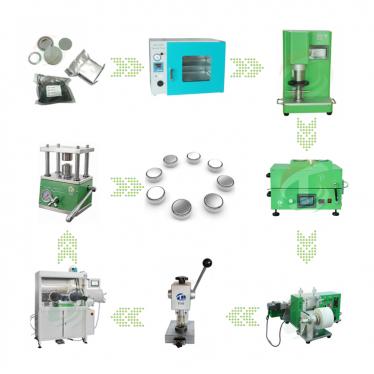
Coin Cell Lab R&D Process

1.Material preparation
The first is to confirm and bake the battery material. Generally, the battery conductive agent needs to be baked at 120℃ for 8 hours. The PVDF powder should be baked at 80℃ for 8 hours. The cathode active material (LFP, NCM, etc.) depends on the state and process of incoming material whether it needs to be baked and dried.
The anode of lithium battery is composed of anode active materials, conductive agent, battery binder and dispersant. The conventional anode electrode system is a water mixing process (the solvent is deionized water), so the incoming material does not require drying. This process requires: Conductivity of deionized water ≤1us/cm. Workshop temperature ≤40℃, Humidity :≤25%RH.
Cathode material mixing
About cathode active material mixing. We need to pay attention to the feeding sequence (add cathode active material and conductive agent slowly mix, then add binder), feeding time, feeding ratio, to strictly according to the process. Secondly, it is necessary to strictly control the rotation and rotation speed of equipment, vacuum degree and temperature of stirring. The slurry needs to be filtered when it is turned out, the purpose of filtration is to filter large particles, precipitation and removal of ferromagnetism and other substances. The influence of large particles coating to the final may lead to the battery from the risk of large or short circuit; The size of the ferromagnetic material too high will lead to the battery self-discharge too large and so on.
Anode material mixing
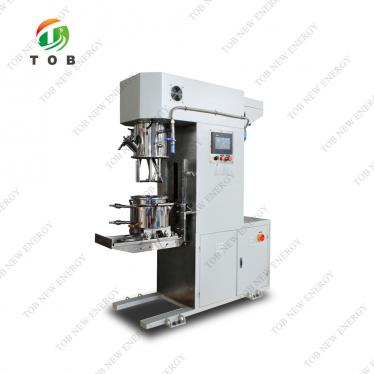
The anode of lithium battery is composed of anode active materials, conductive agent, battery binder and dispersant. The conventional anode electrode system is a water mixing process (the solvent is deionized water), so the incoming material does not require drying. After confirmation of the material, prepare glue solution (CMC powder and water composition) first. Pour the graphite powder and conductive agent(Carbon black, CNTs, Graphene, etc.) into the battery slurry mixer for dry mixing. Finally, pour the SBR binder into the mixer. It is recommended to stir quickly within a short time .
The final viscosity (2000 ~ 4000 mPa. S), particle size (35um≤), solid content (40-70%), vacuum sifting (≤100 mesh). The specific process value needs to be different according to material properties, mixing process and so on.
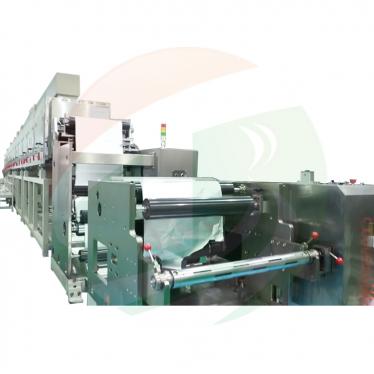
The cathode electrode coating is the cathode slurry extrusion coating or spraying on the cathode current collector aluminum foil, the density of one side is 20 to 40 mg/cm2.
Anode electrode coating is the anode slurry extrusion coating or spraying on the anode current collector copper foil.
3.Electrode drying
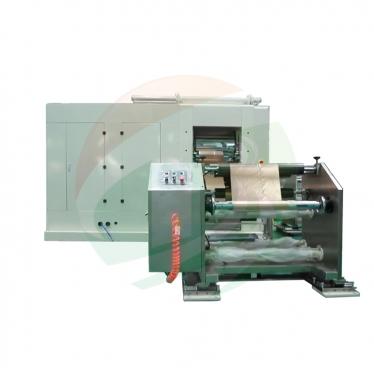
The drying of pole piece generally needs to consider 3 points, baking temperature, baking time and baking environment. The baking temperature of NMP needs to be above 100℃. Under the premise of drying, the baking temperature should be reduced as far as possible and the baking time should be increased. For some materials that are easily oxidized or unstable in high temperature air, they need to be baked in an inert atmosphere oven. Drying conditions can also be determined by directly measuring the moisture content of the electrode.
4.Rolling press
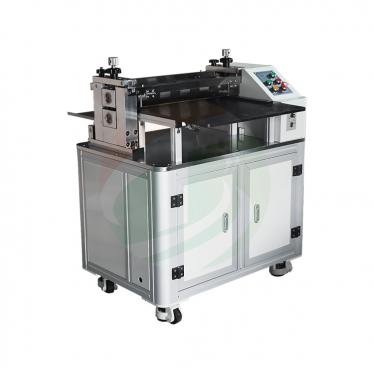
After coating, the dry composite material coating is relatively loose. If used directly, it is easy to fall off and damage after being infiltrated by electrolyte. Roller machine can be used for tablet pressing. Generally, the positive electrode coating can be pressed to 15~60 μm. The stability, fastness and electrochemical properties of the electrode were improved after the tablet was pressed, and the test performance was better than that of the sample without press.
5.Disc cutting(electrode and separator)
The prepared electrode piece is put on the punching machine and rushed out of the small electrode. The diameter of the small electrode can be adjusted according to the size of the punching die of the punching machine. The finished electrode needs to be selected. Try to select the electrode with no burr, no powder dropping, and smooth surface and edge.
6.Electrode and separator drying
Put the electrode into a vacuum drying oven, vacuum to 0.1MPa, set the drying temperature and time, can be baked at 120℃ for 6 hours, the purpose of this step is to further remove the moisture in the electrode.
7.Coin cell assembly
Transfer the prepared electrodes to an inert atmosphere glove box and prepare the coin cell assembly components: anode case, lithium metal plate, battery separator, gasket, spring plate (nickel foam), cathode case, electrolyte, in addition to the crimper, pipette and insulating tweezers.
8.Coin cell crimping
Place the anode side of the coin cell up on the coin cell crimper. Paper towels can be used to absorb the spilled electrolyte. Then crimping the battery, complete assembly and prepare the coin cell, take it out with insulating tweezers, observe whether the appearance of the preparation is complete and wipe clean with paper towels.
9.Tester
After completing the above steps, we can use the battery tester to start measuring the coin cell we have prepared.
Email : tob.amy@tobmachine.com
Phone number : +86 181 2071 5609
If you are interested in our products and want to know more details,please leave a message here,we will reply you as soon as we can.


 subscribe to us