Chinese
 français
 Deutsch
 italiano
 español
 português
 Nederlands
 日本語
日本語 한국의
한국의




- Home
- >
- Battery Materials
- >
- Battery Current Collectors
- >
- 8um Battery-Grade Copper Foil for Li-Ion Anodes
Categories
Hot Products
Loading...
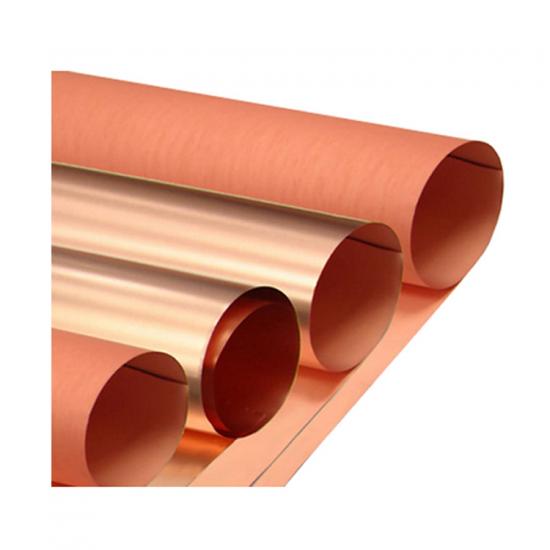
8um Battery-Grade Copper Foil for Li-Ion Anodes
Brand:
TOB NEW ENERGYitem no.:
TOB-C08order(moq):
1Payment:
L/C,T/Tproduct origin:
Chinashipping port:
XIAMEN
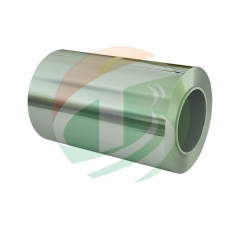
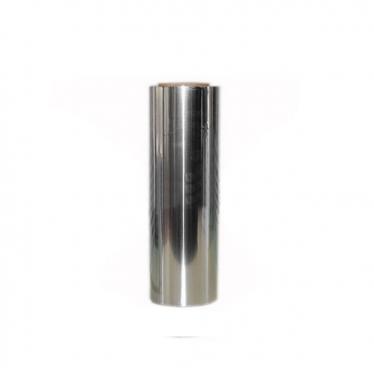
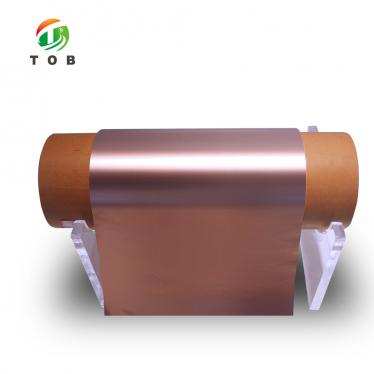
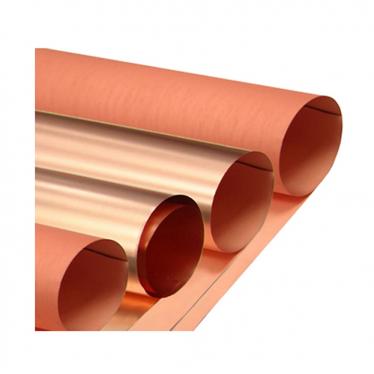
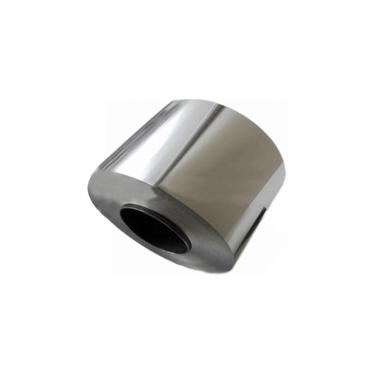
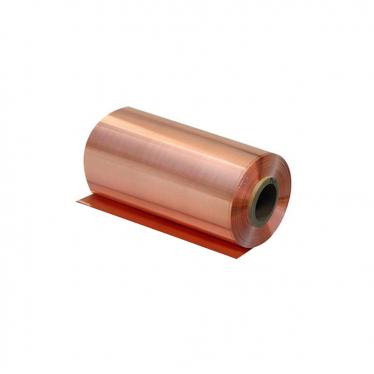
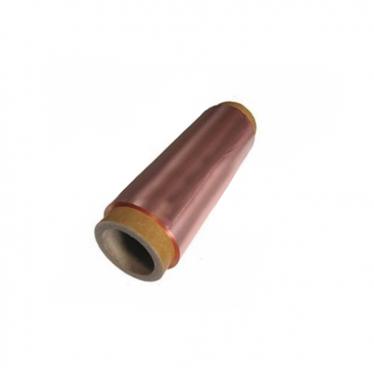
TOB-C08 8μm High-Purity Copper Foil for Lithium-Ion Battery Anode Current Collectors
Product Overview and Ideal Applications
Electrodeposited copper foil is the standard negative current collector in lithium‑ion batteries. It provides a conductive, mechanically stable substrate onto which the anode active material (typically graphite, hard carbon, or silicon‑graphite composite) is coated. The TOB‑C08 is an ultra‑thin 8 µm rolled or electrodeposited copper foil, supplied in a 300 mm width and 383 m length per roll. Its copper purity exceeds 99.9 %, and it is controlled for critical impurities—iron, bismuth, and lead—to levels that minimise the risk of electrochemical side reactions during cell operation.
At 8 µm, this foil is at the thin end of the commercially available range for battery applications. Reducing the copper foil thickness directly increases the gravimetric and volumetric energy density of the cell, because less inactive metal mass and volume is required. However, thinner foil also demands higher tensile strength and elongation to survive the web‑handling tension during slurry coating, drying, and calendaring without tearing or wrinkling. The TOB‑C08 meets this challenge with a room‑temperature tensile strength of ≥294 MPa and an elongation of 2.5 %. Even at the elevated temperatures experienced during electrode drying (e.g., 180 °C), the high‑temperature tensile strength remains ≥147 MPa, and the foil resists oxidation—a critical quality for aqueous‑based slurry processing where the foil may be heated in an air atmosphere.
Ideal for:
- Battery manufacturers seeking to increase energy density by using the thinnest commercially viable copper foil for high‑capacity anodes.
- R&D labs fabricating graphite or silicon‑graphite anodes for coin cells, single‑layer pouch cells, or small cylindrical cells.
- Pilot lines that require a consistent, defect‑free copper substrate to evaluate new anode formulations without adding variability from the current collector.
- Any team that has experienced foil tearing or wrinkling during roll‑to‑roll coating with thinner foils and needs a reliable, mechanically robust alternative.
Material Properties and Technical Specifications
The following table provides the actual measured data for the TOB‑C08 copper foil, as supplied with each roll. The purity limits are controlled to ensure consistent electrochemical behaviour.
Mode: TOB-C08
Width: 300mm, Lenght: 383m, Thicness: 8μm
|
Copper foil for battery anode substrate |
||
|
Item |
Data |
|
|
width (mm) |
300mm |
|
|
Thickness (um) |
8 |
|
|
areal density (g/m2) |
85-90 |
|
|
Purity(%) More than 99.9% |
Cu ≥99.9% |
|
|
Fe < 0.0010% |
||
|
Bi < 0.00020% |
||
|
Pb < 0.0005% |
||
|
Tensile strength (MPa) |
≥294 |
|
|
Normal elongation(%) |
2.5 |
|
|
High temperature Tensile strength180℃(MPa) |
≥147 |
|
|
High temperature elongation180℃(%) |
2 |
|
|
Anti oxidization(180℃ Heating 1h) |
No oxidation of points on the surface,The color does not change,Copper foil without fracture |
|
|
Surface roughness(um)Rz |
Drum side(um) |
Less than 0.3 |
|
Matte side(um) |
Less than 3.0 |
|
|
Surface tension(dyne/cm) |
Drum side |
62 |
|
Matte side |
62 |
|
|
Coating performance |
Cu foil with uniform tension on both sides, slurry coating uniformity |
|
Where Copper Foil Fits in Battery Electrode Manufacturing
Copper foil serves as the anode current collector, the electrically conductive substrate that carries the negative active material and transports electrons to and from the external circuit. In the electrode manufacturing chain, the foil enters at the coating stage, after slurry preparation. The anode slurry—a mixture of active material, conductive carbon, and binder in water or NMP—is applied onto the copper foil using a doctor blade, slot die, or comma coater. The coated foil then passes through drying ovens (where the copper foil experiences temperatures typically between 80 °C and 120 °C, and sometimes up to 180 °C for rapid drying) and is calendared before being slit into individual electrode strips.
The copper foil must satisfy several demanding requirements simultaneously:
- Mechanical robustness: Withstand web‑handling tension (often 10–30 N per 100 mm width) without necking or breaking, especially at splices and turnaround points.
- Thermal stability: Maintain adequate tensile strength at the peak drying temperature; oxidation at 180 °C must be avoided for aqueous slurries where the foil is exposed to air.
- Surface quality: Both the drum side (smooth) and matte side (slightly rougher) must possess consistent surface tension and roughness to ensure uniform slurry wetting and adhesion without the need for a primer coat.
- Purity: Impurities such as iron, bismuth, and lead must be limited to prevent dissolution into the electrolyte and subsequent plating on the anode, which can cause dendrite growth and short circuits.
Best practices for handling and coating 8 µm copper foil (from real manufacturing experience):
- Web tension control: Because the foil is very thin, use a closed‑loop tension control system with a load cell. Start with a line tension of 8–12 N for a 300 mm web and increase only if wrinkling or slack occurs. Excessive tension causes necking (permanent elongation) that changes the foil width and can lead to edge bead formation during coating.
- Splicing: When joining two rolls, use a thin, high‑temperature‑resistant splicing tape on the matte side. Do not overlap the foil, as the double thickness will cause calender pressure spikes and uneven compaction. A butt splice with tape on one side works well.
- Drying temperature profile: Although the foil can withstand 180 °C without oxidation, a gradual drying ramp (80 °C → 110 °C → 120 °C) reduces the risk of thermal shock and prevents binder skinning. The anti‑oxidation property ensures that even if a zone overshoots to 180 °C, the foil surface remains clean.
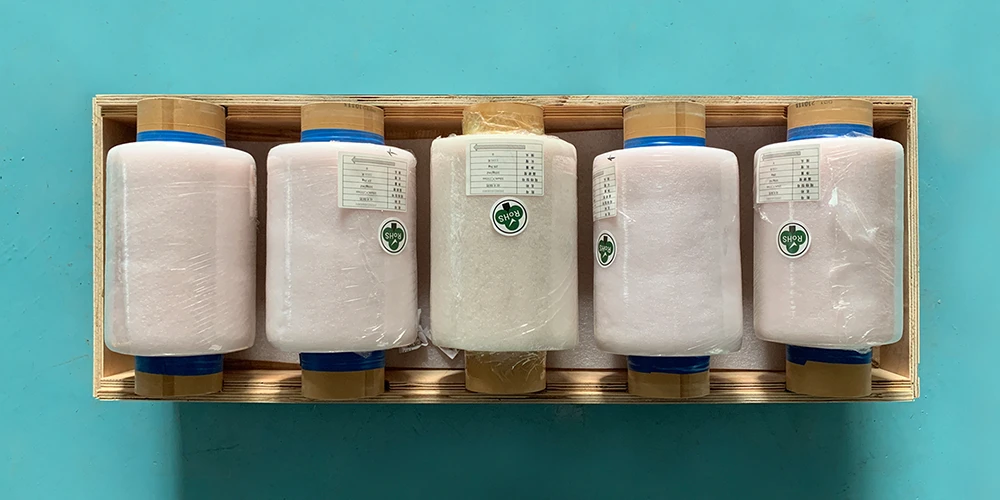
- Storage: Keep the roll in its original packaging until use. Copper oxidises slowly in ambient air, forming a thin tarnish layer that can increase contact resistance. If the foil is to be stored after slitting, keep it in a dry environment (<40 % RH) and coat it within a few days.
Common Processing Issues and Troubleshooting
| Problem | Possible Cause | Recommended Action |
| Foil wrinkling or telescoping during unwinding | Excessive web tension or misalignment of the unwinding stand. | Reduce tension to 8–12 N for 300 mm width. Check that the unwind shaft is parallel to the coating roll. Wrinkles that have already formed cannot be removed and will show as coating defects. |
| Foil tears or breaks at the splice or near the edge | Nicked edge from slitting, or improper splice technique. | Inspect the slitting quality: the edge should be clean, without micro‑tears. Use a butt splice with thin tape on one side only. If breaks recur, increase the tension monitoring frequency. |
| Discolouration after drying (golden‑brown hue) | Oxidation due to excessive residence time at high temperature or high humidity in the drying air. | Check that the dryer air intake is filtered and dry. The foil should resist oxidation up to 1 h at 180 °C; if discolouration occurs sooner, verify the actual oven temperature and that the foil meets the anti‑oxidation spec. |
| Poor slurry adhesion (slurry beads up or retracts) | Surface contamination (oil, silicone) or insufficient surface tension. | Clean the foil surface with anhydrous isopropyl alcohol if contamination is suspected. The specified surface tension of 62 dyne/cm should ensure wetting. If the problem persists, measure the actual surface tension of the foil batch. |
| Coating streaks parallel to the web direction | Agglomerates in the slurry or a particle lodged under the doctor blade. | Filter the slurry (e.g., 200 mesh) before coating. The ultra‑smooth drum side of the TOB‑C08 makes it easier to spot and diagnose streaking compared to rougher foils. |
Recommended Anode Coating Parameters (Starting Points for 8 µm Copper Foil)
These parameters are based on aqueous graphite anode formulations and assume a doctor‑blade or slot‑die coating system. Always optimise for your specific slurry and equipment.
| Parameter | Recommended Value / Range | Notes |
| Web tension (300 mm width) | 8–12 N | Use closed‑loop tension control; check load‑cell calibration before starting. |
| Coating speed | 0.5–5 m/min (lab scale) | Start slow; increase after confirming wrinkle‑free travel. |
| Drying profile | 80 °C (zone 1) → 110 °C (zone 2) → 120 °C (zone 3) | Each zone 1–2 m length; adjust to achieve <0.5 % residual moisture. |
| Target dry coating thickness | 50–100 µm per side | Corresponds to areal capacity 1.5–3 mAh/cm², depending on active material. |
| Calendaring pressure | Line force 20–50 N/mm | Calender rolls heated to 60–80 °C. Monitor anode thickness after calendaring. |
| Slurry solid content | 45–55 % (aqueous) | Viscosity 2000–6000 mPa·s for slot‑die; lower for doctor blade. |
| Binder system | CMC/SBR or PAA | Ensure the pH is compatible with copper (avoid strong acid below pH 3). |
Engineering FAQ — Using 8 µm Copper Foil for Battery Anodes
Q1: Can I use TOB‑C08 with a silicon‑graphite anode slurry that expands significantly during cycling?
Yes. The key requirement for silicon‑based anodes is that the copper foil must maintain electrical contact with the active material as the particles expand and contract. The TOB‑C08’s high purity and smooth surface provide good initial adhesion, but for high‑silicon contents (> 10 %), it is recommended to use a primer or a higher binder content to improve long‑term adhesion. The foil itself has sufficient strength to handle the volume changes without tearing. Also, note that the anode coating weight must be adjusted to accommodate the lower density of silicon compared to graphite.
Q2: How should I store an opened roll of copper foil to prevent oxidation?
Copper foil oxidises slowly in ambient air, forming a thin Cu₂O or CuO layer. After opening, reseal the roll tightly in its original plastic bag with a fresh desiccant pack if possible, and store in a dry cabinet (<40 % RH). If you plan to use the roll over several weeks, consider storing it in a nitrogen‑purged container. If the foil surface develops a visible tarnish, a brief dip in dilute citric acid by a deionised‑water rinse can remove the oxide, but this must be done with care and validated for your process.
Q3: Is the foil suitable for double‑side coating in a single pass?
Yes. The TOB‑C08 is specified as having uniform tension on both sides and a coating performance note of "slurry coating uniformity." The drum side is extremely smooth, so coating on that side may require a slightly lower slurry viscosity or a thinner wet film to avoid dewetting. The matte side, with its controlled roughness, may provide marginally better adhesion. Both sides can be coated simultaneously in a two‑side coating machine. Always conduct a small trial to verify uniform wetting on both sides before committing a full roll.
Q4: What is the expected weight of a full roll?
With a width of 300 mm, thickness of 8 µm, and length of 383 m, the total copper volume is approximately 300 mm × 0.008 mm × 383,000 mm = 919,200 mm³. Using the density of copper (8.96 g/cm³), the weight of copper is about 8.24 kg. Adding the core and packaging, the total roll weight is typically around 9–10 kg, which is conveniently handled by one person.
Q5: Can I solder or weld tabs directly to the TOB‑C08 foil?
Yes, ultrasonic welding and resistance welding both work well on 8 µm copper foil. Because the foil is thin, use a lower energy setting than you would for 10 µm foil to avoid burning through. The specified purity and controlled impurities also ensure a clean weld without voids. It is common to weld multiple foil layers together and then weld the tab to the stack; the foil’s high ductility (2.5 % elongation) helps it conform around the weld nugget without cracking.
You May Also Need
- TOB-CC-9-D Conductive Carbon Coated Copper Foil For Battery Anode
- TOB-AL-Foil-12 12μm Aluminum Foil For Lithium Battery Cathode
- More Battery Current Collectors Materials from TOB NEW ENERGY
Ready to build higher‑energy‑density anodes with 8 µm copper foil? Request a quote for TOB‑C08 in standard 300 mm width, or contact our engineers to discuss custom slitting widths and test samples.
tob.amy@tobmachine.com | +86 181 2071 5609
Previous:
Lithium Ion Battery Copper Foil 10umNext:
Battery Grade Aluminum Foil For Lithium Battery 14um
If you are interested in our products and want to know more details,please leave a message here,we will reply you as soon as we can.

 subscribe to us