Chinese
 français
 Deutsch
 italiano
 español
 português
 Nederlands
 日本語
日本語 한국의
한국의




- Home
- >
Battery Materials
- >
Battery Current Collectors
- >
Lithium Ion Battery Copper Foil 10um
Categories
Hot Products
Loading...
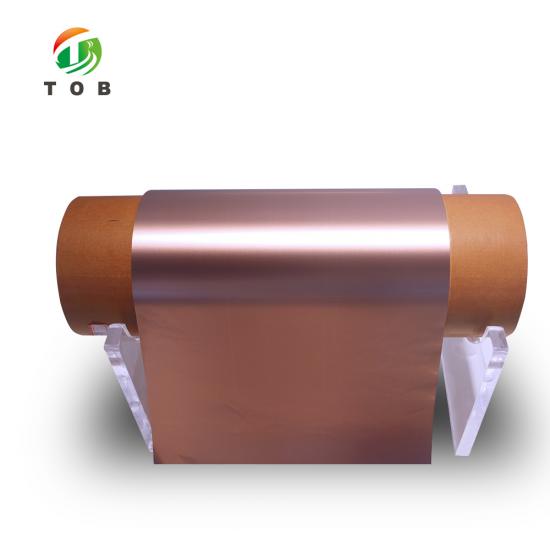
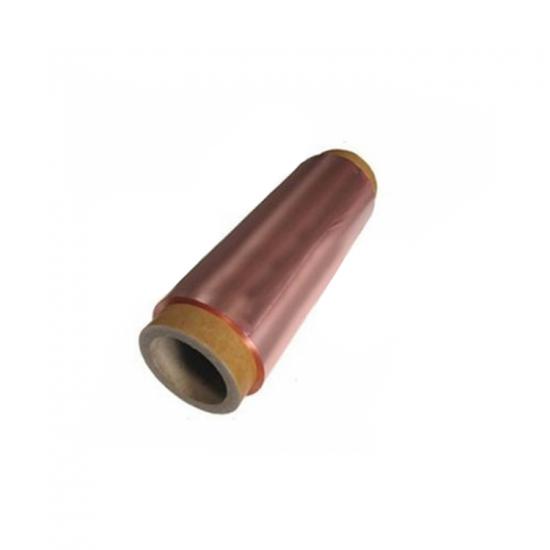
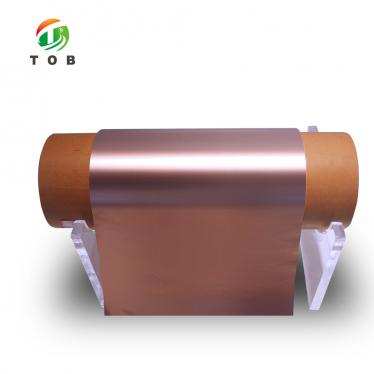
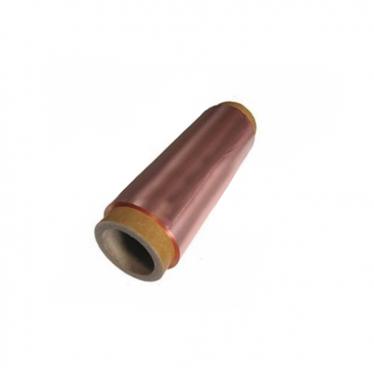
Lithium Ion Battery Copper Foil 10um
Brand:
TOB NEW ENERGYitem no.:
TOB-C10order(moq):
1Payment:
L/C,T/Tproduct origin:
chinashipping port:
XIAMEN
10μm Battery-Grade Copper Foil for Li-Ion Anodes | TOB-C10
Product Overview and Ideal Applications
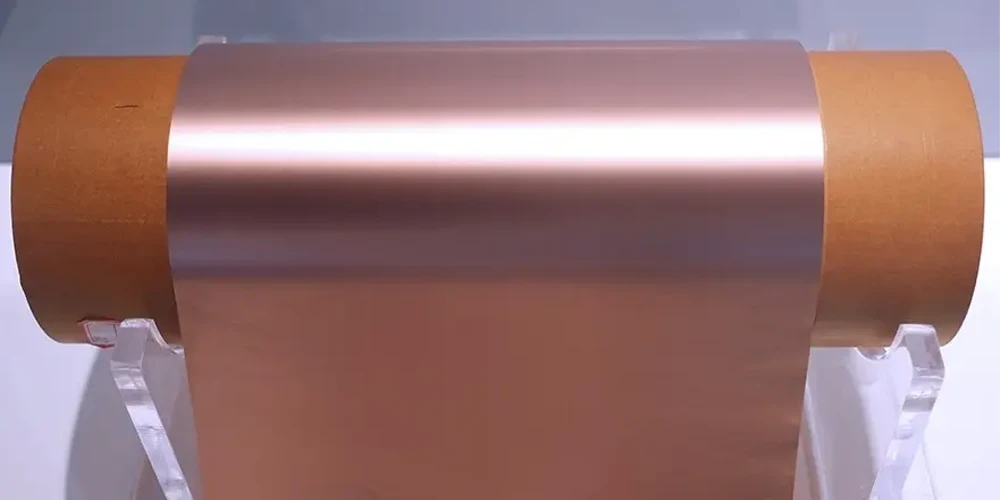
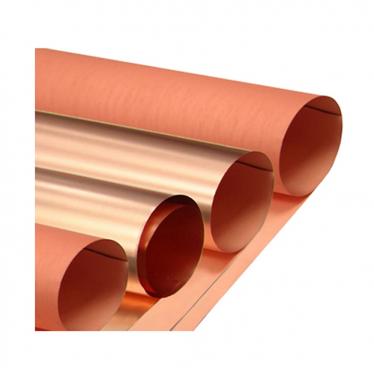
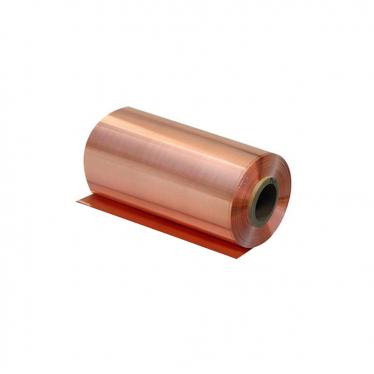
Electrodeposited copper foil is the standard negative-electrode current collector in the lithium‑ion battery industry. It provides a continuous conductive path from the active anode material to the external circuit while serving as a mechanically stable web that can be handled, coated, dried, and calendared at industrial speeds. TOB‑C10 is a 10 µm‑thick battery‑grade copper foil, supplied in 300 mm‑wide rolls each containing 383 m of foil. With a copper purity exceeding 99.9 % and tightly controlled levels of iron, bismuth, and lead, the foil is designed to minimise the risk of electrochemical side reactions that shorten cell life.
At 10 µm, TOB‑C10 sits in the most widely adopted thickness range for commercial lithium‑ion cells. Thinner foils (such as 8 µm) offer a weight‑saving advantage for ultra‑high‑energy‑density cells, but they require more careful tension control during web handling. TOB‑C10 balances the demand for high energy density with robust mechanical properties that simplify processing: its room‑temperature tensile strength reaches ≥ 400 MPa, and the normal elongation of 3.72 % allows the foil to pass through coating and drying lines without tearing or necking. Even at the elevated temperatures encountered in a drying oven (180 °C), the tensile strength remains ≥ 150 MPa, and the foil maintains its surface quality without oxidation or discolouration.
The two sides of the foil—the drum side (smooth) and the matte side (slightly textured)—are optimised for different aspects of electrode processing. The drum side exhibits an extremely low surface roughness (Rz < 0.3 µm) and a surface tension of 65 dyne/cm, providing a perfectly smooth plane for uniform slurry wetting. The matte side, with a controlled roughness (Rz < 3.5 µm) and the same 65 dyne/cm surface tension, offers enhanced mechanical adhesion for the anode coating. This dual‑surface design ensures that whichever side faces the slurry—single‑side coating uses the matte side; double‑side coating uses both—the coating uniformity is preserved.
Ideal for:
- Battery cell manufacturers and pilot lines producing graphite, hard‑carbon, or silicon‑composite anodes for cylindrical, pouch, or prismatic cells, where 10 µm foil is the standard choice.
- R&D groups scaling up anode formulations from single‑sheet coatings to continuous roll‑to‑roll processing, where the foil's mechanical integrity is essential to avoid web breaks.
- Quality‑control laboratories that require a consistent, well‑characterised current collector to eliminate substrate variability when evaluating new anode active materials.
- Any production line transitioning from 12 µm or thicker foil to a 10 µm gauge to gain energy density without the extreme handling challenges of an 8 µm foil.
Where Copper Foil Fits in Anode Electrode Manufacturing
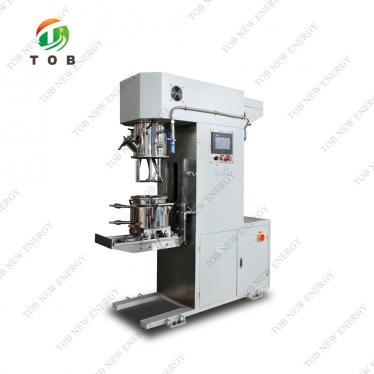
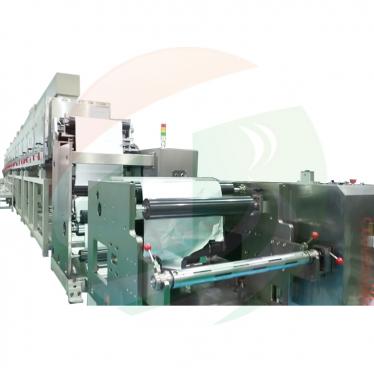
The TOB‑C10 copper foil enters the electrode production chain at the coating stage. After the anode slurry—a mixture of graphite or hard‑carbon active material, conductive carbon, and a water‑based or NMP‑based binder—has been prepared in a planetary mixer, it is deposited onto the copper foil using a doctor blade, slot die, or comma coater. The coated foil then passes through a drying oven and is calendared to the target electrode density before being slit into individual electrode sheets.
During this process, the copper foil must simultaneously:
- Carry the wet slurry without wrinkling: The high tensile strength of TOB‑C10 (≥ 400 MPa) allows the foil to be tensioned adequately on the unwind and rewind stations while the slurry is being applied. The uniform surface tension on both sides (65 dyne/cm) ensures that the aqueous or organic slurry spreads evenly and adheres without dewetting or beading.
- Survive the drying oven without degrading: The drying temperature for aqueous anode slurries often reaches 80–120 °C, and some rapid‑drying profiles can briefly expose the foil to 180 °C. TOB‑C10’s high‑temperature tensile strength (≥ 150 MPa) and its anti‑oxidation property (no discolouration after 1 h at 180 °C) guarantee that the foil retains its mechanical integrity and clean surface through the hottest zone of the oven.
- Support calendaring without cracking or stretching: After drying, the anode is compressed between calender rolls to reach the target porosity. The elongation of 3.72 % allows the foil to conform to the calender pressure without necking, and the controlled roughness on the matte side provides an interlocking surface that maintains electrode adhesion even after compression.
Because TOB‑C10 is produced to a consistent thickness, areal density, and surface finish across the entire 383 m roll, the coating weight and electrode porosity remain stable from the first metre to the last, helping to produce cells with uniform capacity and internal resistance.
Complete Technical Specifications
The following is the actual product data for TOB‑C10 copper foil.
| Item | Data |
| Width (mm) | 300 mm |
| Thickness (µm) | 10 |
| Areal Density (g/m²) | 85–90 |
| Purity (%) : More than 99.9% | Cu ≥ 99.9%, Fe < 0.0010%, Bi < 0.00020%, Pb < 0.0005% |
| Tensile Strength (MPa) | ≥ 400 |
| Normal Elongation (%) | 3.72 |
| High Temperature Tensile Strength 180 °C (MPa) | ≥ 150 |
| High Temperature Elongation 180 °C (%) | 2 |
| Anti‑Oxidation (180 °C Heating 1 h) | No oxidation of points on the surface, the color does not change, Copper foil without fracture |
| Drum Side Surface Roughness Rz (µm) | Less than 0.3 |
| Matte Side Surface Roughness Rz (µm) | Less than 3.5 |
| Drum Side Surface Tension (dyne/cm) | 65 |
| Matte Side Surface Tension (dyne/cm) | 65 |
| Coating Performance | Cu foil with uniform tension on both sides, slurry coating uniformity |
Note: The 85–90 g/m² areal density corresponds to a copper density close to the theoretical value of 8.96 g/cm³, confirming the full densification of the foil and the accuracy of the thickness measurement.
Comparison: TOB‑C10 vs. TOB‑C08 (8 µm Copper Foil)
For users who are evaluating whether to adopt a 10 µm or an 8 µm foil for their anode, the following points highlight the differences between the two TOB products.
| Parameter | TOB‑C10 (10 µm) | TOB‑C08 (8 µm) |
| Thickness | 10 µm | 8 µm |
| Areal density | 85–90 g/m² | 75–80 g/m² (or 85–90 for standard) |
| Tensile strength (RT) | ≥ 400 MPa | ≥ 294 MPa |
| High‑temperature tensile (180 °C) | ≥ 150 MPa | ≥ 147 MPa |
| Elongation (RT) | 3.72 % | 2.5 % |
| Weight saving (vs. 12 µm) | ~17 % thinner | ~33 % thinner |
| Ease of web handling | Easier (higher strength, higher elongation) | More demanding (requires tighter tension control) |
| Typical application | Standard high‑energy‑density cells | Maximum energy density, weight‑critical cells |
Which foil should you choose?
TOB‑C10 is the standard choice for most commercial cells because it provides a strong enough web to run at high speed with a safety margin against breaks. TOB‑C08 pushes the energy density higher but requires a coating line with sensitive tension control and a stable drying environment. Both foils are available from TOB, and the selection can be guided by a trial on the specific coating equipment.
Coating and Handling Recommendations
The following practical recommendations are based on experience with 10 µm copper foil and are applicable to TOB‑C10.
- Web tension: For a 300 mm‑wide web, start with a tension of 10–15 N and adjust upward only if wrinkling is observed. TOB‑C10’s higher tensile strength compared to 8 µm foils provides some headroom, but the minimum tension that yields a flat, wrinkle‑free foil is always the best practice.
- Splicing: Use a butt‑splice method with a thin, heat‑resistant tape on one side of the foil. Avoid overlapping splices, as the double thickness will create a hard spot in the calender that can mark the electrode.
- Drying temperature: Although TOB‑C10 withstands 180 °C, a gradual ramp (80 °C → 100 °C → 120 °C) improves the electrode microstructure and reduces the risk of binder migration. The anti‑oxidation property provides peace of mind if a zone controller momentarily overshoots.
- Storage: Keep the roll in its sealed original packaging until use. If the roll is partially used, reseal it tightly with a desiccant bag and store in a dry cabinet (<40 % RH). The foil surface will tarnish slowly in ambient air; prompt use or re‑sealing preserves the original surface tension.
Engineering FAQ
Q1: Can TOB‑C10 be used with aqueous anode slurries that may be slightly alkaline or acidic?
Yes, provided the slurry pH is within the typical range for CMC‑SBR or PAA binder systems (approximately pH 3–9). The copper foil is resistant to moderate aqueous environments, but prolonged exposure to highly acidic or highly alkaline slurries should be avoided. The high purity and clean surface ensure that no pre‑existing corrosion sites are present.
Q2: Is the 85–90 g/m² areal density normal for a 10 µm foil?
Yes. For a fully dense copper foil of 10 µm, the theoretical areal density is approximately 89.6 g/m² (10 µm × 8.96 g/cm³). The 85–90 g/m² specification covers minor variations in foil density and thickness measurement. This confirms that the foil is manufactured to a high degree of densification, without significant porosity.
Q3: How should I weld a nickel tab onto TOB‑C10 foil for cell assembly?
Ultrasonic welding or resistance spot welding can both be used. The clean, oxidation‑free surface of TOB‑C10 provides consistent electrical contact during welding. Due to the foil's 10 µm thickness, use a lower energy setting than for 12 µm or thicker foil. For ultrasonic welding, a short burst with moderate amplitude typically yields a strong joint. Always verify the weld quality with a peel test.
Q4: What is the expected weight of a full roll of TOB‑C10?
A 300 mm‑wide, 10 µm‑thick, 383 m‑long foil has a volume of approximately 1,149,000 mm³. The mass of copper is about 10.3 kg (using a density of 8.96 g/cm³). Including the core and packaging, the total roll weight is roughly 11–12 kg, which can be handled manually by one person.
Ready to produce high‑quality, uniform anode electrodes on a robust and reliable 10 µm copper foil? Request a quotation for TOB‑C10 in standard 300 mm width, or ask our engineers for a sample roll to test on your production line.
tob.amy@tobmachine.com | +86 181 2071 5609
You May Also Need
- PET Composite Copper Foil (Cu-PET-Cu) - A lightweight three‑layer composite current collector with a PET insulating core between two copper films. Reduces overall foil weight while adding intrinsic safety—when a cell short‑circuits, the PET layer acts as a fuse. An alternative to solid copper foil when maximum gravimetric energy density and pack safety are the primary design drivers.
- Lithium Ion Battery Cu Foil Roll 8µm - An 8 µm‑thick copper foil for applications where every gram of inactive material matters. Offers a further weight reduction versus TOB‑C10, at the cost of requiring tighter tension control during web handling and a lower absolute tensile strength. Suitable for ultra‑high‑energy‑density cells prepared on well‑controlled coating lines.
- Three‑Dimensional Porous Copper Foil for Lithium Ion Battery - A porous copper foil with a three‑dimensional surface structure that enhances mechanical interlocking with the anode active material. Particularly beneficial for silicon‑based anodes that undergo large volume changes; the porous architecture accommodates expansion and improves long‑term cycling stability compared to flat‑surface foils.
If you are interested in our products and want to know more details,please leave a message here,we will reply you as soon as we can.

 subscribe to us