Chinese
 français
 Deutsch
 italiano
 español
 português
 Nederlands
 日本語
日本語 한국의
한국의




Tobey Chen
- Home
- >
Company
- >
Experts
- >
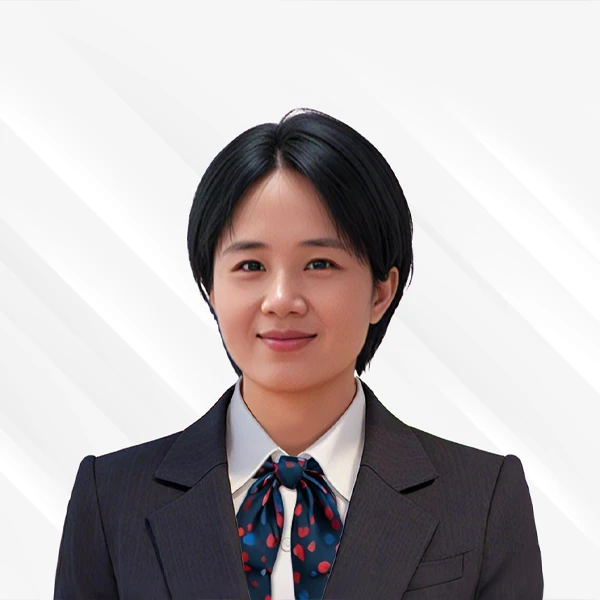
Tobey Chen
At a Glance
Dry Electrode Process Chain — three patents, three consecutive stages
Dry electrode processing removes the solvent, drying oven and solvent-recovery system from electrode manufacturing. The engineering difficulty is not any single step — it is making three consecutive steps hold together at production speed. The three patents below, held jointly by Tobey Chen and Dany Huang as individuals, address exactly that sequence. Each links to its official record.
- 1 Stage 1 — Raw-material feeding & mixing uniformity CN219193253U Material Feeding Structure for Dry Electrode Film Production, with Uniform Raw-Material Mixing View on Google Patents →
- 2 Stage 2 — Self-supporting film roll forming CN218887233U Dry-Process Electrode Film Roll Forming Machine for Lithium Batteries View on Google Patents →
- 3 Stage 3 — Lamination & stretching CN218887274U Dry Electrode Film Lamination and Stretching Mechanism for Lithium Batteries View on Google Patents →
Coverage of a continuous process, not three isolated devices
A dry electrode line fails at the handoffs. Powder that mixes uniformly in the feeder can still segregate before the roll gap; a film that forms correctly can still tear during lamination. Filing across all three stages reflects work on the transitions between them, which is where solvent-free electrode processes are hardest to stabilise — and it is the engineering basis for the dry electrode equipment TOB builds today.
A fourth patent completes the route at line level — CN118315678A, covering dry-process film forming and substrate lamination as an integrated production line. That one is filed by Dany Huang individually and is not among the three held jointly, so it is listed on the founder's page rather than here.
Patent Co-Inventorship
Beyond the three patents held in her own name, Tobey Chen is a named co-inventor on the patents held by the company itself. The distribution below is drawn from the same CNIPA records published on the founder's patent portfolio page.
| Count | Assignee | Her role |
|---|---|---|
| 16 patents | XIAMEN TOB NEW ENERGY TECHNOLOGY Co., Ltd. (registered on CNIPA as 厦门特普特新能源科技有限公司) | Named co-inventor on all 16, together with Dany Huang |
| 3 patents | Held jointly by Tobey Chen and Dany Huang as individuals | Joint holder and co-inventor |
Co-inventorship means she is named on the patent record as having contributed to the invention. It does not mean sole authorship — every patent listed here also names Dany Huang, and the 16 company-held patents are owned by the company, not by any individual. Counts are current as of September 2026; further applications are pending.
Every patent number on this page can be checked on Google Patents or the CNIPA public register. Nothing here relies on us being believed.
Central South University — Industry Graduate Advisor
Appointed 2026, Materials and Chemical Engineering program.
What the appointment covers
- ▸Co-supervision of graduate students in the Materials and Chemical Engineering program
- ▸Bringing manufacturability constraints — coating speed, calendered density, yield at scale — into research question design
- ▸Extension of the existing TOB–CSU joint laboratory on battery materials and manufacturable processes
Why a university appoints an industry advisor
Central South University is one of China's strongest institutions in cathode materials, electrolyte chemistry and electrochemical characterisation. The gap it addresses through industry advisors is the translation gap: a cathode composition that cycles well in a coin cell is a different question from one that can be coated at line speed, calendered to target density, and assembled at acceptable yield. Appointing someone who has commissioned production lines puts that constraint in the room during the research design stage.
Career
-
2026 — Central South University
Appointed industry graduate advisor, Materials and Chemical Engineering program.
-
2012 – present — XIAMEN TOB NEW ENERGY TECHNOLOGY Co., Ltd.
Co-founded the company with Dany Huang. Senior Engineer. Named co-inventor on all 16 company-held patents and joint holder of three further patents covering consecutive stages of dry electrode film production.
Only positions that can be verified against public records are listed. The company's engineering roots date to 2002, but this page does not assign her a role in that period without a citable source.
Technical Focus
- ▸Dry electrode film production — solvent-free electrode processing across feeding, forming and lamination
- ▸Raw-material feeding and mixing uniformity for dry powder systems
- ▸Self-supporting electrode film roll forming
- ▸Film lamination and stretching mechanism design
- ▸Battery equipment structural design and patent development
- ▸Industry–academia collaboration and graduate-level technical mentoring
Frequently Asked Questions
What are Tobey Chen’s main technical directions?
Dry electrode film production — solvent-free electrode processing across the three consecutive stages of feeding, forming and lamination. Her patent work addresses raw-material feeding and powder mixing uniformity, self-supporting electrode film roll forming, and film lamination and stretching mechanism design. Alongside this she works on battery equipment structural design and patent development, and since 2026 on industry–academia collaboration as a graduate advisor at Central South University.
What problem does the three-patent sequence solve?
In dry electrode manufacturing the engineering difficulty is not any single step — it is making three consecutive steps hold together at production speed. Powder that is fed unevenly produces a film with density variation; a film that forms but cannot be stretched without tearing cannot be laminated to the current collector. The three patents (CN219193253U, CN218887233U, CN218887274U) cover that sequence as a continuous process rather than three isolated devices, which is what allows the stages to be matched to one another at line speed.
What does each of her three dry electrode patents cover?
Stage 1 — CN219193253U, a material feeding structure for dry electrode film production with uniform raw-material mixing. Stage 2 — CN218887233U, a dry-process electrode film roll forming machine for lithium batteries, which produces the self-supporting film. Stage 3 — CN218887274U, a dry electrode film lamination and stretching mechanism for lithium batteries. All three are held jointly with Dany Huang as individuals, and each links to its official record on Google Patents.
What is dry electrode processing, and why does it change the production line?
It is a method of manufacturing battery electrodes without solvent. Removing the solvent also removes the drying oven and the solvent-recovery system from the line, cutting energy consumption and floor space. The trade-off is that the powder must be fed, formed and laminated into a self-supporting film without the forgiveness that a wet slurry provides — which is precisely the process sequence her three patents address.
How many patents name Tobey Chen as an inventor?
19 in total as of September 2026, in two distinct categories. She is a named co-inventor on all 16 patents held by XIAMEN TOB NEW ENERGY TECHNOLOGY Co., Ltd. (registered on CNIPA as 厦门特普特新能源科技有限公司), together with Dany Huang. She additionally holds 3 patents jointly with Dany Huang as individuals. The 16 company patents are owned by the company, not by any individual; further applications are pending.
What does her Central South University appointment involve?
Central South University appointed her an industry graduate advisor in its Materials and Chemical Engineering program in 2026. The role covers co-supervision of graduate students and brings manufacturability constraints — coating speed, calendered density, yield at scale — into research question design. It extends the existing TOB–CSU joint laboratory on battery materials and manufacturable processes.
Why does a university appoint an industry advisor for materials research?
To close the translation gap. A cathode composition that cycles well in a coin cell is a different question from one that can be coated at line speed, calendered to target density, and assembled at acceptable yield. Central South University is one of China’s strongest institutions in cathode materials, electrolyte chemistry and electrochemical characterisation; appointing someone who has commissioned production lines puts the manufacturability constraint in the room during research design rather than after it.
For technical questions on solvent-free electrode processing or line configuration, the engineering team is the right starting point.
Contact TOB NEW ENERGY → subscribe to us