Chinese
 français
 Deutsch
 italiano
 español
 português
 Nederlands
 日本語
日本語 한국의
한국의




- Home
- >
Solid state Battery Equipment
- >
Warm Isostatic Press Machine
Categories
Hot Products
Loading...
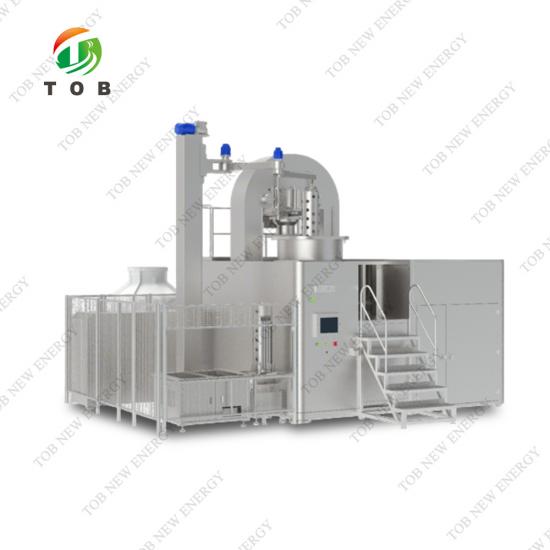
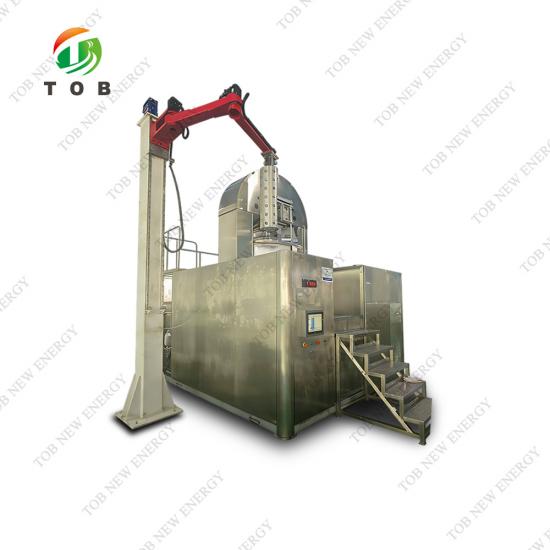
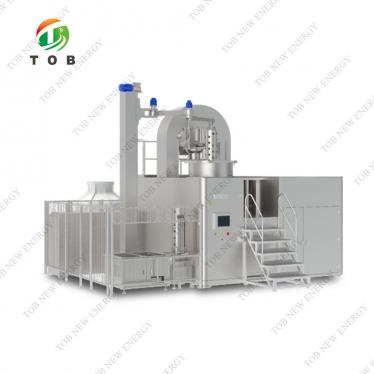
Warm Isostatic Press Machine
Brand:
TOB NEW ENERGYitem no.:
TOB-WIPorder(moq):
1setPayment:
L/C,T/Tproduct origin:
Chinashipping port:
XIAMEN
Warm Isostatic Press Machine for Solid-State Battery Processing
SPECIFICATIONS
This warm isostatic press is widely applied in solid-state battery research and pilot-scale manufacturing, where electrolyte densification and interface stability are critical process parameters.
Overview
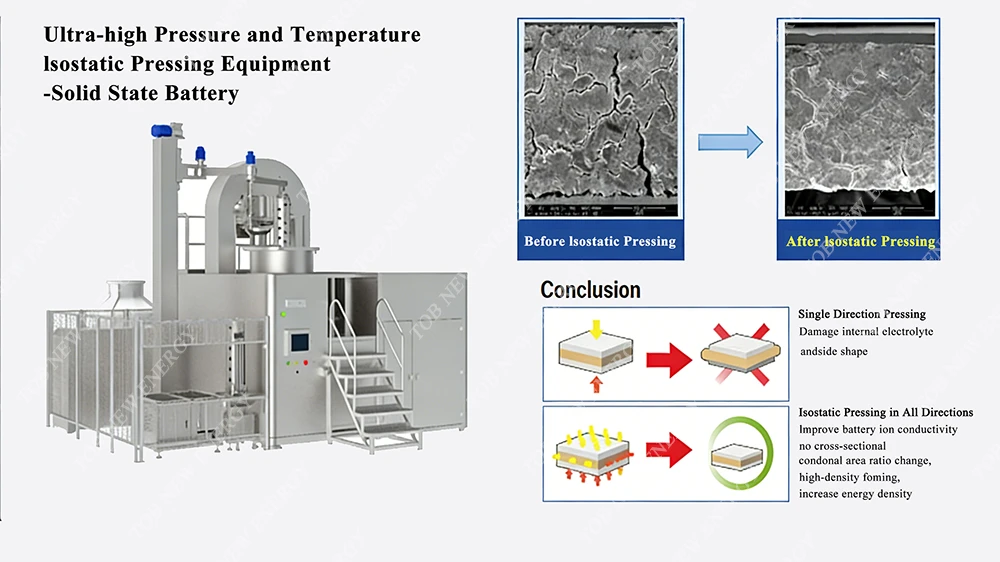
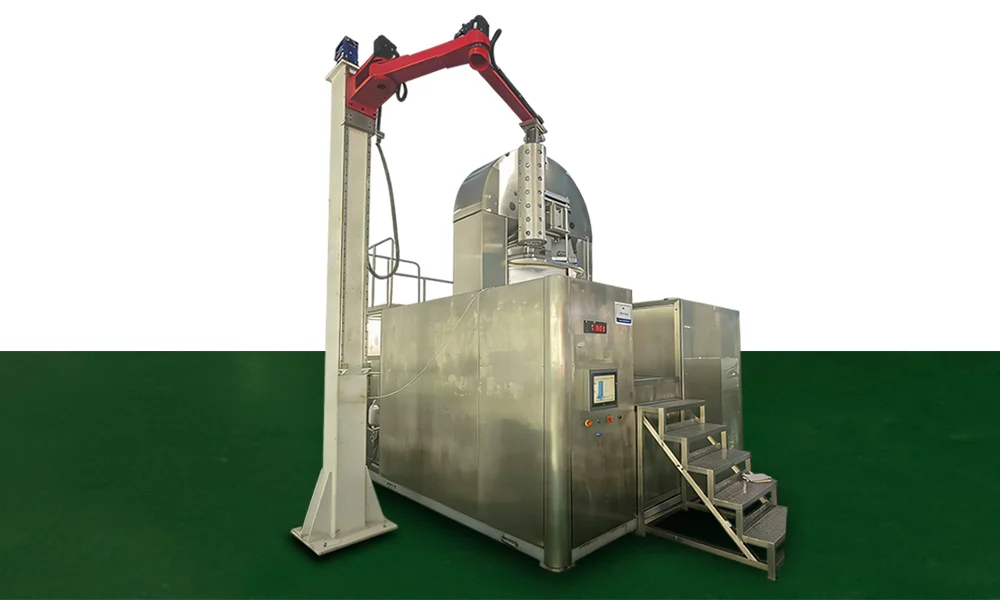
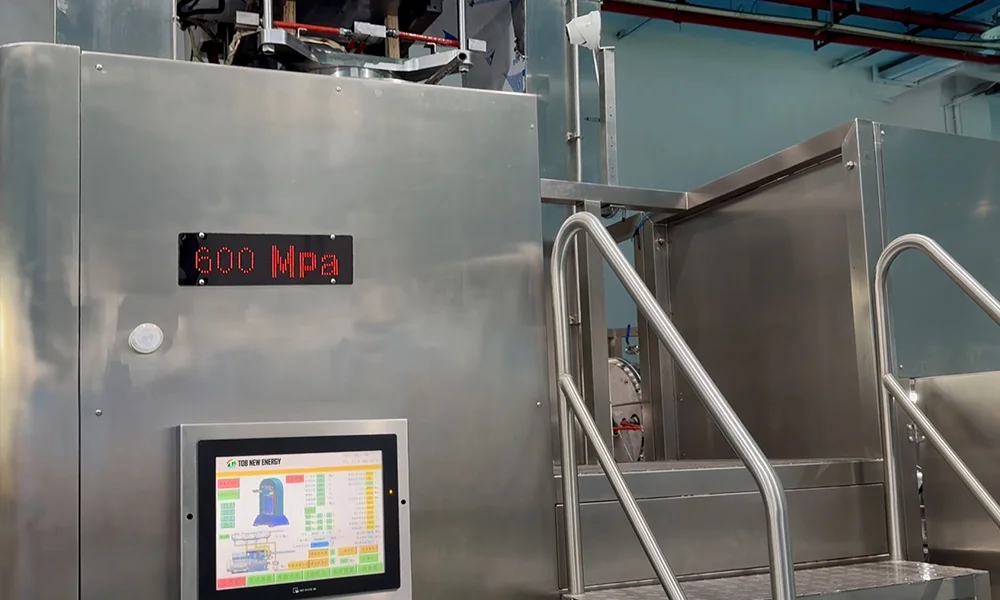
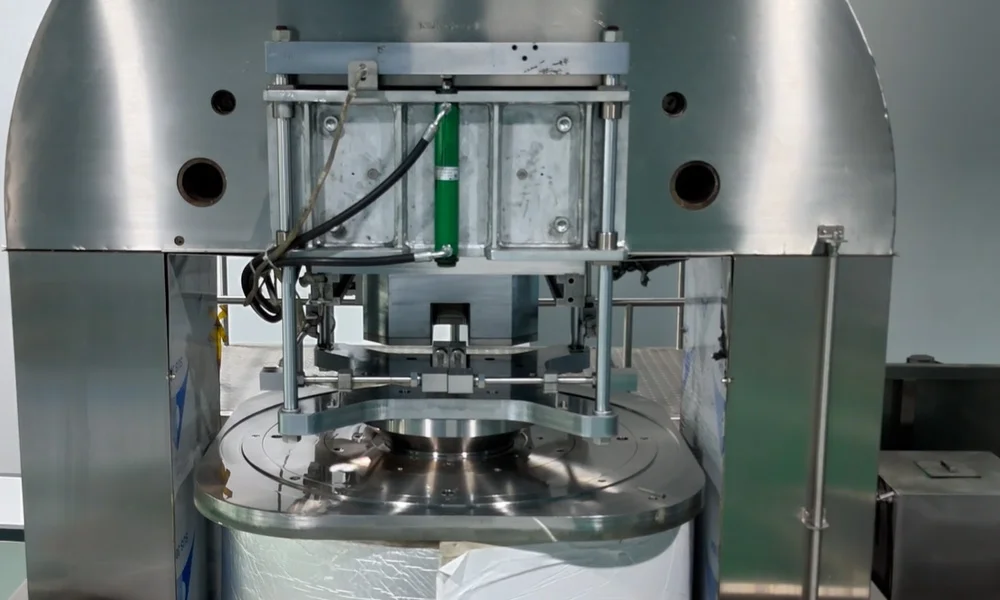
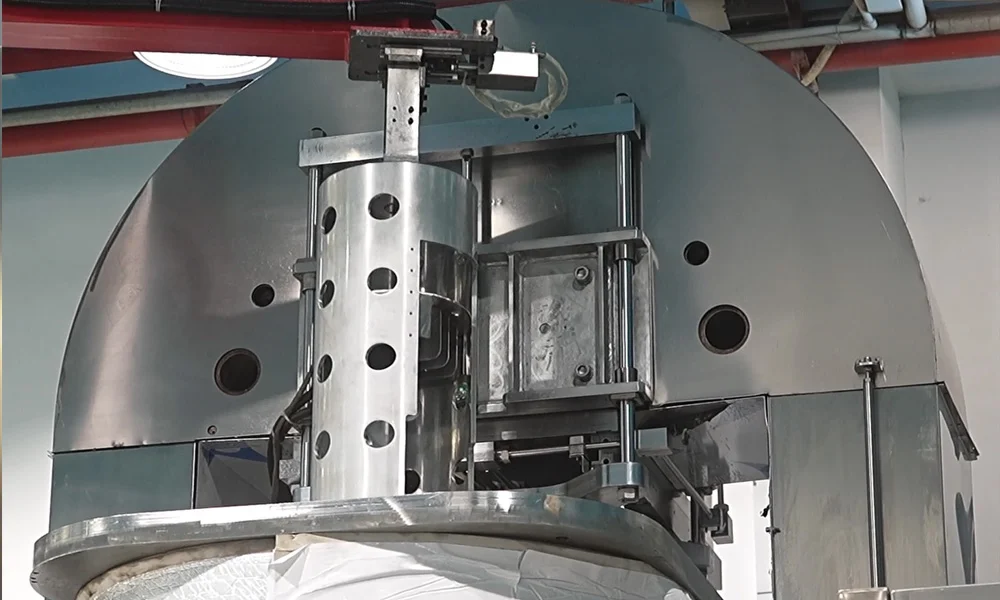
The Warm Isostatic Press (WIP) Machine is a precision pressure–temperature forming system designed for advanced material densification under controlled warm conditions. Operating at pressures up to 600–660 MPa and temperatures up to 150 °C, this equipment provides uniform, omnidirectional compaction that cannot be achieved with conventional uniaxial or cold isostatic pressing methods.
In solid-state battery (SSB) research and pilot-scale production, WIP plays a critical role in improving electrolyte–electrode contact, reducing internal porosity, and stabilizing interfacial structures. The system is engineered for laboratories, pilot lines, and industrial R&D environments that require repeatable, traceable, and scalable forming processes.
Role in Solid-State Battery Development
Solid-state batteries impose stringent requirements on material density, interfacial integrity, and structural homogeneity. The Warm Isostatic Press Machine directly addresses these challenges:
● Electrolyte Densification: Warm isostatic pressure enhances particle rearrangement and plastic flow in ceramic and polymer-based solid electrolytes, improving ionic pathways and reducing voids.
● Interface Optimization: Controlled temperature and pressure promote intimate contact between electrolyte layers and electrodes, reducing interfacial resistance.
● Process Repeatability: Uniform pressure distribution eliminates density gradients, enabling consistent experimental results across batches.
● Scale-Up Readiness: Cell-size compatibility and programmable control logic allow direct process transfer from laboratory research to pilot production.
This makes the WIP system a key enabling tool for translating solid-state battery concepts into manufacturable cell architectures.
Key Technical Specifications
|
Item |
Parameters |
|
Working chamber diameter |
Φ300mm |
|
Effective depth |
1000mm |
|
Maximum design pressure |
660MPa |
|
Maximum working pressure |
660MPa |
|
Maximum operating temperature |
150℃ |
|
Maximum temperature difference measured in the medium under steady-state conditions |
±3℃ |
|
Hydraulic system power medium |
Hydraulic oil |
|
Boosted flow rate |
≥3L/min |
|
Pressure stability (at steady state) |
within±2% |
|
Boost time (0-600 MPa) |
≤5min |
|
Working medium |
Thermal oil |
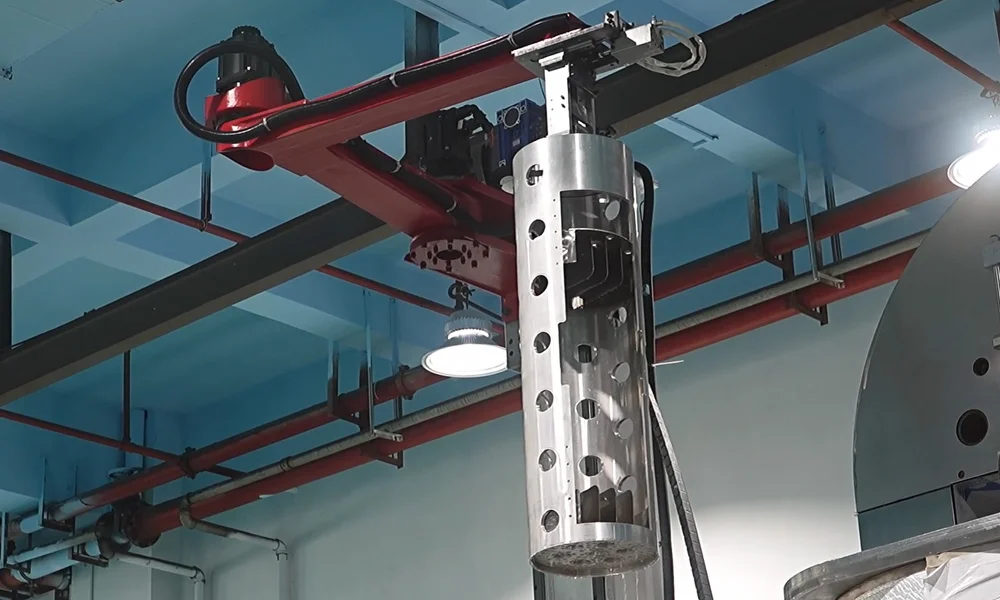
Maximum cell dimensions (L * W * H):≤(L: 950 mm * W: 270 mm * H: 30 mm)
Technical Principles
● Isostatic Pressurization
Pressure is applied equally from all directions through a liquid pressure medium. This avoids the non-uniform stress distribution typical of uniaxial pressing and ensures homogeneous densification throughout the workpiece.
● Warm Forming Conditions
Compared with Cold Isostatic Pressing (CIP), warm operation improves material plasticity and reduces elastic recovery after depressurization. This is particularly beneficial for laminated structures, green sheets, and composite electrolyte systems.
● High-Pressure Capability
Working pressures up to several hundred megapascals enable high green density, which is critical for downstream sintering stability and mechanical integrity.
● Automated Process Control
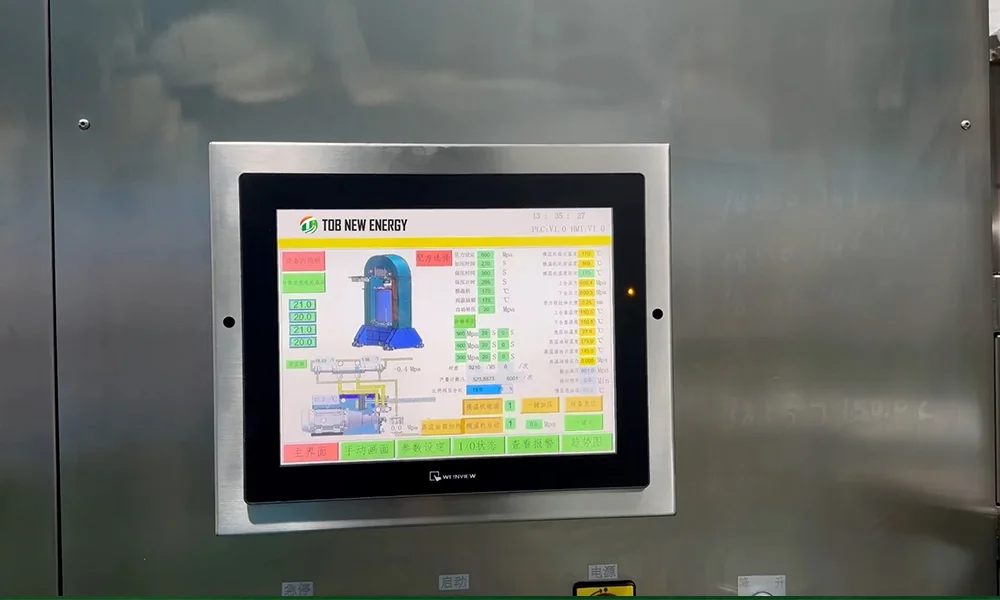
A PLC-based control system with touch-screen interface supports multi-stage recipes, including preheating, pressurization, dwell, and controlled pressure release. All parameters are programmable and traceable.
Engineering Design and Reliability
The system is designed with an emphasis on long-term operational stability and safety:
● High-strength pressure vessel engineered according to industrial pressure equipment standards.
● Multi-layer sealing structure suitable for repeated thermal–pressure cycling.
● Integrated safety interlocks for pressure, temperature, and hydraulic system monitoring.
● Modular design for ease of maintenance and future upgrades.
All critical components are selected based on fatigue life, chemical compatibility with working media, and serviceability.
Customization and Integration Capability
Recognizing that solid-state battery processes vary widely, the Warm Isostatic Press Machine can be configured to specific project requirements:
● Customized chamber dimensions and pressure ratings.
● Application-specific temperature control profiles.
● Integration with upstream lamination or downstream sintering workflows.
● Data logging and interface options for laboratory or MES environments.
This flexibility supports both exploratory research and defined pilot-line processes.
Typical Applications
● Solid-state lithium battery electrolyte densification.
● Multilayer ceramic and composite lamination.
● Polymer–ceramic hybrid material forming.
● Advanced energy material research and pilot production.
Contact and Technical Consultation
For detailed process evaluation, sample feasibility testing, or customized configuration discussions, please contact our engineering team with your application requirements.
Product Display
 |
 |
 |
 |
 |
 |
Get more solid-state battery equipment
Email : tob.amy@tobmachine.com
Phone number :+86 181 2071 5609
Previous:
Solid Electrolyte Transfer Lamination Machine for ElectrodeNext:
Warm Isostatic Press for Solid-State Battery Manufacturing
If you are interested in our products and want to know more details,please leave a message here,we will reply you as soon as we can.


 subscribe to us