Chinese
 français
 Deutsch
 italiano
 español
 português
 Nederlands
 日本語
日本語 한국의
한국의




- Home
- >
- Cylindrical Cell Assembly Machine
- >
- Cylindrical Cell Winding Machine
- >
- Automatic Cylindrical Cell Winding Machine for 21700 and 26650 | TOB-3270Y-26
Categories
Hot Products
Loading...
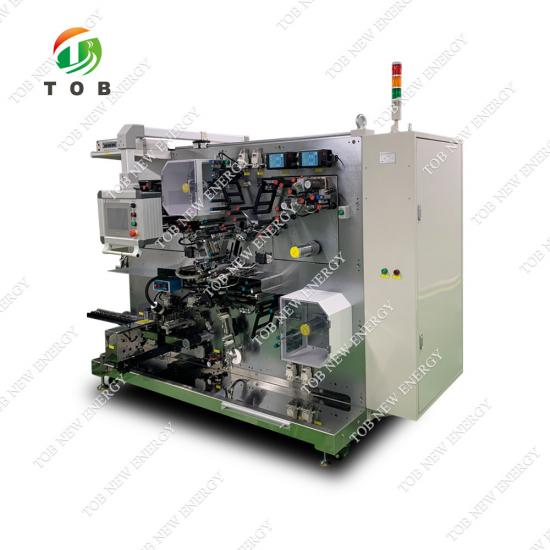
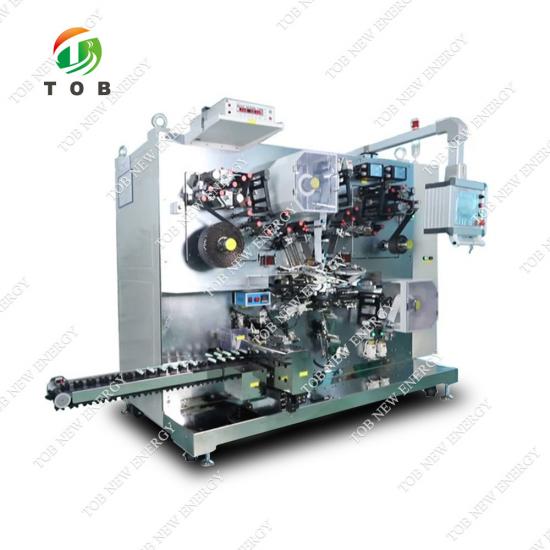
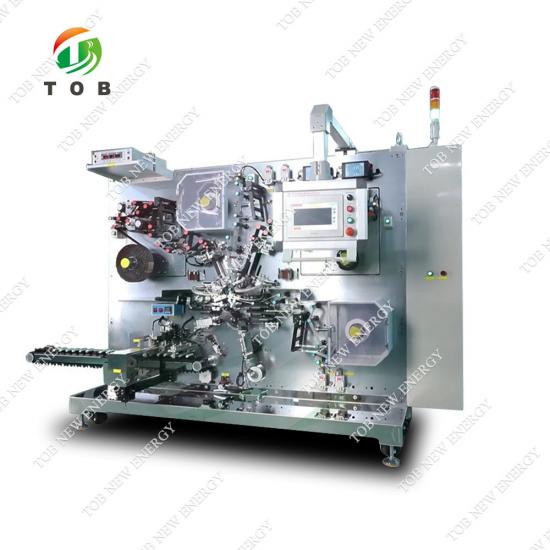
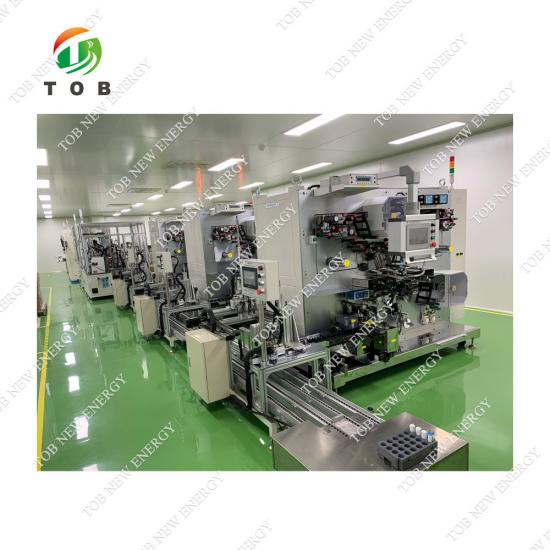
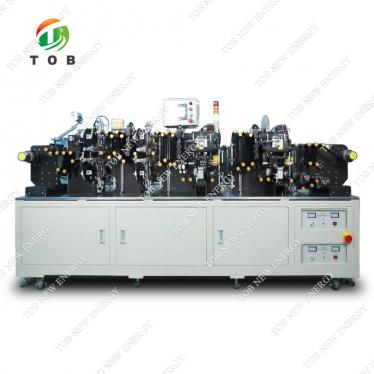
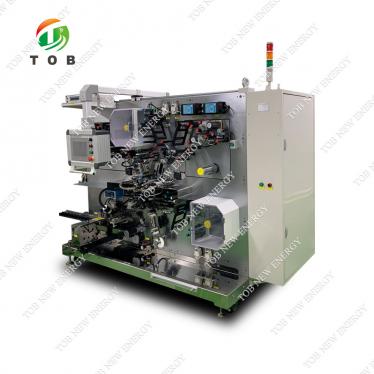
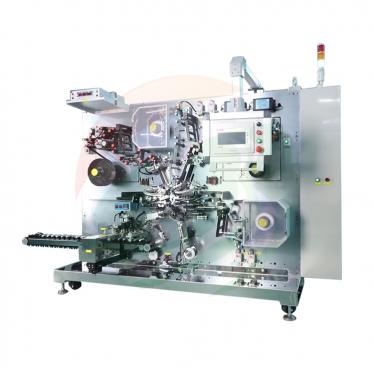
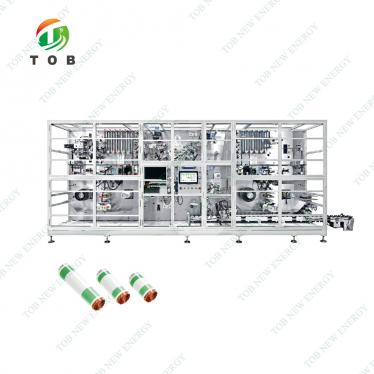
Automatic Cylindrical Cell Winding Machine for 21700 and 26650 | TOB-3270Y-26
Brand:
TOB NEW ENERGYitem no.:
TOB-3270Y-26order(moq):
1Payment:
L/C,T/Tproduct origin:
Chinashipping port:
xiamen
TOB-3270Y-26 Automatic Cylindrical Battery Cell Winding Machine for 21700 and 26650 Production
Product Overview and Ideal Applications
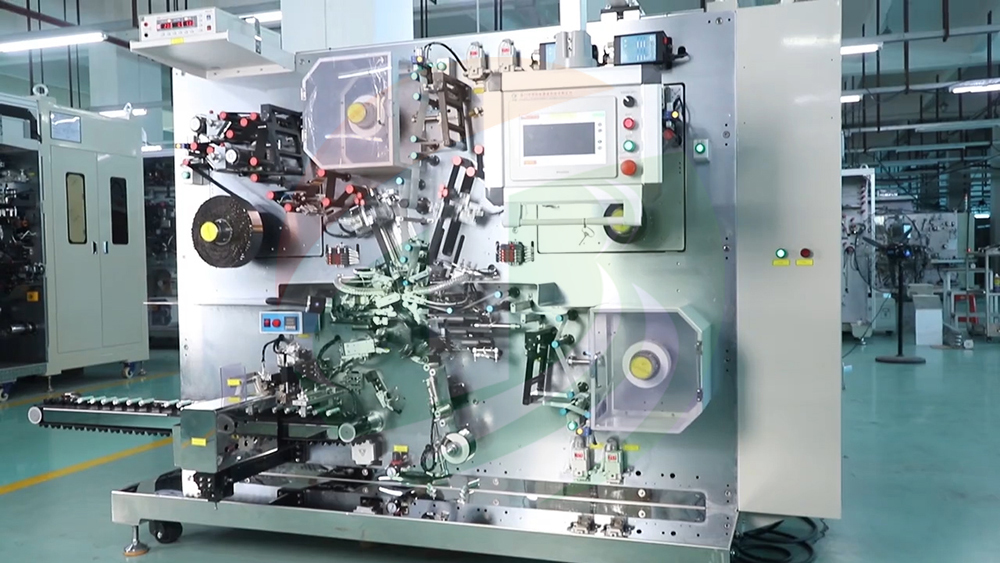
A cylindrical cell winding machine takes continuous strips of cathode electrode, anode electrode, and separator, and winds them under controlled tension into a precise jellyroll—the core of every cylindrical lithium‑ion battery. The TOB‑3270Y‑26 is a fully automatic winder purpose‑built for 21700 and 26650 cell formats, handling electrode widths from 30 mm to 68 mm and producing finished cells with an outer diameter range of φ18–φ21 mm. It performs the complete winding sequence—active unwinding, tension control, dust removal, edge‑alignment correction, winding, termination‑tape application, tab‑stamping, automatic cutting, short‑circuit detection, and sorting of good vs. defective cells—in a single, continuous, operator‑attended cycle.
The machine’s core winding mechanism uses a servo‑driven rotary table with multiple stations, each carrying a winding needle set. The dual‑half‑needle, single‑side extraction design allows the needle to be withdrawn from the finished jellyroll without disturbing the tightly wound layers, which is one of the key factors enabling high winding speed and low rejection rates. Needle changeover—required when switching between cell formats—takes under five minutes, minimizing downtime in a production environment.
Ideal for:
- Lithium‑ion battery manufacturers producing 21700 or 26650 cylindrical cells for electric vehicles, energy storage systems, power tools, and e‑mobility.
- Pilot lines scaling up from semi‑automatic winding to a fully automated, traceable winding station with integrated defect sorting.
- Contract manufacturers who require rapid format changeover (outside diameter, width) without lengthy mechanical re‑tooling.
- Any production line that currently struggles with inconsistent jellyroll alignment, separator wrinkling, or high rates of short‑circuit rejects from manual or semi‑automatic winding.
Where This Machine Fits in Cylindrical Cell Manufacturing
The TOB‑3270Y‑26 operates at the cell assembly stage, positioned after electrode coating, calendaring, and slitting, and before electrolyte filling and crimping. The process flow in a typical cylindrical cell production line is:
● Electrode preparation – Cathode and anode sheets are coated, dried, calendared, and slit to the required width. Tabs are welded at predetermined positions along the strip.
● Winding (the TOB‑3270Y‑26’s role) – The slit electrode strips and separator are fed into the winder. The machine winds them into a precise jellyroll, applies termination tape, stamps the tab positions if required, and performs an in‑line short‑circuit test.
● Insertion and tab welding – The jellyroll is inserted into the cylindrical can. The cathode tab is welded to the cap or the can, and the anode tab is welded to the can bottom or a current‑interrupt device.
● Electrolyte filling and sealing – The can is filled with electrolyte in a vacuum or inert‑atmosphere environment, and the cap is crimped or laser‑welded.
● Formation and aging – The sealed cell undergoes initial charge‑discharge cycles to form the SEI and stabilise capacity.
The winding step is uniquely demanding because it combines high‑speed mechanical motion with micron‑level alignment requirements. A misaligned jellyroll—where the cathode and anode are not perfectly centred relative to the separator—can lead to internal short circuits, reduced capacity, or accelerated capacity fade. The TOB‑3270Y‑26’s alignment accuracy of ±0.3 mm for both the separator and the electrode edges directly addresses this risk.
Material flow and handling:
● Cathode and anode electrode rolls (inner diameter φ76.2 mm, outer diameter up to φ400 mm) are loaded onto active unwinding spindles. Each spindle is equipped with a tension control system using proportional valves, allowing tension to be adjusted in segments (e.g., lower tension during initial winding, higher tension during final layers).
● Separator rolls (inner diameter φ76.2 mm, outer diameter up to φ300 mm, thickness 0.015–0.030 mm) are fed from a separate unwinding station with integral edge‑position correction.
● After winding, a termination tape (inner diameter φ76.2 mm, outer diameter up to φ150 mm, width 20–60 mm) is applied via a rolling‑paste mechanism that prevents folding or wrinkling.
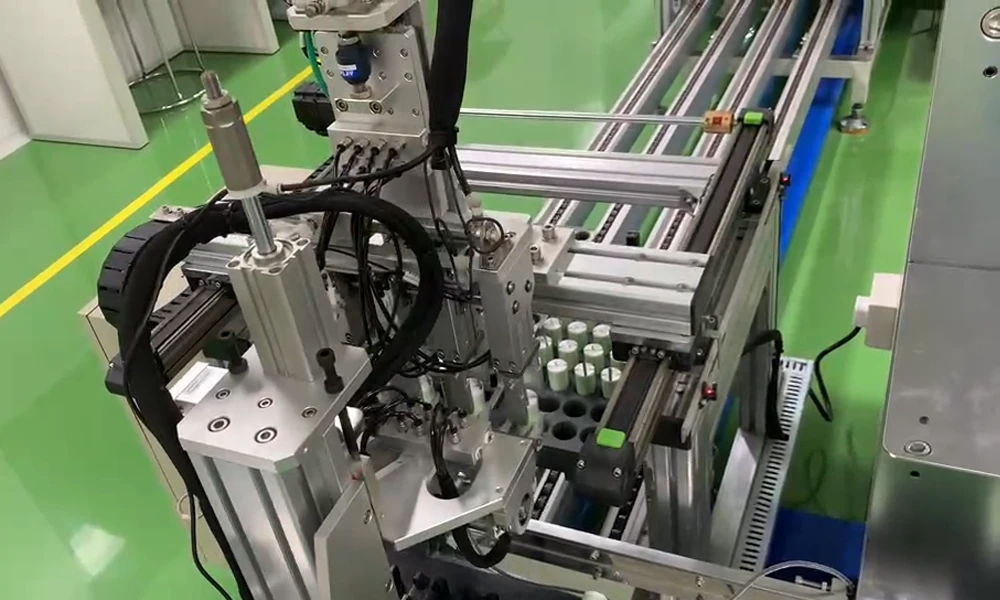
● A manipulator arm removes the finished jellyroll and places it on a belt conveyor, which transports good cells to the collection table and diverts short‑circuited cells to a reject bin.
How the Automatic Winding Machine Works
● Winding mechanism and rotary table
The heart of the machine is a servo‑driven rotary table that indexes between multiple stations. Each station holds a winding needle set—the mandrel around which the electrode and separator are wound. The table is driven by a servo motor coupled with a mechanical splitter (cam indexer), which provides the high positioning accuracy and repeatability needed for consistent jellyroll dimensions.
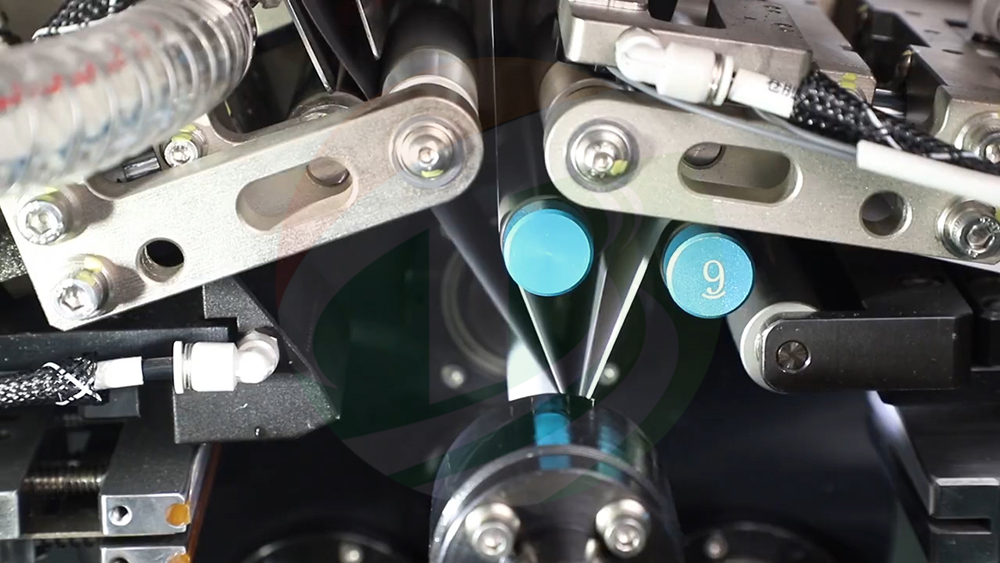
The winding needle itself is a dual‑half‑needle design. Two half‑cylindrical needles mate together to form a full cylindrical mandrel. When the winding is complete, one half‑needle is extracted from one side, leaving the jellyroll free to be removed without dragging or disturbing the innermost layers. This single‑side extraction method is faster and causes less damage than older designs that required both halves to be withdrawn simultaneously from opposite sides.
● Unwinding, tension control, and deviation correction
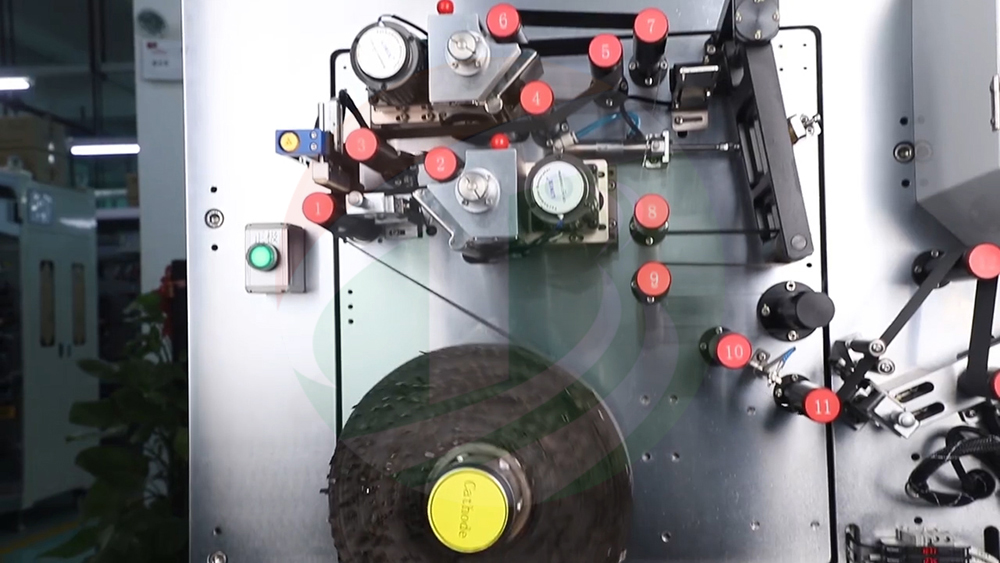
Each of the three material feeds—cathode electrode, anode electrode, and separator—has its own active unwinding motor, tension sensor, and proportional‑valve‑controlled tension actuator. The machine can be programmed with a segmented tension profile: for example, lower tension during the first few turns to accommodate the initial curvature around the small‑diameter needle, then gradually increasing tension to ensure a tight, void‑free jellyroll.
An integral edge‑position correction system uses material‑edge detection sensors to keep each strip centred within ±0.3 mm. If the edge of an electrode begins to drift due to a slight misalignment on the supply roll, the correction mechanism adjusts the lateral position of the guide rollers in real time. This “integral correction” control strategy accumulates the error signal over time, enabling faster and more accurate response than a simple proportional correction—important at the high linear speeds this machine is capable of.
● Dust removal, termination tape, and stamping
At the end of each electrode unwinding path, just before the material enters the winding zone, a dust‑removal device (typically a vacuum‑assisted brush or an electrostatic eliminator) removes any loose particles from the electrode surface. This step is critical for preventing particulate contamination that can cause internal short circuits.
Once the preset number of turns (according to the cell design) is reached, the termination tape is applied automatically. The tape‑application mechanism uses a rolling‑paste motion, where a roller presses the tape onto the outer surface of the jellyroll as it rotates, ensuring a smooth, wrinkle‑free finish. A stamping mechanism then marks the tab positions or codes the cell if required, and an automatic cutter severs the electrode and separator strips.
● Short‑circuit detection and sorting
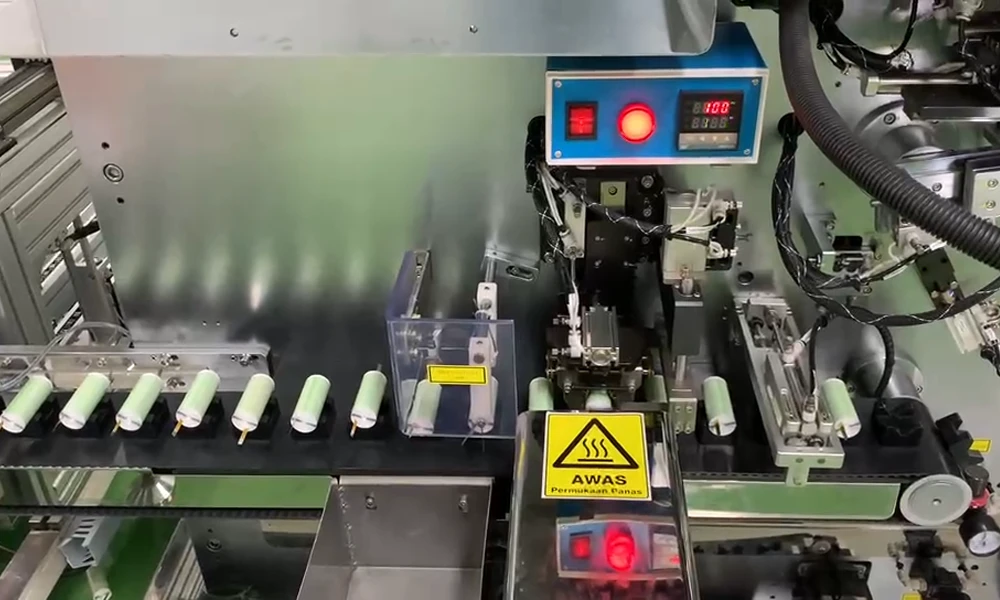
The finished jellyroll is transferred to a short‑circuit testing station. Here, probes contact the cathode and anode terminals and apply a test voltage. The integrated detection circuit measures the insulation resistance (or leakage current) and compares it against a threshold. Cells that fail the test—indicating an internal short, usually caused by a metallic particle or a misaligned electrode edge—are automatically rejected into a separate bin. Good cells are conveyed to the collection table. The addition of a protective cover over the testing station enhances operator safety and prevents external electrical noise from interfering with the measurement.
● Human‑machine interface and controls
The machine is controlled via a sliding HMI panel, which can be repositioned for convenient access during operation and maintenance. The interface displays winding parameters (tension, speed, turns count, alignment status), production statistics, and fault diagnostics. Recipes for different cell formats can be stored and recalled, reducing changeover time. The electrical cabinet is located on the right side of the winder, positioned so that it does not obstruct the operator’s access to the blanking area or the downstream process.
 |
 |
Key Engineering Advantages of the TOB‑3270Y‑26
● Servo‑Driven Rotary Table with Splitter for High‑Speed Precision
The combination of a servo motor and a mechanical cam splitter ensures that each winding station indexes into position with exact repeatability. This eliminates the cumulative positioning errors that can occur with purely servo‑driven indexing, while still allowing flexible speed adjustment. The result is a winding platform that can sustain high throughput without sacrificing jellyroll consistency.
● Dual‑Half‑Needle Single‑Side Extraction — Faster Cycle, Less Damage
The single‑side extraction method removes one half‑needle while the jellyroll is supported by the other half, which then slides out with minimal friction. This design reduces the risk of delamination at the innermost layer, a common cause of initial capacity loss. Furthermore, needle changeover between formats (e.g., from an 18 mm to a 21 mm diameter) takes under five minutes, significantly reducing downtime in multi‑format production environments.
● Segmented Tension Control with Proportional Valves
Winding tension is not a “set once and forget” parameter. The TOB‑3270Y‑26 allows the tension to be programmed in multiple segments—low tension for the initial turns, ramping up to a higher tension for the bulk layers, and a final tension for the outermost turns. This mimics the tension profile that an experienced manual operator would apply, but with digital precision and 100 % repeatability. The proportional valves respond quickly to tension changes commanded by the PLC, maintaining the set tension within narrow limits even as the roll diameter changes on the unwinding spools.
● Integral Edge‑Position Correction — ±0.3 mm Alignment Accuracy
The separator and both electrodes are aligned to within ±0.3 mm of each other, which is the industry benchmark for cylindrical cells. The integral control algorithm and material‑edge detection provide faster correction than simpler PID controllers, which is particularly valuable when processing electrode strips that may have slight waviness or camber from the slitting process.
● In‑Line Short‑Circuit Detection with Automatic Sorting
Every jellyroll is tested for internal shorts before it leaves the machine. Cells that pass are conveyed to the collection table; cells that fail are automatically rejected. This 100 % inspection provides immediate feedback on the winding quality and prevents defective cells from progressing to electrolyte filling, where a short could lead to a fire during formation. The protective cover over the test station also shields the measurement from electromagnetic interference generated by the servo drives.
● Compact, Fully Guarded Design with Sliding HMI
The machine’s footprint (L2400 × W1500 × H2100 mm) is relatively compact for a fully automatic winder, facilitated by the vertical arrangement of the unwinding spindles and the rotary table. All moving parts are enclosed by protective covers, and the HMI panel slides along a rail for ergonomic access. The electrical cabinet is positioned on the right side, away from the blanking area, so it does not interfere with the operator or with downstream equipment.
● Rapid Format Changeover — Five Minutes for Needle Swap
The product range covers outer diameters φ18–φ21 mm and widths 30–65 mm. Changing between products within this range requires only exchanging the clip set (the guides that determine the jellyroll width) and adjusting the needle diameter via the HMI’s stored recipes. The mechanical design of the needle clamping system allows the needles to be swapped in under five minutes, as verified in factory acceptance tests.
Material Specifications Required for the Machine
The following table specifies the dimensions and tolerances of the materials that the TOB‑3270Y‑26 is designed to process. All values are in millimetres unless otherwise noted.
| Material | Inner Diameter | Outer Diameter | Width | Thickness |
| Cathode electrode | φ76.2 | ≤φ400 | 30–68 | 0.1–0.2 mm |
| Anode electrode | φ76.2 | ≤φ400 | 30–68 | 0.1–0.2 mm |
| Separator | φ76.2 | ≤φ300 | 32–70 | 0.015–0.030 mm |
| Termination tape | φ76.2 | ≤φ150 | 20–60 | 0.02–0.05 mm |
Additional material requirements:
- The number of tabs on a single electrode sheet shall not exceed 2 pcs.
- It is recommended that the tab adopt a through‑welding process, with the exposed length less than 25 mm.
- Cathode‑first entry and anode‑first entry can be set freely by modifying parameters.
- The electrode coating shall be uniform; the length and position shall be well controlled; the wave after rolling shall be less than 1 mm; the serpentine bend shall be less than 0.3 mm per 1000 mm (so as not to affect winding accuracy).
- The electrode must be cut continuously; the width error shall be less than ±0.05 mm; the material must not exhibit obvious tower‑type winding (no more than ±1 mm); the winding tension shall be uniform.
- Tabs should be flat, avoiding bending as far as possible.
- The thickness of the electrode shall not be affected after welding.
- The termination tape shall be evenly wound, with no obvious tower shape, folding, warping, or other defects.
- The electrode roll shall have colour‑code identification at locations where there is a taping defect, a missing tab, bright spots, or other defects, so that defective products can be manually detected and removed.
Winding Accuracy Specifications
The TOB‑3270Y‑26 guarantees the following alignment accuracies under normal operating conditions with materials meeting the above specifications:
| Parameter | Accuracy |
| Separator alignment error | ±0.3 mm |
| Electrode alignment error | ±0.3 mm |
| Cell height alignment error | ±0.3 mm |
Equipment Characteristics
- The following features are integral to the TOB‑3270Y‑26’s design and contribute to its speed, accuracy, and ease of use:
- Servo motor and splitter principle drive the rotary table for station indexing; positioning is accurate and production speed is high.
- The winding needle adopts an advanced dual‑half‑needle, single‑side extraction method, improving the winding speed.
- Needle changeover is very convenient: the needle can be replaced and normal production resumed within five minutes.
- All winding components have been upgraded to a sliding‑rail structure with clearance coordination.
- The equipment can produce products with an outer diameter of φ18–φ21 mm and a width of 30–65 mm; only the clip needs to be exchanged and parameters adjusted via the HMI; changeover is convenient.
- The human‑machine interface is mounted on a sliding rail for easier refuelling, operation, and maintenance access.
- Cathode, anode, and separator are automatically unwound with deviation correction; tension is controlled through proportional valves and can be adjusted in segments.
- Short‑circuit detection is performed by an integrated testing mechanism that tests and discharges the cell in one step; good contact, low misjudgment rate; fitted with a protective cover.
- Integral correction and material‑edge detection are used for deviation correction; the design is rational, the judgment is accurate, and the correction speed is fast.
- A dust‑removal device is installed at the end of the electrode unwinding path, before the cutting station.
- The termination tape is applied by a rolling‑paste method, which resists folding.
- A manipulator arm handles blanking; belt transmission avoids damage to the jellyroll core.
- The electrical box is located on the right side of the winder, so it does not affect the blanking area or the downstream process.
- The equipment has a friendly interface, simple operation, and simple maintenance; protective covers are fitted throughout.
 |
 |
Complete Technical Specifications
| Parameter | Specification |
| Machine dimensions (L × W × H) | 2400 × 1500 × 2100 mm |
| Power supply | Single‑phase AC 220 V, 50 Hz ± 5 % |
| Power consumption | Approx. 10 kW |
| Weight | Approx. 3000 kg |
| Air supply | 5–7 kgf/cm² (approx. 0.5–0.7 MPa), 100 L/min |
| Suitable cell outer diameter | φ18–φ21 mm |
| Suitable electrode width | 30–68 mm |
| Winding alignment accuracy | ±0.3 mm (separator, electrode, cell height) |
| Control system | PLC with sliding HMI touch screen |
| Needle changeover time | < 5 minutes |
| Short‑circuit detection | In‑line, automatic sorting of rejects |
| Environment | No corrosive gas, liquid, or explosive gas |
Common Winding Defects and Troubleshooting
| Defect | Possible Cause | Recommended Action |
| Jellyroll misalignment (cathode offset from anode) | Deviation correction system out of calibration; edge sensor dirty; or electrode camber exceeds specification. | Calibrate the edge sensor. Clean the sensor lens. Check incoming electrode for camber (<0.3 mm/1000 mm). Increase correction gain slightly. |
| Separator wrinkling or folding | Tension too low or too high; separator not centred; or needle surface roughness. | Adjust separator tension to 150–250 g. Verify that the separator roll is centred on the unwinding spindle. Polish or replace the winding needle if the surface is worn. |
| Termination tape not adhering or folding | Incorrect tape application pressure; tape storage condition (too dry or too humid). | Check the rolling‑paste mechanism for consistent pressure. Ensure tape is stored at recommended temperature and humidity. Increase paste overlap by 0.5 turn. |
| Jellyroll too loose or too tight (OD out of tolerance) | Winding tension profile not optimised; electrode thickness variation. | Adjust the segmented tension profile. Check electrode thickness uniformity; if variation exceeds ±3 %, screening of incoming electrodes may be required. |
| High short‑circuit reject rate | Dust or metallic particles on electrode; burr on slit electrode edge; insufficient dust removal. | Clean or replace the dust‑removal device filter. Inspect the electrode slitting quality for burrs. Increase the dust‑removal vacuum level. |
| Needle difficult to extract or jellyroll damaged during extraction | Needle surface worn or contaminated; insufficient lubrication; or jellyroll wound too tightly. | Polish or replace the needle. Apply a light, dry lubricant if compatible with cell chemistry. Reduce the final winding tension slightly. |
Engineering FAQ — Automatic Cylindrical Cell Winding
Q1: How long does it take to change over from a 21700 format to a 26650 format?
The TOB‑3270Y‑26 can produce cells with outer diameters from φ18 mm to φ21 mm and widths from 30 mm to 65 mm. Within this range, a full changeover—including exchanging the clip set, adjusting or swapping the winding needle, and loading the new recipe—typically takes less than 30 minutes. The needle itself can be swapped in under five minutes. Parameters such as tension profile, turns count, and alignment offsets are stored in the HMI recipe memory and recalled instantly.
Q2: What is the expected throughput in cells per minute?
Throughput depends on the number of turns in the jellyroll design and the winding speed. For a typical 21700 cell with a jellyroll consisting of approximately 20 turns (cathode/anode/separator combined) and a winding speed of 100–150 rpm at the needle, a throughput of 6–10 cells per minute is achievable. Contact TOB with your specific cell design for a detailed cycle‑time analysis.
Q3: Can this machine handle electrode strips with tabs already welded, or does it require a separate tab‑welding station?
The machine is designed to accept electrode strips with tabs pre‑welded at the slitting stage. It can accommodate up to 2 tabs per electrode sheet, and the exposed tab length should be less than 25 mm. The machine does not weld tabs; tab welding is an upstream process performed on the electrode strip before it is wound into a roll for this machine.
Q4: How does the integral correction system differ from a standard edge‑guide system?
Standard edge‑guide systems use proportional correction: the guide roller moves an amount proportional to the detected edge error. Integral correction adds the error over time (integration) to the correction signal, which enables the system to eliminate a persistent offset that a purely proportional system would tolerate. This is especially useful for correcting the slow drift that occurs as an electrode roll unwinds from full diameter to core diameter. The result is tighter, more consistent alignment over the entire roll.
Q5: Is the machine compatible with ceramic‑coated separators?
Yes, the machine can handle separators within the specified thickness range (0.015–0.030 mm). Ceramic‑coated separators tend to be slightly thicker and stiffer than uncoated ones, which may require a slight increase in separator tension to maintain flatness during winding. The tension can be adjusted via the HMI’s segmented tension settings. The dust‑removal device and the deviation‑correction system are also effective with coated separators; however, ensure that the coating is well‑adhered and does not shed particles that could contaminate the winding zone.
Ready to automate your cylindrical cell winding and eliminate manual alignment and short‑circuit defects? Request a quotation for the TOB‑3270Y‑26, or contact our automation engineers with your target cell diameter, width, and throughput for a detailed technical proposal and line‑integration study.
tob.amy@tobmachine.com | +86 181 2071 5609
You May Also Need
- Automatic Cathode Electrode Making Machine — A fully integrated coating, calendaring, and slitting line that produces precision‑slit cathode electrode strips ready for high‑speed automatic winding on the TOB‑3270Y‑26.
- Cylindrical Cell Laser Cutting and Winding Machine — A combined laser slitting and automatic winder that cuts and winds electrode tabs in a single, continuous process, removing the need for pre‑slit electrode rolls and improving tab alignment accuracy.
- Semi‑Automatic Winding Machine for 50320 Cylindrical Tabless Cells— A flexible, operator‑assisted winder designed specifically for large‑format 50320 tabless cells, ideal for pilot‑scale trials or lower‑volume production of next‑generation cylindrical packs.
Previous:
Semi-Automatic Winding Machine For Cylinder CellNext:
Cylindrical Cell Laser Cutting and Winding Machine
If you are interested in our products and want to know more details,please leave a message here,we will reply you as soon as we can.

 subscribe to us