Chinese
 français
 Deutsch
 italiano
 español
 português
 Nederlands
 日本語
日本語 한국의
한국의




- Conductive Materials for Lithium Batteries: CNT vs Graphene Guide
- Step-by-Step Guide to Partnering with a Sodium-Ion Battery Technology Developer in China
- A Complete Guide to Implementing Industrial Solid State Battery Technology in Manufacturing
- How to Select a Professional Battery Equipment Provider for High-Volume Production
- Guide to Procuring High-Quality Lithium Battery Coating Machines from Chinese Manufacturers
Battery Cathode Materials Compared: NMC vs LFP vs NCA
The cathode is the costliest, heaviest, and most performance-defining component in a lithium-ion cell. For procurement teams, the choice between NMC, LFP, and NCA is not a chemistry quiz—it is a multi-million dollar decision that cascades into every step of cell manufacturing. Energy density targets, safety certifications, slurry rheology, electrode calendering, drying budgets, and even factory dry room design all pivot on this single selection.
1. The Material Triangle: Energy, Safety, Cost – You Can’t Have All Three
Every cathode chemistry compromises somewhere.
● NMC (Lithium Nickel Manganese Cobalt Oxide)
The workhorse of high-energy cells. Specific capacities range from 150 mAh/g (NMC111) up to 210 mAh/g (NMC811). Higher nickel boosts energy density but slashes thermal stability. A typical NMC811 cell enters thermal runaway at around 200°C, whereas an LFP cell holds until 270°C.
● LFP (Lithium Iron Phosphate)
The low-cost, ultra-stable cathode. 160 mAh/g capacity sounds weak, but 4,000+ deep cycles and zero oxygen release on failure make it the standard for grid storage and commercial EVs. Its tap density is limited to 1.0–1.4 g/cm³, which translates to thicker electrodes and lower volumetric energy density.
● NCA (Lithium Nickel Cobalt Aluminum Oxide)
NMC’s aggressive cousin. 220 mAh/g capacity and excellent rate capability make it ideal for high-power applications. However, it degrades rapidly in the presence of trace moisture. A -50°C dew point in the processing environment is a baseline requirement.
2. The Spec Sheet Trap – Why Supplier Numbers Mean Nothing Without Context
A certificate of analysis that falls within generic specification limits does not guarantee process stability. A common and costly oversight in cathode procurement is ignoring residual lithium compounds on the particle surface. High-nickel NMC and NCA form LiOH and Li₂CO₃ during synthesis. These residues react with the PVDF binder during slurry preparation, causing unexpected gelation. When the Li₂CO₃ content exceeds 0.5 wt% in the incoming powder, slurry pot life can drop from 48 hours to fewer than 6.
The table below lists the parameters that directly impact electrode manufacturing yield. A supplier’s failure to meet these numbers—or to demonstrate batch-to-batch consistency—will generate waste at the coater, the calender, or the formation station.
|
Material Property |
NMC (High-Ni, e.g., 811) |
NCA |
LFP |
|
Specific Capacity (mAh/g, 0.1C) |
200–210 |
200–220 |
155–165 |
|
Tap Density (g/cm³) |
>2.4 |
>2.2 |
>1.0 |
|
Moisture Content (ppm, incoming) |
<500 |
<300 (prefer <200) |
<800 |
|
Specific Surface Area (BET, m²/g) |
0.3–0.8 |
0.5–1.0 |
12–20 |
|
pH (water wash) |
<11.5 |
<12 |
<10 |
|
Residual Li₂CO₃ (wt%) |
<0.5 |
<0.3 (LiOH) |
N/A |
|
Metal Impurities (Fe, Cu, Zn, each) |
<50 ppm |
<50 ppm |
<100 ppm |
If an NCA cathode supplier cannot guarantee moisture below 300 ppm in a nitrogen-sealed drum, the risk of batch-wide degradation during transit and storage is acute. Moisture-killed NCA has forced pilot lines to scrap their entire electrode output.
3. The Real Cost of LFP – Why Cheap Powder Can
Bankrupt Your Coating Line
LFP powder is significantly cheaper than
NMC811 on a per-kilogram basis. But the coating line measures cost in dollars
per kilowatt-hour, not dollars per kilogram. With a tap density of only 1.0
g/cm³, achieving the required areal mass demands thicker wet films, slower
coating speeds, extended drying, and higher foil consumption. A poorly
optimized LFP electrode can therefore end up more expensive per usable kWh than
a well-optimized NMC532 electrode once processing yield and throughput are
factored in.
This is where cathode sourcing must be
evaluated alongside equipment capability. As both a bulk procurement source for
LFP powder and a turnkey line manufacturer, TOB New Energy provides the
processing-cost modeling that calculates true cost per kWh before a chemistry
is locked into the factory design.
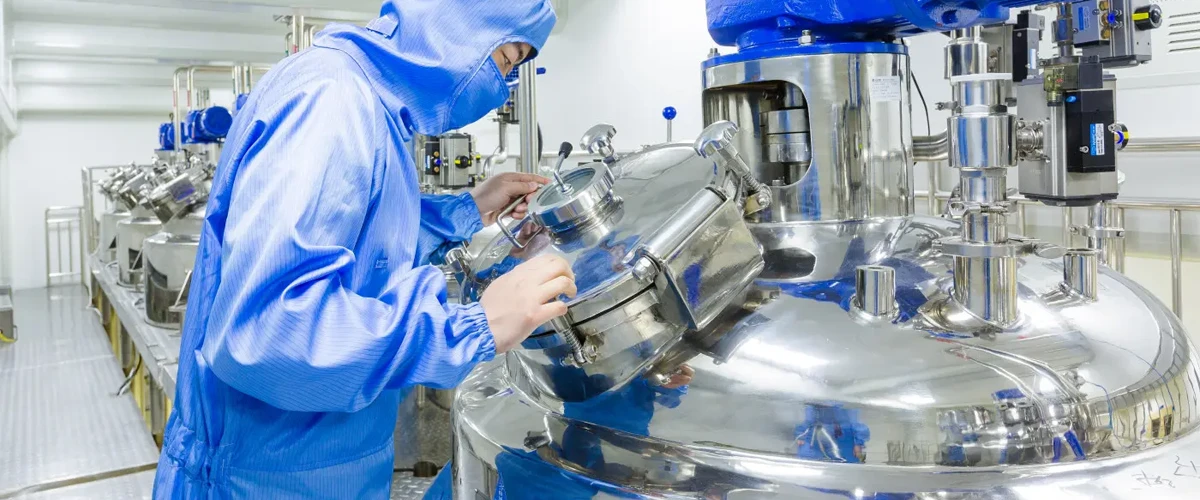
4. Mixing and Coating – Every Cathode Demands a Different Machine
Dropping NCA into a mixing process designed for LFP will destroy both the slurry and the production schedule. Each cathode chemistry imposes unique requirements on upstream and downstream equipment.
● NCA slurry has a very narrow processing window. The high surface area lithium residues drive pH up, attacking aluminum foil if the slurry dwells too long after mixing. A fully enclosed, nitrogen-blanketed mixer is mandatory.
● LFP slurry is abrasive. The hard phosphate particles wear through progressive cavity pump stators within months. Unless the pump is upgraded with ceramic-lined internals, maintenance costs will triple and line availability will suffer.
● NMC811 presents a drying hazard. The material evolves oxygen if over-dried. The coating line must therefore be equipped with precise temperature ramping and lower explosive limit (LEL) monitoring in the drying ovens.
When a cathode powder is sourced from one supplier and the coating equipment from another, the integration risk sits with the buyer. A source factory that manufactures both—such as TOB New Energy—pre-validates these combinations. Pump designs, shim thicknesses, and drying profiles are engineered against specific cathode slurry rheologies, so that the material process window is already built into the machine specifications.
Engineering Insight: The cathode’s particle size distribution (D10, D50, D90) directly determines the slot die shim gap. A shift in D50 by as little as 2 µm can produce longitudinal streaks on the electrode. Before finalizing a cathode supplier, it is standard practice to request a 1 kg sample and run an industrial electrode coating compatibility trial to verify processability under production conditions.
5. NMC vs. NCA – The High-Nickel Showdown for EV Cells
For premium EV cells targeting 300+ Wh/kg, the choice often narrows to NMC811 versus NCA. Both deliver high specific capacities, but their manufacturing risk profiles diverge significantly.
NCA gasses heavily during formation. The aluminum dopant does not fully stabilize the structure until the first charge cycle. If humidity in the dry room rises above -45°C dew point during electrode storage, CO₂ evolution can swell pouch cells before the electrolyte wets out completely. In one documented production incident, a 3% swelling rate on NCA cylindrical cells was traced to a faulty dew point sensor that registered -50°C while the actual ambient condition was -38°C. The humidity excursion was undetected until 20,000 cells were already compromised and scrapped.
NMC811 is slightly more forgiving toward moisture, but its thermal runaway onset is lower—approximately 175°C versus 190°C for NCA—which reduces the margin for error in pack-level safety design.
|
Manufacturing Risk Factor |
NMC811 |
NCA |
|
Moisture sensitivity |
High |
Extreme |
|
O₂ evolution during overcharge |
High |
Medium |
|
Residual lithium reactivity |
Medium |
High |
|
Slurry pot life |
24-48 hrs |
12-24 hrs |
|
Formation cycle gas generation |
Moderate |
High |
The role of a competent cathode material supplier extends beyond shipping powder. It includes providing the handling and storage protocols, the mixing parameters, and the safety data specific to the cell manufacturer's production environment. For bulk buyers, TOB New Energy supplies both NMC and NCA cathode powders with full documentation, plus turnkey dry room and material handling system design to eliminate the dew point gamble.
6. The Procurement Checklist – Audit Your Supplier Like a Line Engineer
Before signing a purchase order, three verification steps reduce the probability of a line-stopping batch failure:
● Batch-to-batch PSD overlay. Demand the particle size distribution curves for the last 10 production batches. The D50 variance must be under ±1 µm. A supplier that cannot provide this data lacks upstream synthesis control.
● Moisture content at bagging. The moisture value on the certificate of analysis must be measured within 24 hours of drum sealing—not at the conclusion of the calcination step weeks earlier.
● Tap density measurement procedure. There is no universal standard. Obtain the exact method (cylinder volume, tap count, amplitude) and cross-check with an in-house measurement on a reference sample.
Brand reputation alone is insufficient. Leading NMC cathode brands have shipped 811 material with moisture levels exceeding 1,200 ppm because the drums were stored in a humid port warehouse for several weeks. Cells built from such material have delivered an 8% capacity loss after only 500 cycles.
7. Material Handling Infrastructure – The Part You Forgot to Budget
After investing in premium NCA or high-nickel NMC, the immediate next question must be: how will the material be stored and handled to preserve its ultra-low moisture specification?
These powders require a dry room with a dew point of -50°C or nitrogen-sealed containers at all times. A single drum left open for 30 minutes in ambient air absorbs enough moisture to push the entire batch out of specification. The handling system must therefore include:
● Automated drum loading and dispensing
● In-line sieving to remove agglomerates before mixing
● Enclosed pneumatic conveying with dew point monitoring at transfer points
LFP is more forgiving—a desiccant dry air environment at -40°C dew point is sufficient. However, when both NMC and LFP lines operate in the same facility, the material storage areas must be physically separated. Cross-contamination of LFP with even trace amounts of NMC causes electrochemical mismatch in the final battery pack.
Design Your Material Handling for Zero Moisture Exposure. Automated drum loading, in-line sieving, and pneumatic conveying with dew point monitoring are not optional—they are the difference between a validated process and a scrap rate that erodes margin.
8. FAQ Section
Q: Which cathode material is best for electric vehicle batteries?
A: Currently, high-nickel NMC (811) dominates
premium EV cells due to high energy density. LFP is rapidly gaining share for
standard-range EVs because of lower cost and longer cycle life. NCA remains
prevalent in cylindrical-cell EV applications.
Q: Can I mix LFP and NMC in the same battery pack?
A: No. LFP has a flat 3.2V nominal voltage, while NMC operates at
3.6–3.7V. Their voltage curves do not align, and a single BMS cannot safely
manage both chemistries within one pack. Separate packs or a hybrid
architecture with isolated BMS units are required.
Q: What is the shelf life of cathode powder?
A: NCA and high-nickel NMC should be used within 6 months when stored
under nitrogen or vacuum at room temperature. LFP can last up to 12 months if
kept below -40°C dew point. Always re-test moisture and pH before use if the
material exceeds half its stated shelf life.
Q: How do I evaluate a reliable NMC cathode material supplier?
A: Audit their batch consistency data (PSD, BET surface
area, tap density), visit the production site to inspect storage and packaging
conditions, and request a trial batch to run on the actual coating line. A
technical supplier will also provide support for mixing and coating parameter
optimization.
Q: What is the typical bulk price for NMC811 cathode powder?
A: Prices fluctuate with lithium and cobalt markets, but
large-volume contracts (>10 tonnes per year) typically fall in the
25–35/kgrange.Themoremeaningfulmetricis25–35/kg range. The more meaningful
metric is 25–35/kgrange.Themoremeaningfulmetricis/kWh after processing yield—a
cheaper powder that generates high scrap rates can increase the total cell
cost.
Your Single-Source Partner from Powder to
Production Line
Juggling separate suppliers for cathode
materials and battery manufacturing equipment introduces integration risk and
delays. As a direct source factory and turnkey provider, TOB New Energy
delivers high-purity NMC, LFP, and NCA cathode powders alongside the mixing,
coating, and calendering lines engineered to process each chemistry at maximum
yield.
Send your capacity requirements today. Receive a material sample, an equipment quotation, and a plant layout proposal—all directly from the manufacturer, with no distributor markup.
 subscribe to us