Chinese
 français
 Deutsch
 italiano
 español
 português
 Nederlands
 日本語
日本語 한국의
한국의




- Home
- >
- Battery and Materials Drying Oven
- >
- Battery Vacuum Drying Oven
- >
- High Vacuum Automatic Drying Oven For Lithium ion Battery
Categories
Hot Products
Loading...
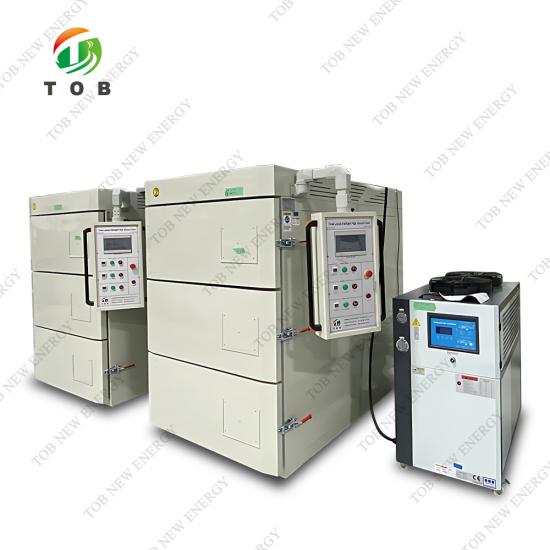
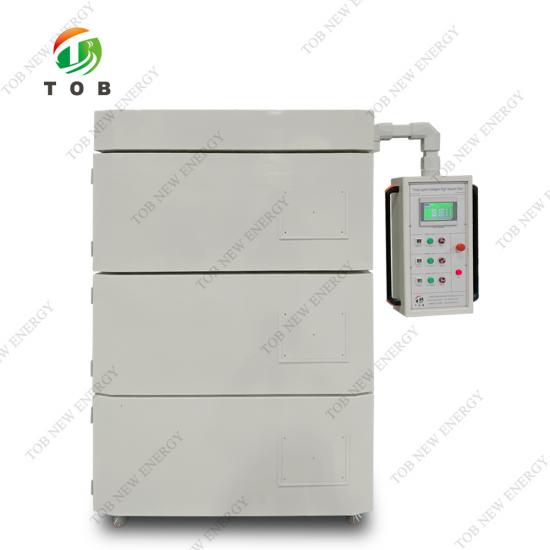
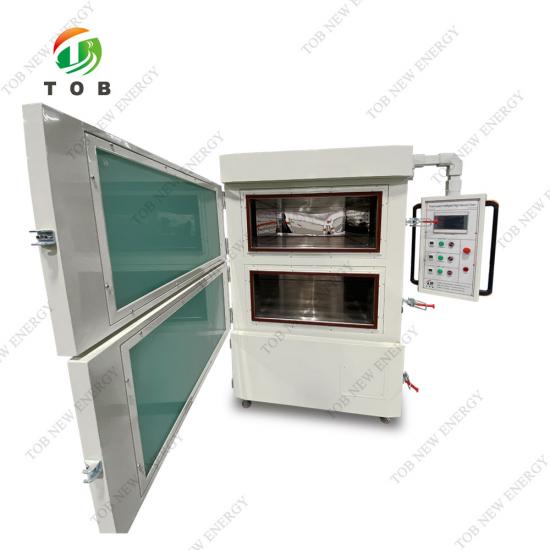
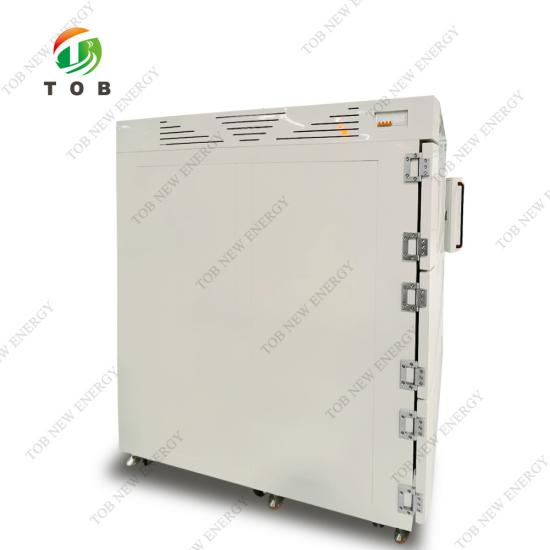
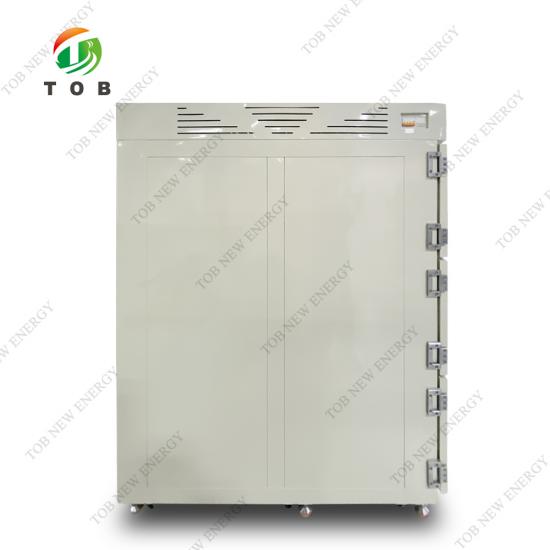
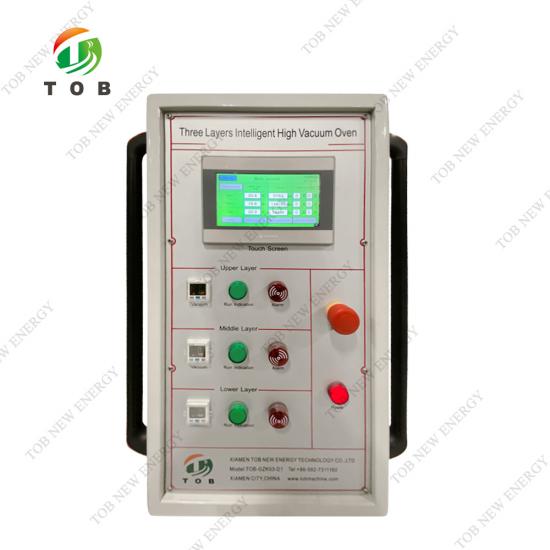
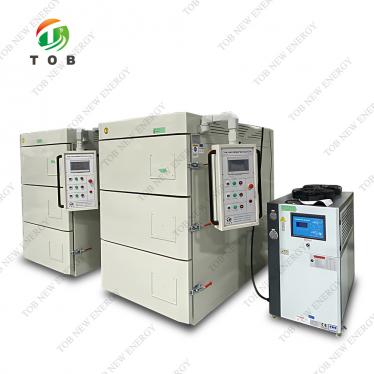
High Vacuum Automatic Drying Oven For Lithium ion Battery
Brand:
TOB NEW ENERGYitem no.:
TOB-GZK03-D1order(moq):
1Payment:
L/C,T/Tproduct origin:
Chinashipping port:
XIAMEN
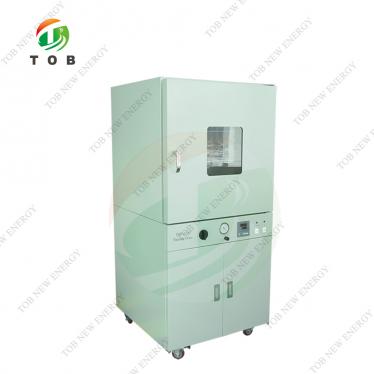
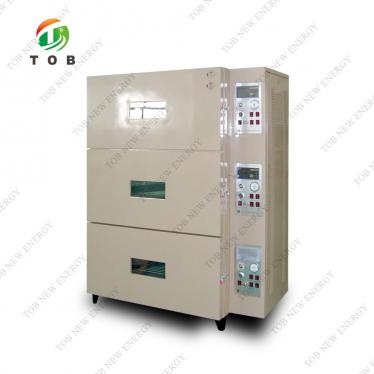
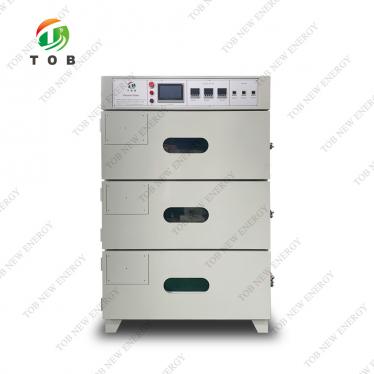
High Vacuum Three Layer Automatic Drying Oven For Lithium ion Battery
Product Overview and Ideal Applications
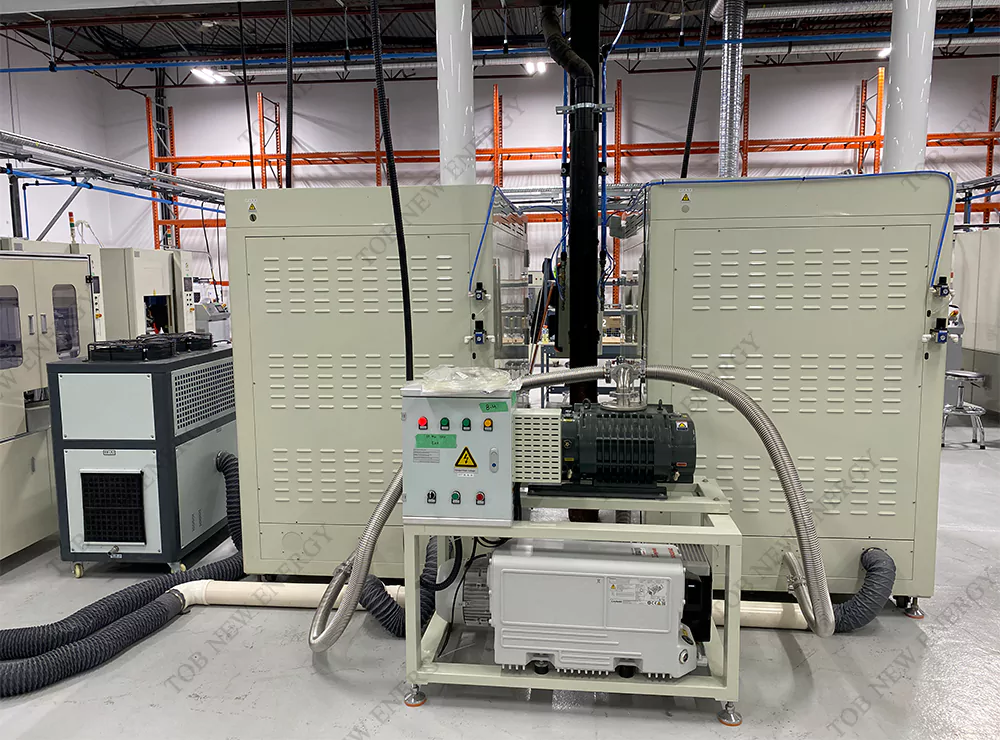
A high vacuum drying oven removes moisture and residual solvent from battery components and electrode materials under reduced pressure. The TOB-GZK03-D1 is a three-chamber automatic drying oven purpose-built for lithium-ion battery cells and electrode dehydrating and drying applications. Compared with a conventional oven, the TOB-GZK03-D1 offers stable performance, high vacuum level, short baking time, effective dehydrating and drying results, and excellent pressure retention. The oven is combined with a dedicated high vacuum unit and a cooling system to form an independent baking station, replacing the conventional oven in battery production lines.
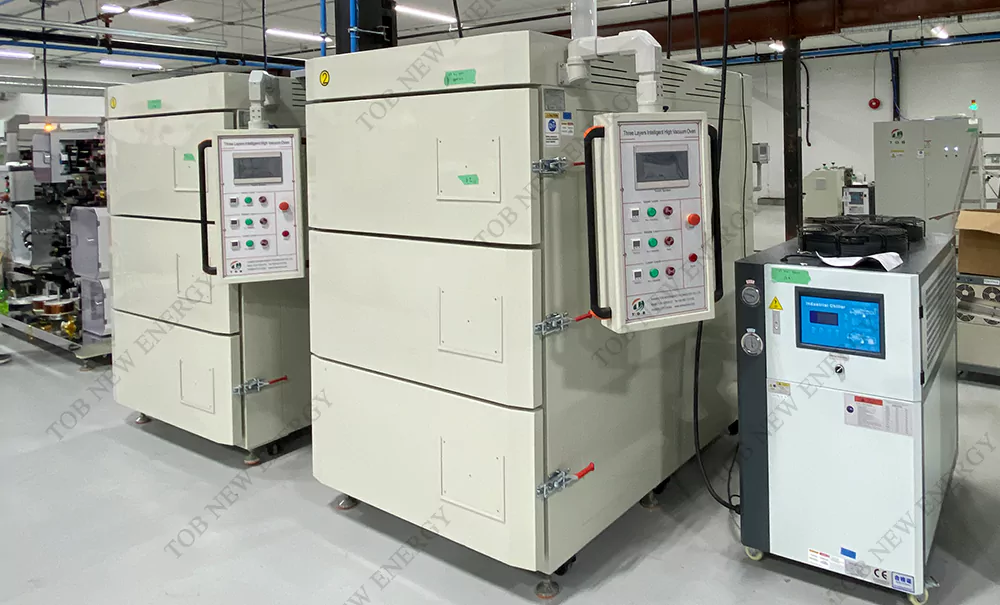
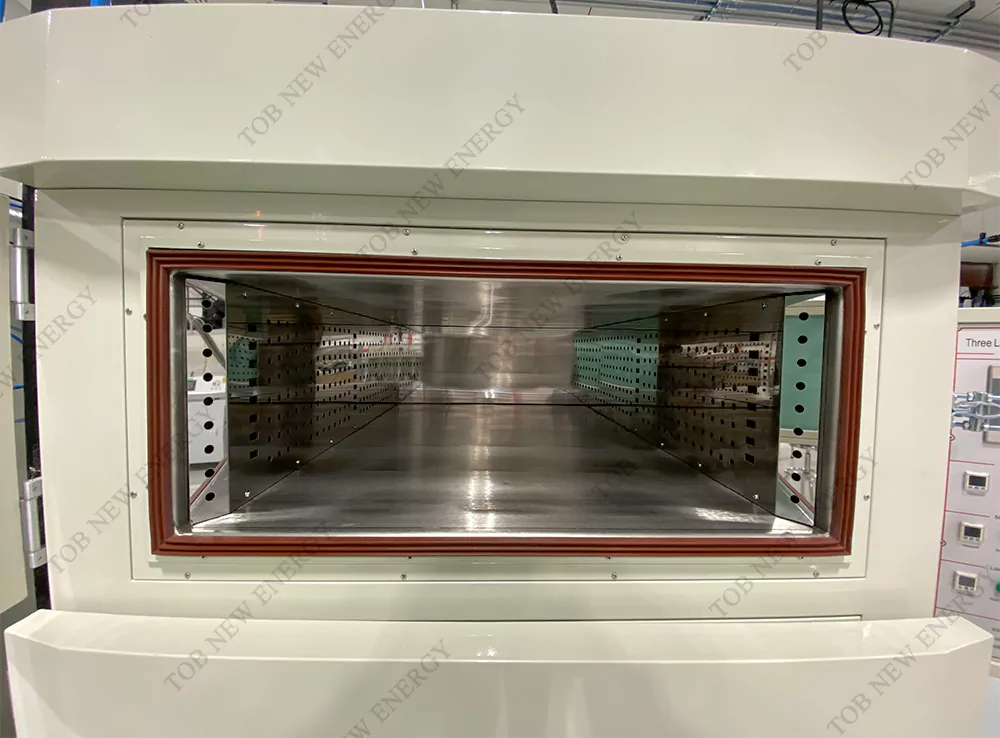
The TOB-GZK03-D1 is constructed with a 5.0 mm stainless-steel industrial wire-drawn interior, an A3 cold-rolled steel shell with baked paint finish, and three independently operated heating chambers (each H350 mm × W850 mm × D1250 mm). Each chamber is equipped with its own PLC-controlled heating, vacuum, and nitrogen-filling sequence, allowing up to three batches to be processed in parallel with independent timing. The interior adopts a dual air-duct principle that combines internal and external double-circulation airflow with dual heat-source control, solving the problem of slow cell heating under high vacuum while keeping the glass door surface at a safe temperature.
Ideal for:
- Lithium-ion battery cell drying before electrolyte filling, where residual moisture in the cell would otherwise hydrolyse LiPF₆ and generate corrosive HF.
- Drying of coated cathode and anode electrode rolls before cell assembly, reducing the moisture load that the formation step must overcome.
- Electrode material powder drying (NMC, LFP, graphite) and battery component moisture removal in a production environment.
- Any battery manufacturing process that requires a stable, repeatable, high-vacuum drying step with automated program control and multi-chamber throughput.
Where High Vacuum Drying Fits in Battery Cell Production
Moisture control is one of the most critical quality parameters in lithium-ion battery manufacturing. Water molecules introduced during cell assembly can react with the LiPF₆ salt in the electrolyte to form hydrofluoric acid (HF), which attacks the SEI layer, corrodes the current collector, and accelerates capacity fade. The drying step removes this moisture before the electrolyte is introduced, and its effectiveness directly governs the cell's cycle life, self-discharge rate, and safety.
The TOB-GZK03-D1 is deployed at two key points in the production chain:
Electrode drying before cell assembly: Coated and calendared electrode rolls are loaded into the vacuum drying oven to remove residual water adsorbed from the ambient air during slitting and handling. The high vacuum (≤10 Pa empty-chamber, 50–100 Pa under full load) lowers the boiling point of water, allowing effective dehydration at moderate temperatures (typically 80–120 °C) that would not damage the PVDF binder or cause electrode delamination.
Cell drying before electrolyte filling: Assembled (but not yet filled) cells—cylindrical, pouch, or prismatic—are dried under vacuum to remove moisture from the jellyroll, separator, and can interior. The three-chamber design allows the drying of multiple batches in parallel, matching the throughput of the upstream assembly line and the downstream electrolyte filling machine.
The PLC automatic control system simplifies the operation into a repeatable recipe: the operator sets the heating time, vacuum time, and nitrogen time, and the system automatically completes the heating and regular ventilation (nitrogen purging) cycle. This removes the operator-to-operator variation that can cause inconsistent drying results on manually controlled ovens.
How the High Vacuum Drying Oven Operates
The TOB-GZK03-D1 is designed to work in a continuous cycle. The basic process is:
- Loading: The operator opens the chamber door and places the cell or electrode material into the oven.
- Program setting: The operator sets the heating time, vacuum time, and nitrogen time on the touch-screen interface.
-
Automatic drying cycle: The PLC automatically completes the heating and regular ventilation (nitrogen purging) according to the set time parameters, executing the following sequence:
- Heating to the set temperature under vacuum
- Maintaining the vacuum for the programmed duration to extract moisture
- Periodic nitrogen purging (regular ventilation) to sweep out evaporated solvent and moisture, preventing re-condensation
- Completion: After the programmed cycle, the oven automatically switches to cooling mode or completes the process, and the dried material can be removed.
Heating mechanism (internal and external double circulation): The TOB-GZK03-D1 uses an internal-and-external double circulation wind system with dual heat-source control, operating through heat radiation and heat conduction. The external heating structure uses a U-shaped circulating air path with air leaving on the left and being drawn in on the right, with exhaust on the upper and lower sides. This arrangement achieves temperature consistency across the chamber. The internal heating structure adopts the dual-duct principle, which ensures rapid, uniform heating of the cell even under high vacuum—an area where conventional vacuum ovens often perform poorly.
During the cooling phase, the heating tubes are closed, and the heat inside is carried away through the wind circulation, accelerating the cooling speed. The cooling time from 100 °C to 55 °C is approximately 95 minutes for an empty box (cell detection) and about 100 minutes under full load.
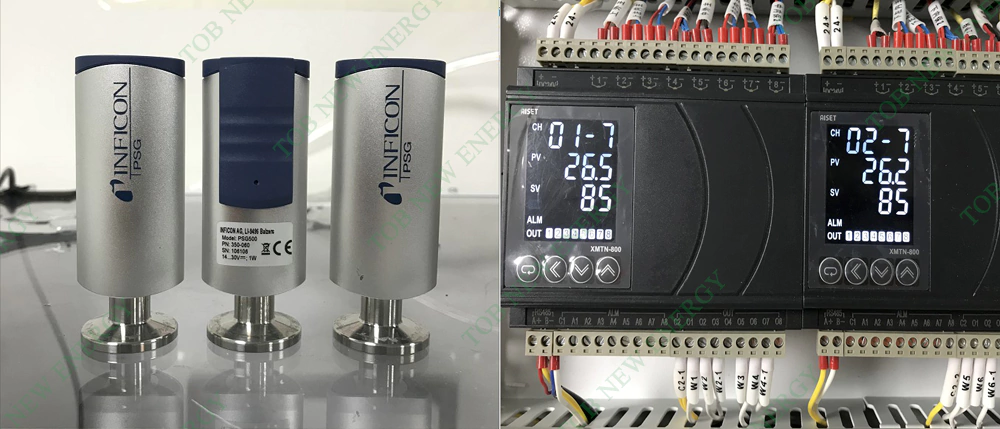
Temperature control: The temperature control uses thyristor SSR + PID mode, providing low thermal inertia and good control performance. The main heating temperature control accuracy is within ±0.5 °C. The temperature error inside the box is ±2 °C in the empty-box, constant-temperature state and ±4 °C in the full-load, constant-temperature state. The temperature range is room temperature +10 °C to 120 °C, and the temperature rise from room temperature to 85 °C takes approximately 30 minutes in the empty state and 45 minutes under full load. Each layer of the oven operates independently—heating, vacuum, and nitrogen filling are all independently controlled per chamber.
Cooling system: The auxiliary cooling system is composed of cooling exchange valves, cooling pipelines, and high-pressure fans that cool the cavity from the outside of the working chamber. The auxiliary cooling system is shared by the three chambers, with each chamber independently controlled by its own valves. The interior is cooled alternately by vacuum and nitrogen. The external cold-air system connects to the outer air duct, and the cooling is conducted alternately from the outer air duct of the inner liner.
Key Engineering Advantages of the TOB-GZK03-D1
- High Vacuum Design with Pressure-Vessel-Grade Welding - The inner cavity is manufactured using the standard welding process of a pressure vessel, providing high vacuum retention, long service life, and resistance to deformation. The empty-chamber vacuum degree is ≤ 10 Pa, the full-load vacuum degree is 50–100 Pa, and the 24-hour leakage is ≤ 500 Pa. These figures confirm that the chamber maintains a stable vacuum over extended drying cycles, which is essential for consistent moisture removal.
- Stable Temperature Uniformity (±2 °C) - The internal and external double-circulation airflow, combined with the dual heat-source control, keeps the temperature uniform across the chamber. In the empty-box constant-temperature state, the temperature error is ±2 °C; under full load, it remains within ±4 °C. This uniformity is critical for drying multiple cells or electrode rolls simultaneously without some parts of the batch being over-dried or under-dried.
- Three Independently Operated Chambers - Each of the three chambers (H350 × W850 × D1250 mm) has its own heating, vacuum, and nitrogen-filling sequence, controlled independently via the PLC. The operator can start a drying cycle in one chamber while another chamber is still heating or cooling, maximizing the utilization of the oven and matching the rhythm of the production line. The interior dimensions can be customized according to the customer's battery size to improve space-utilization efficiency.
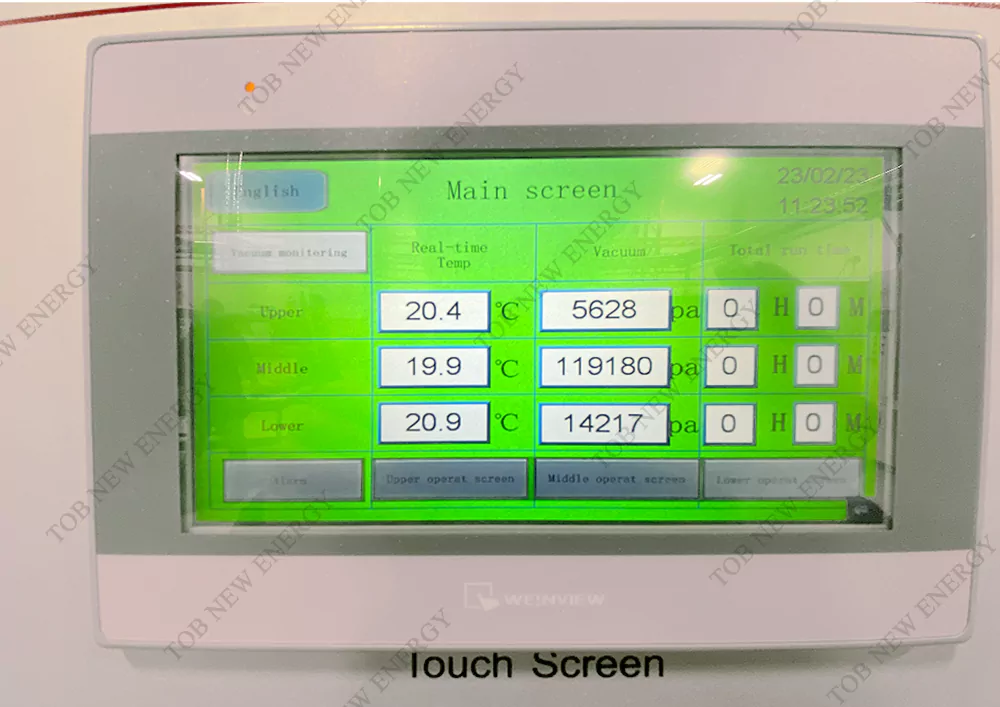
- Automated PLC Program Control - The PLC program controls heating, vacuum pumping, and nitrogen injection, with manual/automatic operation switchable and automatic timed heating. The operator only needs to set the heating time, vacuum time, and nitrogen time; the program automatically completes the baking and ventilation process. The PLC (Fujian Wecon) and the 7-inch Wecon color touch screen provide an intuitive interface for recipe programming and process monitoring.
- Six Safety Protections - The oven is equipped with six safety protection functions: cavity over-temperature protection (automatic power cut-off), electric heating tube overcurrent and short-circuit protection, internal circulation fan overcurrent and short-circuit protection, control system overcurrent and short-circuit protection, a special explosion-proof door with overpressure self-relief, and automatic closure of the nitrogen/dry-gas inlet when the inner cavity is over-filled (to save gas). An independent sound-and-light alarm with a settable time provides additional operator notification.
- Effective Drying Through Vacuum-Nitrogen Alternation - The combination of high vacuum (which lowers the boiling point of water and accelerates evaporation) and periodic nitrogen purging (which sweeps the evaporated moisture and solvent out of the chamber and prevents re-condensation) achieves a shorter baking time and a better drying result than a conventional oven. The interior dual-duct principle ensures rapid, uniform heating of the cell in the high-vacuum environment.
- Excellent Pressure Retention - The vacuum leakage rate is tightly controlled: after pumping to the limit vacuum and closing the valve, the average vacuum drop is ≤ 20 Pa per hour (measured over 1 hour), and the 24-hour vacuum drop is ≤ 500 Pa (20 Pa/h). This low leakage rate means that the vacuum level is maintained throughout the long drying cycle without excessive pump operation, saving energy and prolonging pump life.
Complete Technical Specifications
Product Feature
|
High vacuum design |
The inner cavity is made by standard welding process of pressure vessel, with high vacuum retention, long service life and no deformation |
|
Stable temperature uniformity |
The uniformity at constant temperature is ±2℃ |
|
Reasonable Space Design |
The size of the inner cavity can be designed according to the size of the customer's battery to improve the efficiency of space utilization |
|
Temperature control precision |
Temperature control using thyristor SSR+PID mode, small thermal inertia, good temperature control effect |
|
Heating mode |
The hot air is used to circulate outside and inside the cavity, so that the temperature inside and outside the furnace cavity is consistent, and then through thermal radiation and heat transfer, so as to ensure the uniformity of the temperature of the cavity. When cooling down, the heating tube is closed, the heat inside is taken away through the wind circulation, and the cooling speed is accelerated |
|
Six safety protections |
Ensure operation safety and product reliability |
|
Automatic program control |
PLC program control heating, vacuum pumping, nitrogen injection, manual/automatic operation can be switched, automatic timing heating; Just set the heating time, vacuum time, nitrogen time, the program automatically complete the baking and ventilation process |
|
The interior adopts double air duct principle |
This function solves the problem of slow heating of the battery cell in the high vacuum, and the problem of low temperature of the glass door, so as to achieve good uniformity of rapid heating. |
Oven Box Structure
|
Inner cavity size |
H350mm*W850mm*D1250mm(*3 PCS)(Can customized acccording to customer requirement) |
|
Overall dimensions |
H2030mm*W1480mm(Includes control electric box)* D2050mm |
|
Shell material |
A3 cold rolled steel plate, baking paint processing, color is black, white and red |
|
Interior material |
Stainless steel industry wire drawing board, thickness: 5.0mm |
|
Way of open door |
Single door |
|
Interior sealing ring |
Open mold casting form Silicone rubber O-ring, high temperature and corrosion resistant |
|
Control mode |
PLC Automatic control mode, touch screen operation |
|
Vacuum and nitrogen filling locations and interface specifications |
The interface position is at the rear of the device; The vacuum interface is KF40, and the dry air interface is¢12mm air pipe interface |
Vacuum and temperature control
|
Vacuum degree |
Vacuum degree of no-load cavity ≤ 10Pa, vacuum degree of full-load cavity: 50Pa -- 100Pa, air leakage for 24 hours ≤ 500Pa |
|
Heating method |
Adopt internal and external double circulation wind, internal and external double heat source dual control heating mode through heat radiation, heat conduction, electric heating control |
|
External heating structure |
U type circulating air, left air out, right air suction, upper and lower side exhaust, to achieve temperature consistency |
|
Internal heating structure |
Dual duct principle is adopted |
|
Main heating temperature control |
Temperature control accuracy within±0.5℃ |
|
Temperature error inside the box |
±2℃(Empty box, constant temperature state);±4℃ (Full load, constant temperature) |
|
Temperature range |
Room temperature +10℃~120℃ |
|
Temperature rise speed |
Room temperature ~85℃≤30 minutes (atmospheric pressure, no-load state, the time for the instrument to reach the set temperature) temperature stability time in the furnace 60 minutes (empty); minutes at room temperature ~85℃ ≤45(full load condition, the time for the instrument to reach the set temperature) Temperature stability time in the furnace 80-100 minutes (full load); |
|
Temperature rising state |
The room temperature rises to the set value in a curve state, after constant temperature in a straight line state |
|
Cooling way |
The cold air system is connected with the outer air duct, and the cooling is conducted alternately from the outer air duct of the inner liner. The interior is cooled alternately by vacuum nitrogen |
|
Cooling time |
≤95 minutes (empty box, 100℃~55℃, cell detection), full load test time ≈100min (battery size depends on capacity) |
|
Box surface temperature |
The temperature in the furnace is 150℃, and the surface temperature is ≤ room temperature +15 ℃ |
|
Each layer operates independently |
Heating up, vacuum it, fill it with nitrogen |
System composition
- The body part is mainly composed of sheet metal structure, heating system, blast circulation system, software control system, etc.
- The auxiliary cooling system is mainly composed of cooling exchange valves, cooling pipelines and high pressure fans to cool the cavity from the outside of working room;
- The auxiliary cooling system is shared by three chambers, which are independently controlled by valves;
- vacuum system, vacuum pipe composition
Security protection
| Protection Item | Description |
| Cavity Over-Temperature Protection | Automatic power cut-off when over-temperature occurs |
| Electric Heating Tube Overcurrent and Short-Circuit Protection | |
| Internal Circulation Fan Overcurrent and Short-Circuit Protection | |
| Control System Overcurrent and Short-Circuit Protection | |
| Special Explosion-Proof Door | Strong pressure resistance; overpressure self-relief function |
| Over-Fill Protection | When the inner cavity is over-filled, the equipment automatically closes the nitrogen and dry-gas inlet to save gas and reduce gas loss |
| Independent Sound-and-Light Alarm | With settable alarm time |
The vacuum system provided by the supplier is allowed to open up to three cavities at the same time for vacuum pumping. When the vacuum degree is reached, the branch valve can be automatically closed before the vacuum pumping of other branches can be started
1. Ultimate vacuum ≦ 10Pa (no-load state), single chamber from atmospheric pressure to 10Pa ≦10min (no-load state)
Vacuum leakage rate (no-load state of cooler) : close the valve after pumping to the limit vacuum, keep it for 1h, and the absolute value of the average decrease of vacuum degree is 100Pa≤20Pa; Keep the absolute value of 24h vacuum drop ≤500Pa (20Pa /h). Using a single pump multi-cavity arrangement of vacuum pumping; No load limit vacuum degree is less than or equal to 10Pa, vacuum degree is the actual vacuum set value according to the displacement of the pumped object changes: high vacuum degree is set at 50-100 Pa (can be efficient water removal); Low vacuum control ≤ -20kPa (limit under nitrogen exchange).
2. The vacuum system includes a two-stage vacuum pump and a vacuum pipe. The vacuum pump is self provided or by the supplier.
3. The vacuum piping should be confirmed according to the actual contract drawing, and the vacuum bellows should be provided by the supplier in a short distance according to the position between the vacuum pump and the oven. If additional vacuum piping is needed, it shall be confirmed in advance and the construction party shall be designated.
Power and Weight
| Parameter | Specification |
| Power Supply | 380 V / 50 Hz, 3-phase 5-wire system |
| Single-Machine Total Power | 12 kW |
| Vacuum System Power | 9 kW |
| Cooling System Power | 4 kW |
| Equipment Weight | Approx. 1650 kg |
Installation Conditions
| Item | Requirement |
| Oven Clearance | Front of oven ≥ 1500 mm from wall; left, right, and rear sides ≥ 300 mm |
| Power Supply | Three-phase AC 380 ± 38 V, frequency 50 ± 1 Hz; user provides a separate distribution switch and is responsible for the power connection outside the equipment |
| Air Pressure | Pressure −0.5 MPa, Ø8 pipe |
| Nitrogen | Pressure 0.1–0.2 MPa, nitrogen pipe Ø12 mm |
| Max. Electrical Consumption | ≤ 12 kW/hour (excluding vacuum pump and cooling system) |
| Uniform-Time Consumption | ≤ 3 kW/hour (excluding vacuum pump and cooling system) |
| Ambient Temperature | −5 to +35 °C, humidity ≤ 40 % |
| Environment | No flammable or explosive gas, liquid, or solid around; avoid baking flammable items, flammable gases, and explosive substances in the box |
Recommended Drying Parameters
The following drying parameters are starting points based on typical battery production practice. Optimise for your specific cell type, material, and target moisture specification.
|
Application
|
Chamber Temperature | Vacuum Setting |
| Cylindrical cell drying (before electrolyte filling) | 80–100 °C | 50–100 Pa (high vacuum) |
| Pouch cell drying (before electrolyte filling) | 85 °C | 50–100 Pa |
| Electrode roll drying (before slitting) | 100–120 °C | 50–100 Pa |
| Electrode material powder drying | 100–110 °C | High vacuum (50–100 Pa) |
Important: The drying time must be validated by measuring the residual moisture of the dried cell or electrode. TOB can recommend a moisture measurement method and a target value based on your cell design and electrolyte chemistry.
Engineering FAQ
Q1: Why is the drying performed under vacuum instead of at atmospheric pressure?
Under vacuum, the boiling point of water is significantly lowered. At 50–100 Pa, water boils well below room temperature, so even moderate temperatures (80–120 °C) evaporate the moisture rapidly and completely. Atmospheric-pressure drying at these temperatures would leave a larger residual moisture content and would require a longer time, because the water would need to be evaporated at its normal boiling point. The combination of high vacuum and controlled temperature achieves faster, more complete drying while protecting the temperature-sensitive components of the cell (separator, binder, electrolyte salts).
Q2: How often should the vacuum pump oil be changed?
The pump oil should be inspected monthly and changed when it appears dark, emulsified, or has a burnt smell. In a drying oven application where the pump extracts moisture-laden gas, the oil tends to contaminate faster than in a clean-vacuum application. The oil-change interval is typically 3–6 months under continuous production, depending on the moisture load. TOB recommends keeping a log of oil changes and using only the grade of oil specified in the pump manual.
Q3: Can the three chambers be operated with different programs simultaneously?
Yes. Each chamber has its own heating, vacuum, and nitrogen-filling control, and the PLC allows independent programs to be set for each chamber. The auxiliary cooling system is shared but each chamber is independently controlled by its own valves. However, the vacuum system allows up to three chambers to be pumped simultaneously; when the vacuum degree of one chamber is reached, its branch valve closes automatically so that the pump capacity is redirected to the remaining chambers.
Q4: What is the purpose of the nitrogen purging during the drying cycle?
Nitrogen purging serves two purposes. First, it sweeps the evaporated moisture and solvent vapours out of the chamber, preventing them from re-condensing on the cooled parts of the oven or on the dried material. Second, it restores the chamber to an inert atmosphere, which is beneficial when drying materials that could oxidize at elevated temperatures. The nitrogen purge is programmed as a periodic step within the drying recipe, alternating with the vacuum hold phase.
Q5: What maintenance does the explosion-proof door require?
The explosion-proof door is designed with strong pressure resistance and has an overpressure self-relief function. It should be inspected quarterly for seal integrity and for any deformation of the door frame. The sealing O-ring should be checked for cracks or hardening and replaced if necessary. In the event that the overpressure relief mechanism activates, the door must be inspected by a qualified technician before the oven is returned to service.
Ready to add a high-vacuum, automatically programmed drying step to your battery cell production line? Request a quotation for the TOB-GZK03-D1, specifying your cell type, electrode size, and target throughput. Our thermal process engineers can recommend the optimal chamber configuration and drying recipe for your application.
tob.amy@tobmachine.com | +86 181 2071 5609
You May Also Need
- DZF-6050 Vacuum Drying Oven — A benchtop vacuum drying oven for laboratory-scale moisture removal. Complements the TOB-GZK03-D1 by providing a smaller, flexible drying station for R&D samples, small batches, and materials qualification work.
- Battery Electrode Roll Vacuum Drying Oven — A dedicated vacuum drying oven designed specifically for electrode rolls, with a chamber geometry and loading system tailored to large-format coated electrode webs. Complements the TOB-GZK03-D1 when the production line requires dedicated roll drying in parallel with cell drying.
- Automatic Vacuum Oven for Lithium Battery — An automatic vacuum oven in the same product family, offering automated drying cycles for lithium battery cells. Provides an alternative configuration for production lines with different throughput or footprint requirements.
Previous:
Water and Electricity Heating High Vacuum OvenNext:
Automatic Vacuum Oven For Lithium Battery
If you are interested in our products and want to know more details,please leave a message here,we will reply you as soon as we can.

 subscribe to us