Chinese
 français
 Deutsch
 italiano
 español
 português
 Nederlands
 日本語
日本語 한국의
한국의




- Home
- >
- Glove Box
- >
- Standard Glove Box
- >
- Single Workstation Lab Equipment Glove Box
Categories
Hot Products
Loading...
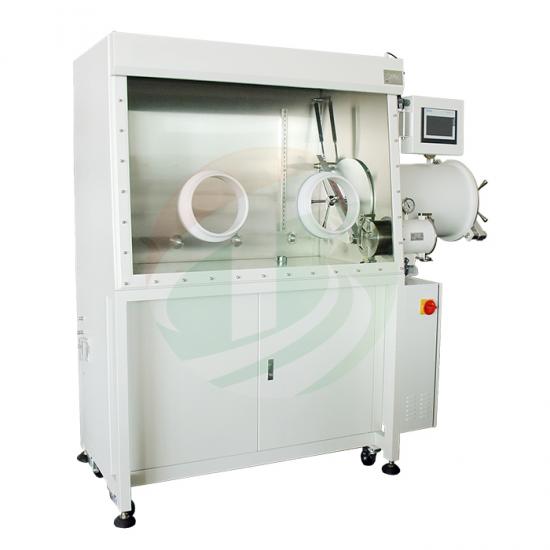
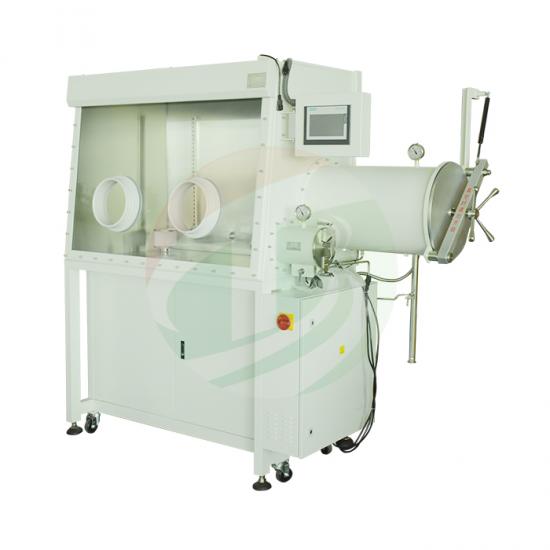
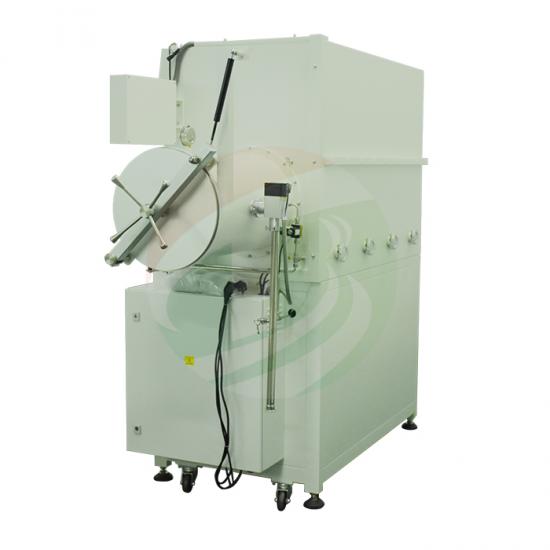
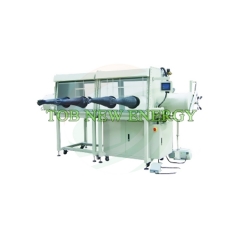
Single Workstation Lab Equipment Glove Box
Brand:
TOB NEW ENERGYitem no.:
TOB-GB-1220order(moq):
1Payment:
L/C,T/Tproduct origin:
Chinashipping port:
XIAMEN
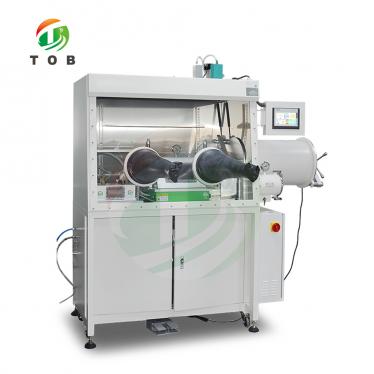
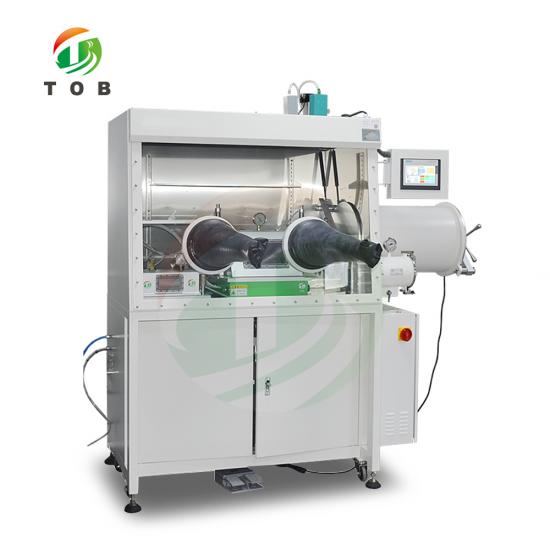
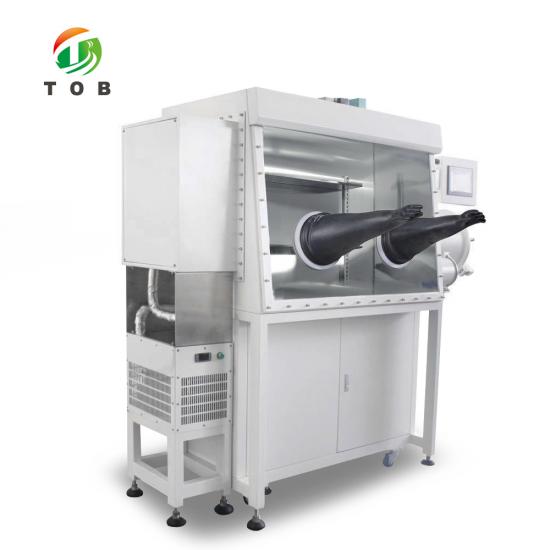
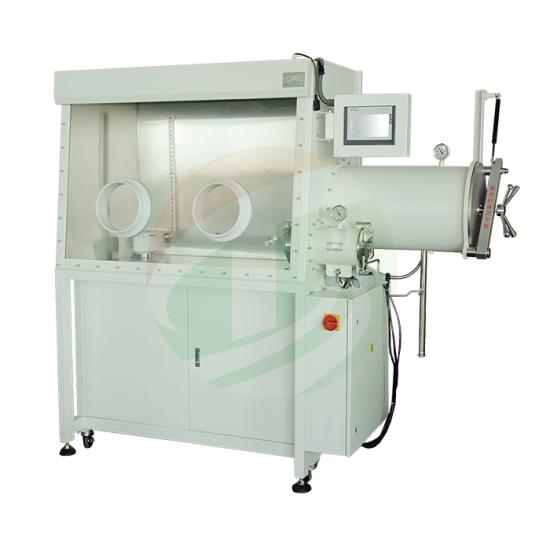
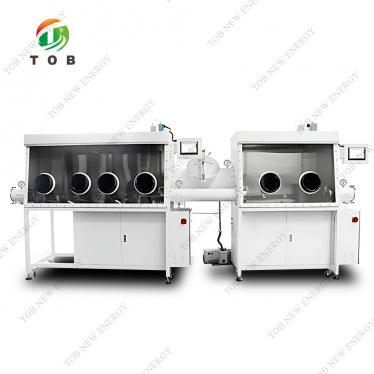
TOB-GB-1220 Single-Workstation Glove Box with Integrated Gas Purification for Air-Sensitive Battery R&D
Product Overview and Ideal Applications
A glove box with integrated gas purification is a sealed containment system that provides a continuous ultra‑dry, low‑oxygen inert atmosphere for handling air‑ and moisture‑sensitive materials. The TOB‑GB‑1220 is a single‑workstation glove box purpose‑built for lithium‑ion and solid‑state battery research and pilot production. It combines a 3 mm-thick 304 stainless‑steel main chamber, a PLC‑controlled single‑column purification unit, and automatic antechamber vacuum/inert‑gas cycling to maintain H₂O and O₂ concentrations below 1 ppm under normal operating conditions (20 °C, standard atmosphere, 99.999% inert gas supply).
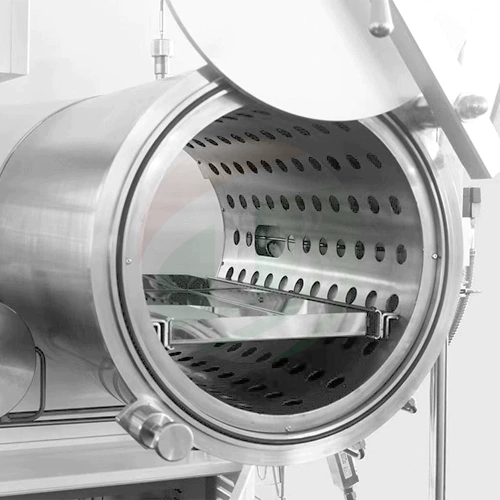
The operator works through two butyl‑rubber gloves mounted on 200 mm glove ports while viewing the process through a tilted, 8 mm-thick toughened‑glass front window. A large motorised antechamber (φ360 × 600 mm) and a smaller manual antechamber (φ150 × 300 mm) allow material transfer without breaking the internal atmosphere. The purification column, filled with imported German adsorbent material, is regenerated on‑demand, and the ZrO₂‑based oxygen sensor avoids the limited lifetime issues of fuel‑cell sensors often found in older glove box designs. All system parameters—vacuum, circulation fan speed, regeneration cycles—are managed via a touch‑screen PLC.
Ideal for:
-
Lithium‑metal and solid‑state battery assembly: stacking electrodes, solid electrolytes, and lithium‑copper composite foils in a moisture‑free environment.
-
Electrolyte filling of pouch and cylindrical cells with sensitive liquid or gel electrolytes.
-
Handling of moisture‑reactive cathode precursors (e.g., high‑nickel NMC powders), sulfide solid electrolytes, and metallic lithium.
-
Universities and corporate R&D labs that require a single, reliable workstation for advanced battery prototyping and material characterization.
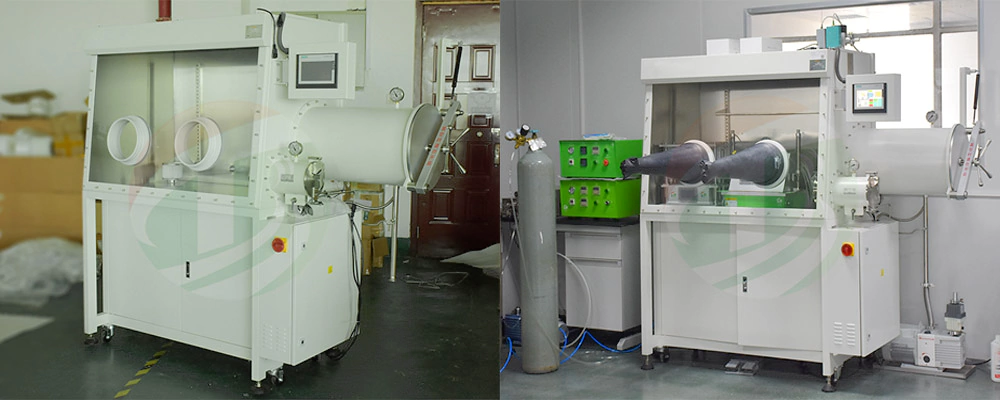
Where the Glove Box Fits in Battery Manufacturing and Research
In the lithium‑ion and solid‑state battery workflow, the TOB‑GB‑1220 sits at the cell assembly and material handling stage—after electrode preparation and slurry coating, and before cell sealing. It is the bridge between air‑exposed fabrication steps and the final, hermetically sealed cell.
Once cathode and anode sheets are dried and calendared, they are transferred into the glove box for cutting, stacking or winding, tab welding, and electrolyte filling—all under an inert argon or nitrogen atmosphere. For solid‑state batteries, this is where the solid electrolyte layer (e.g., LLZO pellet, sulfide membrane) is brought into contact with the lithium anode and the cathode, completely eliminating exposure to moisture that would form resistive interfacial phases. Even a brief exposure of a sulfide electrolyte to 10 ppm H₂O can degrade its ionic conductivity by an order of magnitude, making a reliable glove box not just convenient but essential.
The TOB‑GB‑1220’s automatic antechamber and PLC‑controlled purification make it particularly suitable for workflows that involve frequent material transfers—for example, moving dried cathode sheets, lithium‑copper foils, and electrolyte components into the box multiple times per day. The large 360 mm-diameter antechamber can accommodate several electrode stacks or a small oven for in‑situ drying, while the small antechamber handles samples and tools quickly without disturbing the main chamber atmosphere.
How the Integrated Purification and Control System Works
The TOB‑GB‑1220 maintains its ultra‑dry, low‑oxygen environment through a closed‑loop gas purification cycle, continuously scrubbing the internal atmosphere rather than relying on a one‑time inert gas purge. This is what allows it to keep both H₂O and O₂ below 1 ppm even when the operator is regularly introducing small amounts of contamination through the gloves or antechambers.
Gas circulation and purification circuit
A high‑performance frequency‑controlled fan (90 m³/h) draws gas from the main chamber through a DN40 main pipe. The gas passes through the purification column, which is filled with a proprietary German‑imported adsorbent material combining molecular sieve (for H₂O absorption) and copper‑based catalyst (for O₂ removal by reaction with trace hydrogen or active metal). The cleaned gas is returned to the chamber through a HEPA filter, ensuring that any particulates generated by the purification material are not introduced into the working space. Electronically controlled pneumatic vacuum bellows‑sealed valves (DN40) direct the flow and isolate the column during regeneration.
Water and oxygen monitoring
Independent real‑time analysers continuously measure H₂O (range 0–500 ppm) and O₂ (range 0–1000 ppm). The water analyser is designed to be washed and reused, which is particularly valuable for lithium‑battery manufacturing environments where trace electrolyte vapours can contaminate standard sensors. The oxygen analyser uses a ZrO₂ solid‑electrolyte sensor rather than a fuel cell. Unlike fuel cells, which have a finite lifetime and degrade when exposed to air, the ZrO₂ sensor can operate for years with occasional calibration, significantly reducing maintenance cost and downtime.
Antechamber and vacuum system
-
Large antechamber (φ360 × 600 mm): Fully automated control via the PLC touch screen. With one button, the chamber executes a programmable vacuum/refill cycle: evacuate to a set vacuum level (using an RV8 rotary vane pump with oil mist filter), hold to remove adsorbed moisture from the load, backfill with process gas, and repeat if necessary. This automated sequence ensures that every item entering the main chamber is stripped of surface moisture and air to a consistent degree, independent of operator skill.
-
Small antechamber (φ150 × 300 mm): Manual valve control for rapid transfer of small tools, samples, or a single electrode sheet. Its small volume means a vacuum/refill cycle can be completed in under 2 minutes.
-
Main chamber vacuum: The main chamber itself can be evacuated for initial start‑up or after maintenance, using the same vacuum pump via the purification column bypass.
PLC control and safety interlocks
The touch‑screen PLC coordinates the circulation fan speed, valve states, regeneration heating cycles, vacuum pump operation, and analyser readings. It includes password‑protected recipe storage for different operating modes (e.g., “normal run”, “regeneration”, “standby”). Alarms for high H₂O/O₂ levels, low inert gas pressure, and regeneration over‑temperature are displayed on screen and indicated audibly.
Key Engineering Advantages for Battery R&D and Production
-
Sub‑1 ppm H₂O and O₂ Atmosphere
Under standard conditions (20 °C, 99.999 % inert gas supply), the integrated purification system maintains both moisture and oxygen below 1 ppm. This is achieved not by a massive one‑time purge, but by continuous circulation of the internal gas through the German‑imported purification material. The practical benefit: even after an operator has inserted and removed gloved hands multiple times, or after the antechamber has been cycled a dozen times in a day, the atmosphere recovers to < 1 ppm within minutes without the need for a full system regeneration. -
German‑Imported Purification Material with Long Service Life
The purification column is charged with a high‑capacity adsorbent and catalyst combination sourced from Germany. The material can be regenerated multiple times by heating under a flow of regeneration gas (typically 5 % H₂ in N₂ or Ar), a process controlled automatically by the PLC. The combination of high initial capacity and full‑automatic regeneration extends the column life well beyond that of generic molecular‑sieve‑only systems, lowering the cost per operating hour. -
ZrO₂ Oxygen Sensor Eliminates Fuel‑Cell Sensor Limitations
Conventional glove boxes often employ electrochemical fuel‑cell oxygen sensors, which have a limited lifespan (typically 12–24 months) and can be destroyed if accidentally exposed to air. The TOB‑GB‑1220 uses a ZrO₂ solid‑electrolyte sensor that withstands air exposure and requires only periodic calibration. For labs that may not run the glove box continuously, this is a major practical advantage: the sensor survives shut‑down periods and is instantly ready for the next campaign. -
Automatic Large Antechamber Reduces Operator Variability
The φ360 × 600 mm antechamber is equipped with automatic pneumatic valves and a PLC‑controlled vacuum/refill sequence. Instead of a manual process where an operator might skip a vacuum cycle or use inconsistent hold times, the automatic program ensures that every load—whether a tray of electrode sheets or a container of solid electrolyte powder—undergoes the same verified cleaning before entering the main chamber. This directly improves the reproducibility of cell assembly. -
Robust 304 Stainless‑Steel Construction and Safety Features
The main chamber is fabricated from 3 mm-thick 304 stainless steel, providing excellent resistance to the acidic vapours that can evolve from LiPF₆‑based electrolytes or from cleaning solvents. The front window is 8 mm toughened glass, detachable for major cleaning or equipment installation, and tilted for ergonomic viewing. The box includes a foot pedal for hands‑free control of the antechamber or lighting, and the entire system is mounted on a wheeled frame with lockable castors for repositioning within the lab. -
Organic Solvent Adsorber and Washable Water Sensor
Battery fabrication often involves organic solvents (NMP, DMC, EMC) that can outgas from electrodes or electrolyte. The built‑in organic solvent adsorber captures these vapours before they poison the purification column or fog the window. Additionally, the water analyser is specifically designed to be washed and reused, avoiding the replacement cost associated with disposable sensor elements that fail when contaminated with electrolyte fumes.
Complete Technical Specifications
| Parameter | Specification |
|---|---|
| Model | TOB‑GB‑1220 |
| Box dimensions (L × W × H) | 1220 × 750 × 900 mm |
| Box material | 304 stainless steel, 3 mm thick, acid‑resistant |
| Box bracket height | 900 mm |
| Main pipe | Stainless steel, DN40 |
| Circulation fan | 90 m³/h, frequency‑controlled |
| Cycle valve | Electrically controlled pneumatic vacuum bellow‑sealed valve, DN40 |
| Purification material | Imported from Germany (molecular sieve + catalyst) |
| Regeneration | PLC‑controlled automatic heating cycle |
| Large antechamber | φ360 × 600 mm, automatic pneumatic valve control, vacuum/refill |
| Small antechamber | φ150 × 300 mm, manual valve, vacuum/refill |
| Vacuum pump | RV8 rotary vane pump with oil mist filter |
| Water analyser | Range 0–500 ppm, washable and reusable |
| Oxygen analyser | Range 0–1000 ppm, ZrO₂ sensor (not fuel cell) |
| Organic solvent adsorber | Included |
| Glove ports | Stainless steel, Ø200 mm |
| Gloves | Butyl rubber, type 7B1532 |
| Front window | Transparent toughened glass, 8 mm thick, detachable, tiltable |
| Lighting | Integrated illumination system |
| Backup interfaces | 3 × KF40, 1 × power interface |
| Shelves | Two‑layer inside the box |
| Mobility | Wheeled frame with lockable castors |
| Foot pedal | Included |
| Control | PLC with touch‑screen interface, alarm management |
| Operating conditions | 20 °C, standard atmosphere, 99.999 % inert gas supply → H₂O and O₂ < 1 ppm |
Common Operational Issues and Practical Troubleshooting
Even a well‑designed glove box requires attention to maintain its atmosphere quality. The following are the most frequent issues encountered in battery labs and how to resolve them with the TOB‑GB‑1220.
| Problem | Possible Cause | How TOB‑GB‑1220 Helps / Action |
|---|---|---|
| H₂O or O₂ level rises above 1 ppm and does not recover | Purification column saturated; or a leak in the system (glove, window seal, antechamber door). | Check the PLC alarm log for regeneration overdue. Initiate an automatic regeneration cycle. If the level still does not drop, perform a leak test by pressurising the box slightly and using a commercial leak‑detector spray on seals and gloves. The washable water sensor can be cleaned if exposed to electrolyte vapours. |
| Antechamber vacuum cycle too long or fails to reach set vacuum | O‑ring on the door not seated or contaminated; pump oil degraded. | Inspect and clean the antechamber door O‑ring with IPA. If vacuum performance is poor on both antechambers, check the RV8 pump oil level and colour—milky oil indicates moisture or solvent contamination and should be changed. |
| Glove rupture or pin‑hole leak (often only noticeable as a slow H₂O rise) | Mechanical damage, chemical attack from solvents, or natural ageing of butyl rubber. | Regularly inspect gloves visually and by pressurising the box slightly and listening for hissing. The 7B1532 butyl gloves are resistant to many solvents but should be replaced annually or immediately if a defect is found. Keep a spare pair in the lab. |
| Oxygen sensor reading drifts or fails calibration | Sensor ageing or contamination. | The ZrO₂ sensor is inherently more stable than a fuel cell. If drift occurs, perform the recommended air calibration procedure (expose the sensor to a known O₂ concentration). If the sensor fails completely, replacement is simpler than with fuel‑cell types and does not require purging the sensor housing for days. |
| Water sensor reads high after introducing electrodes that were dried in a vacuum oven | Electrodes can still contain residual NMP or moisture that outgases slowly. | The organic solvent adsorber will capture some of the solvent vapour. If the H₂O rises but then slowly decreases over several hours, the purification column is working. To accelerate recovery, run the circulation fan at maximum speed. Pre‑baking electrodes at 120 °C under vacuum for at least 2 h directly before transfer reduces the initial load. |
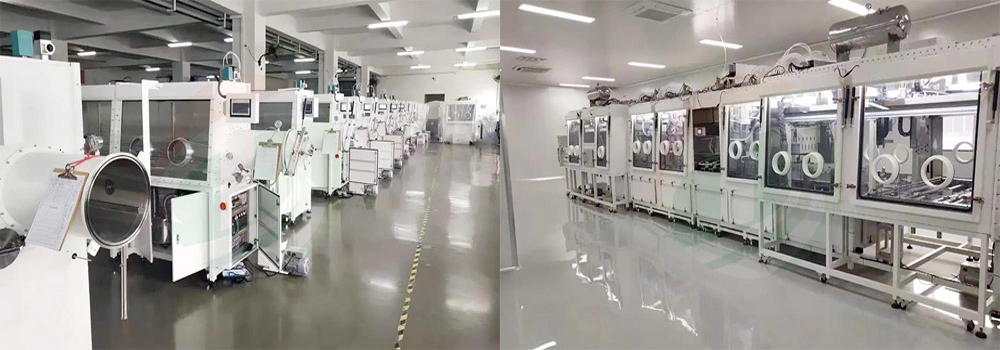
Best Practices for Sustained Sub‑1 ppm Atmosphere
These recommendations are based on field experience with battery R&D glove boxes to help you keep the TOB‑GB‑1220 operating at its specified performance with minimal regeneration downtime.
-
Regeneration scheduling: Do not wait until the H₂O or O₂ alarm triggers. Establish a routine: for labs operating 8 hours/day, 5 days/week, a regeneration every 2–4 weeks is typical. The PLC can be programmed to run regeneration overnight or on weekends automatically.
-
Glove usage discipline: Minimise the frequency of inserting and withdrawing hands, as each operation introduces trace moisture and oxygen from the outside of the gloves. Wipe the outer glove surfaces with a dry, lint‑free cloth before insertion, and consider covering the gloves with over‑gloves when not in use.
-
Antechamber loading: Always pre‑dry items that will enter the gloved box—especially electrode sheets, separators, and tools—in a vacuum oven or a dry environment before placing them in the antechamber. The less moisture you introduce, the longer the purification column lasts between regenerations.
-
Solvent and electrolyte handling: Open containers of electrolyte or solvent only when necessary and keep them tightly sealed inside the box. Use the smallest possible open vessel. The organic solvent adsorber has finite capacity; regular replacement or regeneration (if supported) prevents solvent carryover into the main purification column.
-
Periodic leak check: Once a month, close all valves and slightly pressurise the box with inert gas, then monitor the pressure decay over 30 minutes. Any measurable drop indicates a leak that should be located and sealed. This preventative check catches small leaks before they cause a chronic H₂O/O₂ problem.
Why Choose TOB‑GB‑1220 Over a Basic Single‑Station Glove Box: A Comparison
| Feature | TOB‑GB‑1220 | Basic Single‑Station Glove Box |
|---|---|---|
| Purification system | Integrated, single‑column, PLC‑controlled automatic regeneration, German‑imported material | Often simple recirculation or manual valve; no automatic regeneration; lower‑grade adsorbent |
| Oxygen sensor | ZrO₂ solid‑electrolyte, air‑exposure tolerant, long lifetime | Fuel cell, limited life, must be protected from air |
| Water sensor | Washable/reusable, designed for battery electrolyte environments | Disposable type, easily contaminated by solvents |
| Large antechamber control | Fully automatic pneumatic valve control, programmable cycles | Manual valves, operator‑dependent vacuum quality |
| Circulation control | Frequency‑controlled fan, adjustable speed | Fixed‑speed fan |
| Organic solvent adsorber | Included | Usually not available |
| Construction | 304 stainless steel, 3 mm thick, acid‑resistant | Often thinner material, less chemical resistance |
| Control and data | Touch‑screen PLC with alarms, regeneration logs, and parameter storage | Basic manual pressure gauges, no data recording |
| Mobility | Wheeled frame with lockable castors, foot pedal | Often stationary bench‑top design |
Why upgrade to the TOB‑GB‑1220:
Labs that start with a basic glove box commonly report that the H₂O and O₂ levels drift upward after a few weeks of use, and the regeneration process is cumbersome. The constant need to replace fuel‑cell oxygen sensors and the inability to diagnose slow leaks lead to unpredictable atmosphere quality, which directly affects the reproducibility of cell assembly. The TOB‑GB‑1220 removes these frustrations by automating purification, using durable sensors, and providing the data needed to spot problems before they become failures.
Engineering FAQ — Glove Box Operation for Battery Research
Q1: Can this glove box be operated with argon from standard liquid‑argon dewars, and what purity is strictly required?
Yes, liquid‑argon dewars typically supply gas with 99.999 % purity, which is adequate as the main process gas. However, if your dewar is nearly empty or the gas lines are not properly purged, trace impurities may increase the load on the purification column. We recommend installing a gas purifier on the supply line (not included) to further reduce moisture and oxygen before the gas enters the glove box. This extends the column regeneration interval and reduces the risk of an unexpected atmosphere upset.
Q2: How is the regeneration of the purification column performed, and does it require the box to be taken out of service?
Regeneration is performed by the PLC in a fully automatic sequence. The column is isolated from the main chamber, heated to the required temperature (typically 200–300 °C, depending on the material), and flushed with a regeneration gas mixture (e.g., 5 % H₂ in N₂ or Ar) to remove absorbed H₂O and reactivate the catalyst. The main chamber atmosphere is not affected during regeneration because the circulation loop is diverted. The process takes several hours and is usually scheduled overnight. The box remains usable during regeneration, though the atmosphere will not be actively purified; for critical work, waiting until regeneration is complete is recommended.
Q3: Is it possible to integrate small equipment (e.g., a heated press, a microbalance) inside the glove box?
Yes, the 1220 mm × 750 mm footprint provides sufficient space for many compact laboratory instruments. The two‑layer shelf can be adjusted or removed to accommodate taller equipment. Power can be supplied through the dedicated power interface (one is included), and additional KF40 ports allow signal cables or gas lines to pass through with appropriate feedthroughs. Before introducing any equipment, verify that its surface materials are compatible with the glove box atmosphere (no outgassing of plasticisers, no exposed grease) and that it can operate safely in a low‑humidity, low‑oxygen environment.
Q4: What maintenance does the vacuum pump require?
The RV8 rotary vane pump is equipped with an oil mist filter to prevent oil vapour from entering the antechamber or the box during evacuation. The pump oil should be checked monthly and changed when it appears dark or emulsified. Because the pump handles gas from the antechambers and potentially from solvent‑laden loads, oil contamination is more frequent than in a typical vacuum oven application. Keep a spare bottle of the recommended pump oil and an exhaust filter on hand.
Q5: Can the glove box be used for processes involving hydrogen or other flammable gases?
The standard TOB‑GB‑1220 is designed for inert gas operation (argon, nitrogen). If you intend to use hydrogen‑containing atmospheres, additional safety features are required, such as a hydrogen sensor, explosion‑proof electrical components, and appropriate gas handling. Contact TOB with your specific gas mixture and concentration requirements for a custom configuration.
Other models & Custom Solution(contact us for the detail information)
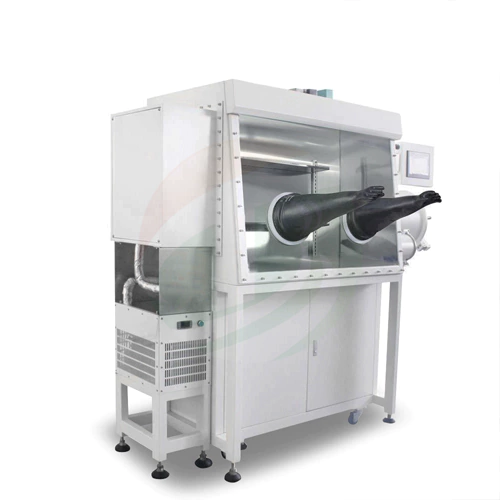 |
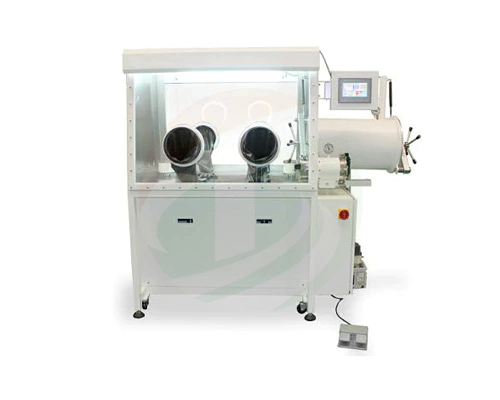 |
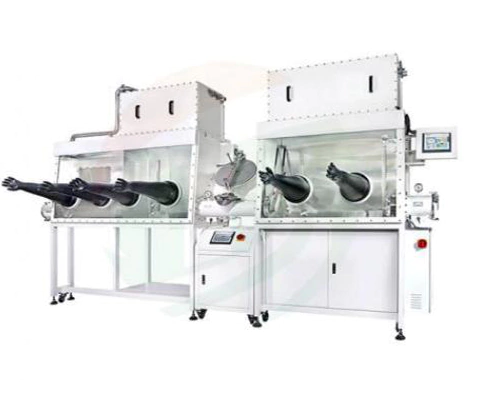 |
 |
|
Glove box with refrigerator |
Single work station face to face |
T-shape glove box |
Heated transfer chamber |
Ready to assemble lithium‑metal or solid‑state cells in a controlled, sub‑1 ppm atmosphere? Request a quotation for the TOB‑GB‑1220 with your required configuration, or ask our engineers for a recommendation on accessories such as an integrated oven, balance, or additional feedthroughs.
tob.amy@tobmachine.com | +86 181 2071 5609
Previous:
4-Position Anaerobic Glove Box For BatteryNext:
Glove Box Integrated H₂S Removal for Lithium-Sulfur and Solid-State Battery Research
If you are interested in our products and want to know more details,please leave a message here,we will reply you as soon as we can.

 subscribe to us