Chinese
 français
 Deutsch
 italiano
 español
 português
 Nederlands
 日本語
日本語 한국의
한국의




- Home
- >
- Batteries for Sale
- >
- Sodium-ion Batteries
- >
- 1Ah NFM Sodium-Ion Pouch Cell for Research
Categories
Hot Products
Loading...

1Ah NFM Sodium-Ion Pouch Cell for Research
Brand:
TOB NEW ENERGYitem no.:
TOB-CU-PO-S1-10H101order(moq):
1Payment:
L/C, T/Tproduct origin:
Chinashipping port:
XIAMEN
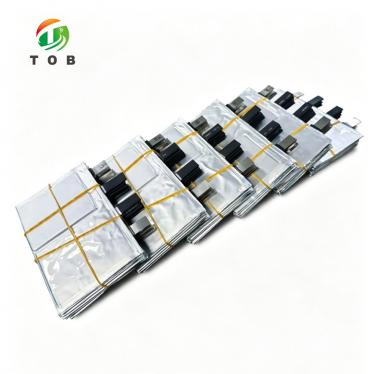
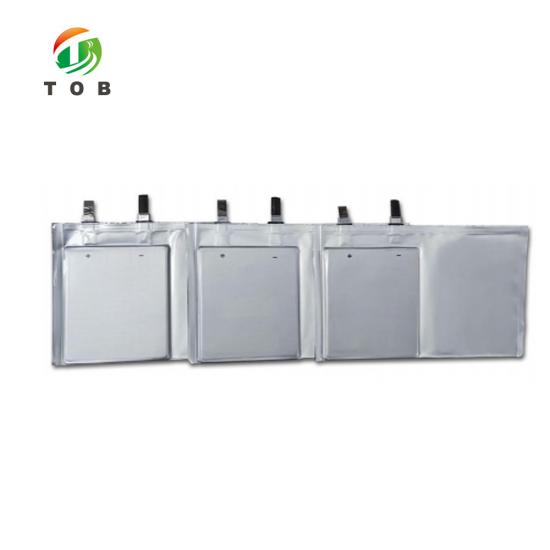
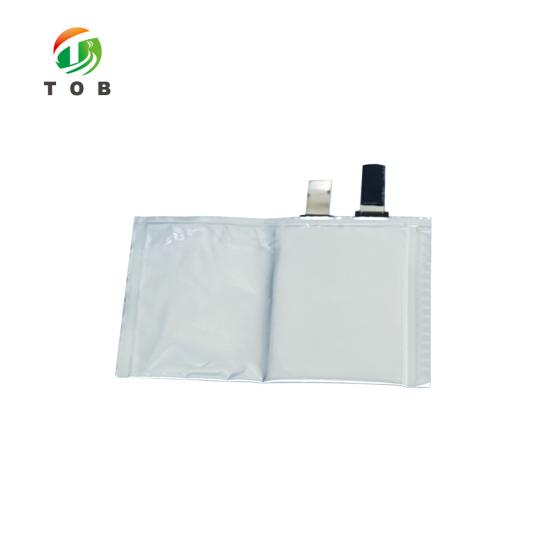
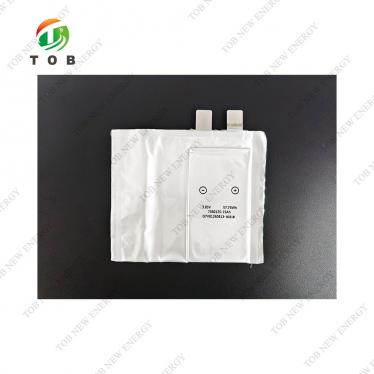
425868 Sodium-Ion Pouch Cell (1Ah, NFM/Hard Carbon) – Unfilled Research Cell for Electrolyte & Formation Development
Product Overview
A pre-engineered, unfilled sodium-ion pouch cell built on a stacking architecture, using nickel-iron-manganese-oxide (NFM) cathode and imported hard carbon anode. Designed for labs and cell development teams that need a standardized, high-repeatability platform to study sodium-ion electrolyte systems, formation protocols, and cycling behavior—without the variability of in-house electrode fabrication. The cell comes dry, with no electrolyte, putting full formulation control in the hands of researchers. The 1Ah nominal capacity and precise electrode loading data (cathode 13.84 mg/cm² single-sided areal density, 2.70 g/cc compaction; anode 6.42 mg/cm², 0.95 g/cc) eliminate guesswork and allow immediate correlation of electrochemical data to well-defined physical parameters. Built with the same stacking process and quality discipline our engineers apply in pilot-scale production, this cell serves as a reliable bridge between coin-cell screening and A-sample prototyping. Every batch is manufactured under process controls informed by 24 years of battery engineering, then validated through cycling in our own sodium-ion dry room labs. For material developers, electrolyte formulators, and start-up teams moving into Na-ion technology, this cell cuts the time-to-data and scales with your research.
Key Advantages
A standardized unfilled pouch cell designed for reproducible sodium-ion research. Our engineering team selected the NFM/Hard Carbon couple and stacking process based on steady-state cycling data from TOB NEW ENERGY’s in-house pilot lines and customer feedback across more than 500 battery labs. The result is a cell that removes electrode fabrication variables, lets you focus on electrolyte chemistry and formation, and feeds directly into larger-scale process development.
● Dry, unfilled design with recommended electrolyte model (TOB-NF96F, 6.0 g)
Gives full control over electrolyte formulation and filling volume. Researchers can screen additive packages, co-solvents, or novel sodium salts without fighting pre-existing SEI artifacts.
Our applications lab pre-qualifies the cell with the recommended electrolyte to establish a performance baseline; cycle data available on request.
● Transparent electrode metrics and validated specific capacities (cathode 127 mAh/g, anode 300 mAh/g)
Lets you normalize electrochemical data against known active material performance immediately. This eliminates the “black box” problem common with third-party cells.
Areal density, loading, and compaction data are verified on production samples via our in-house coin-cell and pouch-cell test lines.
● Stacking process matched to production-relevant geometry
Avoids the limited scalability of small single-sheet lab cells. The 425868 form factor (68×58 mm body, ≤4.2 mm thickness) reflects real-world pouch cell dimensions, making it directly translatable to A-sample prototyping on our pouch cell equipment.
The same cell structure has been used internally for scale-up trials, confirming thermal and pressure uniformity under hot-press formation (0.9 MPa).
● Pre-defined formation and grading recipes, both with and without hot press
Reduces protocol development time. The hot-press protocol (45°C, 0.9 MPa) and the standard Neware-compatible protocol (25°C, 0.2 MPa) are provided as field-tested starting points.
These recipes were refined through iterative cycling in our solid-state and sodium-ion lab, achieving <2% capacity variance across dozens of cells.
● Backed by a team of PhD process engineers with 20+ years in battery scale-up
When your research moves from electrolyte screening to prototype runs, we can support cell design changes, larger format adaptations, and transfer to our sodium-ion battery production line.
TOB NEW ENERGY has completed over 3,000 research-to-pilot transitions for universities and start-ups worldwide.

Basic information
|
Item |
Sodium Nickel Iron Manganese Oxide(NFM) / Hard Carbon, 1Ah |
|
Model No. |
425868 |
|
Main Body Length (mm) |
68 |
|
Main Body Width (mm) |
58 |
|
Total Cell Length (mm) |
130 |
|
Total Cell Height (mm) |
75 |
|
Total Cell Thickness (mm) |
≤ 4.2 |
|
Remark |
1.Rubber protective sleeves: For protection only. Must be removed before testing. 2.The tab near the gas bag is the negative terminal. 3.When clamping the cell for testing, take care not to clamp the tab sealant. 4.These values are manually measured and subject to measurement error. |
Technical parameters
|
Item |
Specification |
|
|
Battery Type |
Sodium Nickel Iron Manganese Oxide / Hard Carbon, 1Ah |
|
|
Product Code |
TOB-CU-PO-S1-10H101 |
|
|
Cell Model |
425868 |
|
|
Cell Structure |
Stacking |
|
|
Cathode |
Material |
Sodium Nickel Iron Manganese Oxide |
|
Loading |
95.5% |
|
|
Single-sided Areal Density (mg/cm²) |
13.84 |
|
|
Compaction Density (g/cc) |
2.70 |
|
|
|
Specific Capacity (mAh/g) |
127 |
|
Anode |
Material |
Imported Hard Carbon (5um) |
|
Loading |
95.5% |
|
|
Single-sided Areal Density (mg/cm²) |
6.42 |
|
|
Compaction Density (g/cc) |
0.95 |
|
|
Specific Capacity (mAh/g) |
300 |
|
|
Voltage Range (V) |
1.50–3.95 |
|
|
Recommended Electrolyte Volume (g) |
6.0 |
|
|
Recommended Electrolyte Model |
TOB-NF96F |
|
|
Formation & Capacity Grading Conditions (With Hot Press) |
Formation Process |
45°C, 0.9 MPa (1)Rest for 60 min (make cell body to 45°C) (2)0.05C constant current charge for 8h and then cutoff (3)Rest for 1 min (4)0.1C constant current charge for 3h and then cutoff) |
|
Capacity Grading Process |
25°C, 0.9 MPa (1)Rest for 3 min (2)0.2C constant current-constant voltage charge to 3.95V, cutoff current 0.05C (3)Rest for 3 min (4)0.2C constant current discharge to 1.50V(Complete 1st cycle charge/discharge, calculate initial efficiency) |
|
|
Formation & Capacity Grading Conditions (Without Hot Press, e.g., Neware Test Cabinet) |
25°C, 0.2 MPa (1)Rest for 3 min (2)0.05C constant current charge to 3.95V, cutoff current 0.02C (3)Rest for 3 min (4)0.2C constant current discharge to 1.50V(Complete 1st cycle charge/discharge, calculate initial efficiency) |
|
|
Cycle Test Conditions |
(1)Rest for 3 min (2)0.5C CC charge to 3.90V, CV hold until 0.02C or 0.05C cutoff (3)Rest for 3 min (4)1.0C DC discharge to 1.50V; Repeat steps 1–4 for XX cycles |
|
|
Charge and discharge curve graph (1Ah) |
Cycle Diagram (at room temperature - hard carbon 1Ah 0.5C/1C) |
 |
 |
|
Test condition: 45℃, 0.9MPa, 0.05C CC to 8h, 0.1C CC to 3h, exhausting after completion; 25℃, 0.9MPa, 0.2C CC to 3.95V, CV to 0.05C, 0.2C DC to 1.5V |
Test condition: 25℃℃, 0.2MPa, rest 3min; 0.5C CC to 3.90v, CV to 0.02Cor 0.05C; rest 3min; 1.0c Dc to 1.50v. |
Parameter Interpretation & Application Notes
The 1.50–3.95 V window aligns with the electrochemical stability range of the NFM/Hard Carbon couple and typical electrolyte oxidation limits for sodium-ion systems. The low-voltage cut-off at 1.50 V prevents irreversible hard carbon structural damage during deep discharge. The specific capacities (127 mAh/g cathode, 300 mAh/g anode) reflect N/P ratio tuning validated through our in-house half-cell baseline tests — providing a balanced full-cell design where the anode maintains a slight excess to suppress sodium dendrite nucleation. The stacking architecture, combined with the <4.2 mm thickness and hot-press-capable formation, mimics industrial thermal management, ensuring that your lab data translates more reliably to pilot-setup on our cylindrical and pouch cell pilot lines. The recommended electrolyte TOB-NF96F meets the SEI formation needs for hard carbon; when you substitute your own electrolyte, the provided formation recipes serve as a direct comparative benchmark. For those working on solid-state sodium electrolytes or high-nickel O3-type cathode variants, the cell’s dry, unfilled state and robust sealing geometry support post-injection vacuum sealing and cycling under controlled moisture (-50°C dew point available in our facilities).
Applications
● Electrolyte R&D and Formulation Screening
Problem: Cycling data from self-made electrodes is often dominated by coating inconsistencies, mixing variables, and unknown electrode parameters. Isolating electrolyte effects becomes a statistical battle.
Solution: Standardize on the 425868 cell. With precisely controlled electrode loading and compaction, any performance shift correlates to your electrolyte variable. Run side-by-side cells with TOB-NF96F as the control, and your new formulation as the test. TOB NEW ENERGY’s in-house sodium-ion lab validates baseline cycling curves for every production lot — you get a reference dataset before you even fill.
● Sodium-Ion Material Qualification
Problem: New cathode active materials or hard carbon variants show promising half-cell data but unpredictable full-cell behavior due to unknown electrode balancing.
Solution: Use the cell’s anode as a fixed commercial reference (5 µm imported hard carbon, 300 mAh/g), then pair it with your own cathode coating using our electrode coating equipment to rapidly evaluate your material in a full-cell configuration. We can also fabricate custom cathodes for this cell format through our pilot services.
● University Research & Shared Facilities
Problem: Students spend months optimizing electrode recipes instead of generating electrochemistry insights; cross-group reproducibility suffers.
Solution: The unfilled pouch cell provides a ready-made platform for Master’s and PhD projects on sodium-ion aging mechanisms, EIS modeling, dV/dQ analysis, and post-mortem studies. Clear documentation of all physical parameters removes the need for in-house electrode fabrication. Our educational discount program and technical support — built from 6,000+ university partnerships — accelerate lab course setup.
● Start-up Prototype & A-Sample Verification
Problem: Moving from coin-cell data to prototype pouch cells requires significant process know-how and capital.
Solution: The 425868 cell acts as a process validation vehicle. Use it to dial in your formation protocol, evaluate gas generation under your specific electrolyte, and generate cycle life data sheets for investor due diligence. When ready to scale, our PhD team can transfer the design to larger formats on your own or our contracted sodium-ion battery pilot line.
● Factory Process Introduction & Training
Problem: Production teams need hands-on training with sodium-ion technology before committing to mass production equipment.
Solution: Procure batches of these cells for operator training on electrolyte filling, pouch sealing, and cycling test procedures. The detailed formation protocols reduce learning curve and standardize training outcomes.
 |
 |
Frequently Asked Questions
Q1: Can I use a different electrolyte than TOB-NF96F with this cell?
A: Absolutely. The cell ships dry precisely to let you introduce your own electrolyte formulations. TOB-NF96F is our recommended commercial baseline based on internal cycling studies across 0°C to 60°C showing stable coulombic efficiency >99.8% after formation. If you use a different electrolyte, we suggest running our formation protocol first as a comparative benchmark, then adapting voltage limits and formation current as your electrochemistry requires. Based on our 24 years of battery process data, if your electrolyte has notably different ionic conductivity or SEI formation kinetics, adjust the 0.05C and 0.1C formation steps accordingly — our applications team can review your protocol.
Q2: The cell comes with a rubber protective sleeve and a gas bag. How do I handle these before testing?
A: The rubber sleeve is for mechanical protection during transport only. Remove it fully before clamping the cell in your test fixture. The gas bag serves as a reservoir during formation; after the formation process, you may cut and reseal the pouch under vacuum or inert atmosphere, depending on your post-formation analysis plan. When clamping, ensure the fixture extends pressure only to the electrode stack area — never clamp the tab sealant zone. This procedure is detailed in our handling guideline, drawn from thousands of cell integrations in academic and industrial labs.
Q3: How do you ensure batch-to-batch consistency for a cell that’s intended as a research standard?
A: Every production batch undergoes statistical sampling that includes cell thickness measurement, electrode loading verification, and reference cycling using our standard electrolyte and formation protocol under controlled dry-room conditions (dew point –50°C). We release the batch only if capacity variance across samples is within 2% and thickness within ±0.1 mm. These data are generated on our own coin cell and pouch cell test lines, the same pilot infrastructure used for process development with our university partners.
Trusted by Global Innovators
TOB NEW ENERGY’s standardized sodium-ion pouch cells are currently operating in over 200 electrolyte development programs, cathode material qualification studies, and start-up prototype cycles across North America, Europe, and Asia. Our platform was used by a leading solid-state sodium battery group to evaluate oxysulfide electrolyte- hard carbon interfacial stability, and by a major cathode producer to benchmark their O3-type layered oxide against our NFM reference.
Every researcher who adopts this cell taps into an ecosystem backed by 60+ national patents, IATF 16949-certified manufacturing discipline, and the same engineering support that has guided 6,000+ customers worldwide. When you publish, we’re here to help you describe cell parameters with the precision high-impact journals require.
Previous:
15Ah 3.85V Anode-Free Pouch Cell
If you are interested in our products and want to know more details,please leave a message here,we will reply you as soon as we can.

 subscribe to us