Chinese
 français
 Deutsch
 italiano
 español
 português
 Nederlands
 日本語
日本語 한국의
한국의




- Home
- >
- Battery Tester
- >
- Coin Cell Tester
- >
- Four-Zone Constant Temperature Environmental Test Chamber for Coin Cell Testing
Categories
Hot Products
Loading...
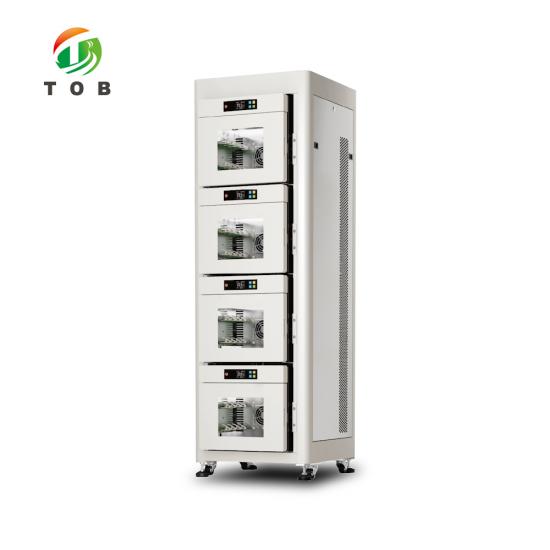
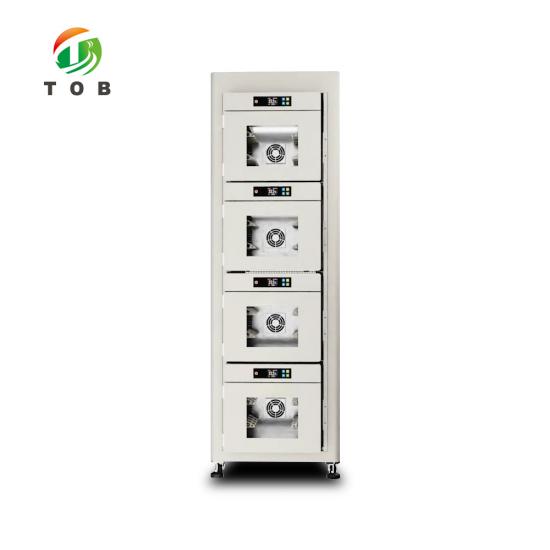
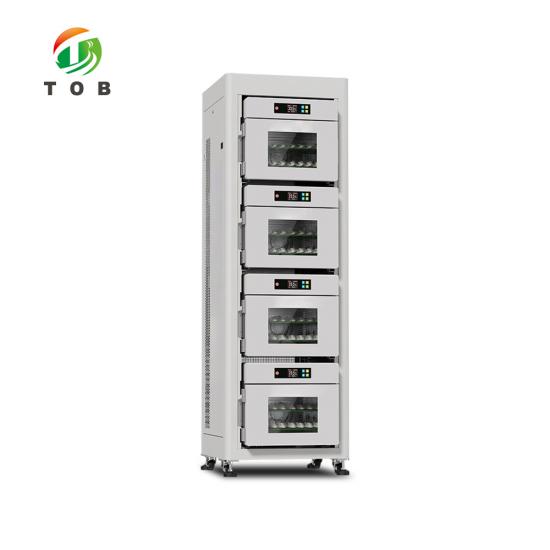
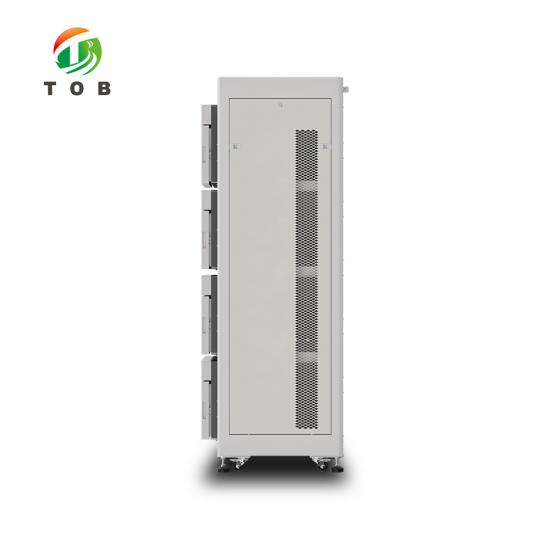
Four-Zone Constant Temperature Environmental Test Chamber for Coin Cell Testing
Brand:
TOB NEW ENERGYitem no.:
TOB-25L-5V100mA-16CHorder(moq):
1setPayment:
L/C,T/Tproduct origin:
Chinashipping port:
XIAMEN
Four-Zone Constant Temperature Environmental Test Chamber for Coin Cell Testing
SPECIFICATIONS
Overview
The TOB-25L-5V100mA-16CH-4 is a laboratory-grade environmental testing system engineered for high-precision thermal evaluation and electrochemical cycling of coin cells.
The system integrates four independent constant-temperature zones, multi-channel milliamp-level charge–discharge capability, and PID-regulated semiconductor thermal control, enabling stable and repeatable battery characterization under controlled environmental conditions.
Designed for battery R&D laboratories, universities, and pilot-scale validation facilities, this equipment supports simultaneous multi-sample testing, improves experimental throughput, and ensures reliable thermal uniformity and safety compliance.
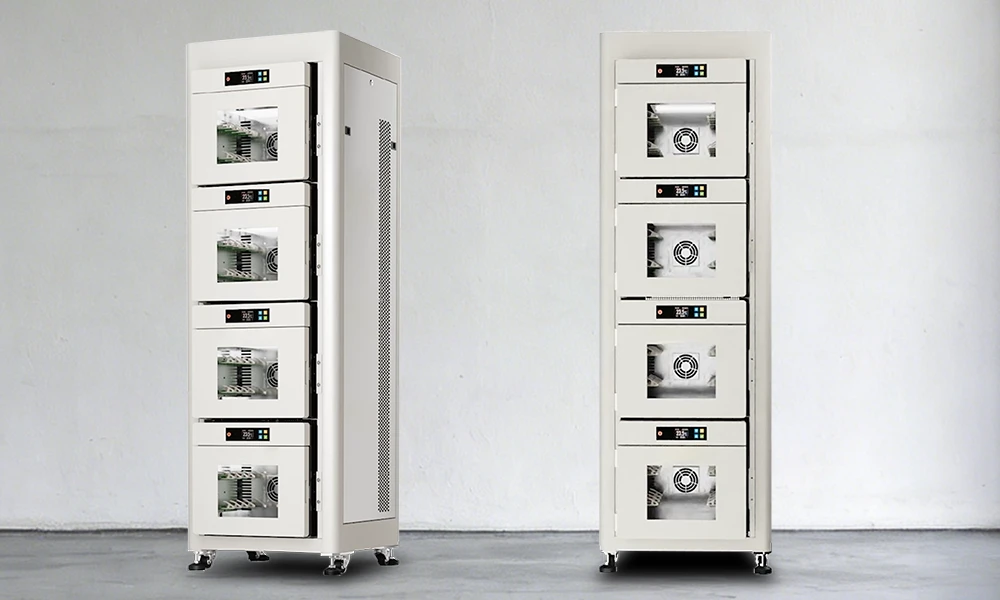
Key Product Features
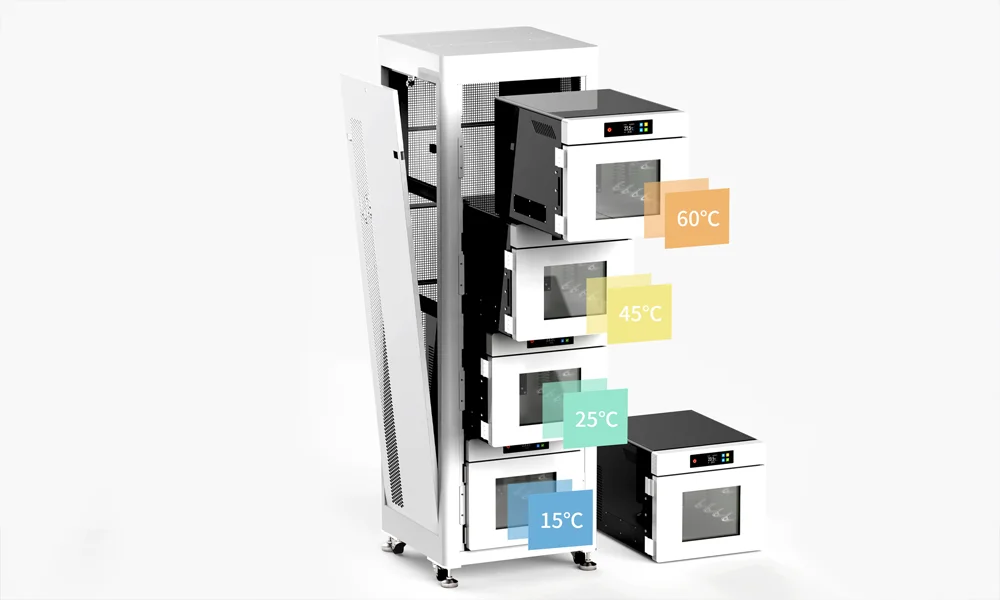
● Four Independent Temperature Zones
● Four fully isolated chambers, each with 25 L internal volume
● Independent thermal regulation for parallel multi-condition testing
● Total capacity of 64 coin cell test positions
This architecture enables comparative studies, batch validation, and accelerated screening within a single compact platform.
Integrated Charge–Discharge Testing Capability
● Up to 16 channels per temperature zone
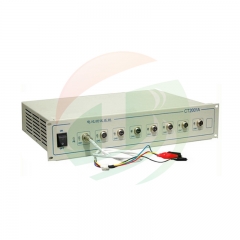
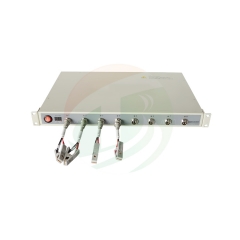
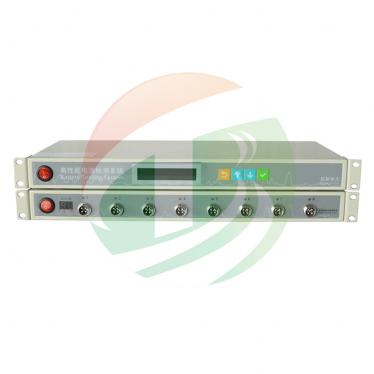
● 64 total milliamp-level channels across the system
● Compatible with 5 V / 100 mA precision testing modules
● Ethernet communication for upper-computer programming and control
The chamber functions as a combined environmental simulator and electrochemical tester, reducing laboratory footprint and simplifying system integration.
High-Stability Thermal Performance
● Temperature range: 15 °C to 60°C
● Temperature fluctuation: ≤ ±0.5°C (no load, stable state)
● Temperature deviation: ±2.0°C
● Heating time: 25 °C→60°C≤50 min
● Cooling time: 25 °C→15°C≤60 min
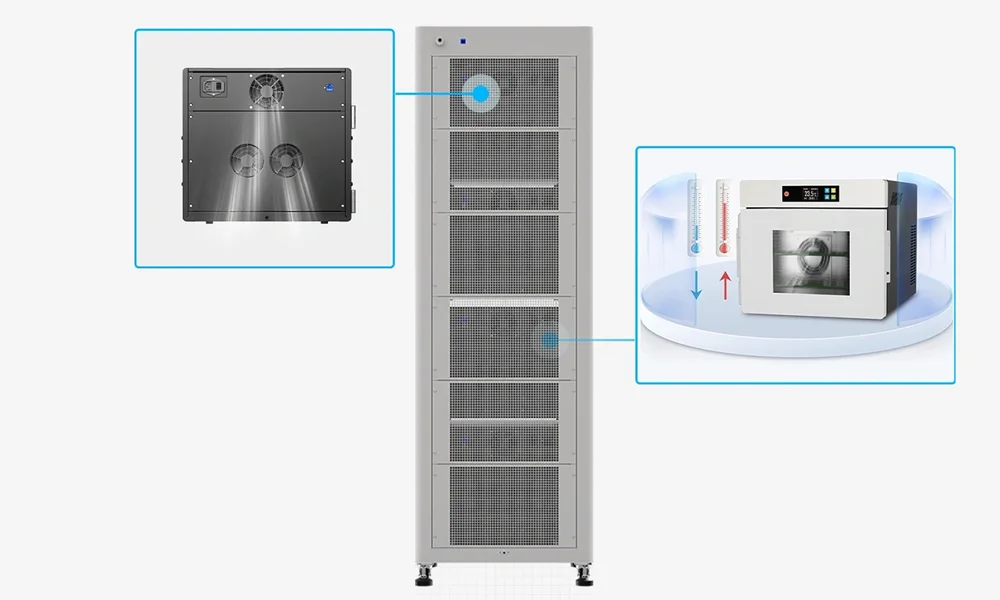
Thermal regulation is achieved through PID-controlled semiconductor cooling and heating modules with forced air circulation, ensuring uniform temperature distribution and repeatable test conditions.
Main Technical Specifications
Chamber Configuration
|
Parameter |
Specification |
|
Temperature zones |
4 |
|
Volume per zone |
25 L |
|
Internal size (per zone) |
360×235×300 mm |
|
External dimensions |
600×680×1880 mm |
|
Net weight |
≈280 kg |
Electrical & Control System
|
Parameter |
Specification |
|
Controller |
LED display + touch key |
|
Control algorithm |
PID automatic balance |
|
Communication |
Ethernet |
|
Power supply |
220 V 50 Hz or 110 V 60 Hz |
|
Power capacity |
1 kW |
|
Max current |
5 A (220 V) / 10 A (110 V) |
Testing Capacity
|
Parameter |
Specification |
|
Cells per zone |
16 |
|
Total cells |
64 |
|
Cell type |
Coin cell (milliamp level) |
|
Channel chassis |
Multi-unit integrated system |
Engineering & Customization Capability
|
Service |
Capability |
|
System integration |
Laboratory testing platform design |
|
Channel customization |
Voltage/current range configuration |
|
Environmental customization |
Temperature control logic adjustment |
|
Delivery |
Integrated transport and rapid installation |
|
Technical support |
Global remote engineering service |
Multiple Safety Protection
The equipment is engineered to comply with laboratory safety and environmental testing standards, including:
● Prohibition of flammable, explosive, corrosive, radioactive, or toxic samples
● Electrical grounding resistance requirement < 4 Ω
● Independent power protection and controlled current limits
● Structural insulation and controlled airflow design
● Temperature fluctuation awareness when chamber doors are opened
These mechanisms ensure safe and compliant laboratory operation.
Strong Heat Dissipation and System Reliability
Semiconductor-based thermal management combined with forced ventilation airflow design enables:
● Rapid heat exchange response
● Stable long-duration cycling tests
● Reduced thermal overshoot and recovery time
This ensures consistent electrochemical data accuracy during extended experiments.
Application Fields
Application by Industry
|
Application Field |
Typical Users |
Main Test Content |
Purpose |
|
Research & University Laboratories |
Universities, electrochemistry institutes |
Cycling, rate capability, temperature performance of new battery systems |
Material development and mechanism study |
|
Battery Manufacturers (R&D) |
Cell manufacturers, material suppliers |
Formula validation, process window evaluation, cycle life testing |
Product development and performance optimization |
|
Battery Manufacturers (Quality Control) |
QC departments |
Batch consistency, high/low temperature cycling, self-discharge |
Quality assurance and reliability verification |
|
Third-Party Testing & Certification |
Testing labs, certification bodies |
Capacity, resistance, rate, life cycle, temperature testing |
Standards compliance and customer certification |
|
Advanced Energy R&D Institutes |
Solid-state / energy storage research centers |
Interface impedance, long-cycle stability, low-temperature charging behavior |
Frontier technology validation and commercialization evaluation |
Application by Battery Technology
|
Battery Type |
Typical Research Focus |
Significance of Temperature Control |
|
Lithium-ion Batteries |
Cycle life, rate capability, degradation mechanism |
Evaluate commercial performance stability |
|
Sodium-ion Batteries |
Low-temperature behavior, long-term degradation |
Verify feasibility of emerging chemistry |
|
Solid-state Batteries |
Interface impedance, thermal stability |
Analyze interfacial kinetics |
|
Lithium-sulfur / Lithium-air |
Shuttle effect, capacity fading |
Study failure mechanisms |
|
Long-life Energy Storage Batteries |
>1000 cycles, calendar life |
Assess long-term reliability |
Typical Test Functions
|
Test Category |
Description |
Value |
|
Constant-Temperature Cycling |
Charge/discharge cycling at controlled temperatures |
Evaluate lifespan and stability |
|
High/Low Temperature Capacity |
Capacity testing from sub-zero to elevated temperatures |
Verify extreme-condition performance |
|
Rate Capability Testing |
Charging/discharging at different C-rates |
Analyze kinetic performance |
|
Storage & Self-discharge |
Long-term rest and capacity decay |
Assess material stability |
|
Failure Mechanism Analysis |
Impedance rise, capacity degradation |
Support material and process optimization |
Email : tob.amy@tobmachine.com
Phone number :+86 181 2071 5609
If you are interested in our products and want to know more details,please leave a message here,we will reply you as soon as we can.

 subscribe to us