Chinese
 français
 Deutsch
 italiano
 español
 português
 Nederlands
 日本語
日本語 한국의
한국의




- Home
- >
- Battery Materials
- >
- Cathode Active Material
- >
- NMC622 NMC Cathode Materials Lithium Nickel Cobalt Manganese Oxide
Categories
Hot Products
Loading...
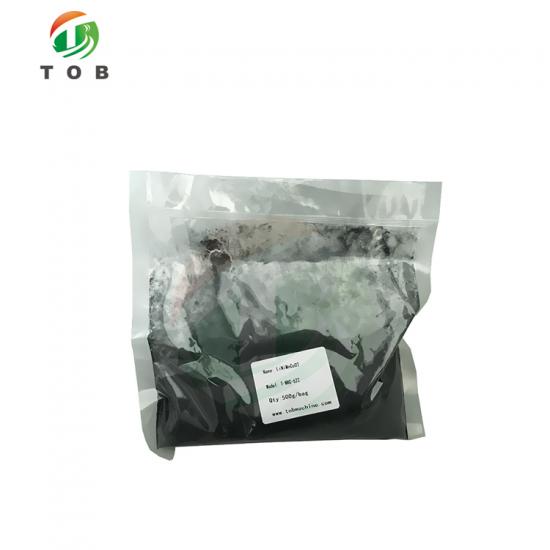
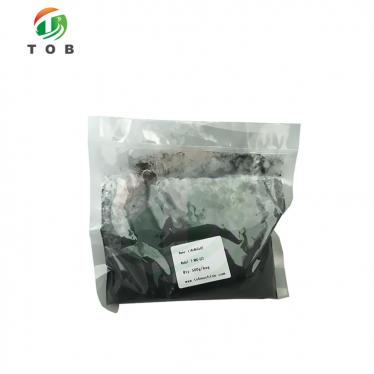
NMC622 NMC Cathode Materials Lithium Nickel Cobalt Manganese Oxide
Brand:
TOB NEW ENERGYitem no.:
TOB-NMC-622order(moq):
1 bagPayment:
L/C,T/Tproduct origin:
chinaColor:
blackshipping port:
xiamen
TOB-NMC-622 High-Nickel Cathode Material (LiNi0.6Co0.2Mn0.2O2) for Lithium-Ion Battery Manufacturing
1. Product Overview and Ideal Applications
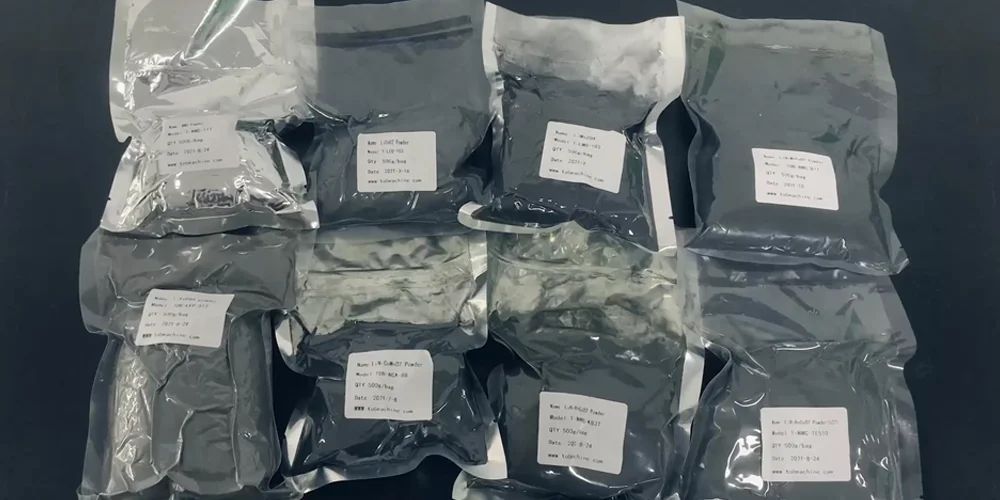
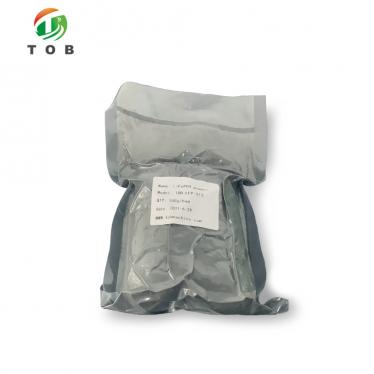
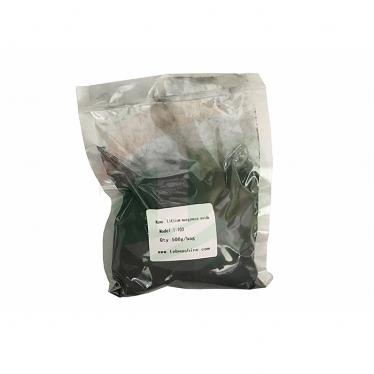
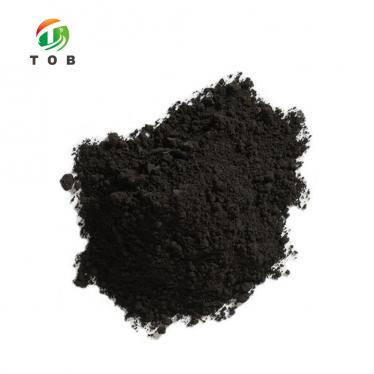
NMC622 (LiNi₀.₆Co₀.₂Mn₀.₂O₂) is a high‑nickel layered oxide cathode material that occupies the sweet spot between energy density, thermal stability, and cost within the NMC family. In everyday battery manufacturing, it serves as the active positive electrode material, mixed with conductive carbon and binder to form a slurry, then coated onto aluminium foil and assembled into lithium‑ion cells. TOB supplies it as a free‑flowing grey‑black powder, fully tested and sealed in 500 g batches under strict moisture control.
The material’s first discharge capacity—reliably reaching 187 mAh/g against a graphite anode at 0.5C—translates directly to longer runtime or thinner electrodes. Its first‑cycle efficiency of 88 % means less lithium is permanently trapped in the solid electrolyte interphase during formation, maximising the usable capacity of the finished cell. Together with low residual lithium compounds (LiOH ≤0.1 wt %, Li₂CO₃ ≤0.09 wt %), the powder processes cleanly through aqueous or solvent‑based slurry systems without the gelation problems that plague many generic NMC622 batches.
Ideal for:
- Battery cell manufacturers developing high‑energy‑density 18650, 21700, or large prismatic cells for EVs and energy storage.
- R&D groups benchmarking cathode materials or formulating next‑generation lithium‑ion systems.
- Pilot lines that need repeatable coating performance batch after batch, with minimal humidity‑related variation.
- Any team that has previously dealt with high‑alkali NMC causing slurry instability and is looking for a robust drop‑in replacement.
2. Where NMC622 Fits in Battery Manufacturing: From Powder to Electrode
NMC622 is the starting point of the cathode‑side manufacturing chain. It enters the process right after raw material synthesis and precursor calcination—TOB has already completed the lithiation and sintering, delivering a crystallised powder that only requires mixing, coating, and calendaring before cell assembly. This places it squarely in the electrode preparation stage of lithium‑ion cell production, upstream of slitting, winding or stacking, and electrolyte filling.
Because NMC622 is a high‑nickel material (Ni ≥0.6), it is inherently more moisture‑sensitive than low‑nickel cathodes or LFP. Water adsorbed on the particle surface can react with residual lithium to form additional LiOH and Li₂CO₃, raising the pH of the slurry and causing PVDF binder dehydrofluorination or even gelation. That’s why the handling environment matters so much. TOB’s low initial alkali content gives processors a wider processing window: even if the slurry preparation area is not dew‑point‑controlled down to −40 °C, the powder remains manageable for several hours after opening—provided the humidity is kept ≤30 %RH.
Process integration best practices based on actual factory feedback:
- Pre‑bake exactly as specified: Bake the powder at 120 °C for 6 hours before batching. This removes any physisorbed moisture picked up during transport or storage, and it also converts a fraction of surface Li₂CO₃, slightly reducing the alkali surface even further. Skipping this step is the most common cause of sudden slurry viscosity spikes.
- Mix in staged dry‑blend sequences: Dry‑blend NMC622 with carbon black for 15‑20 minutes at low speed before adding the PVDF solution. This allows the conductive network to form around the particles without immediate binder‑alkali interaction, giving you a smoother dispersion.
- Coat immediately after mixing: Once the slurry is prepared, coat within 2 hours. Holding slurry overnight, even in a sealed container, can still lead to gradual alkali leach and viscosity creep, especially with aqueous‑based systems.
- Calendaring window: The TOB-NMC-622 is designed to be compacted to 3.20–3.40 g/cm³. Attempting to push beyond 3.50 g/cm³ risks fracturing secondary particles and exposing fresh surface, which can increase side reactions with the electrolyte during cycling.
3. Material Properties and Electrochemical Characteristics
NMC622 crystallises in a hexagonal α‑NaFeO₂ layered structure (R‑3m space group), where lithium ions occupy the interlayer sites and transition metals (Ni, Co, Mn) form the slab. Nickel is the primary electroactive species—it stores and releases charge through the Ni²⁺/Ni⁴⁺ redox couple during delithiation and lithiation. Cobalt stabilises the layered structure and improves electronic conductivity, while manganese provides thermal stability and reduces cost.
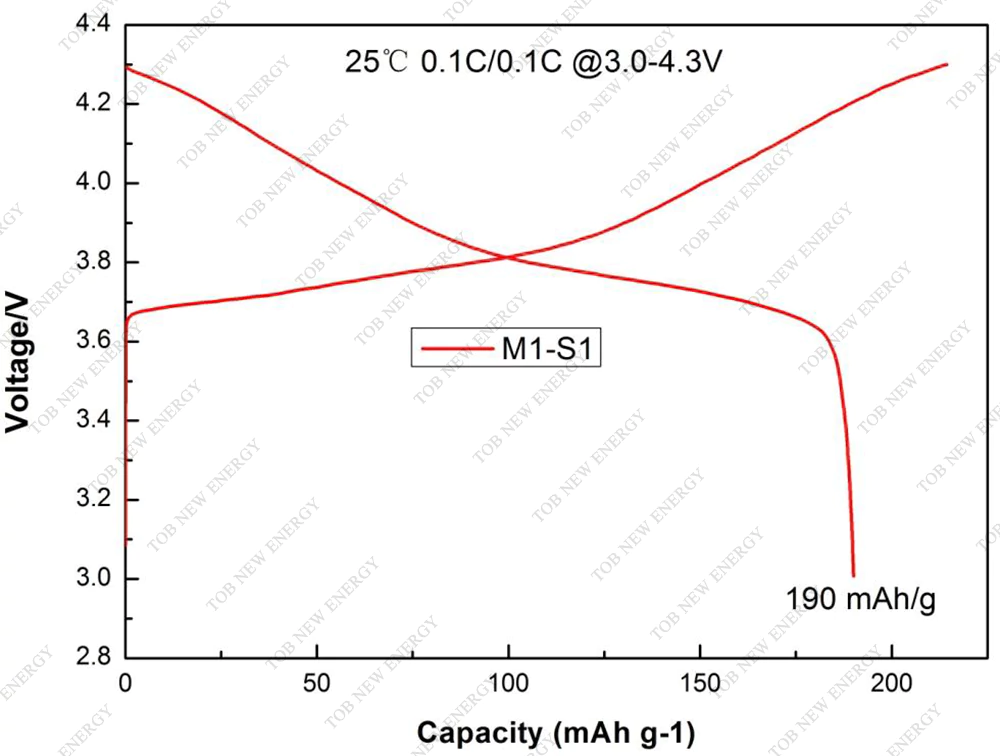
At a nickel content of 0.6, NMC622 balances high specific capacity with better thermal stability than NMC811. In full‑cell tests against graphite, TOB’s material consistently delivers a first‑cycle discharge capacity of 187 mAh/g at 0.5C, close to the theoretical limit for this stoichiometry, and a first‑cycle coulombic efficiency of 88 %. The shape of the voltage profile—smooth, with no abrupt steps—indicates a single‑phase lithium extraction mechanism, which is desirable for battery management system (BMS) design.
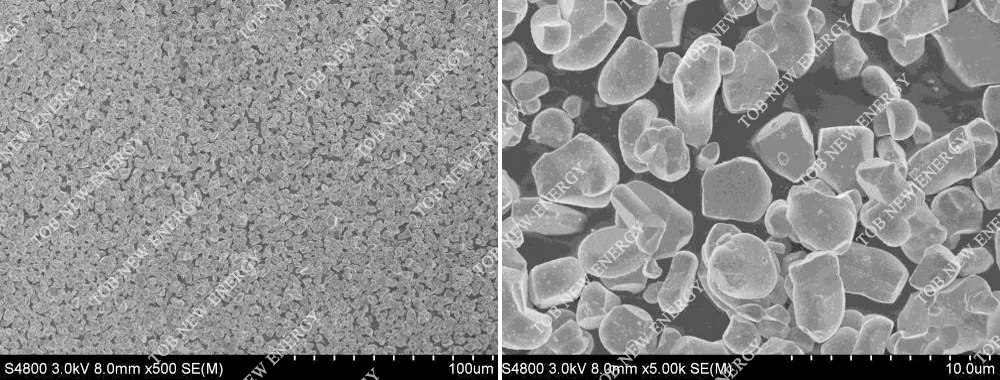
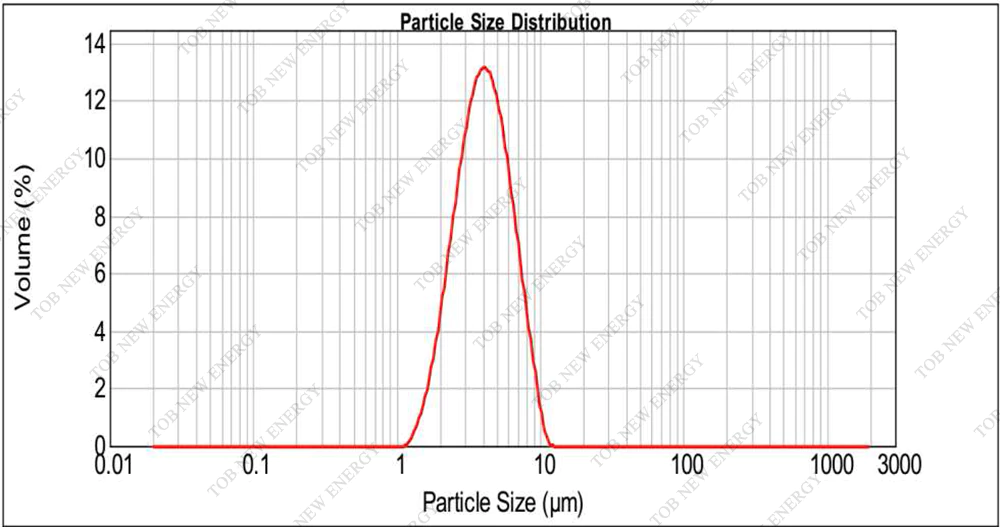
One practical detail that often goes unmentioned is how particle size distribution affects electrode porosity. The D50 of 4 µm, coupled with a relatively low BET surface area (~0.5 m²/g), helps minimise the amount of SEI formed on the cathode side while still providing sufficient surface for lithium transfer. In layman's terms: you get good rate capability without excessive electrolyte consumption, and the electrode compacts uniformly without creating dead zones that would trap gas.
4. Key Engineering Advantages of TOB-NMC-622
● 187 mAh/g Delivered Capacity — More Energy in the Same Space
Every extra milliamp‑hour per gram of cathode material directly increases the cell’s energy density. At 187 mAh/g, TOB’s NMC622 outperforms the commercial baseline (typically 180 mAh/g) by roughly 4 %. Over a 60 Ah pouch cell, this can translate to several extra kilometres of driving range without changing the cell footprint.
● 88 % First‑Cycle Efficiency — Less Lithium Wasted
First‑cycle irreversible capacity loss is mainly due to SEI formation on the anode, but a cathode that traps too much lithium oxidised irreversibly can worsen the overall loss. A higher first‑cycle efficiency means more of the expensive lithium inventory in the cathode remains cyclable from day one, reducing the need for additional cathode material to compensate for formation losses.
● Ultra‑Low Residual Alkali — Clean Slurry Processing
Residual LiOH and Li₂CO₃ are notorious for reacting with PVDF binder to form insoluble species that raise slurry viscosity or cause gelation. TOB’s material keeps LiOH ≤0.1 wt % and Li₂CO₃ ≤0.09 wt %. In practice, this means you can prepare NMP‑based slurries without needing to spike extra acid additives, and the pot life stays predictable through an 8‑hour coating shift.
● Tight Particle Size Control — Optimized Electrode Porosity
A D50 of 4.0 ± 1.0 µm provides a good compromise between packing density and lithium‑ion diffusion length. The narrow distribution reduces the presence of ultra‑fine particles that would consume electrolyte through high surface area, and of oversized particles that would create coating streaks. This contributes to an electrode with consistent porosity and uniform current distribution during cycling.
● Ready for High Compaction Density
With a tap density of 1.8 g/cm³, the powder packs well, making it easier to achieve an electrode coating density of 3.20–3.40 g/cm³ without over‑calendaring. This is essential for building high‑volumetric‑energy‑density cells, especially in cylindrical formats where internal space is at a premium.
5. Complete Material Specifications and Storage Guidelines
Physical and Chemical Specifications
| Test Item | Unit | Standard | Typical Value |
| D50 (median particle size) | µm | 4.0 ± 1.0 | 4 |
| BET specific surface area | m²/g | 0.5 ± 0.2 | 0.5 |
| Tap density (TD) | g/cm³ | 1.8 ± 0.2 | 1.8 |
| pH | – | ≤ 11.5 | 11 |
| LiOH content | wt% | ≤ 0.20 | 0.10 |
| Li₂CO₃ content | wt% | ≤ 0.20 | 0.09 |
| First discharge capacity* | mAh/g | ≥ 180 | 187 |
| First‑cycle efficiency* | % | ≥ 87 | 88 |
Measured in half‑cell configuration vs. lithium metal at 0.5C, 4.2 V–3.0 V. Full‑cell design capacity with graphite anode: 163 mAh/g (0.5C, 4.2 V–3.0 V).
Storage and Handling Instructions
- Keep sealed in original packaging to avoid sunlight and moisture exposure.
- Recommended storage conditions: temperature 20 ± 10 °C, humidity ≤50 %RH.
- Shelf life under sealed conditions: 1 year. After expiry, contact TOB for re‑evaluation.
- Once opened, maintain ambient humidity ≤30 %RH and use within 48 hours. Reseal the opened bag immediately after each use.
- Before electrode batching, always bake the powder at 120 °C for 6 hours to restore the optimal moisture level.
6. Common Processing Problems and How TOB’s Material Helps
The following issues are regularly reported by cell manufacturers processing high‑nickel cathode materials. The table explains how TOB-NMC-622’s properties directly mitigate or eliminate them.
| Processing Issue | Typical Root Cause | Mitigation with TOB-NMC-622 |
| Slurry gelation or sudden viscosity increase | Alkali residues react with PVDF, causing dehydrofluorination and cross‑linking. | Residual LiOH (0.10 wt %) and Li₂CO₃(0.09 wt %) are among the lowest in the NMC622 market. This drastically reduces the driving force for binder degradation, even at solid contents of 50 % or higher. |
| Coating streaks and particle agglomerates | Oversized particles or insufficient dispersion; sometimes moisture‑induced agglomeration. | Narrow D50 distribution (4.0 ± 1.0 µm) minimises coarse fractions. Combined with proper dry‑blending, the powder disperses uniformly, virtually eliminating visible streaks on the coated web. |
| Electrode over‑calendaring and capacity fade | Attempting to reach high density with weak secondary particles leads to cracking and new surface exposed to electrolyte. | The robust spherical particles withstand 3.20–3.40 g/cm³ compaction without structural collapse, preserving the original particle integrity and long‑term cycling stability. |
| Gas generation during formation | Surface carbonates and moisture decompose to CO₂and H₂, causing cell swelling. | Low initial Li₂CO₃(0.09 wt %) means less CO₂source from the cathode side. Proper pre‑baking (120 °C, 6 h) further reduces adsorbed moisture, keeping formation gas volumes low. |
| Inconsistent capacity between batches | Variations in lithium stoichiometry or particle morphology across lots. | TOB’s strict quality control and specifications (±1 µm on D50, tight alkali limits) ensure batch‑to‑batch consistency—a critical factor for large‑scale production where cell uniformity directly affects pack performance. |
If you encounter a processing difficulty outside this list, reach out to our materials engineering team—we can often provide a root cause analysis based on our experience with hundreds of customer formulations.
7. Recommended Electrode Manufacturing Parameters
The following are pilot‑proven starting points for fabricating NMC622 cathodes. They assume a standard NMP‑PVDF binder system and Super‑P carbon black. Always optimise to your specific equipment and target cell design.
| Parameter | Recommended Range / Value | Notes |
| Cathode composition (weight) | NMC622 : PVDF : Carbon = 96 : 2 : 2 | For higher rate capability, increase carbon to 2.5–3.0 % and reduce NMC proportionally. |
| Dry‑blend sequence | NMC622 + carbon, 15 min at 200 rpm | Pre‑mixes conductive network before binder addition, reducing shear on PVDF. |
| Solvent | NMP (anhydrous) | Moisture content in solvent should be <300 ppm, or dry molecular sieves. |
| Slurry solid content | 48–52 % | Adjust to achieve 4000–6000 mPa·s viscosity for slot‑die coating. |
| Coating thickness (one side) | 80–120 µm wet | Target 50–80 µm dry thickness per side for 2–4 mAh/cm² areal capacity. |
| Baking profile | 80 °C ramp, 120 °C for 30 min | Multi‑zone oven allows gradual NMP removal; avoid skinning. |
| Calendaring density | 3.20–3.40 g/cm³ | Use a two‑pass calendaring to avoid particle fracture; check porosity remains 30–35 %. |
| Electrolyte pairing | 1 M LiPF₆ in EC:DMC:EMC (1:1:1 vol) | Standard Gen2 electrolyte works well; for extended cycle life, consider FEC or VC additives. |
Pre‑baking reminder: Do not skip the 120 °C, 6‑hour bake. Even if the powder appears dry, ionic conductivity measurement before and after baking often reveals a moisture‑related performance drop in the final cell. Some producers use a vacuum oven with a slight nitrogen purge to accelerate the step without risking oxidation.
8. Why Choose TOB-NMC-622 Over Generic NMC622: A Direct Comparison
The table below compares TOB-NMC-622 against commercially available generic NMC622 powders that are widely offered without tight batch controls. Values for the generic material are based on typical data sheets from the industry (an average of several publicly available products).
| Performance Metric | TOB-NMC-622 (Typical) | Generic NMC622 (Typical) | Why It Matters |
| First discharge capacity | 187 mAh/g | 180 mAh/g | 7 mAh/g extra means ~4 % more energy per gram of cathode. |
| First‑cycle efficiency | 88% | 86–87 % | Higher efficiency saves lithium inventory; for a 10 Ah cell, nearly 100 mAh less is wasted on formation. |
| LiOH + Li₂CO₃total | 0.19 wt % | ≤0.40 wt % | Half the alkali load reduces slurry processing risk and extends calendar life. |
| D50 consistency (lot‑to‑lot) | ±1 µm | ±2 µm or more | Tighter particle size control means fewer coating recipe adjustments every new lot. |
| Tap density | 1.8 g/cm³ | 1.5–1.7 g/cm³ | Higher tap density aids achieving target electrode density with less calendaring force. |
| Storage stability (sealed) | 1 year with guaranteed specs | Often 6–12 months but with greater degradation risk | TOB’s packaging and QC allow longer inventory planning without material wastage. |
The difference is not magic chemistry—it’s the result of TOB’s 24‑year focus on battery material processing, stringent incoming precursor control, and investment in an in‑house pilot line that validates every lot electrochemically before it reaches you. Many global customers initially switched to TOB after experiencing batch failures with lower‑cost NMC622 that derailed their cell qualification timelines. Once they standardised on TOB’s material, the recurring processing complaints disappeared.
9. Engineering FAQ — Using NMC622 Cathode Materials
Q1: How does TOB-NMC-622 perform in aqueous slurry systems compared to NMP?
Aqueous processing of high‑nickel cathode materials is challenging because water reacts with residual lithium to form LiOH, driving the pH above 11 and corroding the aluminium current collector. While TOB-NMC-622 has extremely low initial alkali, we still recommend using NMP‑based systems for production. If you must use water, keep the slurry preparation time under 30 minutes, maintain pH below 12 with a buffer, and apply a protective carbon undercoat on the Al foil.
Q2: Can this material be used for solid‑state battery cathodes?
Yes. The well‑defined particle size and low surface contamination make TOB-NMC-622 a suitable active material for composite cathodes in solid‑state batteries. When mixing with solid electrolytes (e.g., LLZO, LPSCl), the low alkali content minimises chemical reactivity at the cathode‑electrolyte interface—a key factor in achieving stable cycling. Contact our team for compatiblity data with specific solid electrolyte chemistries.
Q3: What is the effect of long‑term storage on electrochemical performance, and how can we recover it?
If stored sealed, at ≤50 %RH, and within one year, no significant capacity loss is observed. However, after prolonged storage, we recommend the 120 °C/6 h re‑baking procedure as a precaution. We’ve seen that moist NMC622 can lose 3–5 % of its capacity due to surface lithium leaching, which is fully restored after baking. Always check the LiOH and Li₂CO₃ content after storage if the bag was not perfectly sealed.
Q4: How does TOB ensure lot‑to‑lot repeatability?
Every production lot undergoes half‑cell electrochemical testing in TOB’s in‑house R&D pilot line. The data you receive in the Certificate of Analysis (CoA) is not an estimate—it’s a measured value from that specific lot. Combined with ISO 9001 and IATF 16949 quality systems, this provides the traceability required for automotive cell manufacturing. If you need additional custom testing (e.g., full‑cell cycle life at 45 °C), we can provide it upon request.
Related Cathode Materials
◉ TOB-NMC811— For even higher energy density with a nickel content of 80%, suitable for next‑gen cylindrical and pouch cells pushing above 200 mAh/g.
◉ TOB-LFP-03 — Lithium iron phosphate cathode powder for ultra‑safe, long‑life cells in stationary energy storage and commercial vehicles. Offers ≥155 mAh/g with exceptional thermal stability.
◉ TOB-LMFP11 — High‑voltage olivine material combining the safety of LFP with improved energy density via manganese substitution.
Request the full Certificate of Analysis for the current TOB-NMC-622 lot, or ask our materials engineers for a recommendation on the optimal cathode‑to‑anode capacity ratio for your cell design.
tob.amy@tobmachine.com | +86-18120715609
Previous:
99% Purity MnC2O4 PowderNext:
High Capacity NCM Precursor Powder NMC battery Cathode Material NixCoyMn(1-x-y)(OH)2
If you are interested in our products and want to know more details,please leave a message here,we will reply you as soon as we can.

 subscribe to us