Chinese
 français
 Deutsch
 italiano
 español
 português
 Nederlands
 日本語
日本語 한국의
한국의




- Home
- >
- Battery Materials
- >
- Battery Material Analyzer
- >
- True Density and Porosity Analyzer
Categories
Hot Products
Loading...
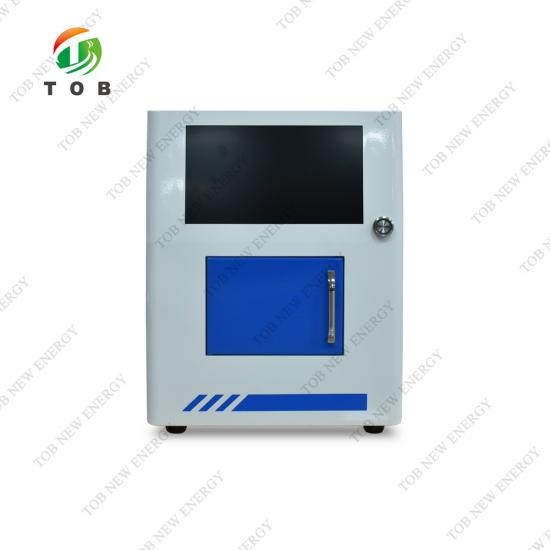
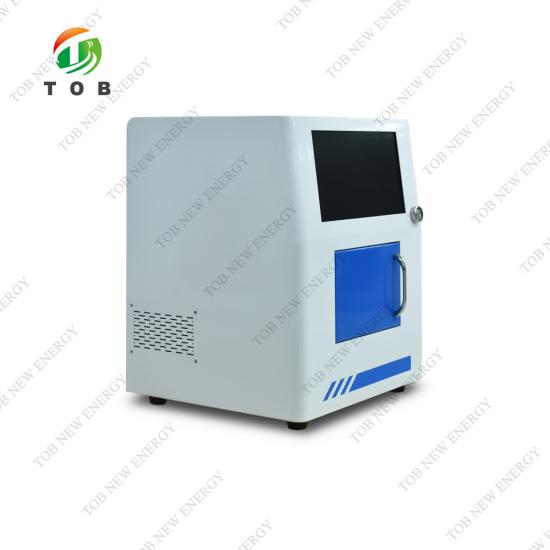
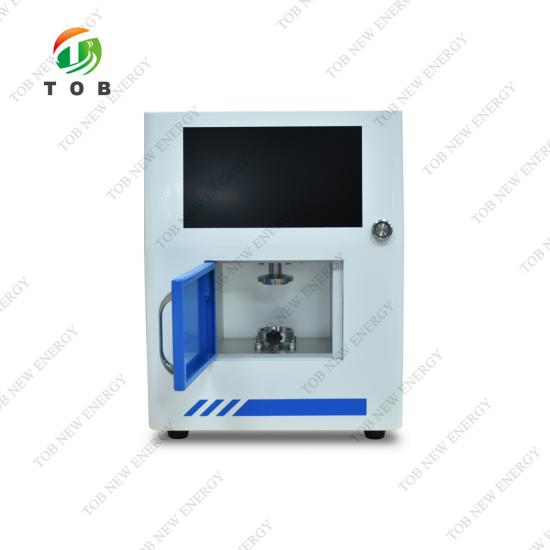
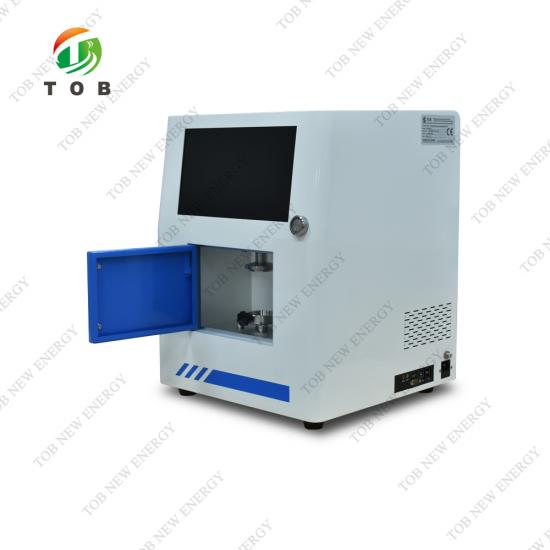
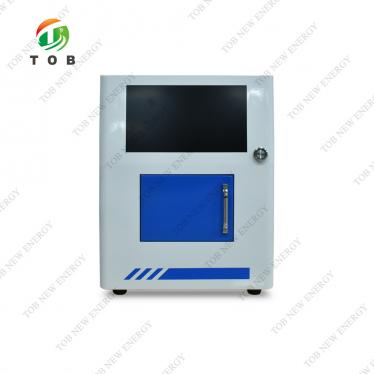
True Density and Porosity Analyzer
Brand:
TOBitem no.:
TOB-TPE-01order(moq):
1Payment:
L/C,T/Tproduct origin:
Chinashipping port:
XIAMEN
True Density and Porosity Analyzer
Product Overview and Ideal Applications
The TOB‑TPE‑01 is a fully automatic true density and porosity analyzer that uses the gas expansion method (based on Archimedes' principle applied to gases) to determine the open porosity, closed porosity, cut‑corrected open porosity, and cut‑corrected closed porosity of solid materials. The instrument employs a fully integrated, container‑type metal pipeline design that minimises the number of joints between valves, reduces potential leak points, and maintains a uniform temperature field across the gas circuit.
The analyzer operates by introducing a small‑molecule‑diameter inert gas (typically high‑purity helium, ≥ 99.999 %) into a test chamber containing the sample. By measuring the volume of gas displaced by the sample under precisely controlled pressure conditions, the instrument calculates the skeletal volume of the material—including any closed pores that the gas cannot penetrate. When this skeletal volume is combined with the sample's externally measured apparent volume, the open and closed porosity fractions are obtained. Because gas can infiltrate extremely small pores and surface irregularities, the measured skeletal volume is very close to the true solid‑phase volume, giving porosity values that are more accurate than those obtained by liquid‑immersion methods, where sample dissolution or incomplete wetting can introduce error.
The instrument is supplied with a sample tube specifically designed for rectangular specimens of 25 × 25 × 50 mm (as specified in GB/T 10799‑2008), maximising the utilisation of the tube volume and improving measurement precision. Custom sample tubes, such as those for cylindrical core specimens (Ø25 mm), are available on request.
Ideal for:
- Quality control of rigid polyurethane and phenolic foams used as thermal insulation and structural materials in battery pack enclosures, energy storage cabinets, and electric vehicle battery compartments.
- Testing of closed‑cell foam gaskets and seals that protect battery modules from moisture ingress and mechanical shock.
- Characterisation of metal foams and porous metal components used in battery thermal management systems.
- Petroleum core analysis, geotechnical sample evaluation, and general solid‑state materials research requiring accurate porosity data.
SPECIFICATIONS
The TOB-TPE-01 type open/closed porosity analyzer adopts a fully integrated container type metal pipeline. It is a fully automatic analyzer that uses the gas expansion method to detect the open/closed porosity, cut corrected open porosity, and cut corrected closed porosity of foamed materials, hard foam, core, metal and other materials. The instrument is mainly used in insulation materials, sound insulation materials, metal materials, oil exploration and other industries, and can test polyurethane foam, phenolic foam, core, metal blocks, soil blocks and other substances.
Product advantages
National standard: test of open and closed cell volume percentage of rigid foamed plastics GBT 10799-2008 has the following sample sizes
Requirements:
● Two regular cylinders with a cross-sectional size of 6.25cm2 and a height of 2.5cm (optional size);
● Two regular cubes with dimensions of 2.5cm * 2.5cm * 2.5cm (recommended size by national standards);
Working principle
Applying Archimedes' principle - gas expansion displacement method, using the Boyle's law of small molecule diameter inert gas under certain conditions: (PV=nRT), the skeleton volume (including closed pores) of the sample is accurately measured by measuring the volume of gas displaced by the sample in the test chamber, thus obtaining the open pore rate and closed pore rate. Closed pore rate=skeleton volume/apparent volume
The gas expansion displacement method replaces liquid with gas to determine the volume displaced by the sample This method can avoid testing errors caused by sample dissolution in the immersion method and has the advantage of not damaging the sample Because gas can penetrate the extremely small pores and irregular pores on the surface of the sample, the measured sample volume is closer to the skeleton volume of the sample, which can be used to calculate the opening and closing porosity of the sample. The test value is also closer to the true opening and closing porosity of the sample.
Performance parameters
|
Main functions |
Open closed porosity and porosity (for block materials such as foam materials, rock cores, metal components, etc.); True density (for various non-volatile, non corrosive, non closed cell materials such as metals, liquids, etc.); Real volume (various non-volatile, non corrosive solids and liquids, including closed pores); Porosity (the porosity of a material can be calculated by its true density and apparent density); |
|
|
Applicable standard |
GB/T 40401-2021、GB/T 10799-2008、GB/T 29046-2012、GB/T 29047-2021、 GB/T 3139-2005、ASTM-D1622-2008、ASTM-D2856、ASTM-D6226-2005、ISO 4590:2016、Q/CR 549.8-2017、D45 1355、T/CECS 717-2020; |
|
|
Test accuracy |
Accuracy error ≤± 0.03%, repeatability error ≤± 0.03%, division value: 0.01% (based on the test results of the standard sample, other material testing accuracy refers to national standards); |
|
|
Pressure range |
0KPa-100KPa。Users can freely set the pressure value to reduce the error caused by deformation of the analyzed sample due to pressure; |
|
|
Pressure accuracy |
Silicon thin film capacitive pressure sensor, with an accuracy of 0.1% of the actual reading; 0.1%, better than the full range |
|
|
Test speed |
Single test time of 3-5 minutes (excluding flushing time); |
|
|
Test scope |
The sample density is not limited. It can measure the true density of solid samples in powder, granular, block, foam and other forms, as well as slurry, nonvolatile liquid and other samples; The opening and closing porosity of substances such as foam materials and metal materials; |
|
|
Sample tube |
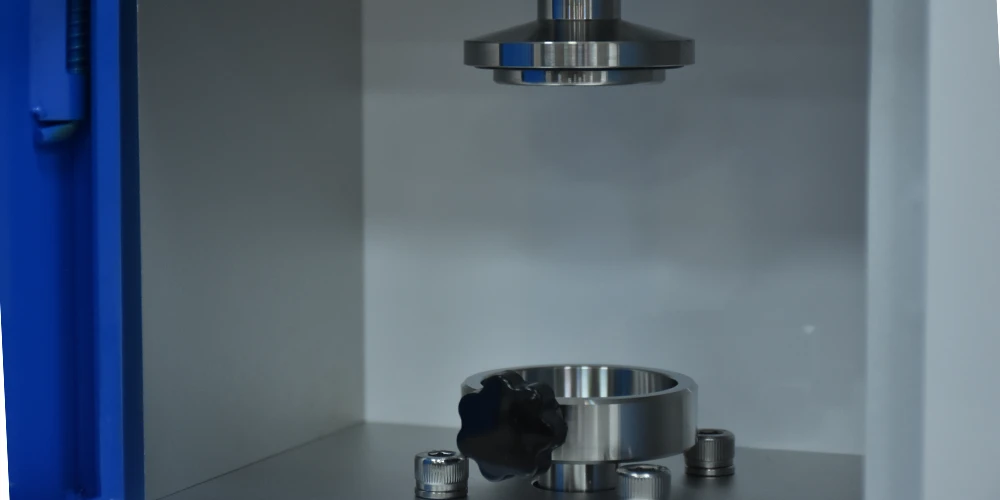
Standard 27 * 27 * 51mm sample tube (made according to the requirements of the national standard GB/T10799-2008), suitable for testing rectangular samples with dimensions of 25 * 25 * 50mm made according to the standard. It can effectively utilize the sample pool space and reduce measurement errors caused by insufficient space utilization. According to user needs, different specifications of sample tubes can be provided, such as 25mm diameter core specific sample tubes, etc; |
|
|
Test gas |
40% pure helium gas with a purity of ≥ 99.999%; Other gases such as nitrogen are optional; |
|
|
Dual gas testing |
Users can choose instruments with dual gas function according to their needs, with high-purity helium as the test gas and high-purity nitrogen as the driving gas, resulting in lower long-term usage costs; |
|
|
Core accessories |
Pneumatic valve and silicon thin film pressure sensor; |
|
|
Operation method |
Dual control system, can be connected to a computer for use, and can also be used independently. Users can switch freely according to their needs; |
|
|
Instrument size |
Length: 380mm; Width: 380mm, Height: 480mm; Net Weight: 25kg; |
|
Product Features
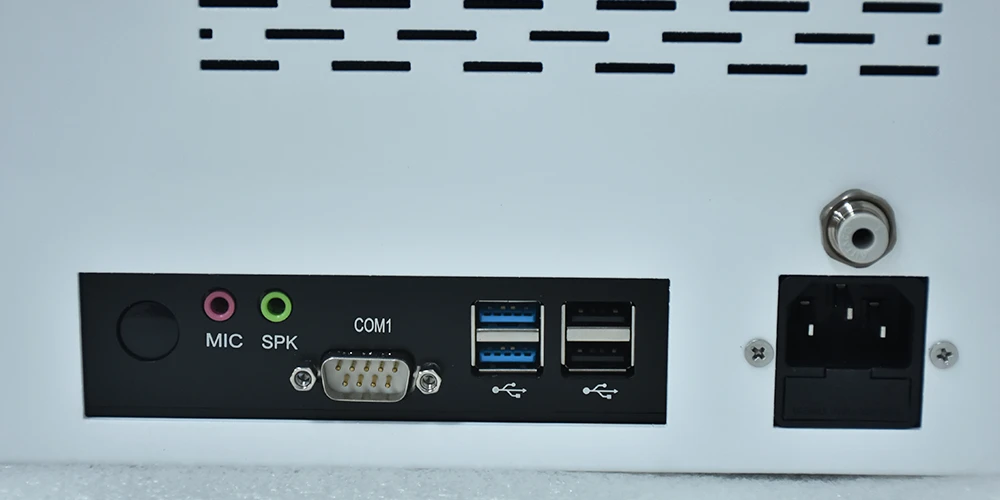
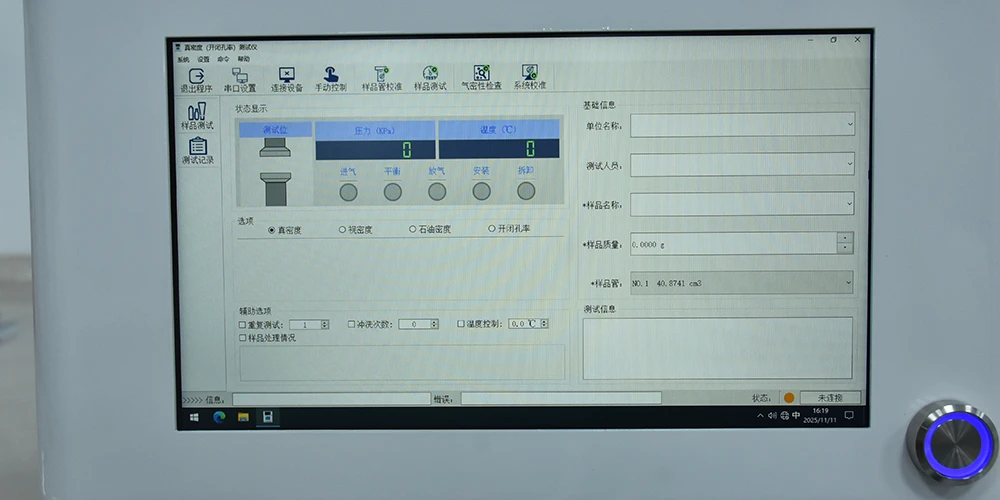
● Dual control system, the instrument comes with a Windows operating system industrial computer, which can be operated by the host or connected to an external computer through a serial port. The instrument can be operated through external computer software; Both operation modes are fully automated, without the need for manual supervision, and automatically generate and save test results. The dual control system can provide users with more convenient operation methods. Users can switch operation modes at any time according to their needs, and both systems have full voice prompts throughout the process;
● The sample tube can be directly used as a testing chamber, which can effectively utilize the volume of the testing chamber and significantly improve the testing accuracy. Sample tubes of different volumes can simultaneously meet the needs of micro volume and large volume sample loading, in order to achieve the goal of improving testing accuracy;
● Sample tube automatic installation, equipped with a sample tube automatic installation device. Simply place the sample tube in the designated position, and the instrument will automatically install the sample tube to the connection port, making the operation more convenient and avoiding testing errors caused by manual installation of the sample tube.
● Repeat testing, automatic repeat testing times can be set, and the test results display the average value and single test value;
● Pneumatic control valve, no heating problem, eliminates the impact of electromagnetic valve heating on testing accuracy;
● Integrated modular pipeline with no pipeline joints between valves, reducing air leakage points and ensuring uniform temperature distribution;
● Automatic sealing inspection of the gas path system, automatic judgment of whether there is air leakage in the reference chamber and sample tube, ensuring the accuracy of the test results;
● Through the control unit of the operation interface, the actions of various hardware components of the instrument can be controlled, which helps operators understand the working principle of the instrument and timely discover the fault point when the instrument malfunctions, facilitating subsequent inspection and maintenance.
● After the test is completed, the system automatically returns to normal pressure to prevent sample splashing when disassembling the sample tube;
Where True Density and Porosity Testing Fits in Battery Industry Quality Control
In the lithium‑ion battery industry, the TOB‑TPE‑01 is not used to test electrode materials or electrolytes directly. Its primary role is in the quality control of auxiliary materials that are critical to the safety, thermal management, and mechanical integrity of battery packs and modules:
- Thermal insulation foams: Battery packs for electric vehicles and energy storage systems often incorporate rigid polyurethane or phenolic foam panels to thermally insulate individual cells or modules from each other and from the external environment. The closed‑cell content of these foams directly affects their insulating performance—a higher closed‑cell fraction means lower thermal conductivity. The TOB‑TPE‑01 measures this parameter quickly and in compliance with GB/T 10799‑2008 and ASTM‑D2856.
- Acoustic insulation materials: Porosity also governs the sound‑absorption characteristics of foams used to dampen noise and vibration in battery enclosures. The open‑cell fraction is the key parameter here, and the TOB‑TPE‑01 provides it directly.
- Gasket and seal materials: Closed‑cell foam gaskets are used to seal battery module enclosures against moisture and dust. Porosity testing verifies that the seal material has the specified closed‑cell content for reliable environmental protection.
- Metal foams for thermal management: Porous metal structures are being developed for battery cooling plates and heat spreaders. The open‑cell porosity of these metal foams dictates the coolant flow paths and heat‑transfer efficiency.
In all of these applications, the gas expansion method avoids the problems associated with liquid‑immersion testing: foam samples can partially dissolve in organic solvents, water can be retained in open cells, and surface tension can prevent liquid penetration into fine pores. The TOB‑TPE‑01's helium‑based method circumvents these issues entirely.
PRODUCT DISPLAY
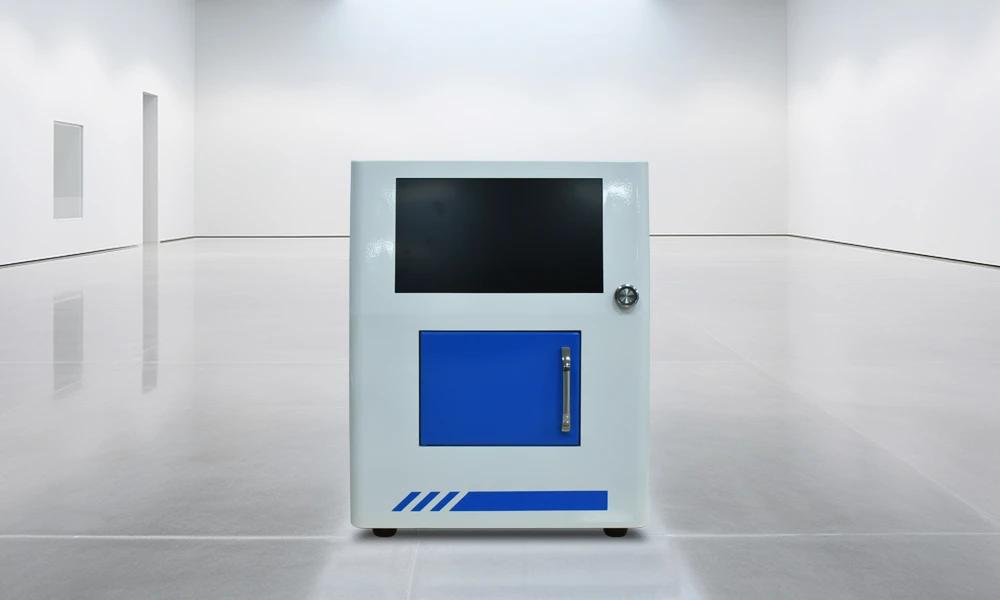
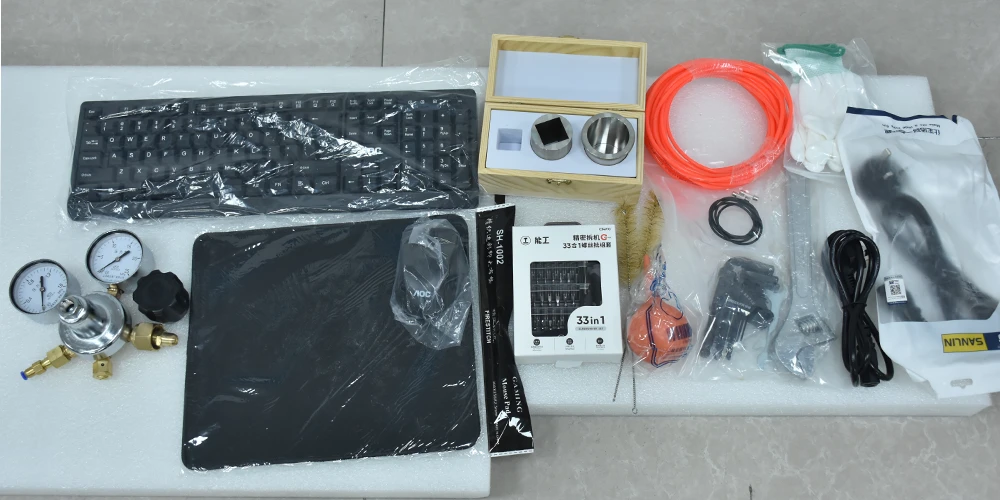
Ready to bring accurate, standard‑compliant porosity testing into your quality‑control laboratory? Request a quotation for the TOB‑TPE‑01, including details of any custom sample tube requirements. Our materials characterisation team can advise on the optimal configuration for your specific foam or solid material.
tob.amy@tobmachine.com | +86 181 2071 5609
You May Also Need
- Gurley Air Permeability Tester for Lithium‑Ion Battery Separator — Measures the air permeability of battery separators, a parameter closely related to porosity and ionic transport. Complements porosity data by evaluating the separator's influence on electrolyte wetting and cell performance.
- Automatic Lithium Battery Electrode Sheet Resistance Tester — Quantifies the electrical resistance of coated electrode sheets. Pairs with porosity analysis to correlate pore structure with electronic conductivity and coating uniformity in cathode and anode films.
- Conductivity Meter — A general‑purpose instrument for measuring ionic conductivity of liquid electrolytes and solid electrolyte materials. Useful alongside porosity and density testing for comprehensive characterisation of battery materials.
Previous:
Gurley Air Permeability Tester for Lithium-Ion Battery Separator | TOB New EnergyNext:
Automatic Lithium Battery Electrode Sheet Resistance Tester
If you are interested in our products and want to know more details,please leave a message here,we will reply you as soon as we can.

 subscribe to us