Chinese
 français
 Deutsch
 italiano
 español
 português
 Nederlands
 日本語
日本語 한국의
한국의




- Home
- >
- Battery Materials
- >
- Battery Binder
- >
- BM-451B SBR Styrene Butadiene Rubber Binder
Categories
Hot Products
Loading...
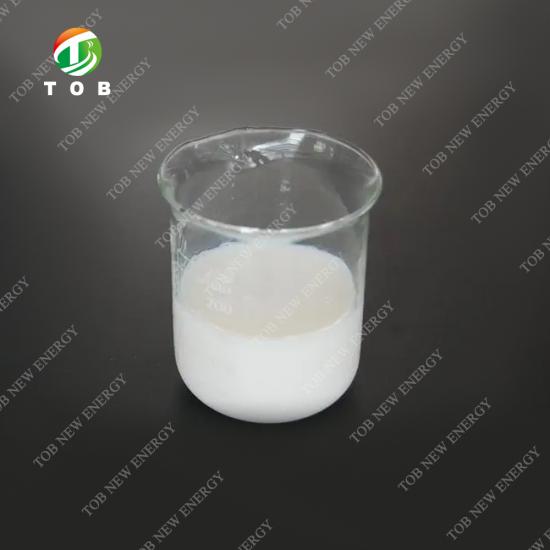
BM-451B SBR Styrene Butadiene Rubber Binder
Brand:
TOB NEW ENERGYitem no.:
BM-451Border(moq):
18KGPayment:
L/C,T/Tproduct origin:
Chinashipping port:
XIAMEN
BM-451B SBR Styrene Butadiene Rubber Binder for Lithium-Ion and Sodium-Ion Battery Anodes
Product Overview and Ideal Applications
SBR (styrene butadiene rubber) is a synthetic rubber latex used as a water-based binder in battery anode electrodes. In a lithium-ion or sodium-ion cell, the anode active material (graphite, hard carbon, or silicon-containing blends) must stay bonded to the copper current collector while the electrode is slit, wound, stacked, wetted with electrolyte, and cycled. BM-451B is an SBR binder supplied as a polymer dispersion in water, with a solid content of 40.0±1.0 wt%, a viscosity of 50 mPa·s, and a pH of 8.0±1.0.
BM-451B is positioned around three properties that matter directly in anode production: high adhesion stress, low addition amount, and excellent low-temperature performance of the battery. High adhesion stress keeps the active material attached to the copper foil during slitting, winding, electrolyte wetting, and cycling. A low addition amount allows the electrode to retain a higher fraction of active material and reduces the amount of insulating polymer in the electrode. Excellent low-temperature performance helps the cell maintain usable capacity and power delivery when operating below 0 °C, which is a common requirement for automotive, energy-storage, and outdoor applications.
The product is supplied in 18 kg polyethylene-can packaging with a 12-month shelf life from the date of production when the seal is not broken, and it must be stored in a dark, cool place at 5-40 °C. These properties make BM-451B practical for laboratory formulation work, pilot-scale anode slurry preparation, and production-scale aqueous electrode coating.
Ideal for:
- Lithium-ion battery anode R&D using aqueous CMC/SBR binder systems.
- Sodium-ion battery anode development with hard carbon active materials.
- Graphite and silicon-blend anodes where binder elasticity and adhesion are critical.
- Pilot lines producing coated anode electrodes on copper foil for cylindrical, pouch, or prismatic cells.
- Battery researchers comparing water-based binders for low-temperature operation and lower solvent-related process cost.
Where the SBR Binder Fits in Anode Manufacturing
The BM-451B binder enters the cell manufacturing chain at the electrode preparation stage, specifically during aqueous anode slurry formulation and coating:
- Slurry preparation: Deionized water, CMC thickener, conductive carbon, and the anode active material are mixed first. BM-451B is added as the final component at low shear to preserve the latex particle structure and avoid mechanical degradation of the rubber dispersion.
- Anode coating: The aqueous slurry is coated onto copper foil using a doctor blade, slot die, or comma coater. The low viscosity of BM-451B as supplied (50 mPa·s) makes it easy to dose by weight, and the final slurry rheology is controlled mainly by CMC content and total solids.
- Drying: Water is removed in a drying oven. As the water evaporates, the SBR particles coalesce and form a flexible polymer network that anchors the active material and conductive carbon to the copper foil.
- Calendering and slitting: The dried anode is compacted to the target density and slit into electrode widths. The binder must withstand compressive force and slitting without edge peeling or foil exposure.
- Cell assembly and formation: The electrode is assembled into cylindrical, pouch, or prismatic cells, wetted with electrolyte, and formed. Adhesion and elasticity continue to matter during swelling, tab welding, and cycling, especially at low temperature.
Process best practices for water-based anode slurries:
- Pre-dissolve CMC fully before adding SBR; incomplete CMC dissolution causes local viscosity variation and coating streaks.
- Add BM-451B at the end of the mixing cycle and use a lower shear step after the binder addition.
- Filter the final slurry with a 200-mesh screen; the specification limits coagulum content to ≤0.0500 wt%, which directly reduces the risk of coarse particles blocking the die and creating pinholes.
- Monitor slurry pH around 8.0±1.0; large pH shifts can destabilize the latex or change CMC behaviour.
- Keep the binder container sealed and store it at 5-40 °C in a dark, cool place; use the material within its 12-month shelf life.
Material Properties and Engineering Characteristics
The BM-451B specification defines a stable, water-dispersed polymer system with processing-relevant values:
-
Polymer Dispersion in Water
BM-451B is a latex-type product, not a dry powder. Water-based processing removes NMP from the anode slurry, simplifies solvent recovery, and reduces fume and moisture sensitivity during electrode manufacturing. -
Solid Content 40.0±1.0 wt%
The solid content determines how much dry polymer is delivered per kilogram of product. A 40.0 wt% solid content provides a practical balance between transport cost and ease of pumping, weighing, and mixing. -
Viscosity 50 mPa·s
The as-supplied viscosity is low enough for direct dosing by mass or volume. Final slurry viscosity is controlled by CMC, active material type, and solids loading, so the binder does not dominate the slurry rheology. -
pH 8.0±1.0
A mildly alkaline pH is compatible with typical aqueous anode systems containing CMC. Keeping the slurry in this range helps maintain dispersion stability and predictable coating behaviour. -
Coagulum Content ≤0.0500 wt% (200 mesh)
Coagulum is the coarse, insoluble polymer fraction that can plug screens, streak the coating, or create pinholes. The ≤0.0500 wt% limit keeps the latex clean enough for production-scale slurry filtration and coating. -
High Adhesion Stress and Low Addition Amount
The product description states high adhesion stress and low addition amount as core advantages. In practice, this means formulators can keep binder content low, retain more active material in the electrode, and still meet peel-strength and winding requirements. -
Excellent Low-Temperature Performance
The product is stated to provide excellent low-temperature performance of the battery. For cells operating below 0 °C, a binder with appropriate low-temperature elasticity helps reduce electrode cracking and capacity loss caused by stiffening and contraction.
Complete Technical Specifications
The following table contains the BM-451B specification exactly as provided. No values have been changed.
| Parameter | Specification |
|---|---|
| Product Name | SBR Binder |
| Product Model | BM-451B |
| MOQ | 18KG/barrel |
| Type | Polymer Dispersion in Water |
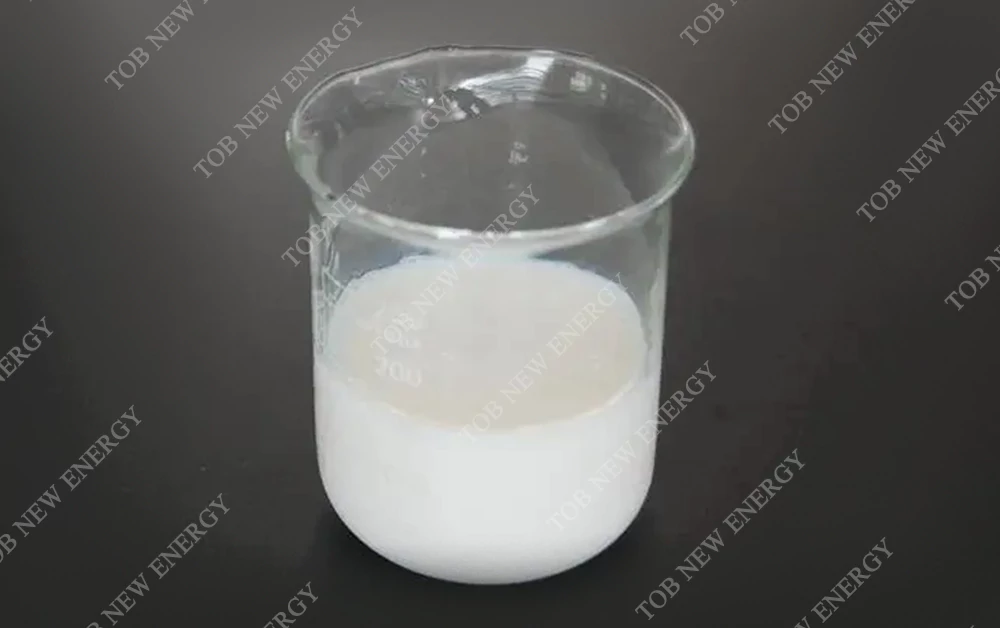
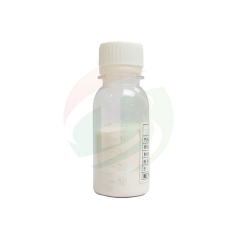
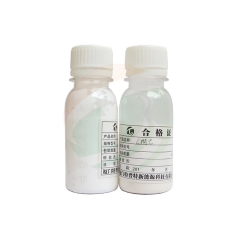
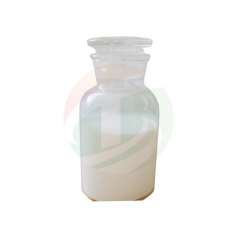
| Appearance | White Liquid |
| Solid Content | 40.0±1.0 wt% |
| Viscosity | 50 mPa·s |
| PH | 8.0±1.0 |
| Coagulum Content (200mesh) | ≦0.0500 wt % |
| Shelf Life | 12 months from the date of production without seal break |
| Storage | Stored at dark cool places (5 - 40℃) |
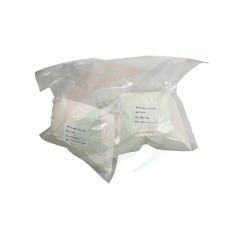
| Package | NET WEIGHT: 18kg; Packaged in polyethylene-can |
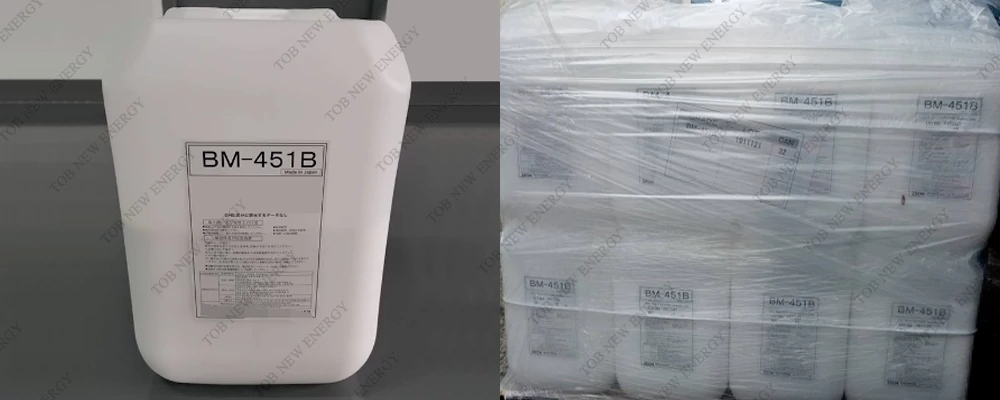
Package: 18KG/barrel
Common Processing Issues and Practical Troubleshooting
| Problem | Possible Cause | Recommended Action |
|---|---|---|
| Electrode edge peeling during slitting or winding | Binder content too low or binder not distributed uniformly | Verify the addition amount, add BM-451B at the end of mixing at low shear, and check electrode peel strength. |
| Coating streaks, pinholes, or die blockage | Coarse coagulum, undissolved CMC, or slurry agglomeration | Use the ≤0.0500 wt% (200-mesh) coagulum limit as the incoming-quality check, filter the slurry, and fully dissolve CMC before adding the latex. |
| Slurry thickening or gelling | pH drift, hard water, or binder added too early under high shear | Keep the slurry pH near 8.0±1.0, use deionized water, and add BM-451B as the last component at low shear. |
| Poor low-temperature discharge behaviour | Electrode cracking or loss of contact at low temperature | Evaluate BM-451B in a coin-cell or pouch-cell low-temperature test and adjust binder content within the recommended low-addition range. |
| Foaming during mixing | High-shear mixing of a water-based latex | Add the binder slowly, reduce mixer speed after binder addition, and allow entrapped air to escape before coating. |
| Viscosity change after storage | Exposure to heat, light, or a broken seal | Store unopened at 5-40 °C in a dark, cool place and use within the 12-month shelf life. |
Recommended Electrode Fabrication Parameters (Starting Points)
The values below are starting points for an aqueous graphite or hard carbon anode using BM-451B. Always verify with your own active material, CMC grade, coating equipment, and cell requirements.
| Parameter | Recommended Value / Range | Notes |
|---|---|---|
| Typical anode composition | Active material : conductive carbon : CMC : BM-451B = 96.5 : 1.0 : 1.2 : 1.3 (weight, dry basis) | Adjust binder content based on peel strength and low-temperature tests. |
| Binder addition amount | About 1–3 wt% of dry electrode solids | BM-451B is designed for low addition amount; start low and increase only if adhesion is insufficient. |
| Slurry solvent | Deionized water | Avoid hard water, which can destabilize the latex and change pH. |
| CMC preparation | Pre-dissolve CMC in water before adding active material and carbon | Incomplete dissolution causes streaks and viscosity variation. |
| Mixing sequence | Water + CMC → active material + carbon → BM-451B at low shear | Adding SBR last protects the latex particles. |
| Slurry filtration | 200-mesh screen before coating | Matches the coagulum-content test grade. |
| Coating substrate | Copper foil, 8–10 μm | Aqueous anode slurry is applied to the matte side for better adhesion. |
| Drying profile | 80 °C → 110 °C → 120 °C | Gradual ramp prevents binder skinning and moisture trapping. |
Why Choose BM-451B Over a Generic SBR Binder: A Direct Comparison
| Feature | BM-451B | Generic SBR Binder |
|---|---|---|
| Binder type | Polymer dispersion in water | Often a water-based latex, but formulation varies by supplier |
| Solid content | 40.0±1.0 wt% | Varies; verify the delivered value |
| Viscosity | 50 mPa·s | Varies; affects dosing and slurry behaviour |
| pH | 8.0±1.0 | Varies; must be checked for CMC compatibility |
| Coagulum content (200 mesh) | ≤0.0500 wt% | Varies; higher coagulum increases coating-defect risk |
| Adhesion stress | High, as stated in the product description | Depends on formulation and addition amount |
| Addition amount | Low, as stated in the product description | Generic products may require higher loading to meet peel strength |
| Low-temperature performance | Excellent, as stated in the product description | Varies; test with your cell format |
| Packaging | 18 kg polyethylene-can | Varies |
| Shelf life | 12 months from production without seal break | Varies; verify storage conditions |
The comparison is intentionally qualitative because the specification provided for BM-451B does not disclose competitor data. The practical value is in the stated combination of high adhesion stress, low addition amount, and excellent low-temperature performance, together with a clean, low-coagulum water-based dispersion that is easy to dose and filter.
Engineering FAQ
Q1: Can BM-451B be used for both lithium-ion and sodium-ion battery anodes?
Yes. BM-451B is a water-based SBR binder suitable for aqueous anode slurry systems. Lithium-ion graphite anodes and sodium-ion hard carbon anodes both use water-based processing with CMC and SBR, so the binder can be evaluated in either system. Confirm compatibility with your active material and electrolyte during coin-cell or pouch-cell testing.
Q2: What addition amount should I start with?
BM-451B is stated to have a low addition amount. A reasonable starting range is 1–3 wt% of dry electrode solids, depending on the active material surface area and the adhesion required for slitting and winding. Increase the amount only if peel strength is insufficient, and verify that the cell still meets capacity and low-temperature targets.
Q3: How should BM-451B be stored?
Store BM-451B in a dark, cool place at 5-40 °C with the container sealed. The shelf life is 12 months from the date of production without seal break. Avoid freezing, direct sunlight, and long-term exposure to high temperature, which can destabilize the latex.
Q4: Why is the pH of 8.0±1.0 important for the anode slurry?
The pH range is compatible with typical CMC-based aqueous anode systems. If the slurry pH drifts significantly, CMC dissolution and latex stability can both be affected, leading to viscosity changes, gelling, or coating defects. Monitor slurry pH with deionized water and a consistent CMC grade.
Q5: How do I prevent coating defects caused by coagulum?
The BM-451B specification limits coagulum content to ≤0.0500 wt% through a 200-mesh screen. On the process side, filter the final slurry through a 200-mesh screen, add the binder at the end of mixing under low shear, and keep the container sealed during storage so dried polymer cannot fall into the batch.
tob.amy@tobmachine.com| +86 181 2071 5609
You May Also Need
- PVDF Powder Binder for Lithium Battery — An NMP-based binder commonly used in cathode electrodes and high-voltage applications. Complements BM-451B when a cell design requires both an aqueous anode binder and an organic cathode binder.
- Carboxymethyl Cellulose Powder for Lithium-Ion Battery — The thickening agent and dispersant most frequently paired with SBR in aqueous anode slurries. Use CMC with BM-451B to control slurry rheology and coating quality.
- Lithium Polyacrylate (PAA/LiPAA) Battery Binder — An alternative water-based binder for silicon-containing anodes and other systems requiring higher rigidity or different adhesion mechanisms.
Previous:
Carboxymethyl cellulose CMC powder For Lithium Ion BatteryNext:
Li polymer battery materials NMP Solvent
If you are interested in our products and want to know more details,please leave a message here,we will reply you as soon as we can.

 subscribe to us