Chinese
 français
 Deutsch
 italiano
 español
 português
 Nederlands
 日本語
日本語 한국의
한국의




- Home
- >
- Other Equipment
- >
- Laboratory Hammer Crusher for Sample Preparation
Categories
Hot Products
Loading...
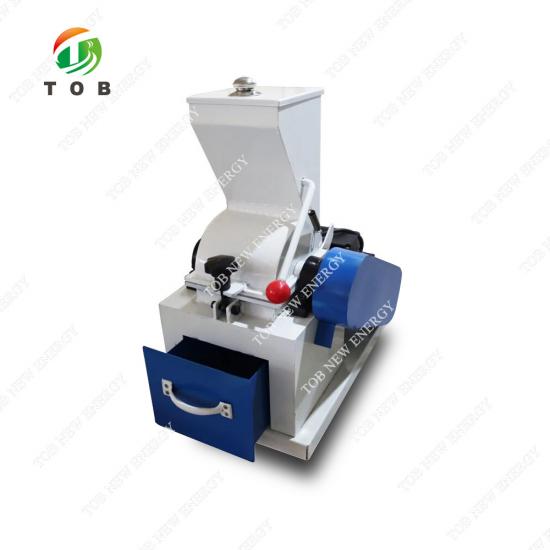
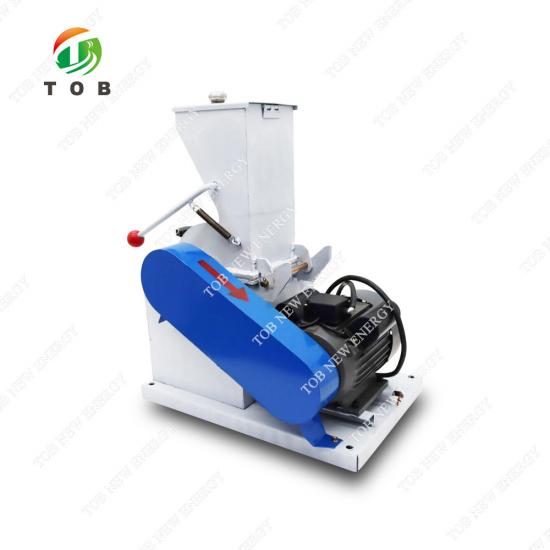
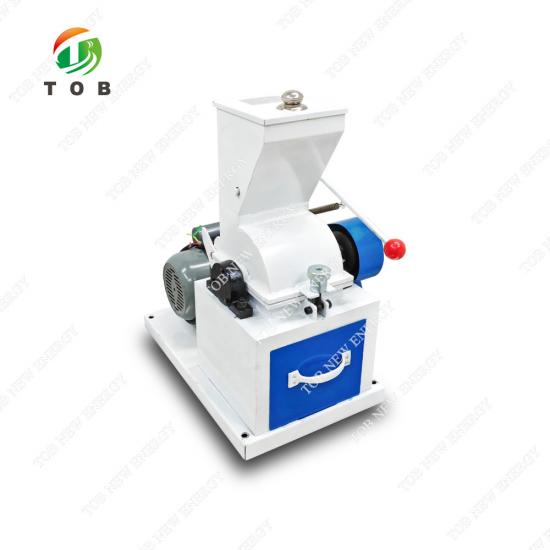
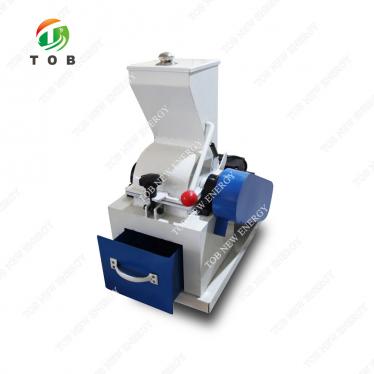
Laboratory Hammer Crusher for Sample Preparation
Brand:
TOB NEW ENERGYitem no.:
TOB‑CP seriesorder(moq):
1Payment:
L/C,T/Tproduct origin:
Chinashipping port:
XIAMEN
Laboratory Hammer Crusher for Sample Preparation | TOB-CP Series
Product Overview and Ideal Applications
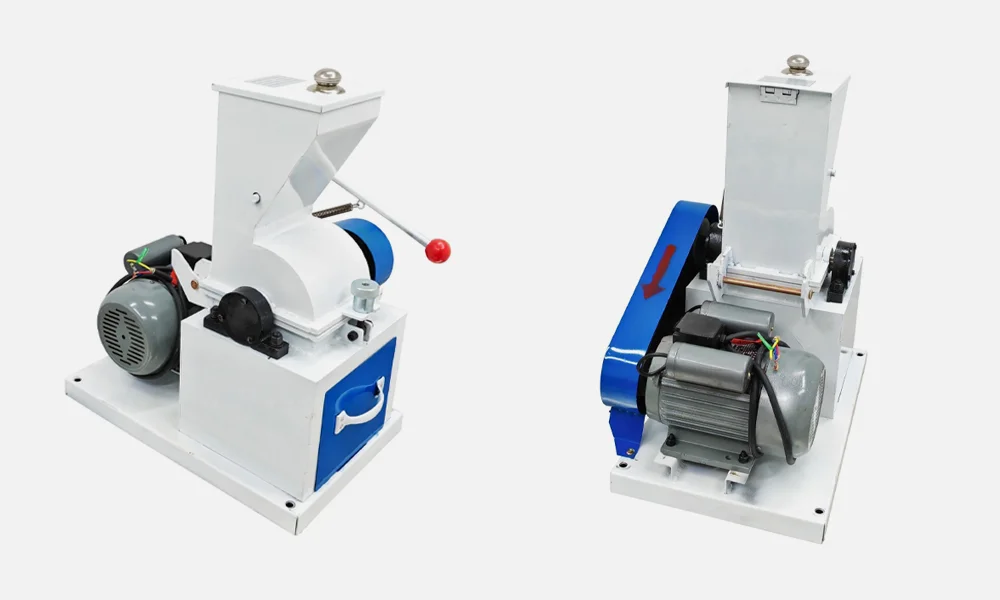
A hammer crusher reduces particle size by the impact of rapidly rotating hammers against the material fed into the chamber. The TOB‑CP series is a laboratory-to-pilot-scale sealed hammer crusher designed for continuous or batch processing of medium-hard materials, including coal, ores, rocks, minerals, and certain industrial intermediates. Unlike open-frame crushers that generate significant dust, the TOB‑CP series features a fully enclosed housing that complies with modern environmental and occupational health standards, making it suitable for clean analytical laboratories as well as production floors.
The material enters tangentially into the crushing chamber, where it is struck by high‑speed hammers mounted on a rotor. The centrifugal force drives the crushed particles against a grate or screen at the discharge opening, ensuring that only particles below the target size leave the chamber. This tangential feeding and milling action minimises choking and ensures smooth discharge even with materials containing up to 20% moisture. The sealed design prevents dust escape and minimises moisture loss during crushing, so the sample’s original moisture content is preserved for subsequent analysis.
Ideal for:
- Geological and mining laboratories preparing rock or ore samples for chemical analysis.
- Coal quality testing laboratories that must crush representative samples without altering moisture content.
- Pilot plants processing bulk samples of medium‑hard materials for metallurgical testing or mineral processing trials.
- Industrial quality control departments in cement, ceramics, and refractory industries requiring consistent particle size reduction.
- Research institutions and teaching laboratories that need a dependable, low‑maintenance crusher for a wide range of materials.
Where the Hammer Crusher Fits in Sample Preparation Workflows
In a typical analytical or processing chain, the TOB‑CP series sits after primary crushing and before fine grinding or pulverising. For example, in a coal analysis laboratory, the workflow might be:
- Primary crushing: Large lumps are first reduced to < 50–70 mm using a jaw crusher.
- Secondary crushing: The TOB‑CP hammer crusher further reduces the material to ≤6 mm or ≤3 mm, producing a uniform product suitable for splitting and pulverising.
- Splitting: A representative sub‑sample is taken using a riffle splitter.
- Fine grinding: The split portion is ground in a pulveriser or ball mill to analytical fineness (< 200 mesh) for chemical analysis.
The hammer crusher is the critical step that bridges the gap between coarse primary size reduction and fine analytical grinding. If this intermediate step is skipped or poorly performed, the final pulverising stage will be overloaded, and the analytical sample may not be truly representative.
Material moisture considerations: The TOB‑CP series tolerates feed materials with up to 20% moisture, which would blind or choke many other crusher types. Because the crushing action is impact‑based rather than compression‑based, wet material does not form a sticky cake. The sealed design also means that the moisture content of the sample is largely conserved; this is essential when the moisture level itself is a parameter to be measured (as in coal trading). A small amount of air circulation within the chamber may be present, but the overall moisture loss during a normal batch is typically less than 0.5%.
How the Hammer Crusher Works: Operating Principle
The crushing chamber is cylindrical, with a horizontal rotor shaft running through its centre. On this shaft are mounted several pivoting or fixed hammers made of 45# carbon steel, heat‑treated for wear resistance. When the motor (1.5 kW or 3 kW, depending on model) is started, the rotor spins at a high but controlled speed, and the hammers extend outward by centrifugal force.
Material is introduced through a tangential inlet at the top or side of the chamber. As soon as a lump enters, it is struck by the first hammer and propelled against the inner wall of the chamber. It rebounds and is struck again and again until its size is reduced to the point where it can pass through the discharge grate openings (6 mm by default, or 3 mm if a finer screen is installed). Particles that are still oversized remain in the grinding zone until they are small enough.
The “tangential feed” design is particularly important for materials that tend to arch or bridge in a top‑feeding hopper. By entering at a tangent, the material is immediately engaged by the hammer rotation and drawn into the crushing path, rather than sitting on top of the rotor and causing blockage. This design, combined with a properly sized discharge grate, allows the crusher to handle throughputs of 200–500 kg/h (TOB-CP‑200*150) or 800–1200 kg/h (TOB-CP‑350*200, corrected) without surging or jamming.
No dust, no pollution:
The entire chamber and drive assembly are enclosed in a sealed casing with access doors for cleaning and maintenance. The feed inlet may be connected to a sealed chute, and the discharge outlet can be fitted with a flexible sleeve that directs the crushed material into a collection drum or conveying system. Under normal operation, no dust escapes, meeting stringent occupational health requirements and eliminating the need for a separate dust collection system.
Key Engineering Advantages of the TOB‑CP Series
-
Tangential Feed Prevents Bridging and Ensures Smooth Flow
Many hammer crushers use a gravity feed directly above the rotor. Wet or fibrous materials can form a bridge and stop the feed. The TOB‑CP series introduces material tangentially, so the rotor’s movement actively pulls the feed into the crushing zone. This feature practically eliminates manual rodding and downtime due to feed blockages, especially for materials with surface moisture. -
Sealed Design Eliminates Dust and Preserves Moisture
The fully enclosed housing means that the laboratory environment remains free of dust. This is not just a comfort feature; in a coal lab, airborne dust is a respiratory hazard and an explosion risk. The sealed design also retains the sample’s inherent moisture, so the result of a subsequent moisture analysis reflects the original state of the material, not an artificially dried one. -
Uniform Discharge Particle Size Through Replaceable Grate
The discharge grate or screen defines the maximum particle size. The standard grate opening is 6 mm, but a 3 mm grate can be fitted to produce a finer product. Because the grate is replaceable, one crusher can serve two different sample‑preparation protocols simply by swapping the grate—no need for a separate crusher for different target sizes. -
Robust Construction with 45# Carbon Steel Hammers
The hammers are made of 45# carbon steel, a material known for its good balance of toughness and wear resistance. They withstand the impact stresses generated when crushing hard materials like quartz or granite, while being easy to machine and replace. The hammer life, depending on the abrasiveness of the feed, is typically several months in continuous service, and replacement is a straightforward operation. -
Wide Power Supply Flexibility (AC 220 V or 380 V)
The smaller model (TOB-CP‑200*150) can be ordered with either single‑phase AC 220 V or three‑phase 380 V power, making it compatible with standard laboratory electrical outlets worldwide. The larger model (TOB-CP‑350*200) operates on 380 V three‑phase, as expected for its higher motor power. -
Compact Footprint, Easy to Relocate
Weighing 65 kg and 110 kg respectively, the two models are compact and can be moved by two persons on a trolley. They fit on a sturdy laboratory bench or a dedicated frame, and the access doors allow thorough cleaning without removing the crusher from its position.
Complete Technical Specifications
The following table lists the specifications for both available models. The parameters are determined at the factory using standard test materials and conditions.
|
Model |
TOB-CP-200*150 |
TOB-CP-350*200 |
|
Power Supply |
AC 220V or 380V / 50Hz |
380V / 50Hz |
|
Motor Power |
1.5kW |
3kW |
|
Feed Particle Size |
<50mm |
<70mm |
|
Discharge Particle Size |
≤6mm (default) or ≤3mm |
|
|
Capacity |
200~500 Kg/h |
800~1200 Kg/h |
|
Hammer Material |
45# Steel |
|
|
Net Weight |
65Kg |
110Kg |
|
Dimensions |
600×450×700mm |
800×500×800mm |
Common Operational Issues and Troubleshooting
|
Problem |
Possible Cause |
Recommended Action |
|
Feed hopper clogging or bridging |
High moisture content or fibrous material tangling. |
The tangential feed design reduces this, but if bridging occurs, break the bridge manually with a blunt rod while the crusher is stopped. Alternatively, pre‑dry the material slightly or mix it with a small amount of already‑crushed product. |
|
Discharge particle size inconsistent or too large |
Grate bars worn or broken; hammer tips worn; or feed rate too high. |
Inspect the grate for damage. Measure the hammer tip‑to‑grate clearance. Replace hammers if the tips are rounded or shortened by more than 10%. Reduce the feed rate slightly. |
|
Excessive vibration or noise |
Unbalanced rotor due to broken or unevenly worn hammers; or foreign object in the chamber. |
Switch off and disconnect power. Open the crusher and inspect each hammer for damage. Ensure the rotor turns freely. If a hammer is broken, replace the entire set to maintain balance. |
|
Motor overheating or tripping overload |
Over‑feeding or jamming; incorrect electrical supply; or insufficient ventilation. |
Clear any jammed material. Verify the voltage matches the motor nameplate. Check that the air vents on the motor are not blocked by dust. For the 380V model, check all three phases are present. |
|
Dust escaping from the seals |
Worn or damaged door gaskets; loose clamping. |
Inspect the rubber seal around the access doors. Replace if compressed or torn. Ensure the door clamps are tight. After maintenance, always close and seal the housing completely before starting. |
Recommended Operating Guidelines
- Pre‑screening: Always screen the feed material to remove pieces larger than the maximum feed size (<50 mm for TOB-CP‑200*150, <70 mm for TOB-CP‑350*200). An oversized lump can wedge between the hammer and the housing, causing a jam or damaging the rotor.
- Start‑up sequence: Always start the crusher before adding material. This prevents the motor from starting under load and reduces the risk of jamming. Run the crusher for 30 seconds before feeding.
- Feed rate: Introduce the material gradually, not all at once. For the TOB-CP‑200*150, a feed rate of about 5–10 kg per minute is typical. For the larger model, up to 30 kg/min can be sustained. Listen to the motor sound; a deep change in pitch indicates overloading.
- Cleaning between samples: For analytical work where cross‑contamination is unacceptable, disassemble the grate and vacuum the chamber, rotor, and discharge chute. For even stricter protocols, crush a small amount of the next material and discard it as a “flush” before collecting the sample.
- Moisture content limits: While the crusher tolerates up to 20% moisture, very wet materials may eventually cause buildup on the grate. If this occurs, run a batch of dry material (such as sand) through the crusher to clean the surfaces, or remove and dry the grate before continuing.
Why Choose TOB‑CP Series Over a Standard Jaw Crusher for Secondary Size Reduction
|
Feature |
TOB‑CP Hammer Crusher |
Typical Small Jaw Crusher |
|
Crushing principle |
Impact and milling |
Compression between fixed and moving jaws |
|
Feed moisture tolerance |
Up to 20 % moisture, no sticking |
Limited; wet material packs between jaws and stalls the crusher |
|
Discharge particle shape |
More cubical, less slabby |
Often produces flat, elongated particles |
|
Fineness control |
Replaceable grate ensures constant top size |
Gap adjustment only; product-size distribution is broad |
|
Dust control |
Fully sealed housing, minimal dust escape |
Often open discharge, significant dust |
|
Moisture loss during crushing |
<0.5 % (well sealed) |
Can be higher due to open design and longer residence time |
|
Maintenance |
Hammers replaceable; one‑piece grate |
Jaw plates replaceable; toggle system more complex |
|
Suitability for sample prep |
Excellent: reproducible particle size, clean operation |
Good for primary crushing, less consistent for secondary lab samples |
Why labs prefer hammer crushers over small
jaw crushers for the final crushing step:
In a coal or mineral testing lab, the crusher’s job is not just to break
rock—it is to produce a uniform, representative sample without altering its
chemical or physical properties. Hammer crushers like the TOB‑CP series excel
at this because they produce a consistent top size, keep dust down, and
preserve moisture. A jaw crusher, while robust, leaves a wider particle size
distribution and can generate more dust, leading to sample loss and potential
contamination of the laboratory air.
Engineering FAQ — Hammer Crusher Operation and Applications
Q1: Can I use the TOB‑CP series to crush
lithium‑ion battery materials, such as cathode precursors or solid
electrolytes?
Yes, with caution. The crusher can handle many inorganic materials typical in
battery production, such as dried precursor cakes of NMC, LFP, or solid
electrolyte powders. However, the sealed design and the use of 45# steel
hammers mean that trace iron contamination (ppm level) is possible. If your
material must remain below strict iron limits, consider a crusher with ceramic‑lined
or tungsten‑carbide contact surfaces. For most R&D and pilot work, the iron
contamination from 45# steel is negligible, but we recommend confirming with
your process engineer.
Q2: How do I switch the discharge size from
6 mm to 3 mm?
The crusher is supplied with a standard 6 mm grate installed. To use a 3 mm
grate, remove the front cover of the discharge chute, slide out the existing
grate, and insert the 3 mm grate in its place. The process takes about 5
minutes. When ordering, specify if you require both grate sizes; spare grates
can be purchased separately.
Q3: What is the lifetime of the hammers, and
how are they replaced?
Under continuous use with medium‑hard material (e.g., coal, limestone), a set
of hammers typically lasts 500–1000 operating hours. The hammer life is shorter
for highly abrasive materials like quartzite. Replacement involves opening the
side door, removing the pivot pins, and swapping each hammer one by one. It is
recommended to replace all hammers at the same time to maintain rotor balance.
The replacement procedure is described in the user manual, and TOB can supply
spare hammer kits.
Q4: Is the 800~1200 Kg/h productivity
figure for the larger model correct?
The table reflects the performance under standard test conditions. In practice,
the achievable throughput for the TOB‑CP‑350*200 is approximately 800–1200 kg/h, depending on the feed material’s hardness and moisture, and the
desired final particle size. The exact value should be verified with your
specific material by running a trial batch or consulting our application engineers.
Q5: Can the crusher be used in an inert
atmosphere, for example, to crush pyrophoric or moisture‑sensitive materials?
The sealed housing can be connected to a nitrogen or argon purge line via the
inlet and outlet flanges, allowing the crusher to be operated under a slight
positive pressure of inert gas. This has been done in some specialty
laboratories. However, the standard motor is not explosion‑proof. If you
require ATEX certifaction or an explosion‑proof motor for crushing flammable
materials, please contact TOB for a customised solution.
You May Also Need
- TOB-2GZQM-50 Vibrating Ball Mill — Double-tank high-energy ball mill can be used to ball mill or mix all kinds of solids, suspensions and pastes with different particle sizes and materials by dry and wet methods.
- TOB-ASM-5L Ceramic Corundum Explosion-proof Ball Mill — SUS304 stainless steel, the lining material is zirconium oxide, the total volume is 5L, and the main motor uses an IP55 explosion-proof motor.
If you require a primary jaw crusher for larger lumps, or a pulveriser for ultra‑fine grinding, please contact TOB—our application engineers can recommend a complete sample‑preparation chain.
tob.amy@tobmachine.com | +86-18120715609
If you are interested in our products and want to know more details,please leave a message here,we will reply you as soon as we can.


 subscribe to us