Chinese
 français
 Deutsch
 italiano
 español
 português
 Nederlands
 日本語
日本語 한국의
한국의




- Home
- >
- Battery Materials
- >
- Battery Electrolyte
- >
- Lipf6 Electrolyte solution for lithium battery
Categories
Hot Products
Loading...
Lipf6 Electrolyte solution for lithium battery
Brand:
TOB NEW ENERGYitem no.:
TOB-E-P6order(moq):
1Payment:
L/C,T/Tproduct origin:
Chinashipping port:
XIAMEN
LiPF6 Electrolyte Solution for Lithium Battery | TOB-E-P6
Product Overview and Ideal Applications
Lithium hexafluorophosphate (LiPF₆) is the most widely used conducting salt in commercial lithium-ion battery electrolytes, and the TOB-E-P6 is a ready-to-use electrolyte solution formulated for lithium-ion batteries with a LiCoO₂ cathode. The electrolyte consists of 1 mol/L LiPF₆ dissolved in a mixed organic solvent of ethylene carbonate (EC), dimethyl carbonate (DMC), and diethyl carbonate (DEC) in a 1:1:1 volume ratio. This EC/DMC/DEC ternary solvent system provides a good balance between high dielectric constant (from EC, which dissolves the lithium salt and forms a stable SEI) and low viscosity (from DMC and DEC, which improve ion transport and low-temperature performance).
The TOB-E-P6 is specified for use up to a maximum voltage of 4.5 V, matching the operating window of LiCoO₂ cathodes (typically charged to 4.2–4.5 V). The electrolyte is manufactured to battery-grade purity with tight impurity control: moisture is limited to ≤ 20 ppm, free acid (HF) to ≤ 50 ppm, and chromaticity to < 50 Hazen. These impurity limits are critical because moisture and HF in the electrolyte degrade cell performance—moisture reacts with LiPF₆ to generate additional HF, which attacks the cathode surface and the SEI.
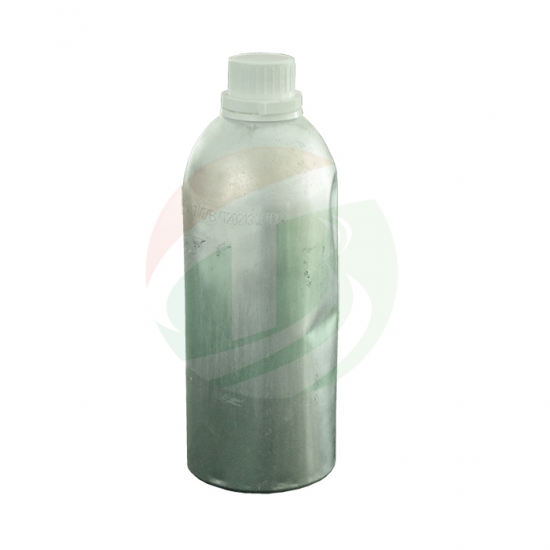
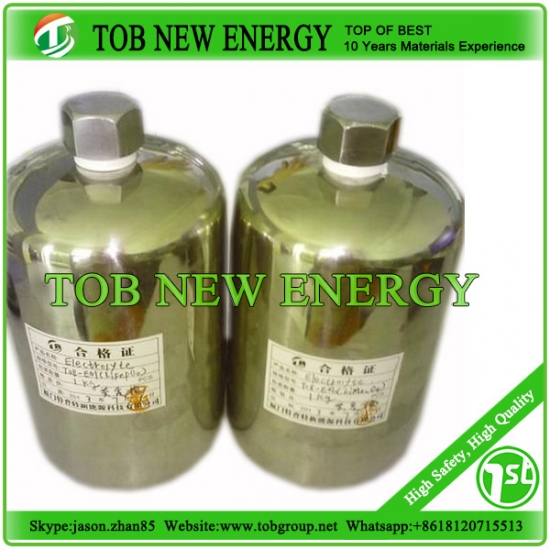
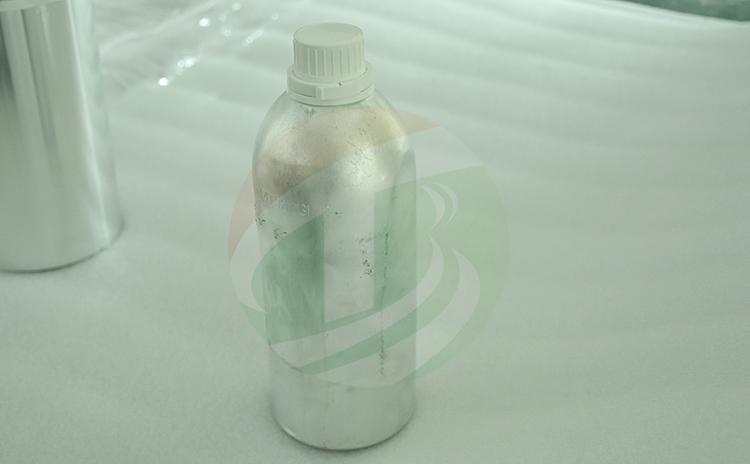
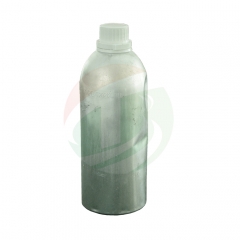
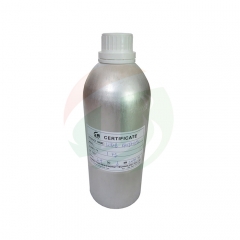
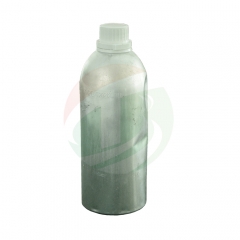
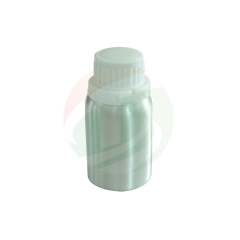
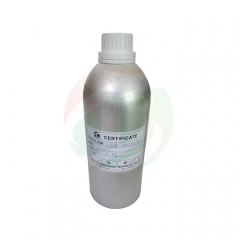
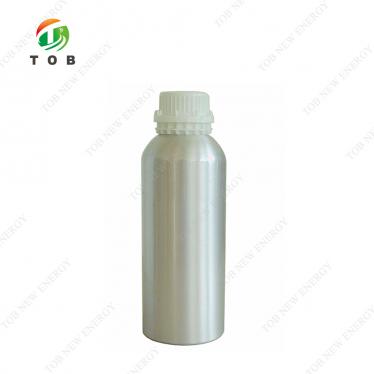
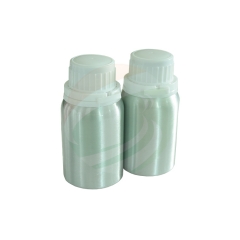
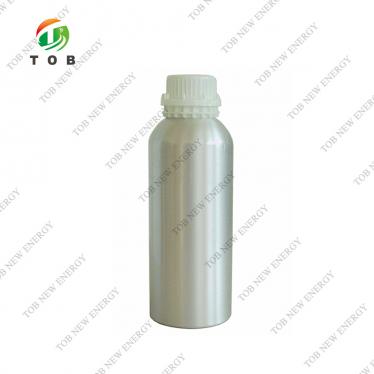
The electrolyte is sealed inside stainless steel containers for safe shipping and storage, supplied in 1 kg bottles (200 ml bottles are also available). The net weight of the standard container is 4 lbs.
Ideal for:
- Research and development of lithium-ion cells with LiCoO₂ cathodes, including coin-cell and small pouch-cell testing.
- Electrolyte evaluation and benchmarking studies, where a consistent, well-characterized baseline electrolyte is required.
- Quality-control testing of electrolyte properties (conductivity, moisture, HF content) against a known reference formulation.
- Pilot-scale cell manufacturing requiring a standard 1 M LiPF₆ in EC:DMC:DEC (1:1:1) electrolyte.
Where the Electrolyte Fits in Lithium-Ion Cell Manufacturing
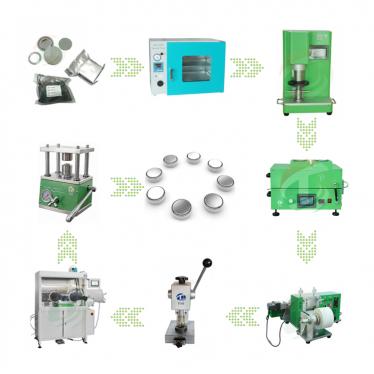
The electrolyte is the medium that enables lithium-ion transport between the cathode and anode during charge and discharge. In the cell manufacturing sequence, the electrolyte is introduced after the electrode stack (cathode, separator, anode) has been assembled and before the cell is sealed. The TOB-E-P6 enters the process at the electrolyte filling stage.
For a LiCoO₂-graphite lithium-ion cell, the electrolyte performs several critical functions:
- Ion transport: The LiPF₆ salt dissociates in the solvent mixture, providing free Li⁺ ions that migrate between the electrodes during charge and discharge.
- SEI formation: During the first charge, the solvent components (particularly EC) decompose at the anode surface to form the solid-electrolyte interphase (SEI)—a protective layer that permits Li⁺ transport while blocking further solvent decomposition.
- Cathode protection: The electrolyte must be stable against the oxidized cathode surface up to the maximum charge voltage (4.5 V for LiCoO₂), preventing excessive side reactions that would consume lithium and increase cell impedance.
The quality of the electrolyte directly determines the cell's first-cycle efficiency, cycle life, rate capability, and safety. The tight moisture and HF control of the TOB-E-P6 ensures that the electrolyte introduces minimal water into the cell, protecting the LiCoO₂ cathode surface and the SEI integrity.
Key Quality Characteristics of TOB-E-P6
-
Battery-Grade Purity with Tight Impurity Control
The TOB-E-P6 is manufactured to battery-grade specifications with strict limits on critical impurities: moisture ≤ 20 ppm, free acid (HF) ≤ 50 ppm, and chromaticity < 50 Hazen. Metal impurities are controlled to single-digit or low-tens ppm levels (Fe < 6 ppm, Pb < 5 ppm, K/Na/Ca < 10 ppm each). These controls ensure that the electrolyte does not introduce contaminants that would degrade the cell's capacity, impedance, or safety. -
Optimized EC/DMC/DEC Ternary Solvent System
The 1:1:1 volume ratio of EC, DMC, and DEC combines the high dielectric constant of EC (which dissociates LiPF₆ and forms a stable SEI on graphite) with the low viscosity of DMC and DEC (which improve ion mobility and low-temperature performance). This is one of the most widely used and validated solvent systems in commercial lithium-ion batteries. -
Compatible with LiCoO₂ Cathodes up to 4.5 V
The electrolyte is specified for a maximum voltage of 4.5 V, matching the operating window of LiCoO₂ cathodes in high-energy-density cells. This compatibility ensures stable cathode performance without excessive electrolyte oxidation at the charged cathode surface. -
Verified Conductivity (10 ± 0.5 mS/cm)
The electrical conductivity of 10 ± 0.5 mS/cm at 25 °C is within the typical range for 1 M LiPF₆ in EC/DMC/DEC systems. This conductivity supports the rate capability expected from a standard lithium-ion electrolyte. -
Safe Stainless Steel Packaging
The electrolyte is sealed inside stainless steel containers for safe shipping and storage, protecting the moisture-sensitive electrolyte from atmospheric humidity. The standard package is 1 kg per bottle (200 ml bottles also available), with a net weight of 4 lbs for the standard container. -
Clear Quality Parameters for Incoming Inspection
The specification provides a complete set of measurable quality parameters (chromaticity, moisture, HF, density, conductivity, and metal impurities) that can be verified by the user's quality-control laboratory, enabling systematic incoming inspection and batch qualification.
Technical Specifications
Formulation
| Parameter | Specification |
| Electrolyte Salt | 1 mol/L LiPF₆ |
| Organic Solvent | EC + DMC + DEC; 1:1:1 in volume |
| Net Weight | 4 lbs |
| Max. Voltage | 4.5 V |
| Packing | The electrolyte is sealed inside the stainless steel container for safe shipping & storage. 1 kg/bottle. Also can supply 200 ml/bottle |
Quality Specifications
| Parameter | Specification |
| Chromaticity | < 50 Hazen |
| Moisture | ≤ 20 ppm |
| Free Acid (HF) | ≤ 50 ppm |
| Density | 1.22 ± 0.03 g/ml @ 25 °C |
| Electrical Conductivity | 10 ± 0.5 mS/cm |
| Chlorine (Cl) | < 1 ppm |
| Sulfate (SO₄) | < 10 ppm |
| Potassium (K) | < 10 ppm |
| Sodium (Na) | < 10 ppm |
| Calcium (Ca) | < 10 ppm |
| Iron (Fe) | < 6 ppm |
| Lead (Pb) | < 5 ppm |
Handling and Storage Recommendations
The TOB-E-P6 electrolyte is moisture-sensitive and contains a corrosive lithium salt. The following handling and storage practices are essential:
- Storage: Store the sealed stainless steel container in a cool, dry, well-ventilated area, away from heat sources, open flames, and incompatible materials. Keep the container tightly sealed when not in use. The container should be stored upright.
- Moisture protection: LiPF₆ reacts with water to form HF, which is corrosive and toxic. Open the container only in a dry environment (dry room or glovebox) with a dew point below −40 °C. Minimize the exposure of the electrolyte to ambient air.
- Personal protection: Wear chemical-resistant gloves (e.g., nitrile or butyl), safety goggles, a lab coat, and, when handling larger volumes, a face shield. Work in a fume hood or a well-ventilated area. Avoid inhalation of vapors and contact with skin or eyes.
- Use in glovebox: For coin-cell assembly, transfer the required amount of electrolyte into a small container inside the glovebox. Use the electrolyte promptly after opening; do not return unused electrolyte to the original container.
- Waste disposal: Dispose of electrolyte waste as hazardous chemical waste in accordance with local regulations. Do not pour electrolyte down the drain.
Common Issues and Troubleshooting
| Issue | Possible Cause | Recommended Action |
| Electrolyte appears discolored (yellowish or brown) | Moisture contamination during storage or use, causing LiPF₆ decomposition and HF formation. | Check the storage conditions and the sealing of the container. Use a fresh, sealed container. Do not use discolored electrolyte, as the HF content will be elevated. |
| Cell first-cycle efficiency lower than expected | Moisture in the electrolyte; electrolyte volume insufficient; SEI formation not optimized. | Verify the moisture content (≤ 20 ppm). Ensure adequate electrolyte wetting of the separator and electrodes. Optimize the formation protocol. |
| Conductivity measured lower than specification | Temperature not at 25 °C; contamination; salt concentration not verified. | Measure at 25 ± 0.5 °C. Verify the density (1.22 ± 0.03 g/ml). Confirm the salt concentration is 1 mol/L. |
| HF odor or corrosion observed | Electrolyte contaminated with moisture; container damaged. | Stop using the electrolyte immediately. Ventilate the area. Check the container seal and storage conditions. |
| Cell swelling after filling | Electrolyte decomposition gas generation; moisture-induced HF attack; over-voltage. | Verify the maximum voltage (4.5 V) is not exceeded. Check the moisture content of the electrolyte. Review the cell assembly and formation procedures. |
Recommended Electrolyte Usage Parameters (Starting Points for LiCoO₂ Cells)
The following parameters are starting points for using TOB-E-P6 in a LiCoO₂-graphite cell. Optimize for your specific cell design and equipment.
| Parameter | Recommended Value | Notes |
| Electrolyte volume (coin cell) | 30–80 µL per coin cell (CR2032) | Sufficient to wet the separator and electrode stack without excess. |
| Electrolyte volume (pouch cell) | 2.5–4.5 g/Ah of cell capacity | Adjust based on the electrode porosity and separator thickness. |
| Charge voltage limit | 4.2 V (standard) or 4.35–4.5 V (high-voltage LiCoO₂) | Do not exceed 4.5 V per the electrolyte specification. |
| Formation protocol | 0.05C–0.1C first charge to 4.2 V, then CV hold | Slow formation promotes a stable SEI on graphite. |
| Working temperature | 0–45 °C (typical) | The EC/DMC/DEC system supports room-temperature operation; low-temperature performance is limited by solvent freezing. |
Engineering FAQ
Q1: Why is the EC/DMC/DEC 1:1:1 solvent system so widely used?
EC has a high dielectric constant that dissociates LiPF₆ into free ions and forms a stable SEI on graphite anodes, but its high viscosity and melting point make it unsuitable alone. DMC and DEC have low viscosity and improve ion mobility and low-temperature performance. The 1:1:1 ternary blend balances these properties, providing high conductivity, good SEI formation, and acceptable low-temperature behavior—which is why it is a standard electrolyte formulation for LiCoO₂-graphite cells.
Q2: Can the TOB-E-P6 be used with other cathode materials besides LiCoO₂?
The electrolyte is specified for use with a LiCoO₂ cathode up to 4.5 V. It may also be compatible with other cathodes operating within the same voltage window (e.g., NMC, NCA at moderate voltages), but the additive package and solvent ratio may need optimization for each cathode chemistry. Contact TOB to discuss electrolyte formulation for your specific cathode.
Q3: How should I handle the electrolyte during coin-cell assembly?
Perform all electrolyte handling inside a glovebox with a dry, inert atmosphere (H₂O < 0.1 ppm, O₂ < 0.1 ppm). Use a clean syringe or pipette to transfer the electrolyte, and avoid exposing the electrolyte to air. Fill the cell with the recommended volume, and seal the cell promptly. The electrolyte is moisture-sensitive and corrosive—always use appropriate personal protective equipment.
Q4: What is the significance of the free acid (HF) limit of ≤ 50 ppm?
HF is generated by the reaction of LiPF₆ with water. It attacks the cathode surface and the SEI, dissolves transition metal ions from the cathode, and contributes to cell impedance growth and capacity fade. The ≤ 50 ppm HF limit ensures that the electrolyte introduces minimal acid into the cell, protecting the LiCoO₂ cathode and preserving the cell's cycle life.
Q5: How should I store the electrolyte for long periods?
Store the sealed stainless steel container in a cool (15–25 °C), dry, well-ventilated area away from sunlight, heat, and moisture. Do not freeze the electrolyte, as phase separation or salt precipitation could occur at low temperatures. Check the container for any sign of leakage or swelling before use. Use the electrolyte within the manufacturer's recommended shelf life.
Ready to build consistent, high-quality LiCoO₂ lithium-ion cells with a well-characterized baseline electrolyte? Request a quotation for TOB-E-P6 in 1 kg or 200 ml packaging, or contact our electrolyte engineers for formulation customization (additives, solvent ratios, or salt concentration) for your specific cell chemistry.
tob.amy@tobmachine.com | +86 181 2071 5609
You May Also Need
1. Battery Electrolyte LiPF6 LiBOB LiTFSI Mass Supply — A mass supply source for battery electrolyte salts and solutions, including LiPF₆, LiBOB, and LiTFSI. Complements the TOB-E-P6 by providing additional electrolyte salt options for custom formulation.
2. LiBOB Lithium Ion Battery Electrolyte — A lithium bis(oxalato)borate (LiBOB) electrolyte salt for lithium-ion batteries. Provides an alternative or additive conducting salt for applications requiring improved SEI formation and high-temperature stability.
3. LiTFSI Electrolyte Solution — A lithium bis(trifluoromethanesulfonyl)imide (LiTFSI) electrolyte solution. Complements the TOB-E-P6 by offering a high-stability conducting salt alternative for advanced electrolyte systems, including solid-state and high-voltage applications.
If you are interested in our products and want to know more details,please leave a message here,we will reply you as soon as we can.

 subscribe to us