Chinese
 français
 Deutsch
 italiano
 español
 português
 Nederlands
 日本語
日本語 한국의
한국의




- Home
- >
- Battery Tester
- >
- Battery and Supercapacitor Capacity Tester
- >
- Portable Battery Testing System with CV and EIS
Categories
Hot Products
Loading...
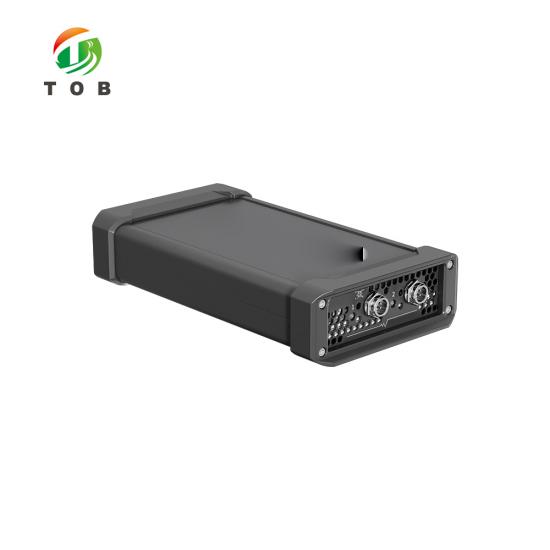
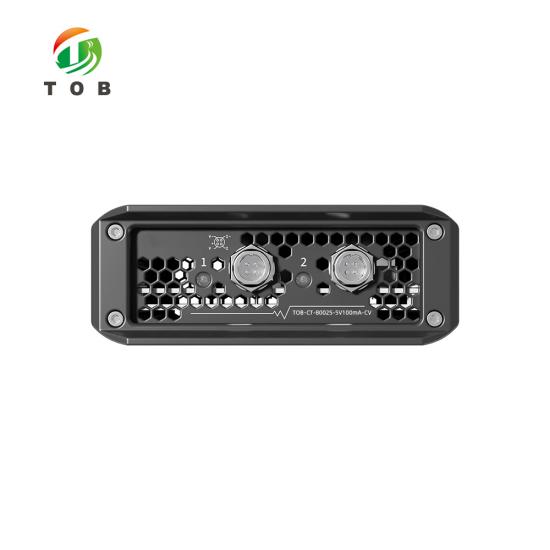
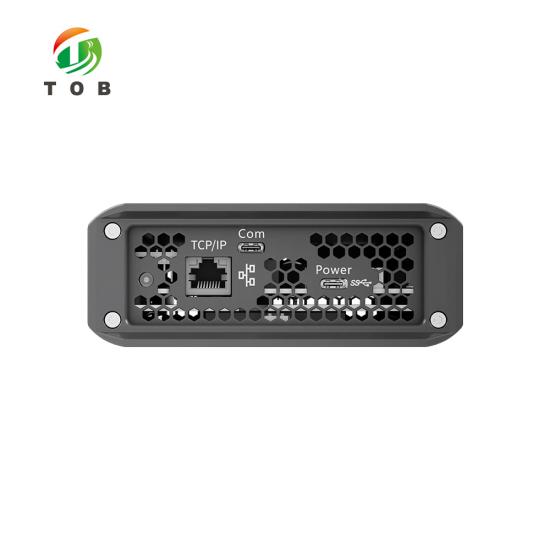
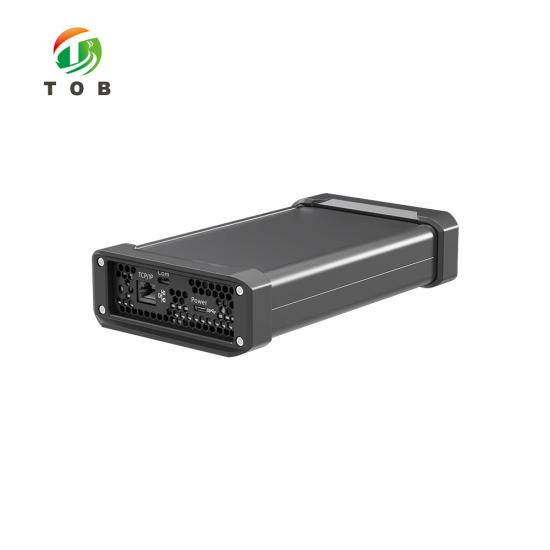
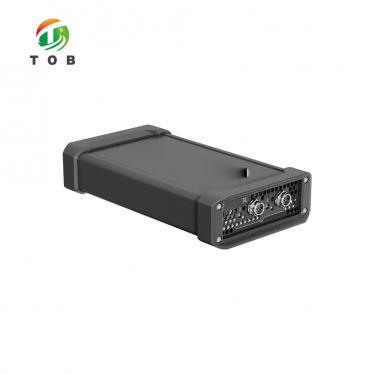
Portable Battery Testing System with CV and EIS
Brand:
TOB NEW ENERGYitem no.:
TOB-CT-8002S-5V100mA-CVorder(moq):
1setPayment:
L/C,T/Tproduct origin:
Chinashipping port:
XIAMEN
Portable Dual-Channel Battery Testing System with Cyclic Voltammetry and EIS | TOB-CT-8002S-5V100mA-CV
Product Overview and Ideal Applications
The TOB-CT-8002S-5V100mA-CV is a portable, dual-channel battery testing system that integrates charge-discharge cycling, cyclic voltammetry (CV), Electrochemical Impedance Spectroscopy (EIS), linear sweep voltammetry (LSV), and DCIR (direct current internal resistance) testing into a single compact device. Designed for researchers who need a battery cycler they can carry in a tote bag, the system is powered through a Type-C port (5 V / 2 A, PD protocol) and connects to a host computer via Ethernet or USB-Type-C, making it a plug-and-play solution for battery performance evaluation.
The TOB-CT-8002S-5V100mA-CV operates within a ±5 V voltage range and offers six selectable current ranges from 0.1 mA to 100 mA, covering the measurement needs of coin cells, small pouch cells, and electrode material half-cells. Each of the two channels is independently controlled through a constant-current/constant-voltage dual closed-loop structure with four-wire connection for accurate voltage and current sensing. The AD/DA resolution is 24-bit / 16-bit, the sampling frequency reaches 1000 Hz, and the current rise time and charge/discharge transition time are both ≤ 20 µs—specifications that support fast transient measurements, including pulse testing and DCIR analysis.
A key differentiator of the TOB-CT-8002S-5V100mA-CV is its integrated CV and LSV functionality. By combining cyclic voltammetry with traditional charge-discharge testing in a single portable device, researchers can perform both electrochemical characterization and cycling evaluation without moving the cell between separate instruments—saving time and avoiding the risk of disturbing the cell during relocation.
Ideal for:
- Academic and industrial battery researchers performing cyclic voltammetry, charge-discharge cycling, and DCIR testing on coin cells and small pouch cells.
- Electrode material evaluation laboratories that need to characterize new cathode, anode, or electrolyte formulations with CV and galvanostatic cycling on the same device.
- Researchers who require a field-portable or space-saving battery tester that can be easily transported between laboratories or used in a glovebox-adjacent setup.
- Quality-control laboratories testing small-format cells where the 100 mA maximum current and ±5 V range are sufficient.
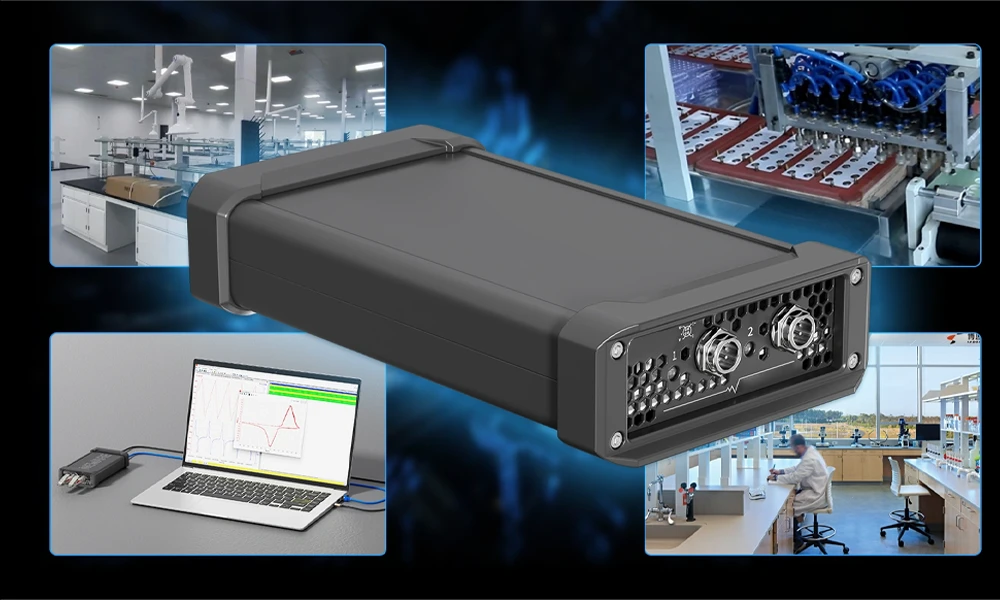
Where Portable Testing Fits in Battery Research and Quality Control
In battery research, a typical test workflow involves several distinct measurements: cyclic voltammetry to identify redox reactions and evaluate electrochemical stability, charge-discharge cycling to measure capacity and cycle life, and DCIR testing to assess internal resistance and power capability. In a conventional laboratory, these tests require separate instruments, and the cell must be physically moved between them—a process that can introduce measurement variability and risks disturbing a delicate cell assembly.
The TOB-CT-8002S-5V100mA-CV consolidates these measurements into a single portable device. The research workflow becomes:
- Cell assembly: The coin cell, pouch cell, or half-cell is assembled (typically in a glovebox for moisture-sensitive materials).
- Cyclic voltammetry: The CV test is run to characterize the redox behaviour of the electrode material, identify the working voltage window, and detect any irreversible side reactions.
- Formation and cycling: The cell is charged and discharged through the constant-current/constant-voltage sequence to form the SEI and measure capacity.
- DCIR testing: The internal resistance is measured at user-defined sampling points to evaluate the cell's power capability and state of health.
- Differential capacity analysis: The DCIR differential capacity curves provide additional insight into phase transitions and degradation mechanisms.
Because the entire sequence can be run on the TOB-CT-8002S-5V100mA-CV without moving the cell, the measurement conditions are consistent throughout, and the researcher gains a complete electrochemical picture of the cell from a single device.
How the Portable Battery Testing System Operates
The TOB-CT-8002S-5V100mA-CV performs battery testing through a precision electrochemical measurement architecture:
-
Channel structure and control:
Each of the two channels is built around a constant-current source and a constant-voltage source in a dual closed-loop structure, with independent channel control. The four-wire (Kelvin) connection separates the current-carrying leads from the voltage-sensing leads, eliminating the influence of lead and contact resistance on the measured voltage. The voltage/current detection and sampling therefore reflect the true cell state. -
CV and LSV testing:
The CV function sweeps the cell voltage linearly between user-defined limits while recording the resulting current, producing the characteristic current-voltage (I-V) curves that reveal oxidation and reduction peaks. The LSV (linear sweep voltammetry) function performs a single-direction linear sweep. The integrated CV/LSV capability allows the TOB-CT-8002S-5V100mA-CV to complete electrochemical characterization without a separate potentiostat. -
Charge-discharge and pulse testing:
The system supports constant-current, constant-voltage, constant-current-constant-voltage, constant-power, constant-resistance discharge, pulse charge/discharge, CV test, current ramp, voltage ramp, and follow-mode charge/discharge. The pulse function supports a minimum pulse width of 5 ms, with up to 32 different pulses per step and continuous switching between charging or between discharging pulses within a single pulse step. The step time range extends to 365 × 24 hours per step with millisecond-resolution time format. -
DCIR testing and differential capacity:
The DCIR test supports custom sampling points for internal resistance calculation, and the DCIR differential capacity curves provide advanced analysis of the cell's electrochemical response. -
Data acquisition and communication:
The 24-bit AD / 16-bit DA converters and the 1000 Hz sampling frequency (1 ms minimum interval) capture fast transient events. The system communicates with the host computer via TCP/IP protocol (Ethernet) or USB-TypeC, and the host software manages test data through a MySQL database, with output formats including EXCEL, TXT, GRAPH, PDF, and CSV.
Key Engineering Characteristics of the TOB-CT-8002S-5V100mA-CV
-
Integrated CV, LSV, Charge-Discharge, and DCIR in One Portable Device
The defining feature of the TOB-CT-8002S-5V100mA-CV is the integration of cyclic voltammetry and linear sweep voltammetry with conventional battery cycling and DCIR testing. Researchers can complete electrochemical characterization and performance testing on a single device, eliminating the time and risk associated with moving cells between separate instruments. -
True Portability — Fits in a Tote Bag
The dual-channel housing measures only 127 × 226 × 48 mm and is powered through a Type-C port (5 V / 2 A, PD protocol). The system is genuinely portable, allowing it to be carried between laboratories, used at field locations, or positioned close to a glovebox without requiring a dedicated bench or high-power outlet. -
Six Current Ranges Covering 0.1 mA to 100 mA
The six selectable current ranges (0.1 mA, 1 mA, 5 mA, 10 mA, 50 mA, 100 mA) provide the flexibility to test everything from small electrode-material half-cells to larger coin cells and small pouch cells. The ±5 V range accommodates most lithium-ion, sodium-ion, and other battery chemistries. -
High Precision (±0.01 % of FS for voltage and current)
The voltage accuracy is ±0.01 % of full scale with a stability of 0.02 % of FS, and the current accuracy is ±0.01 % of FS with a stability of 0.02 % of FS. The power accuracy is ±0.02 % of FS with a stability of 0.04 % of FS. The 24-bit AD / 16-bit DA resolution and the ≥1 GΩ input impedance ensure reliable, high-resolution measurements. -
Fast Transient Response for Pulse and DCIR Testing
The current rise time is ≤ 20 µs (10 %–90 % of FS) and the charge/discharge transition time is ≤ 20 µs (−90 % to 90 % of FS), with a sampling frequency of 1000 Hz. These specifications support precise pulse testing with a minimum pulse width of 5 ms, and reliable DCIR measurements at user-defined sampling points. -
Comprehensive Protection for Safe, Unattended Operation
The system provides both software and hardware protection. Software protection includes power-failure data protection, an offline test function, and settable safety conditions (voltage upper/lower limits, current upper/lower limits, capacity upper limit, delay time, and custom-variable protection). Hardware protection includes reverse-connection protection, over-voltage, over-current, over-temperature, and emergency-stop protection. -
Flexible Test Programming and Data Management
The working modes include constant current/voltage/power charge-discharge, pulse cycling, constant-resistance discharge, CV, current ramp, voltage ramp, and follow-mode. Cut-off conditions include voltage, current, relative time, capacity, energy, −ΔV, and custom variables. The cycle test range is 1–65535 cycles with up to 255 steps per cycle and fewer than 10 levels of cycle nesting, providing deep flexibility for complex test protocols.
Technical Specifications
Equipment Model
|
Item |
Specification |
|
Material code |
TOB-CT-8002S-5V100mA-CV |
Specification Items
|
Item |
Parameter |
|
Input power supply |
Type-C input: 5V2A (PD protocol) |
|
Resolution (AD/DA) |
AD: 24bit; DA: 16bit |
|
Input impedance |
≥1GΩ |
|
Noise |
<2dB (measured at 1m) |
|
Parallel function |
/ |
|
IP protection level |
Protection level IP20 |
|
Channel characteristics |
The constant current source and constant voltage source adopt a dual closed-loop structure |
|
Channel control mode |
Independent control |
|
Voltage/current detection and sampling |
Four-wire connection |
Voltage
|
Item |
Parameter |
|
Range |
±5V |
|
Minimum discharge voltage |
-5V |
|
Accuracy |
± 0.01% of FS |
|
Stability |
0.02% of FS |
Current
|
Item |
Parameter |
|
Range |
Range 1: 0.1mA; Range 2: 1mA; Range 3: 5mA; Range 4: 10mA; Range 5: 50mA; Range 6: 100mA |
|
Accuracy |
± 0.01% of FS |
|
Stability |
0.02% of FS |
Power
|
Item |
Parameter |
|
Maximum output power per channel |
0.5W |
|
Accuracy |
±0.02% of FS |
|
Stability |
0.04% of FS |
Time
|
Item |
Parameter |
|
Current rise time |
≤20μs (10% ~ 90% of FS) |
|
Charge/discharge transition time |
≤20μs (-90% ~ 90% of FS) |
|
Step time range |
≤(365×24) hours/step; time format supports 00:00:00.000 (h:min:s.ms) |
|
Sampling frequency |
1000Hz (minimum time interval: 1ms) |
Working Modes
|
Item |
Parameter |
|
Charge/discharge modes |
Constant current charge/discharge, constant voltage charge/discharge, constant current constant voltage charge/discharge, constant power charge/discharge, pulse charge/discharge, constant resistance discharge, CV test, current ramp, voltage ramp, follow mode charge/discharge |
|
Cut-off conditions |
Voltage, current, relative time, capacity, energy, -△V, custom variables, etc. |
|
DCIR test |
Supports custom sampling points for DCIR calculation |
|
Pulse charge/discharge modes |
Constant current mode, constant power mode |
|
Minimum pulse width |
5ms |
|
Number of pulses per step |
A single pulse step supports 32 different pulses |
|
Pulse switching |
One pulse step can realize continuous switching of charging, or continuous switching of discharging |
|
Pulse cut-off conditions |
Voltage, relative time |
Cycling
|
Item |
Parameter |
|
Cycle test range |
1~65535 times |
|
Steps per cycle |
≤255 |
|
Cycle nesting |
<10 levels |
Protection
|
Item |
Parameter |
|
Software protection |
Power failure data protection, offline test function, settable safety protection conditions; the settable parameters include: voltage upper limit, voltage lower limit, current upper limit, current lower limit, capacity upper limit, delay time, custom variable protection, etc. |
|
Hardware protection |
Reverse connection protection, over-voltage protection, over-current protection, over-temperature protection, emergency stop protection, etc. |
Communication and Computer Configuration Requirements
|
Item |
Requirement |
|
CPU requirement |
I3 or above recommended |
|
Memory |
16G or above recommended |
|
Host computer communication method |
Based on TCP/IP protocol / USB-TypeC |
|
Server disk requirement |
500GB or above recommended |
|
Server operating system requirement |
Windows 11 |
|
Database |
MySQL database for centralized management of test data |
|
Data output methods |
EXCEL, TXT, GRAPH, PDF, CSV |
Equipment Working Environment Requirements
|
Item |
Parameter |
|
Working temperature range |
0℃~40℃ (within the range of 25±10℃, measurement accuracy is guaranteed: accuracy drift 0.005% of FS /℃) |
|
Storage temperature range |
-10℃~50℃ |
|
Working environment relative humidity range |
≤70% RH (no water vapor condensation) |
|
Storage environment relative humidity range |
≤80% RH (no water vapor condensation) |
Fixture Specifications and Dimensions
|
Item |
Specification |
|
Fixture type |
Optional (must be clearly specified at order confirmation) |
|
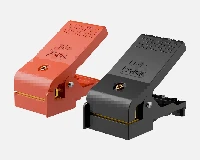
Fixture pictures |
The pictures are for reference only; the actual product prevails. Choose one of the above fixtures |
|
Coin cell fixture |
|
|
Crocodile clip fixture |
|
|
Pouch cell fixture |
|
|
Number of channels per machine |
2 |
|
Equipment dimensions (W×D×H) (mm) |
127×226×48 |
Engineering FAQ
Q1: What is the difference between the CV function on this device and a dedicated potentiostat?
The CV function on the TOB-CT-8002S-5V100mA-CV performs linear potential sweeps and records the resulting current, producing the I-V curves used to identify redox peaks and evaluate electrochemical stability. While a dedicated potentiostat may offer higher scan-rate ranges and additional electrochemical techniques (EIS, etc.), the integrated CV on the TOB-CT-8002S-5V100mA-CV provides the core cyclic voltammetry capability needed for battery material characterization within a single portable device.
Q2: Can the TOB-CT-8002S-5V100mA-CV test lithium-ion full cells, or is it limited to half-cells?
The system can test any cell or material within its ±5 V range and 0.1–100 mA current range. Both half-cells (e.g., lithium-metal vs. electrode material) and full cells (cathode vs. anode) can be tested, as long as the cell's voltage and current requirements are within the instrument's specifications. The fixture type should be selected to match the cell format.
Q3: How is the device powered, and does it require a separate power supply?
The device is powered through a Type-C input at 5 V / 2 A (PD protocol). It can be powered by a standard PD-compatible Type-C charger or a power bank, which further enhances its portability. No separate high-voltage power supply is required.
Q4: What is the maximum number of cycles and steps I can program?
The cycle test range is 1–65535 cycles, with up to 255 steps per cycle and fewer than 10 levels of cycle nesting. This provides substantial flexibility for complex test protocols, including multi-step formation schedules by long-term cycling.
Q5: How does the device protect the cell and itself during testing?
The device provides dual-layer protection. Software protection includes power-failure data protection, an offline test function, and settable safety conditions (voltage/current/capacity limits, delay time, custom variables). Hardware protection includes reverse-connection protection, over-voltage, over-current, over-temperature, and emergency-stop protection. These protections allow the device to operate safely and preserve data during unattended long-duration testing.
Ready to add a portable, CV-capable battery testing system to your research toolbox? Request a quotation for the TOB-CT-8002S-5V100mA-CV, specifying your fixture type (coin cell, crocodile clip, or pouch cell) and host computer configuration. Our battery testing engineers can advise on test protocol setup for your specific cell or material.
tob.amy@tobmachine.com | +86 181 2071 5609
You May Also Need
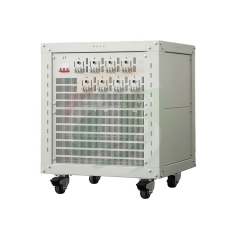
- Single Temperature Zone 5V100mA All-in-One Coin Cell Constant Temperature Testing System — An all-in-one coin cell testing system with integrated constant-temperature control. Complements the portable TOB-CT-8002S-5V100mA-CV by providing temperature-controlled testing for applications that require controlled thermal conditions during cycling.
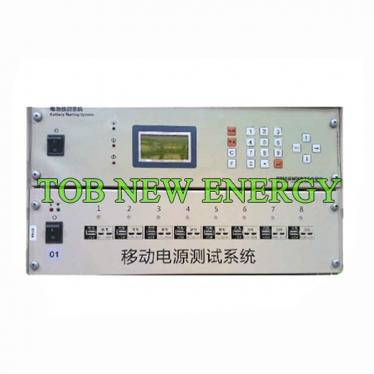
- 5V10mA Button Cell Tester with Three Testing Range — An 8-channel button cell tester with three testing ranges. Provides a higher-channel-count, benchtop testing platform for laboratories that require parallel testing of multiple coin cells, complementing the portable dual-channel TOB-CT-8002S-5V100mA-CV.
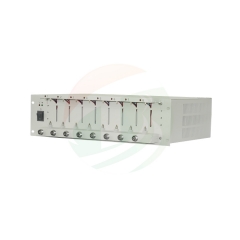
- 8-Channel Battery Analyzer for Lithium-Ion Battery — An 8-channel battery analyzer for lithium-ion battery testing. Complements the TOB-CT-8002S-5V100mA-CV by offering a higher-throughput, multi-channel benchtop solution for production-line or large-batch testing.
If you are interested in our products and want to know more details,please leave a message here,we will reply you as soon as we can.

 subscribe to us