Chinese
 français
 Deutsch
 italiano
 español
 português
 Nederlands
 日本語
日本語 한국의
한국의




- Home
- >
- Cylindrical Cell Assembly Machine
- >
- Cylindrical Cell Short Testing Machine
- >
- Battery Internal Resistance Tester 20V, 0.01mΩ–31Ω | TOB-HP-3561
Categories
Hot Products
Loading...
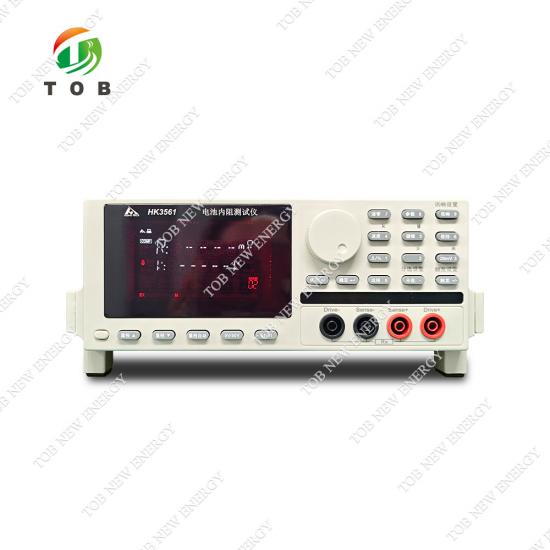
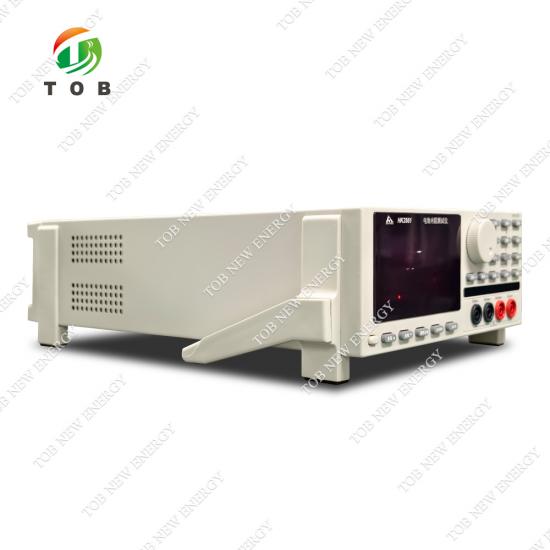
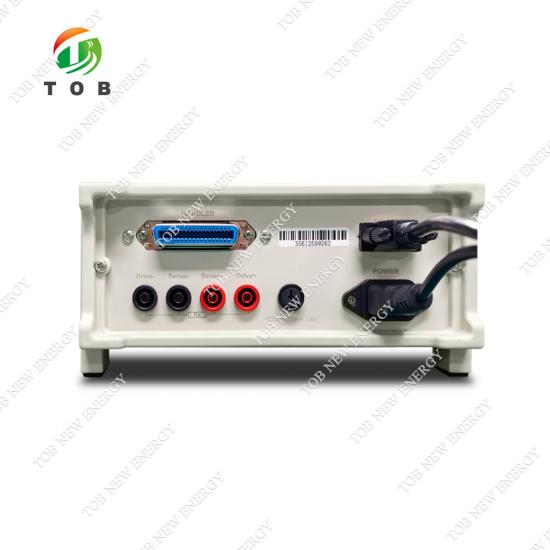
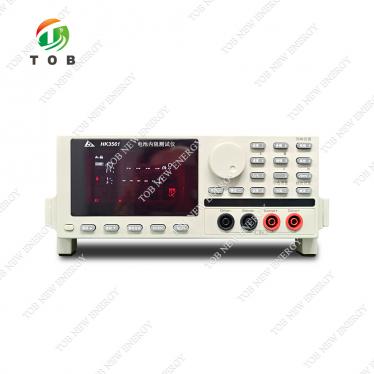
Battery Internal Resistance Tester 20V, 0.01mΩ–31Ω | TOB-HP-3561
Brand:
TOB NEW ENERGYitem no.:
TOB-HP-3561order(moq):
1setPayment:
L/C,T/Tproduct origin:
Chinashipping port:
XIAMEN
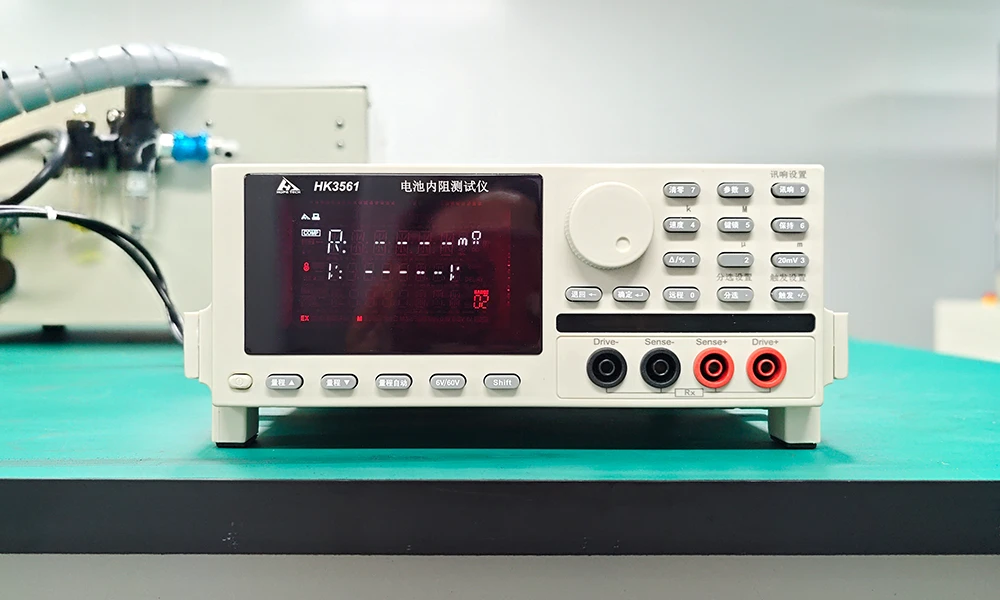
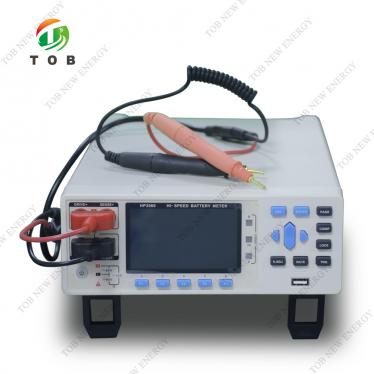
TOB-HP-3561 Precision Battery Internal Resistance Tester — AC-IR and DC-V Measurement for Battery R&D and Production
Product Overview and Ideal Applications
The TOB‑HP‑3561 is a precision battery internal resistance tester that measures the AC internal resistance (AC‑IR) and DC open‑circuit voltage (DC‑V) of a battery cell or pack simultaneously, using a four‑wire (Kelvin) measurement method. A high‑performance microprocessor controls the measurement cycle, delivering fast, stable readings across three selectable resistance ranges (300 mΩ, 3 Ω, 30 Ω) and a single 20 V voltage range. The AC‑IR measurement uses a 1 kHz ± 0.2 Hz test signal, a frequency widely adopted throughout the battery industry because it correlates well with the ohmic resistance that governs a cell's voltage sag under load.
The four‑wire measurement scheme separates the current‑carrying leads from the voltage‑sensing leads, eliminating the contribution of lead resistance and contact resistance from the measured value. This is essential for resolving internal resistances as low as tens of micro‑ohms—a capability that a simple two‑wire ohmmeter cannot provide. The TOB‑HP‑3561 achieves a best resolution of 10 µΩ on the 300 mΩ range and 1 mV on the 20 V voltage range.
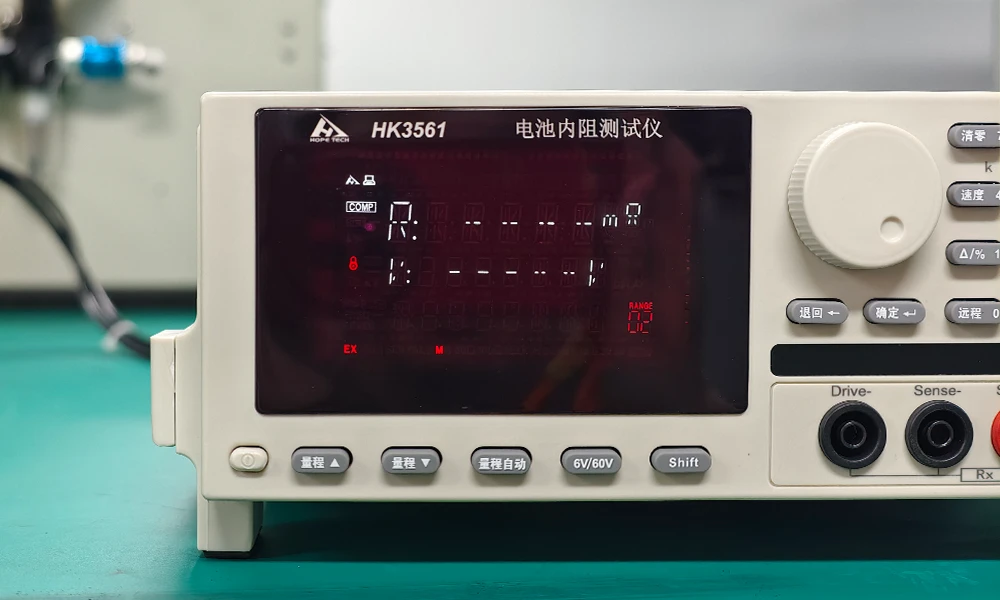
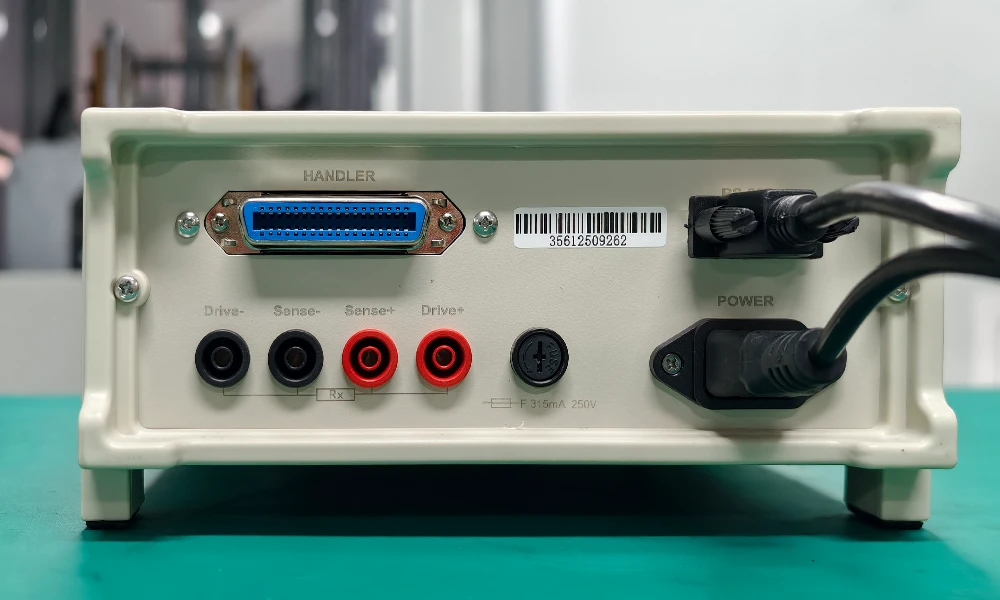
The TOB‑HP‑3561 is equipped with a 3.5‑inch TFT colour LCD for clear readout of measurement data, a built‑in comparator that stores up to 30 records with 10‑grade sorting and bin‑counting, and four trigger modes (internal, manual, external, automatic, and bus) that allow it to operate stand‑alone or integrated into an automated production line. Communication interfaces include RS232, RS485, an optional LAN port, and a Handler (I/O) port for direct PLC connectivity. The instrument supports both SCPI and Modbus communication protocols.
Ideal for:
- Lithium‑ion battery cell manufacturers performing 100 % end‑of‑line internal resistance and voltage screening on cylindrical, pouch, and prismatic cells.
- R&D laboratories characterising new electrode materials and tab‑welding quality by tracking the evolution of AC‑IR through formation cycling.
- Supercapacitor manufacturers measuring ESR (equivalent series resistance), which the TOB‑HP‑3561 can test directly using the AC‑IR function.
- Battery pack assembly lines where the internal resistance of individual cells must be matched before series‑parallel grouping.
- Automated production equipment that requires a fast, Handler‑equipped tester to communicate pass/fail signals for inline sorting.
Where the Internal Resistance Tester Fits in Battery Production and Quality Control
Internal resistance is one of the two primary electrical parameters that define a battery cell's health and performance—the other being capacity. An elevated internal resistance causes excessive voltage drop under load, reduces the usable discharge capacity, and generates heat that accelerates degradation. In a production environment, every cell must be checked for internal resistance and open‑circuit voltage before it is assembled into a pack, because a single high‑resistance cell in a series string will limit the performance of the entire string and may be driven into over‑charge or over‑discharge by the BMS.
The TOB‑HP‑3561 is deployed at several quality‑control checkpoints:
- Incoming cell inspection: Cell manufacturers and pack assemblers use the tester to verify that incoming cells meet the specified internal‑resistance and voltage limits. The comparator function (30 records, 10‑grade sorting) can automatically classify cells into bins based on user‑programmed Hi/IN/Lo thresholds for both resistance and voltage.
- Post‑formation testing: After the first charge‑discharge cycle (formation), the internal resistance of a cell is at its initial baseline. The TOB‑HP‑3561 records this value, which then serves as a reference for tracking degradation during cycling tests or field returns.
- Pack assembly matching: Cells that will be connected in series must have closely matched internal resistance to ensure uniform current sharing and temperature distribution during charge‑discharge cycles. The TOB‑HP‑3561's fast measurement speed (up to 66 times per second in Ex.Fast mode) allows high‑throughput sorting.
- Weld quality verification: The AC‑IR measurement can detect a poor tab‑to‑foil or tab‑to‑cap weld: a weld with insufficient contact area will exhibit an anomalously high resistance. By measuring the resistance at the cell level, the TOB‑HP‑3561 provides a quick, non‑destructive check on the welding process.
The four‑wire test method and the 1 kHz measurement frequency are both prescribed by industry standards for battery internal resistance testing, ensuring that the results are comparable with those obtained from other manufacturers' instruments operating under the same conditions.
How the TOB‑HP‑3561 Measures AC Internal Resistance and DC Voltage
The TOB‑HP‑3561 applies a known AC current (typically 10 mA, 1 mA, or 100 µA depending on the selected range) at a frequency of 1 kHz to the battery under test, through the source leads of the Kelvin clip. The AC voltage that develops across the battery terminals in response to this current is measured by a separate pair of sense leads, which are connected as close as possible to the battery terminals. Because the voltmeter circuit has a very high input impedance, practically no current flows in the sense leads, and therefore the voltage drop across any lead resistance or contact resistance in those leads is zero. The measured voltage divided by the applied current gives the AC internal resistance.
The DC open‑circuit voltage is measured simultaneously through the same sense leads. The instrument reads the DC potential between the positive and negative terminals, displaying it with a resolution of 1 mV.
The microprocessor inside the TOB‑HP‑3561 controls the entire measurement sequence: it sets the appropriate current range (automatically or by manual selection), generates the 1 kHz AC signal, digitises the voltage response, calculates the resistance, and drives the 3.5‑inch TFT display. Measurement results are also transmitted via any of the several communication interfaces for data logging or automated control.
Key functional elements of the TOB‑HP‑3561 include:
- Four‑wire (Kelvin) connection: The HK9500‑11A Kelvin test clip, supplied as standard, brings four wires to the battery: two to carry the test current and two to sense the voltage. This arrangement eliminates the measurement error caused by the resistance of the test leads and the contact resistance at the clip jaws.
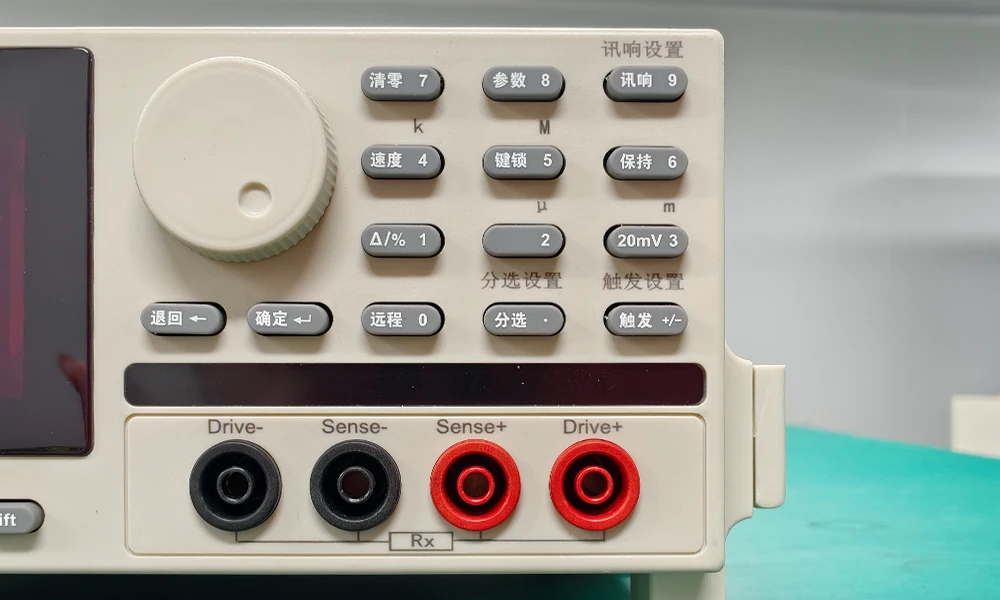
- Three AC‑IR ranges with automatic or manual selection: The instrument can automatically select the most appropriate range, or the operator can lock a specific range. The ranges span 300 mΩ (best resolution 10 µΩ), 3 Ω (100 µΩ), and 30 Ω (1 mΩ), covering everything from an ultra‑low‑resistance large‑format power cell to a high‑resistance coin cell or a dry battery.
- Comparator and sorting: Up to 30 records can be stored, each containing Hi/IN/Lo thresholds for both resistance and voltage. A 10‑grade sorting function classifies parts into bins, and the instrument provides a comprehensive judgement (combined resistance and voltage result) through the display, an indicator light, an audible buzzer, and an external I/O signal via the Handler interface.
- Multiple trigger and communication options: The instrument can be triggered internally, manually, via an external switch, automatically at a set interval, or through a bus command. Communication with a PC or PLC is possible through RS232, RS485, an optional LAN port (using the SCPI protocol), or the Handler I/O port. Both SCPI and Modbus protocols are supported on the RS232 and RS485 interfaces, while the LAN port uses SCPI.
- Wide supply voltage tolerance: The instrument operates from AC 100 V to 240 V, 47–63 Hz, and consumes less than 15 VA, making it compatible with electrical systems worldwide.
Key Performance Characteristics of the TOB‑HP‑3561
Simultaneous AC‑IR and DC‑V Measurement
The TOB‑HP‑3561 measures internal resistance and open‑circuit voltage in a single test cycle, displaying both values on the 3.5‑inch colour LCD. This speeds up the inspection process and ensures that both parameters are recorded for every cell, which is critical for traceability in high‑volume production.
Wide Measurement Range with Three Selectable Resistance Scales
The three ranges (300 mΩ, 3 Ω, 30 Ω) cover the full spectrum of battery internal resistance values encountered in practice. A large‑format EV pouch cell with a resistance of a few hundred micro‑ohms is measured on the 300 mΩ range with 10 µΩ resolution. A small coin cell or a dry battery with a resistance of several ohms can be measured on the 3 Ω or 30 Ω range. The range can be set manually or left in automatic mode for the instrument to select the optimum scale.
High Accuracy and Fast Measurement Speed
On the resistance ranges, the basic accuracy is ±0.5 % of reading ± 0.02 % of full scale (in slow mode). The voltage accuracy is ±0.05 % ± 0.002 % of full scale. Four measurement speeds are available: Slow (3 readings/s), Medium (10 readings/s), Fast (30 readings/s), and Ex.Fast (66 readings/s). In Ex.Fast mode, a cell can be tested in approximately 15 ms, meeting the throughput demands of automated production lines.
Comprehensive Comparator with Binning and I/O Output
The 30‑group comparator can store individual pass/fail limits for both resistance and voltage. The 10‑grade sorting function physically classifies cells into bins via the Handler I/O port, which outputs HI/IN/LO signals that can control external relays or diverters. The total count of cells in each grade is tracked by the instrument.
Wide‑Open Connectivity for Automation Integration
The Handler I/O port provides direct, galvanically isolated communication with PLCs and automation controllers. For PC‑based data acquisition, the RS232, RS485, and optional LAN interfaces are available. The dual SCPI/Modbus protocol support means the TOB‑HP‑3561 can be integrated into existing test systems without software changes.
Compact, Benchtop‑Ready Design with Low Power Consumption
With dimensions of 325 mm × 215 mm × 80 mm and a weight of 3 kg, the TOB‑HP‑3561 fits easily on a laboratory bench or on a shelf in a production‑line test rack. The power consumption of less than 15 VA is negligible in a facility with hundreds of instruments running continuously.
Complete Technical Specifications
The following tables contain the specifications exactly as provided for the TOB‑HP‑3561.
|
Parameter |
Specification / Value |
|
Model |
TOB-HP-3561 |
|
Resistance Display Range |
0.01mΩ~31Ω |
|
Voltage Display Range |
1mV~20V |
|
Display |
3.5 inch TFT color LCD |
|
Source |
1kHz±0.2Hz AC |
|
Test Parameters |
AC Internal Resistance (AC-IR), DC Voltage (DC-V) |
AC Internal Resistance (AC-IR)
|
Range |
300mΩ |
3Ω |
30Ω |
|
Max Reading |
310 |
3.1 |
31 |
|
Resolution |
10μΩ |
100μΩ |
1mΩ |
|
Measurement Current |
10mA |
1mA |
100μA |
|
Accuracy |
±0.5%rdg.±0.02FS |
||
|
Add±2dgt for Medium/Fast (M/F), add±3dgt for Extra Fast (EX.F) |
|||
|
Resistance Gear |
Three Ranges; Automatic and Manual |
||
DC Voltage (DC-V)
|
Range |
20V |
|
Max Reading |
±20.000V |
|
Resolution |
1mV |
|
Accuracy |
±0.05%rdg.±0.002FS |
|
Add±0.001FS for Medium/Fast, add±0.002FS for Extra Fast (EX.F) |
Other Functions
|
Sampling Rate |
Slow S: 3 times/s, Medium M: 10 times/s, Fast F: 30 times/s, Extra Fast EX.F: 66 times/s |
|
Correction |
All ranges short circuit zeroed |
|
Comparator |
30 records can be programmed; 10-grades sorting, grade counting; |
|
Judgment results: Resistance and Voltage Hi/IN/Lo; Overall judgment, screen display, indicator light, buzzer, external I/O output signal |
|
|
Beeper |
GD/NG/OFF |
|
Trigger Mode |
Internal trigger, Manual trigger, External trigger, Auto trigger, BUS trigger |
|
Interface |
RS232 / RS485 / LAN (optional) / Handler (I/O) |
|
Protocol |
SCPI / MODBUS |
|
Power Supply |
Voltage: AC 100V-240V Frequency: 47Hz-63Hz |
|
Power (Pmax) |
<15VA |
|
Dimensions |
325mm×215mm×80mm (L×W×H) |
|
325mm×215mm×96.5mm (L×W×H) with foot pads |
|
|
Weight |
3kg |
Standard Configuration
|
No. |
Name |
Specification/Model |
Qty |
Unit |
Remarks |
|
1 |
Precision Battery Internal Resistance Tester |
TOB-HP-3561 |
1 |
set |
|
|
2 |
Kelvin Test Clip |
HK9500-11A |
1 |
piece |
Consumable |
|
3 |
Power Cord (GB) |
(GB) |
1 |
piece |
|
|
4 |
Communication Cable (RS232) |
HK9800 |
1 |
piece |
|
|
5 |
Handler Interface |
I/O Interface |
1 |
piece |
|
|
6 |
User Manual / Test Report / Certificate of Conformity |
1 |
copy |
Practical Recommendations for Internal Resistance Testing
The following recommendations help users obtain the most accurate and repeatable measurements with the TOB‑HP‑3561.
- Four‑wire connection integrity: Always ensure that both the source and the sense jaws of the Kelvin clip make firm contact with the battery terminal. A loose sense connection will cause the measured voltage to fluctuate, producing an unstable resistance reading. Clean the jaws periodically to remove dirt or oxidation.
- Zero correction: Before starting a measurement session, perform a short‑circuit zeroing on the selected range by connecting the source and sense clips directly together (without a battery) and executing the zero function. This compensates for any residual offset in the leads and the instrument.
- Measurement speed selection: For routine QC testing, Medium or Fast speed provides a good balance between throughput and accuracy. Use Slow speed for reference measurements and for cells with very low internal resistance where the additional settling time improves measurement repeatability. Use Ex.Fast speed only when maximum throughput is required on an automated line, and verify the added accuracy penalty (±2 dgt or ±3 dgt) is acceptable for the application.
- Comparator setup: When using the comparator for pass/fail sorting, set the resistance and voltage limits slightly inside the cell's specification limits to create a guard band that accounts for measurement uncertainty. The 30‑record storage allows dedicated test setups to be saved for each cell model.
- Integration with automation: The Handler I/O port provides the fastest hardware handshake for automated sorting. For data logging to a PC, RS232 or LAN are the preferred interfaces. If the instrument will be part of a larger test system using Modbus, configure the RS232 or RS485 port for Modbus protocol.
Engineering FAQ
Q1: Why does the TOB‑HP‑3561 use a 1 kHz test frequency instead of DC for internal resistance?
The 1 kHz AC signal separates the purely ohmic resistance of the battery (the combined resistance of the current collectors, the tab welds, and the electrolyte) from the slower, time‑dependent processes such as charge‑transfer reactions and diffusion. A DC measurement would include these slower contributions and give a larger, less reproducible value. The 1 kHz frequency has become an industry standard, and the value measured by the TOB‑HP‑3561 can be directly compared to datasheet specifications from most cell manufacturers.
Q2: Can the TOB‑HP‑3561 measure the internal resistance of a battery pack, or only single cells?
The instrument can measure any battery whose open‑circuit voltage is below 20 V. A single lithium‑ion cell is typically 3.0–4.2 V, so the instrument can measure packs up to roughly 4–5 cells in series (a 5S lithium pack would be ~21 V fully charged, approaching the limit). For higher‑voltage packs, the voltage would exceed the 20 V range, and a different instrument would be needed. The resistance of the pack itself can be measured provided the voltage is within range.
Q3: How often should the TOB‑HP‑3561 be calibrated, and what calibration procedure is recommended?
The instrument contains a precision reference and performs internal self‑diagnostics at power‑on. For production environments where traceability is mandatory, an annual calibration using a certified resistance standard and a voltage standard is recommended. The calibration can be performed by a certified calibration laboratory. Contact TOB if an in‑house calibration procedure is desired.
Q4: Can the instrument be used to measure the ESR of supercapacitors?
Yes. The AC‑IR measurement at 1 kHz is directly applicable to supercapacitor ESR (equivalent series resistance) testing. The 300 mΩ, 3 Ω, and 30 Ω ranges cover the ESR values of most commercial supercapacitors. The instrument is specified by the manufacturer as suitable for this application.
Q5: What is the difference between the Handler I/O port and the RS232/RS485/LAN interfaces, and when should each be used?
The Handler I/O port provides dedicated, fixed‑function digital I/O lines for pass/fail output (HI/IN/LO), trigger input, and busy/ready handshaking. It is designed for direct connection to a PLC or a sorting machine with minimum latency. The RS232, RS485, and LAN interfaces transmit the full measurement data (resistance value, voltage value, judgement result, etc.) as serial data packets in SCPI or Modbus format, allowing a PC or a higher‑level controller to log data, perform statistical analysis, or remotely control the instrument. For simple go/no‑go sorting, the Handler port is the fastest; for comprehensive data acquisition, RS232 or LAN is preferred.
Ready to add fast, accurate, four‑wire internal resistance and voltage testing to your battery production or R&D laboratory? Request a quotation for the TOB‑HP‑3561, or contact our measurement engineers to discuss integration with your existing automated test system and communication protocol requirements.
tob.amy@tobmachine.com | +86 181 2071 5609
If you are interested in our products and want to know more details,please leave a message here,we will reply you as soon as we can.

 subscribe to us