Chinese
 français
 Deutsch
 italiano
 español
 português
 Nederlands
 日本語
 한국의




- Home
- >
- Lab Furnace
- >
- Tube Furnace
- >
- Fluidized Bed CVD Furnace
Categories
Hot Products
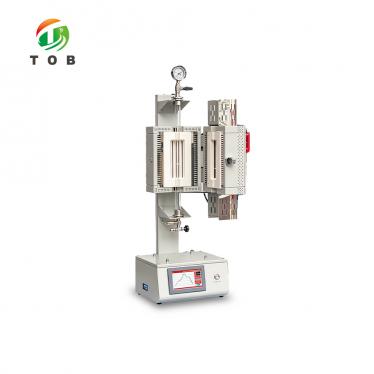
Loading...
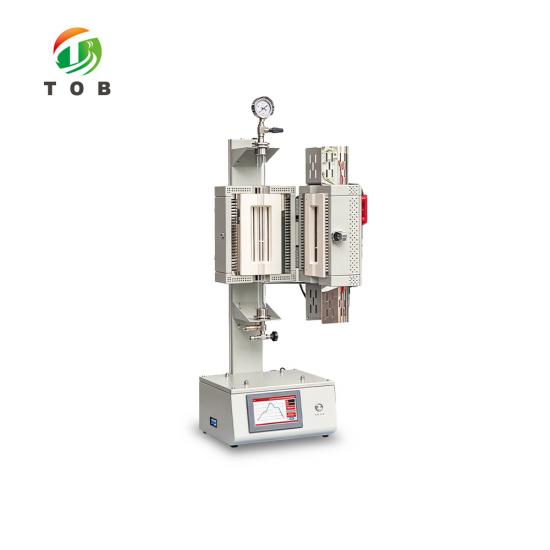
Fluidized Bed CVD Furnace
Brand:
TOB NEW ENERGYitem no.:
TOB-1200-LTS-FBorder(moq):
1setPayment:
L/C,T/Tproduct origin:
Chinashipping port:
XIAMEN
Fluidized Bed CVD Furnace - TOB-1200-LTS-FB
Product Overview and Ideal Applications
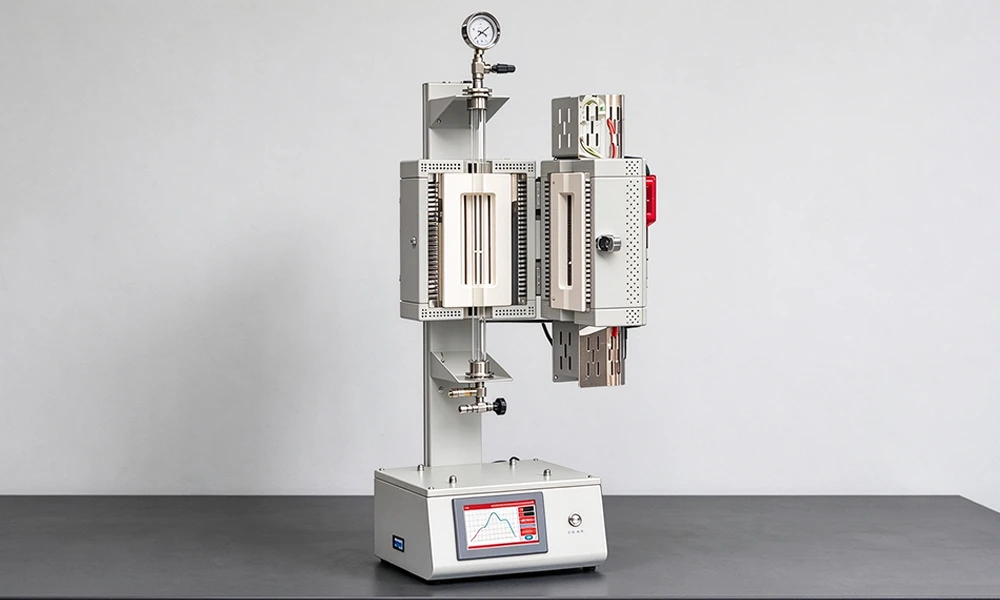
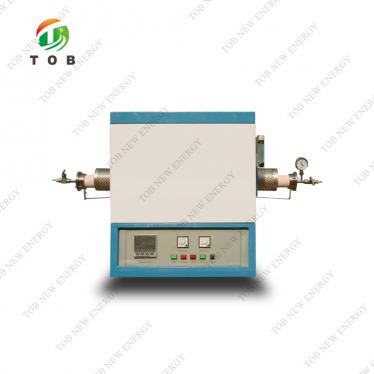
The TOB-1200-LTS-FB is a fluidized bed CVD furnace built for powder surface deposition experiments. A high-purity quartz tube carries a porous quartz plate in its lower section; the powder sits on that plate, gas is fed in from the bottom of the tube, and the upward flow through the plate lifts the particles so that they float inside the heated zone while deposition takes place.
The furnace reaches 1200 °C in under 1 hour and holds 1150 °C continuously, with a 200mm heating zone and a 100mm constant-temperature zone. The tube is available at Φ25mm or Φ50mm with a 600mm length, and the porous plate is made to the pore size your powder needs. A double-layer shell with air cooling, a split furnace body for tube changes, a quartz tube guard and a mechanical pressure relief valve are all standard.
Ideal for:
- CVD deposition onto powders that must be individually suspended rather than packed in a bed
- Coating experiments where gas must pass uniformly through the whole tube cross-section
- Powder loads sized to a Φ25mm or Φ50mm tube with a 600mm length
- Processes that need 1200 °C peak temperature with ±1 °C control and a 15-programme recipe library
- Not for: corrosive or acidic process gases (damage from these is excluded from warranty), or powders whose particle size cannot be fluidized by the available gas velocity
Where Fluidized Bed CVD Fits in Powder Coating Research
In a packed bed the particles touch each other and the gas finds paths of least resistance, so coating thickness varies from particle to particle. A fluidized bed removes that problem by lifting the particles on an upward gas stream, so each particle is exposed to the precursor on its whole surface. The sequence inside this furnace is:
- The powder is loaded onto the porous quartz plate inside the quartz tube, and the tube is closed with the stainless steel flange assembly.
- Process gas is introduced at the lower end of the tube and passes up through the porous plate, which distributes the flow over the full tube cross-section.
- Above the lift velocity the particles leave the plate and form a suspended bed inside the 200mm heating zone, where the precursor decomposes onto their surfaces.
- The coated powder is recovered after cooling by opening the top flange. The tube guard and the mechanical pressure relief valve stay in place through the whole run.
Because the plate pore size sets both the pressure drop and the uniformity of the gas distribution, it is the single specification that most changes the result. Pore sizes from 4-550 μm are available, and the plate is made to order.
Key Engineering Characteristics of TOB-1200-LTS-FB
- Purpose-built for powder deposition: the porous quartz plate and the bottom gas inlet exist so that particles are suspended in the heated zone, not just placed in it.
- Double-layer shell with air cooling: the outer skin stays cooler than a single-wall furnace of the same chamber temperature.
- Split, openable furnace body: the body opens so that the quartz tube can be replaced without dismantling the furnace.
- Quartz tube guard: a shield around the tube prevents injury if the quartz breaks under vacuum or thermal shock.
- Mechanical safety pressure relief valve: protects against over-pressure if the porous quartz filter plate becomes blocked.
- Alumina chamber with high-temperature coating: high-purity alumina fibre insulation with a US-imported high-temperature alumina coating on the chamber surface, for higher heating efficiency and longer chamber life.
- HRE alloy heating elements: 1200 °C reachable in under 1 hour, 1150 °C continuous, ±1 °C accuracy on a K-type thermocouple.
- Stainless steel sealing assembly: double silicone O-ring flange assembly as standard, with optional pump sets down to 5 × 10⁻¹ Pa (mechanical) or 5 × 10⁻³ Pa (turbo).
Complete Specifications
1. Furnace Body and Thermal Specifications
| Parameter | Specification |
|---|---|
| Equipment power | 110V 1.2KW |
| Chamber material | High-purity alumina fibre material |
| Heating element | HRE high-temperature alloy wire |
| Max temperature | 1200 °C (in under 1 hour) |
| Continuous temperature | 1150 °C (continuous) |
| Temperature accuracy | ±1 °C |
| Thermocouple | K-type thermocouple |
| Max heating rate | ≤20 °C/min |
| Chamber size | 80mm × 200mm |
| Heating zone length | 200mm |
| Constant-temperature zone length | 100mm |
2. Quartz Tube and Porous Plate
| Parameter | Specification |
|---|---|
| Tube size | Φ25mm or 50mm × 600mm |
| Tube material | High-purity specially made quartz tube |
| Porous quartz plate pore size | 4-550 μm, multiple specifications available and customisable |
3. Vacuum and Sealing System
| Item | Specification |
|---|---|
| Sealing system | Standard: one set of double silicone O-ring stainless steel sealing flange assembly, with mechanical safety pressure relief valve and quartz tube guard |
| Vacuum, mechanical pump set | 5 × 10⁻¹ Pa (optional) |
| Vacuum, turbo pump set | 5 × 10⁻³ Pa (optional) |
4. Dimensions, Weight and Warranty
| Item | Specification |
|---|---|
| External dimensions | 510mm × 430mm × 1000mm |
| Net weight | About 35KG |
| Warranty | One year warranty, lifetime technical support |
5. Consumables and Warranty Exclusions
| Item | Detail |
|---|---|
| Consumables not included | Heating element, thermocouple, sample crucible and similar consumable parts are not included |
| Corrosive and acidic gases | Damage caused by the use of corrosive gases and acidic gases is not covered by warranty |
Control System
The controller runs on an embedded operating system with a 7-inch true-colour touchscreen. Four functions matter for repeatable powder CVD work:
| Function | Detail |
|---|---|
| Stored temperature curves | 15 temperature curves can be pre-stored, so a different experimental process does not have to be set up again from scratch |
| Embedded operating system | Switchable Chinese/English graphical interface, 7-inch true-colour touchscreen input, intelligent human-machine dialogue mode |
| Non-linear temperature correction | Non-linear sample temperature correction, to bring the displayed value in line with the measured sample temperature |
| Scheduled start | Available as an optional function, so a run can be set to begin at a chosen time |
| System protection | Over-temperature alarm, thermocouple break indication and leakage protection |
The screenshots below follow the order of the rows above: the stored curve library, the curve editor, the switchable interface, non-linear correction, scheduled start, and the two protection alarms.
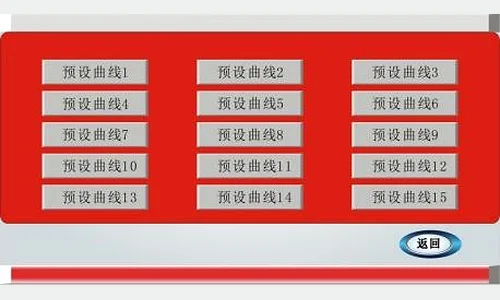
The controller stores 15 temperature curves, so a recipe does not have to be re-entered for every run.
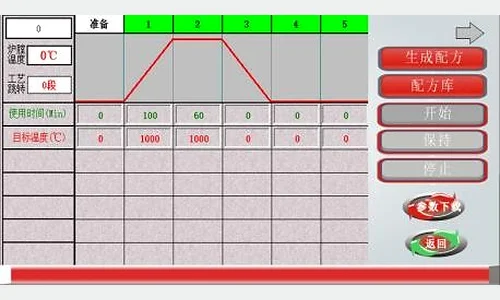
Temperature curve setting screen.
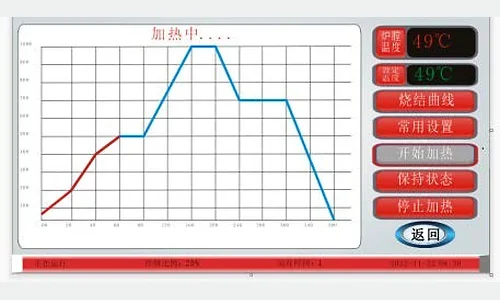
The embedded operating system switches between Chinese and English on the 7-inch true-colour touchscreen.
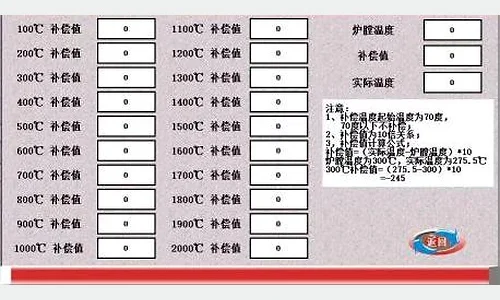
Non-linear sample temperature correction, used to bring the displayed temperature in line with the measured sample temperature.
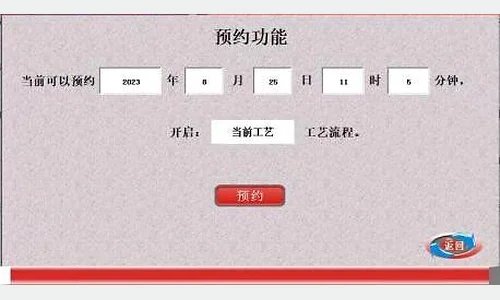
Scheduled start, an optional function, for runs that must begin at a set time.
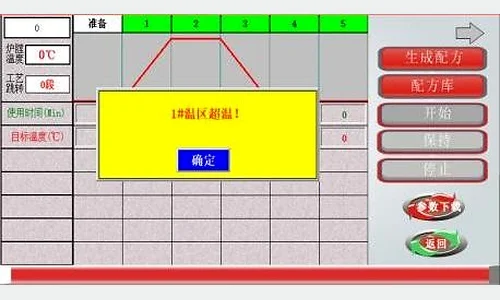
Zone 1 over-temperature alarm.
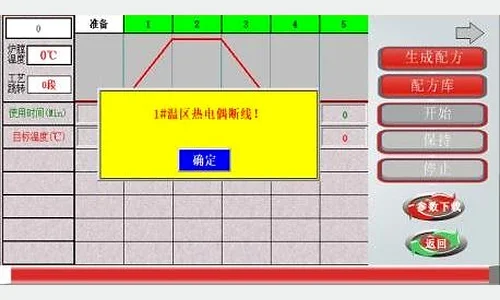
Zone 1 over-temperature with thermocouple break indication.
Practical Operating Recommendations
- Order the porous plate together with the powder, not after it: pore size sets both the pressure drop across the plate and how evenly the gas is distributed, so it decides whether the bed will fluidize at the flow you can supply.
- Plan the dwell below the continuous rating: 1200 °C is the reachable peak, 1150 °C is the continuous temperature. Long holds belong at or below 1150 °C.
- Keep the ramp at or under 20 °C/min: that is the maximum heating rate the furnace is specified for, and it also limits thermal shock on the quartz tube.
- Never remove the tube guard or the relief valve: the guard contains quartz if the tube fails, and the mechanical relief valve opens if the porous plate blocks and pressure builds.
- Check gas compatibility before the run: damage from corrosive and acidic gases is excluded from the warranty, so confirm the process gas is acceptable before the first heat cycle.
- Stock the consumables: the heating element, thermocouple and sample crucible are consumables and are not included, so order spares with the furnace rather than after a failure.
- Use the 15 stored curves as your recipe library: one curve per process keeps the same coating run reproducible across operators.
Engineering FAQ
Q1. Which tube should I choose, Φ25mm or Φ50mm?
A. Both are offered with a 600mm length. The larger tube holds more powder per run and gives a lower gas velocity at the same volumetric flow; the smaller tube reaches the lift velocity with less gas. Choose on the powder volume you need per experiment and the gas flow you can supply.
Q2. What pore size should the porous quartz plate be?
A. Pore sizes from 4-550 μm are available and the plate is made to order. The pore size has to be small enough to hold the powder at rest and open enough to pass the process gas at a workable pressure drop, so it is specified together with the powder rather than separately.
Q3. How hot does it get, and how fast does it heat?
A. 1200 °C is reachable in under 1 hour. The continuous temperature is 1150 °C, the temperature accuracy is ±1 °C on a K-type thermocouple, and the maximum heating rate is ≤20 °C/min.
Q4. What vacuum level can be reached?
A. With an optional mechanical pump set the system reaches 5 × 10⁻¹ Pa; with an optional turbo pump set it reaches 5 × 10⁻³ Pa. The standard supply is the stainless steel sealing flange assembly with double silicone O-rings.
Q5. What happens if the porous plate becomes blocked?
A. A mechanical safety pressure relief valve is fitted as part of the standard sealing assembly, so pressure built up by a blocked quartz filter plate is released rather than contained. A quartz tube guard is also standard, so a tube failure does not expose the operator.
Q6. Can I run acidic or corrosive process gases?
A. Damage caused by corrosive gases and acidic gases is not covered by the warranty, so any acidic or corrosive process gas has to be reviewed with us before the furnace is used with it.
Q7. What does the warranty cover, and what is not included?
A. One year warranty with lifetime technical support. Consumable parts — the heating element, thermocouple, sample crucible and similar items — are not included, and damage from corrosive or acidic gases is excluded.
Q8. What is the footprint and weight?
A. 510mm × 430mm × 1000mm, with a net weight of about 35KG. The furnace stands vertically, so the tube axis is vertical and the gas enters from the bottom.
Tell us the powder, the particle size and the coating you are aiming for. We will come back with the tube diameter, the porous plate pore size and the pump set that fit the run.
tob.amy@tobmachine.com | +86 181 2071 5609
Reviewed by: Pinery Gong, Battery Assembly & Yield Process | Last updated: 2026-10-19
You May Also Need
-
1700°C Tube Furnace for Materials R&D - the same tube-furnace format with a much higher temperature ceiling, for processes that need more than the 1200 °C this furnace reaches.
-
1200℃ Three-Zone Tube Furnace for Battery Materials - the same 1200 °C class with three independently controlled zones, when the process needs a longer or flatter hot zone than the single 200mm zone here.
-
1200℃ High-temperature Atmosphere Furnace - a chamber furnace for atmosphere work that does not need a vertical tube and a fluidized bed.
Previous:
1100 ℃ dual temperature zones high temperature high pressure furnaceNext:
1200°C Sliding Tube Furnace for Battery Materials
If you are interested in our products and want to know more details,please leave a message here,we will reply you as soon as we can.

 subscribe to us