Chinese
 français
 Deutsch
 italiano
 español
 português
 Nederlands
 日本語
日本語 한국의
한국의




- Home
- >
- Battery Tester
- >
- Battery Tester Clamp
- >
- High-Current Cylindrical Battery Test Fixture
Categories
Hot Products
Loading...
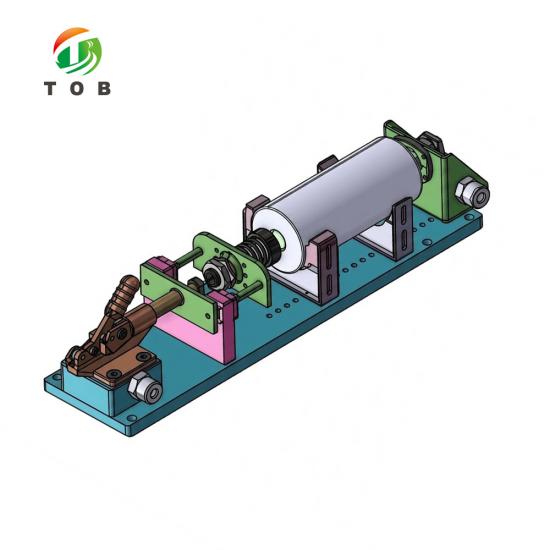
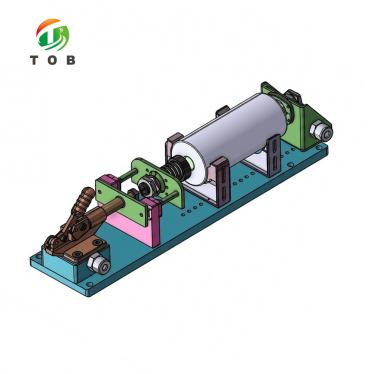
High-Current Cylindrical Battery Test Fixture
Brand:
TOB NEW ENERGYitem no.:
TOB-YZ-HTENI4-TYorder(moq):
1Payment:
L/C,T/Tproduct origin:
Chinashipping port:
XIAMEN
Cylindrical Battery Test Fixture for High-Current Cell Testing - TOB-YZ-HTENI4-TY
Product Overview and Ideal Applications
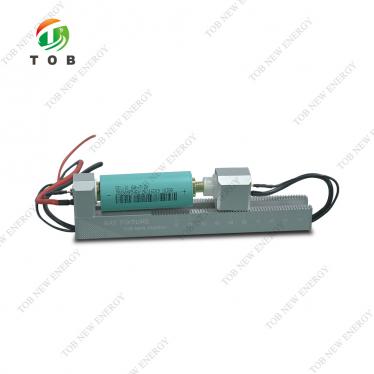
The TOB-YZ-HTENI4-TY is a cylindrical battery test fixture designed to hold cylindrical cells and provide the electrical interface to battery testing equipment during charge-discharge testing and cell evaluation. The fixture accommodates cylindrical cells with a diameter of 18 to 80 mm and a length of 85 to 140 mm, covering conventional battery models including 18650, 26700, 32700, and 4680-120. It is available in three current specifications - 100 A, 200 A, and 300 A - so the version can be selected to match the test current of the application.
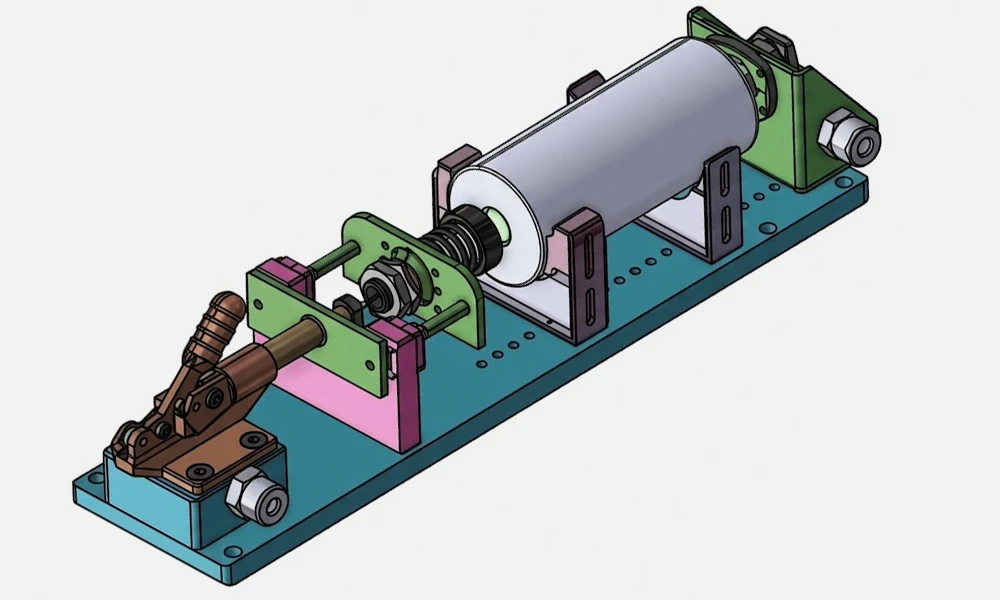
The fixture is organized into three functional sections. At the left end is the probe-type contact mechanism, which forms the electrical connection with the cell terminal. The middle section is the battery clamping cavity, which seats and holds the cell in position during testing. At the right end is the circular connection end, which links the fixture to the rest of the test setup. The fixture measures 420 mm in total length, with a fixture width of 100 mm at the battery accommodation zone and a front-end height of 103.63 mm from the top contact piece to the base.
Ideal for:
- Battery testing laboratories running charge-discharge cycling and capacity grading on cylindrical cells.
- Cell manufacturers and quality-control departments testing 18650, 26700, 32700, and 4680-120 format cells.
- R&D teams evaluating cylindrical cells at test currents covered by the 100 A, 200 A, and 300 A fixture specifications.
- Production and pilot environments that need a repeatable mechanical and electrical interface between cylindrical cells and battery testing equipment.
Where the Test Fixture Fits in Battery Cell Testing
In battery testing, a cell cannot be tested until it is both mechanically held and electrically connected. The test fixture performs these two functions and sits between the cell and the battery tester in the test workflow:
- Cell preparation: the cylindrical cell to be tested is selected from production or development, and its format and test requirements are defined.
- Fixture setup: the TOB-YZ-HTENI4-TY is placed in the test area and connected to the battery testing equipment.
- Cell loading: the cell is seated in the battery clamping cavity, and the probe-type contact mechanism forms the contact with the cell terminal.
- Testing: the battery testing equipment runs the test program - for example charge-discharge cycling, capacity grading, or internal-resistance measurement - with the fixture carrying the current path between the equipment and the cell.
- Unloading and repeat: the tested cell is removed, and the fixture is ready for the next cell.
- Two parameters decide whether a fixture fits a given test. The first is mechanical compatibility: the cell must fit within the fixture's diameter and length ranges (18-80 mm and 85-140 mm). The second is current capability: the fixture must be rated for the current that the test will apply, which is why the TOB-YZ-HTENI4-TY is offered in 100 A, 200 A, and 300 A specifications to cover different testing intensities on cylindrical cells.
Contact interface quality is also part of fixture-based testing. If the contact between the fixture and the cell terminal is not clean and firm, any additional resistance appears in the measured circuit and can affect internal-resistance results and generate heat at high current. Keeping the contact surfaces of the fixture clean is therefore part of normal fixture use.
Key Engineering Characteristics of the TOB-YZ-HTENI4-TY
- Three-Section Structure for Holding and Contact - The fixture is arranged in three functional sections: the probe-type contact mechanism at the left end, the battery clamping cavity in the middle, and the circular connection end at the right end. Each section has a distinct role - contacting the cell, holding the cell, and interfacing with the test setup - which keeps the loading and connection sequence of the fixture clear and repeatable.
- Wide Cell Compatibility: 18-80 mm Diameter, 85-140 mm Length - The fixture accommodates cylindrical cells from 18 to 80 mm in diameter and 85 to 140 mm in length, covering conventional battery models including 18650, 26700, 32700, and 4680-120. This range allows one fixture type to serve multiple cell formats in a test laboratory or production quality-control station.
- Probe-Type Contact Mechanism - The left end of the fixture houses the probe-type contact mechanism, which forms the electrical connection with the cell terminal. The probe-type design provides a defined contact point for the cell as it is seated in the fixture.
- Battery Clamping Cavity - The middle section forms the battery clamping cavity that seats and holds the cylindrical cell during testing. The fixture width at the battery accommodation zone is 100 mm, which accommodates cells across the full 18-80 mm diameter range.
- Circular Connection End - The right end of the fixture is a circular connection end that links the fixture to the test setup. This end provides the interface through which the fixture is connected to the battery testing equipment.
- Three Current Specifications: 100 A, 200 A, 300 A - The fixture is available in three current specifications - 100 A, 200 A, and 300 A - so that the current-carrying capacity of the fixture can be matched to the test current of the application, from standard cell evaluation to high-current testing of power-type cylindrical cells.
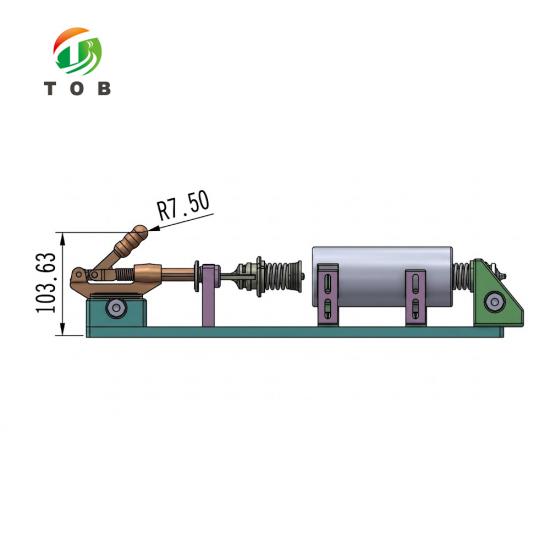
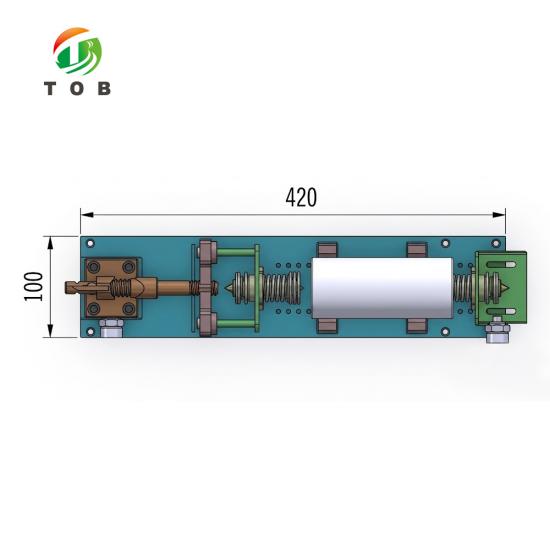
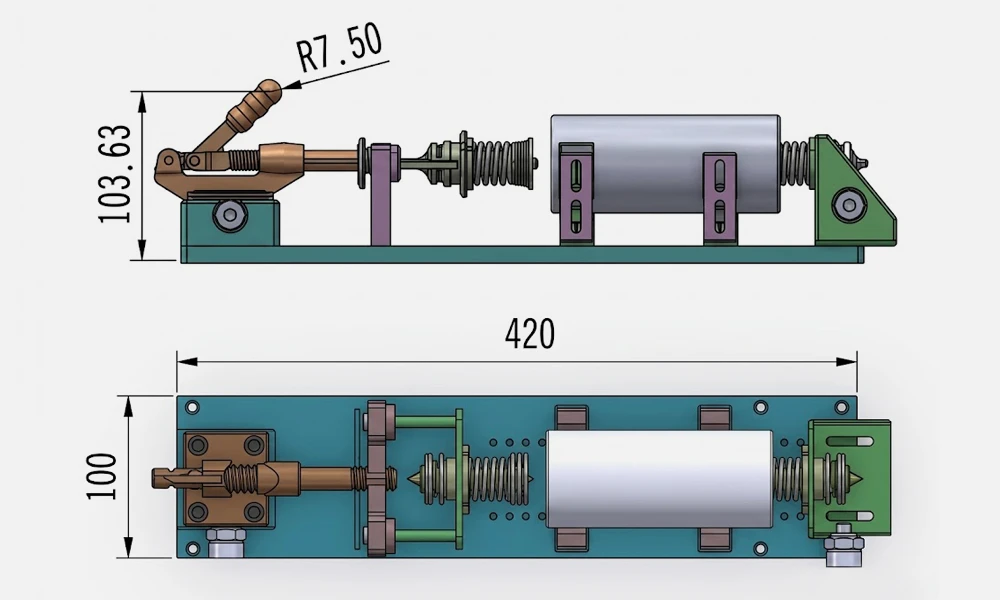
- Defined Mechanical Dimensions - The fixture has a total length of 420 mm, a width of 100 mm at the battery accommodation zone, and a front-end height of 103.63 mm from the top contact piece to the base, with an R7.50 arc radius at the end of the top contact piece. These defined dimensions allow the fixture to be positioned and planned for within a test area before delivery.
Dimensional Specifications
| View | Marked Value | Remark |
| Front view | R7.50 | Arc radius at the end of the top contact piece |
| Front view | 103.63 mm | Fixture front-end height (including the top contact piece, measured to the base) |
| Top view | 420 mm | Total fixture length |
| Top view | 100 mm | Fixture width (battery accommodation zone width) |
| 3D view | - | Overall structure: probe-type contact mechanism at the left end, battery clamping cavity in the middle, circular connection end at the right end |
Compatible Battery Sizes
| Parameter | Range | Description |
| Battery length | 85-140 mm | Allowable length range of cylindrical cells |
| Battery diameter | 18-80 mm | Allowable diameter range of cylindrical cells |
Current Specifications
| Item | Content |
| Conventional battery models | 18650, 26700, 32700, 4680-120 |
| Current specification | 100 A, 200 A, 300 A |
Practical Usage Recommendations
- Select the correct current specification: match the fixture version (100 A, 200 A, or 300 A) to the test current of the application, and do not exceed the rated current of the fixture in use.
- Verify cell compatibility before loading: confirm that the cell diameter and length fall within the 18-80 mm and 85-140 mm compatibility ranges, and that the cell model corresponds to the conventional models covered by the fixture.
- Seat the cell properly: place the cell into the battery clamping cavity so that the probe-type contact mechanism engages the cell terminal at the intended contact point.
- Keep contact surfaces clean: check the probe contact and the cell terminal before testing. Contamination or oxide on the contact surfaces affects the measured circuit, particularly in high-current tests.
- Verify the connection before running a program: confirm that the circular connection end is correctly connected to the test equipment, and that the fixture is positioned stably in the test area.
- Handle with care: load and unload cells without forcing them into the cavity, to avoid mechanical damage to the cell, the fixture, and the contact mechanism.
- Maintain and store correctly: inspect the contact mechanism periodically for wear, and store the fixture in a clean, dry location when it is not in use.
Engineering FAQ
Q1: Which battery sizes does the TOB-YZ-HTENI4-TY support?
The fixture accommodates cylindrical cells with a diameter of 18 to 80 mm and a length of 85 to 140 mm. The conventional battery models covered include 18650, 26700, 32700, and 4680-120.
Q2: What current specifications are available?
The fixture is available in three current specifications: 100 A, 200 A, and 300 A. The appropriate version should be selected according to the test current of the application, and the rated current of the selected fixture should not be exceeded.
Q3: What are the dimensions of the fixture?
The total fixture length is 420 mm, the fixture width at the battery accommodation zone is 100 mm, and the front-end height is 103.63 mm from the top contact piece to the base. The arc radius at the end of the top contact piece is R7.50.
Q4: How does the fixture connect to the cell and to the test equipment?
The cell is seated in the battery clamping cavity in the middle of the fixture, and the probe-type contact mechanism at the left end forms the electrical connection with the cell terminal. The circular connection end at the right end of the fixture provides the interface to the test setup.
Q5: Can the fixture be used with our battery testing equipment?
The fixture connects to the test setup through its circular connection end. Compatibility depends on the connection method of the battery testing equipment in use. Contact TOB with your tester model and connection details, and the fixture configuration can be confirmed for your setup.
Q6: How should the fixture be maintained?
Keep the probe contact surfaces and the clamping cavity clean and free of metal particles and debris. Inspect the contact mechanism periodically for wear or contamination, and store the fixture in a clean, dry location when it is not in use. A clean, undamaged contact surface supports repeatable high-current testing.
Ready to equip your cylindrical cell testing setup with a fixture rated for your test current? Request a quotation for the TOB-YZ-HTENI4-TY with your cell dimensions (diameter and length) and test current, and specify the required current version - 100 A, 200 A, or 300 A. Our battery testing engineers can confirm the configuration for your cells and test plan.
tob.amy@tobmachine.com | +86 181 2071 5609
You May Also Need
▶ Cylindrical Cell Battery Test Clamp - A cylindrical cell battery test clamp from TOB's battery test fixture range. Complements the TOB-YZ-HTENI4-TY by providing an additional fixture option for cylindrical cell testing, so test setups can be matched to different cell formats and test configurations.
▶ 60A Double Self-Locking CNC Four-Wire Battery Holder Fixture - A 60 A double self-locking CNC four-wire battery holder fixture. Complements the TOB-YZ-HTENI4-TY for test setups with different current requirements or four-wire measurement configurations.
If you are interested in our products and want to know more details,please leave a message here,we will reply you as soon as we can.

 subscribe to us