Chinese
 français
 Deutsch
 italiano
 español
 português
 Nederlands
 日本語
日本語 한국의
한국의




- Home
- >
- Battery Tester
- >
- Battery and Supercapacitor Safety Tester
- >
- Temperature Humidity Test Chamber for Battery Cell Reliability Testing
Categories
Hot Products
Loading...
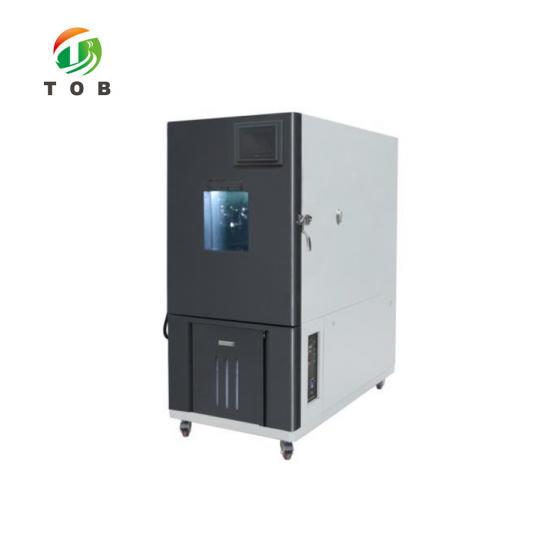
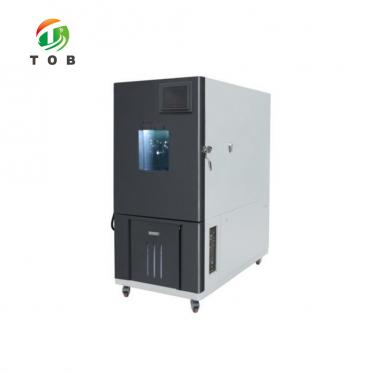
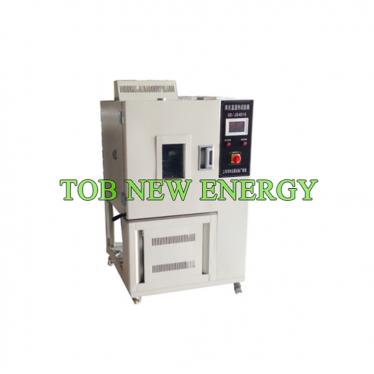
Temperature Humidity Test Chamber for Battery Cell Reliability Testing
Brand:
TOB NEW ENERGYitem no.:
TOB-TH-80Corder(moq):
1Payment:
L/C,T/Tproduct origin:
Chinashipping port:
XIAMEN
-40℃ to +130℃ Temperature Humidity Test Chamber for Battery Cell Reliability Testing
Product Overview and Ideal Applications
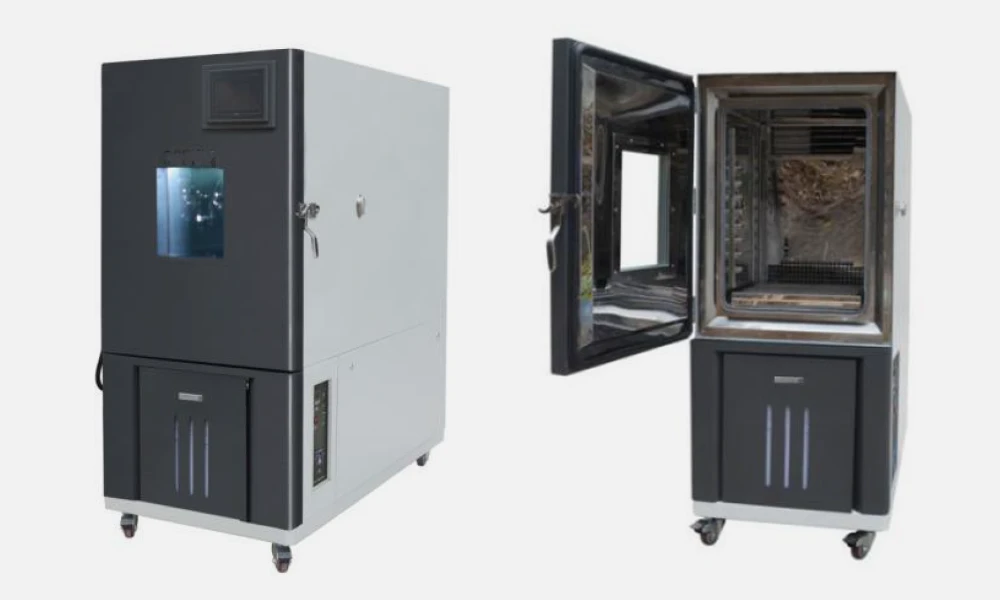
A temperature and humidity test chamber subjects products to precisely controlled climatic conditions to verify their performance, safety, and durability under stress. The TOB‑TH‑80C is a benchtop‑to‑floor‑standing 80‑litre environmental chamber purpose‑built for battery cell testing. It spans a temperature range of –40 °C to +130 °C and a humidity range of 20 % to 98 % RH, enabling the simulation of extreme cold, dry heat, and cyclic damp heat environments that lithium‑ion cells encounter during transport, storage, and operation.
What distinguishes this chamber from a generic climatic test cabinet is the suite of battery‑specific safety features. A smoke vent, two explosion‑proof chains on the chamber door, and a tri‑colour alarm light are integrated to mitigate the risks posed by failing cells. A mechanical pressure‑balance port prevents excessive pressure differentials during high‑humidity runs. The interior is constructed from SUS 304 stainless steel, and the 100 mm‑thick fire‑retardant polyurethane insulation ensures thermal stability and low energy consumption. The control system uses an American PT100 wet‑dry bulb sensor to deliver ±0.5 °C temperature stability and ±2 % RH humidity stability, meeting the repeatability requirements of IEC 60068‑2‑1, 60068‑2‑2, and 60068‑2‑30.
Ideal for:
- Battery manufacturers and testing laboratories performing high/low temperature exposure, temperature cycling, and damp heat tests on lithium‑ion, sodium‑ion, and solid‑state cells.
- R&D teams evaluating new cell chemistries for thermal runaway behaviour, SEI degradation, and capacity fade under controlled environmental stress.
- Quality assurance departments that must comply with GB/T 2423 (IEC 60068) test standards for electronic products destined for global markets.
- Any facility that needs to simulate the climatic journey of a cell from a cold winter warehouse to a tropical shipping container, all within a safe, monitored enclosure.
Where Environmental Testing Fits in Battery Development and Production
Environmental testing is positioned after cell assembly and formation, and before shipment or final qualification. A typical battery cell will undergo a sequence such as:
- Formation and aging – Initial charge/discharge cycles to stabilise the SEI.
- Performance screening – Capacity, internal resistance, and OCV checks.
- Environmental stress tests – High/low temperature storage, temperature cycling, damp heat, thermal shock (using the TOB‑TH‑80C).
- Safety and abuse tests – Overcharge, nail penetration, crush (in separate equipment).
- Final inspection – Electrical and visual checks before the cell is shipped or built into a pack.
Because battery testing involves the risk of cell venting or fire, the TOB‑TH‑80C incorporates safety mechanisms that generic environmental chambers lack. The explosion‑proof door chains prevent the door from being blown open, the smoke vent channels any generated smoke out of the chamber, and the tri‑colour alarm provides immediate visual warning to personnel. These features enable the chamber to be operated in a standard battery laboratory without a separate blast‑proof enclosure, saving space and cost.
How the Temperature and Humidity Control System Works
The TOB‑TH‑80C uses a vapour‑compression refrigeration system combined with an electric heating and a barrel‑type humidification system to generate the required temperature and humidity conditions inside the 80‑litre workspace. A multi‑blade centrifugal blower circulates the conditioned air from the top to the bottom of the chamber through carefully designed ducting, ensuring a uniform distribution of temperature and humidity across the entire test volume.
Temperature control
A French‑brand (Tecumseh or equivalent) hermetic compressor, using R404A refrigerant, provides cooling. The compressor is air‑cooled and operates under the control of the chamber’s main controller, which modulates the refrigeration capacity via hot‑gas bypass or on/off cycling depending on the setpoint. Heating is provided by an exposed‑wire nickel‑chromium alloy heating tube, positioned in the air stream upstream of the fan. The controller uses a PID algorithm and feedback from an American PT100 wet‑bulb/dry‑bulb sensor pair to maintain the temperature within ±0.5 °C of the setpoint, even under fluctuating load conditions.
Humidity control
Humidification is achieved by a hot‑water barrel system, which generates steam that is injected into the air stream. This method offers faster response and better low‑humidity performance than traditional pan‑type humidifiers, and it minimises the build‑up of scale that can contaminate the chamber and test specimens. The humidifying tube is embedded and has an insulation resistance greater than 50 MΩ, with built‑in dry‑burn and explosion‑proof protection. Humidity is measured by the same wet‑bulb/dry‑bulb sensor, and the controller holds the relative humidity within ±2 % RH of the setpoint.
Air circulation and chamber construction
A Taiwan‑brand low‑pressure asynchronous motor drives a multi‑blade centrifugal fan that draws air from the treatment plenum and distributes it through the chamber in a “top‑to‑bottom” pattern. The inner chamber is fabricated from SUS 304 stainless steel, while the external shell is cold‑rolled steel with a durable painted finish. Between the two is a 100 mm layer of fire‑retardant high‑strength polyurethane foam insulation, which keeps the chamber surface cool to the touch and minimises heat exchange with the ambient environment.
Safety and monitoring
The chamber is monitored by an independent adjustable temperature protector (over‑temperature cutoff) and a specimen anti‑condensation circuit. A phase‑sequence protection relay prevents damage from incorrect mains wiring, and a no‑fuse protection switch guards against electrical overload. In the event of a cell failure, the smoke vent and explosion‑proof door chains contain the hazard, while the tri‑colour alarm light alerts laboratory staff.
Complete Technical Specifications
|
1. Product Name |
||
|
1.1 Name 1.2 Model |
Temperature Humidity Test Chamber TOB-TH-80C |
|
|
2. Application & Limitation |
||
|
2.1 Application |
This equipment mainly used for cell high low temperature test, temperature change, damp heat etc. Environment simulate reliability test. |
|
|
3.Volume & Dimension |
||
|
3.1 Effective Volume |
80L |
|
|
3.2 Inner Dimension |
W400*H500*D400mm |
|
|
3.3 Overall Dimension |
W650*H1650*D1270mm Kindly remark:Exact overall dimension please refer to the final design drawing ! |
|
|
4. Performance |
||
|
4.1 Condition |
Air cooling type under environment temp.+5℃ ~+35℃,relative humidity≤85%.No load(without specimen in the testing zone) |
|
|
4.2 Temp. Range |
-40℃~+130℃ |
|
|
4.3 Humidity Range |
20%RH-98%RH(details see temperature humidity control diagram). |
|
|
4.4 Temp. Fluctuation |
±0.5℃ |
|
|
4.5 Fluctuation |
Humidity |
±2%RH |
|
4.6 Temp. Deviation |
≤2.0℃ |
|
|
4.7 Humidity Deviation |
≤+2%/-3%RH (≥75%RH);≤±5%RH (≤75%RH) |
|
|
4.8 Temp. Uniformity |
≤±2.0℃ |
|
|
4.9 Humidity Uniformity |
+2%/-3%RH |
|
|
4.10 Temp. Time |
Heating |
1~3℃/min, non-linear control ,without loading |
|
4.11 Temp. Time |
Cooling |
1℃/min, non-linear control, without loading |
|
4.12 Noise |
≤70dB(A level) |
|
|
4.13 Compliance |
Standard |
Standard Compliance : GB/T2423.1-2008(IEC60068-2-1:2007) Environmental testing - Part 2: Test methods - Tests A: Cold GB/T2423.2-2008(IEC60068-2-2:2007) Environmental testing for electric and electronicproducts Test methods - Tests B:Dry Heat GB/T2423.4-2008(IEC60068-2-30:2005) Environmental testing for electric and electronic products - Part 2: Test method - Test Db: Damp heat,cyclic ( 12h+12h cycle)
|
|
4.14 Temperature Humidity Control Diagraph |
|
|
|
4.15 Power |
220V,50Hz,single phase |
|
|
4.16 Weight |
350kg |
|
|
5. Structure &Material |
||
|
5.1 External Chamber |
Adopt Cold roll steel with painting. |
|
|
5.2 Internal Chamber |
SUS#304 stainless steel. |
|
|
5.3 Insulation Material |
Adopt fire-retardant high strength PU Polyurethane foam insulation material with thickness of 100mm |
|
|
5.4 Chamber Door |
Single open door |
|
|
5.5 Observation Window |
With vacuum glass observation window on the door |
|
|
5.6 Testing Hole |
2 pcs¢50mm testing hole on side of the chamber, with silicon seal and stainless steel cover. |
|
|
5.7 Sealing |
Adopt original imported silicon rubber strip, with high sealing performance. |
|
|
5.8 Sample holder |
sample holder with insulation material ,2 layers , loading capacity about 20KG/layer. |
|
|
5.9 Pressure Balance Port |
Installed mechanical pressure close type balance adjustment device to avoid pressure difference influence the test chamber strength when do high temp. high humidity test. |
|
|
5.10 Lighting inside chamber |
With one energy saving light inside the observation window |
|
|
5.11 Wheels |
4 sets of universal wheels. |
|
|
5.12 Safety functions |
1 piece smokevent.
2 sets of explosion-proof chain on side
of the chamberdoor. |
|
|
6. Air Supply System |
Remarks |
|
|
6.1Air supply feature |
From Upper to lower air supply |
|
|
6.2 Cyclic Motor |
Taiwan brand low pressure asynchronous motor |
|
|
6.3 Blower |
Multi-blades centrifugal circulating blower, high low temp. resistant aluminum blades |
|
|
6.4 Sensor |
1.American PT100 temperature humidity sensor(Wet-dry bulb) |
|
|
7. Refrigeration System |
Remarks |
|
|
7.1 Air cooling method |
Air cooling type compressor |
|
|
7.2 Compressor |
French Tecumseh or similar level compressor |
|
|
7.3 Refrigerant |
R404A |
|
|
7.4 Condenser |
Air cooling high efficiency forced convection finned type |
|
|
7.5 Other Accessories |
All with famous brand products |
|
|
8. Heating & Humidification System |
Remarks |
|
|
8.1 Heating tube |
Naked wire type nickel chromium alloy electric heating tube |
|
|
8.2 Humidification System |
1. Humidification System: use humidifying barrel humidify, higher speed than tradition always and not produce in crust ant, good low humidity performance, easy cleaning. 2. With inlayed type humidifying tube, insulation resistance larger than 50MΩ,with dry burn, explosion-proof function. |
|
|
9. Controller & Control Circuit-Controller |
Remarks |
|
|
9.1 Controller |
Details refer user manual. RS-485 interface ( Lan port for options) |
|
|
10. Protection Function |
Remarks |
|
|
|
1.With specimen anti-condensing, over-temperature protection (also with independent adjustable temperature protector) 2. No fuse protection switch 3. Heater over-temp. Protections witch 4.Compressor over-load, overheating 5. Compressor high low pressure protection 6. System over current protection device 7. Controller fault self diagnosis and display function 8. Phase-sequence protection function |
|
|
11. Other Accessories |
Remark |
|
|
11.1 Standard Configuration |
1.2 layers sample shelf ,loading capacity (average)20KG/Layer. 2.2 cork for diameter 50mm testing hole. 3.Operation & Maintenance manual and monitoring software. 4.Wet gauze 10 pieces. |
|
|
12.Working environment Condition |
Remark |
|
|
1. Environment Temp. : 5℃-35℃; 2.Relative Humidity: ≤85%RH; 3.Atmospheric Pressure:80kPa~106kPa 4. Away from strong vibration source 5 Standard specimen place requirement: 5.1 Specimen weight less than80KG/m³
5.2 Whole specimen dimensionless than 2/5 of the chamber inner volume, each layer less the 2/5 area. Otherwise will seriously effect the chamber performance or the normal |
|
|
Why Choose TOB‑TH‑80C Over a Generic Environmental Chamber
|
Feature |
TOB‑TH‑80C |
Typical Generic Chamber (similar volume) |
|
Temperature range |
–40 °C to +130 °C |
Often –20 °C to +100 °C |
|
Safety features |
Smoke vent, explosion‑proof chains, tri‑colour alarm |
Usually none beyond over‑temp protection |
|
Humidification |
Barrel‑type, anti‑scale, high reliability |
Pan‑type, prone to scale and boiling dry |
|
Sensor |
American PT100 wet‑dry bulb, stable long‑term |
Low‑cost electronic sensor, may drift with humidity exposure |
|
Insulation thickness |
100 mm fire‑retardant PU |
Often 50–80 mm, less thermal stability |
|
Inner chamber |
SUS 304 stainless steel |
Sometimes galvanised steel or lower‑grade stainless, less corrosion resistance |
|
Compliance |
Verified to GB/T 2423 / IEC 60068‑2 series |
May claim “conforms to” without verification |
|
Specimen anti‑condensing |
Included |
Optional or not available |
Why battery testing groups invest in a purpose‑built chamber:
A generic chamber may reach the set temperature and humidity, but it lacks the mechanical and electronic safeguards that make it safe to test lithium‑ion cells for hours or days unattended. The TOB‑TH‑80C was designed with the real‑world failure modes of battery cells in mind, and each safety feature is there because a test engineer once experienced a cell venting in a standard chamber and wished for a better solution.
You May Also Need
- TOB-8102 Temperature Control Battery Short Circuit Tester
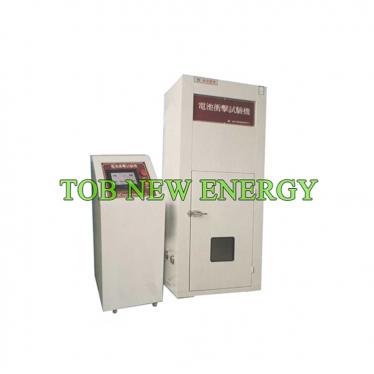
- TOB-SKT-10 Battery Mechanical Shock Tester
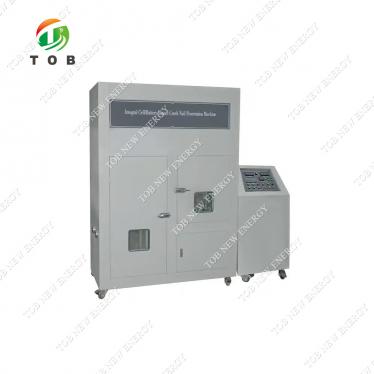
- TOB-6047-2T Lithium Ion Battery Nail Penetration Crush Tester
Ready to put your cells through the rigours of environmental stress testing? Request a quotation for the TOB‑TH‑80C, including any options such as LAN communication, additional shelves, or a custom test‑hole configuration. Our application engineers can also provide a pre‑configured test sequence for your specific battery standard.
tob.amy@tobmachine.com | +86 181 2071 5609
If you are interested in our products and want to know more details,please leave a message here,we will reply you as soon as we can.

 subscribe to us