Chinese
 français
 Deutsch
 italiano
 español
 português
 Nederlands
 日本語
日本語 한국의
한국의




- Home
- >
- Battery Tester
- >
- Battery Tester Clamp
- >
- 200A Prismatic Cell Test Fixture
Categories
Hot Products


Loading...
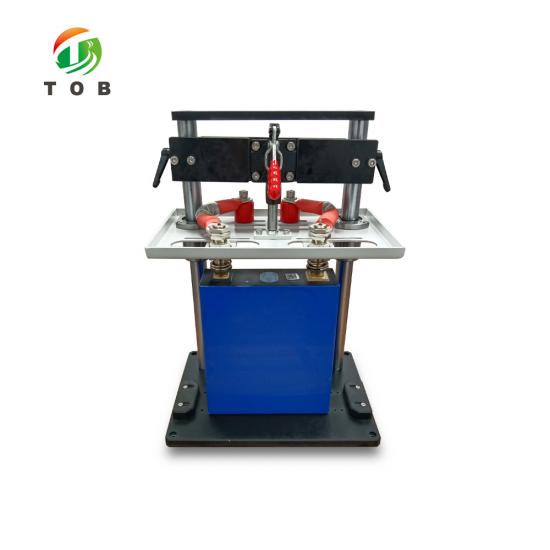
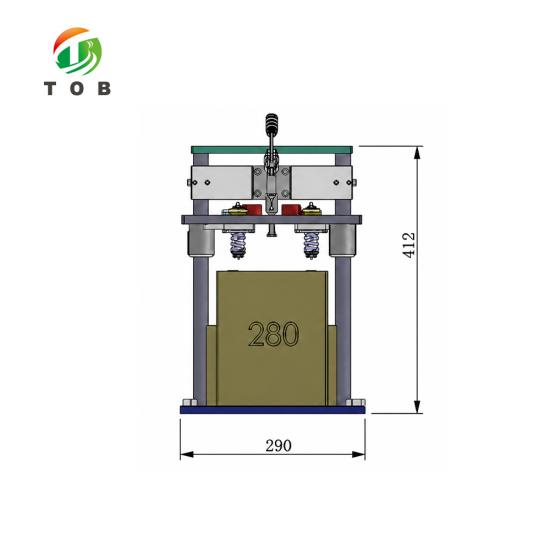
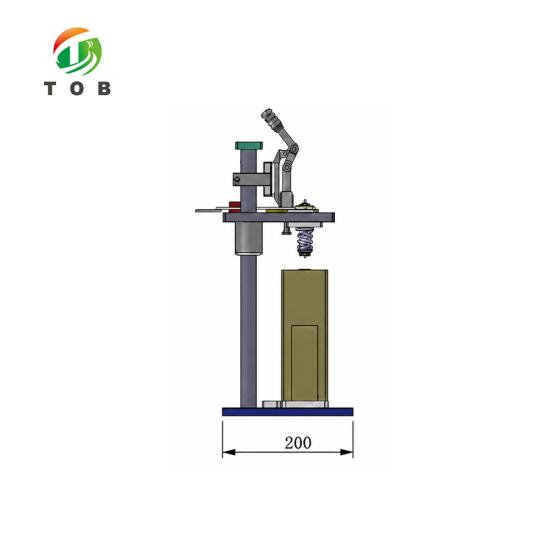
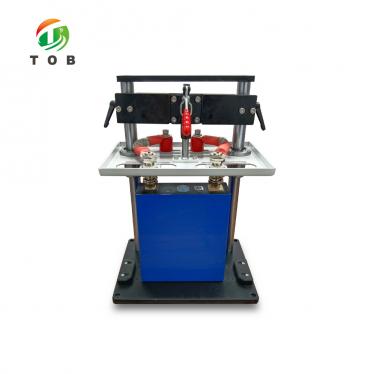
200A Prismatic Cell Test Fixture
Brand:
TOB NEW ENERGYitem no.:
TOB-FJ-314-200Aorder(moq):
1Payment:
L/C,T/Tproduct origin:
Chinashipping port:
XIAMEN
200A High-Current Prismatic Cell Test Fixture - TOB-FJ-314-200A
Product Overview and Ideal Applications
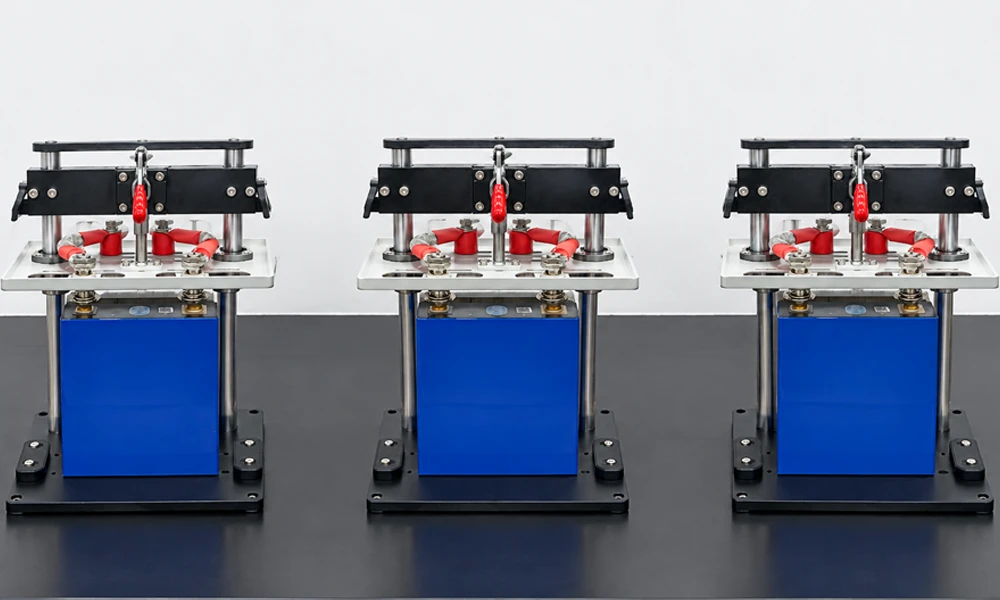
The TOB-FJ-314-200A is a 200 A high-current test fixture for prismatic (square) lithium-ion cells. It is designed to hold a prismatic cell securely during charge-discharge testing and to provide the electrical contact between the cell tabs and the battery testing equipment, with a current-carrying class of 200 A for high-current test programs on power-type cells.
Prismatic cells vary widely in their external dimensions and in the position of their tabs - two cells with the same capacity can differ in width, height, thickness, and tab placement depending on the manufacturer and the cell design. The TOB-FJ-314-200A addresses this variation on both dimensions of compatibility:
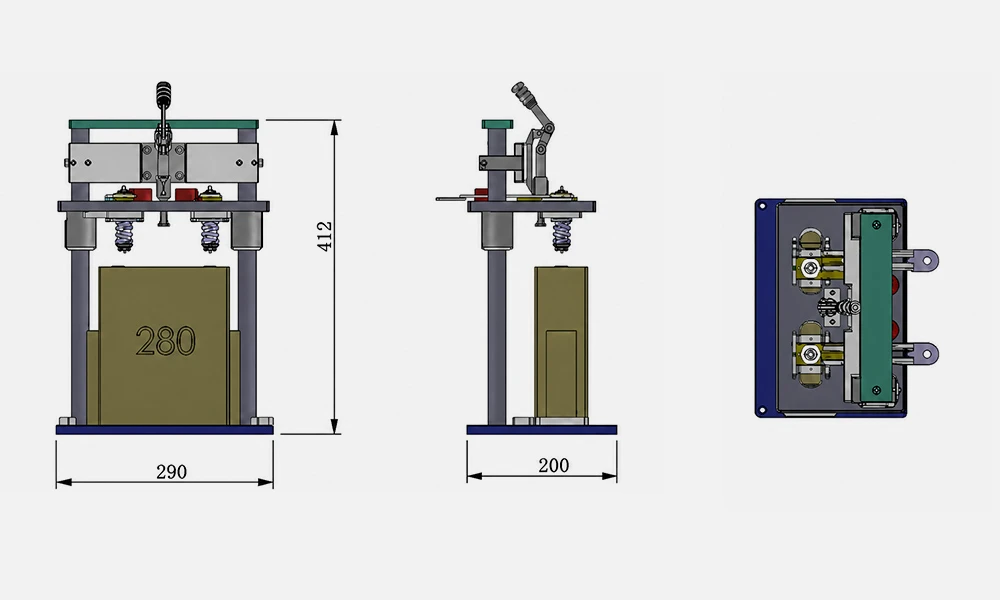
- Cell envelope accommodation: the fixture accepts cells from 100 to 235 mm in width, from 0 to 230 mm in height, and from 30 to 140 mm in thickness. The height range starting at 0 indicates that thin cells can be supported without a height-direction restriction.
- Tab position accommodation: the compatible tab center distance is adjustable from 70 to 180 mm, so the fixture's contacts can be aligned with the positions of the two tabs on different prismatic cell formats.
This combination means one fixture type covers a broad set of prismatic cell formats - from small and mid-size cells up to large high-capacity cells within the thickness and height ranges - reducing the number of dedicated fixtures a test station requires when multiple formats are tested.
Ideal for:
- Prismatic cell manufacturers running charge-discharge testing and capacity grading on square cells, including power-type cells that require high test currents.
- Battery quality-control laboratories that test prismatic cells from incoming inspection or production batches.
- Battery research and development teams evaluating prismatic cell designs, where cell dimensions and tab positions change between iterations.
- Testing stations that handle several prismatic formats and need one adjustable fixture rather than a dedicated fixture per format.
Where the Fixture Fits in Prismatic Cell Testing
A prismatic cell cannot be tested until it is both mechanically held and electrically connected to the test equipment. The test fixture performs these two functions, sitting between the cell and the battery tester in the test workflow:
- Cell preparation: the prismatic cell to be tested is selected, and its dimensions and tab layout are defined.
- Fixture adjustment: the fixture is set to the cell - the cell accommodation zone is adjusted to the cell's width, height, and thickness, and the tab contacts are set to the cell's tab center distance within the 70 to 180 mm range.
- Cell loading: the cell is placed in the fixture, and the contacts are brought onto the cell tabs.
- Testing: the battery testing equipment runs the test program - for example charge-discharge cycling, capacity grading, or internal-resistance measurement - with the fixture carrying the current between the equipment and the cell.
- Unloading and repeat: the tested cell is removed, and the fixture is readjusted for the next format or the next cell.
Several factors make the fixture a decisive element in prismatic cell testing:
Tab alignment. The electrical connection to a prismatic cell is made at its two tabs. If the fixture contacts do not align with the tab positions, the contact area is reduced, the contact resistance rises, and the current path becomes uneven between the two tabs. The adjustable tab center distance of 70 to 180 mm is what allows the TOB-FJ-314-200A to align correctly with cells of different tab layouts.
High-current operation. At test currents approaching the fixture's 200 A class, the quality of every interface in the current path matters. Contact condition, cleanliness, and firm seating directly influence how much heat is generated at the contacts and how consistent the measured results are. The fixture is designed to carry these currents for high-rate testing of prismatic cells.
Mechanical stability. A prismatic cell of up to 235 mm width and 140 mm thickness has significant mass and footprint. The fixture holds the cell stably through the test so that the cell position - and therefore the contact condition - does not shift during cycling.
Key Engineering Characteristics of the TOB-FJ-314-200A
-
200 A Current-Carrying Class
The fixture is designed for a current-carrying capability of 200 A, making it suitable for high-current charge-discharge testing programs on power-type prismatic cells - the testing regime in which conventional low-current fixture designs become the limiting factor. -
Wide Cell Width Accommodation: 100 - 235 mm
The fixture accepts cells from 100 to 235 mm in width, covering a broad span of prismatic formats from mid-size cells to large-format cells within this range. The width range is fixed at the wide end so that one fixture serves multiple cell widths. -
Height Accommodation from 0 to 230 mm
The fixture accommodates cells up to 230 mm in height. The range starts at 0, which indicates that thin cells can be supported without a height-direction restriction - useful where cells with low profiles are tested alongside taller formats. -
Thickness Accommodation: 30 - 140 mm
The fixture accepts cells from 30 to 140 mm in thickness. This range covers a substantial span of prismatic cell formats, including thick, high-capacity cells whose footprint and mass require secure seating in the fixture. -
Adjustable Tab Center Distance: 70 - 180 mm
The compatible tab center distance is adjustable from 70 to 180 mm, so the fixture contacts can be aligned with the tab positions of different prismatic cell designs. This is the parameter that makes the fixture adaptable across cell formats whose tab spacing differs. -
One Fixture for Multiple Formats
Because the cell envelope ranges and the tab center distance are both adjustable, a single TOB-FJ-314-200A configuration serves many prismatic formats. For test stations handling several cell types, this reduces the number of dedicated fixtures needed and simplifies fixture management. -
Built for High-Current Test Stations
The combination of a 200 A current class and wide format accommodation positions the fixture for use in high-current test stations - where the fixture is part of the current path and must hold its contact quality run after run.
Compatible Cell Dimensions
| Parameter | Range | Description |
| Width | 100 - 235 mm | Battery width allowable range |
| Height | 0 - 230 mm | Battery height allowable range ('0' indicates support for thin cells without height-direction restriction) |
| Thickness | 30 - 140 mm | Battery thickness allowable range |
Tab Parameters
| Parameter | Range | Description |
| Compatible tab center distance | 70 - 180 mm | Adjustable range between the centers of the two tabs |
Practical Usage Recommendations
Verify the cell against the accommodation ranges before loading: confirm that the cell width (100 - 235 mm), height (0 - 230 mm), and thickness (30 - 140 mm) fall within the fixture ranges, and check the cell's tab center distance against the adjustable 70 - 180 mm range.
- Set the tab contacts to the cell's tab positions: adjust the tab center distance so the fixture contacts align with the centers of the two tabs. Correct alignment maximizes the contact area and keeps the current path even between the two tabs.
- Match the fixture to the test current: confirm that the planned test current is within the fixture's 200 A current-carrying class before starting the program.
- Keep the contact surfaces clean: at high test currents, contamination or oxide on the contacts raises contact resistance and generates heat. Inspect and clean the contact surfaces before high-current runs.
- Seat the cell firmly: ensure the cell is seated and held without play before the test begins, so the contact condition remains stable through cycling.
- Load and unload without forcing: place and remove cells without forcing them into the accommodation zone, to avoid mechanical damage to the cell, the fixture, and the contact mechanism.
- Inspect and maintain periodically: check the contacts and the adjustable sections for wear at defined intervals, and store the fixture in a clean, dry location when it is not in use.
Engineering FAQ
Q1: Which prismatic cell sizes does the TOB-FJ-314-200A support?
The fixture accommodates cells from 100 to 235 mm in width, from 0 to 230 mm in height, and from 30 to 140 mm in thickness. For tab position, the compatible tab center distance is adjustable from 70 to 180 mm.
Q2: What does the height range of 0 - 230 mm mean?
The fixture supports cells up to 230 mm in height, and the range starts at 0, which indicates that thin cells can be supported without a height-direction restriction. This allows thin-form cells to be tested in the same fixture as taller formats within the range.
Q3: What is the tab center distance, and why is it adjustable?
The tab center distance is the distance between the centers of the cell's two tabs - the points at which the electrical connection to the cell is made. The fixture's compatible tab center distance is adjustable from 70 to 180 mm, so the fixture contacts can be aligned with the tab positions of different prismatic cell designs, keeping the contact area and current path consistent across formats.
Q4: What does the 200 A rating mean for the fixture?
The TOB-FJ-314-200A is in the 200 A current-carrying class, meaning it is designed to carry test currents up to this level for high-current charge-discharge testing of power-type prismatic cells. Confirm the details of the rating (for example, the conditions under which the current is applied) against your specific test program.
Q5: How does the fixture connect the cell to the battery tester?
The fixture holds the cell mechanically and provides the electrical contact at the cell tabs; the current path continues from the fixture to the battery testing equipment. Contact TOB with your tester model and connection details so the fixture configuration can be confirmed for your setup.
Q6: Can one fixture serve several prismatic cell formats?
Yes. Both the cell envelope (width, height, thickness) and the tab center distance are accommodated across wide ranges, so the same fixture type can be used for multiple prismatic formats within those ranges. Format switching is a matter of readjusting the fixture rather than changing to a dedicated fixture.
Q7: How should the fixture be maintained?
Keep the contact surfaces and the adjustable sections clean, and inspect them periodically for wear or contamination - particularly important when testing approaches the 200 A class, where contact condition affects both heat generation and measurement consistency. Store the fixture in a clean, dry location when it is not in use.
Ready to equip your prismatic cell test station with a 200 A fixture that adapts across cell formats? Request a quotation for the TOB-FJ-314-200A with your cell dimensions (width, height, thickness) and tab center distance, and your planned test current. Our battery testing engineers can confirm the fixture configuration for your cells and test plan.
tob.amy@tobmachine.com | +86 181 2071 5609
You May Also Need
▶ 5V300A High-Current Prismatic Cell Test Fixture - A high-current prismatic cell test fixture in the 300 A class. Complements the TOB-FJ-314-200A for test programs whose current requirements exceed the 200 A class, so a test station can match the fixture rating to the cell and the test plan.
▶ Prismatic Cell Testing Clamp - A testing clamp for prismatic cells. An additional fixture option from the TOB range, complementing the TOB-FJ-314-200A when a different cell format, contact method, or test configuration is required.
▶ Aluminum Alloy Fixture Clamp and Plate for Battery Pressurized Cycle Test - An aluminum alloy fixture clamp and plate for pressurized cycle testing of batteries. Complements the TOB-FJ-314-200A where cycle testing requires the cell to be held under pressure, extending the test station beyond basic mechanical fixation and tab contact.
Previous:
Lithium ion Polymer Battery Testing Clamp for Battery Tester High Current TestNext:
5V300A High-Current Prismatic Cell Test Fixture
If you are interested in our products and want to know more details,please leave a message here,we will reply you as soon as we can.


 subscribe to us