Chinese
 français
 Deutsch
 italiano
 español
 português
 Nederlands
 日本語
日本語 한국의
한국의




- Home
- >
- Battery Materials
- >
- Battery Current Collectors
- >
- 8um Battery Grade Copper Foil Double Faced Smooth
Categories
Hot Products
Loading...
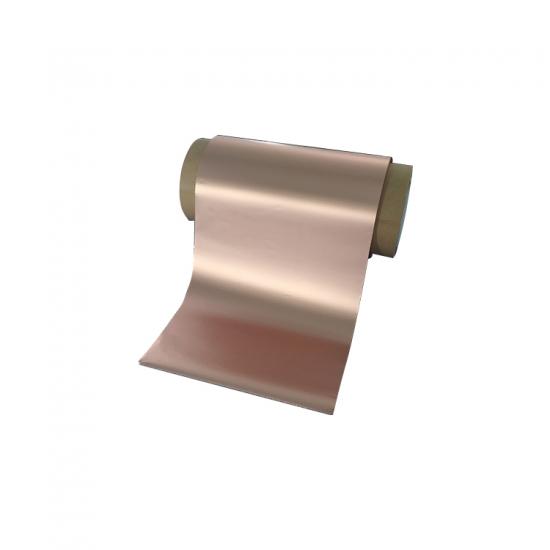
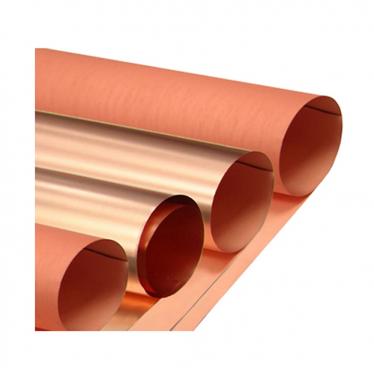
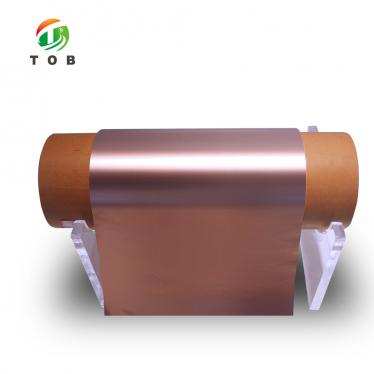
8um Battery Grade Copper Foil Double Faced Smooth
Brand:
TOB NEW ENERGYitem no.:
TOB-C08-Sorder(moq):
1Payment:
L/C,T/Tproduct origin:
chinashipping port:
XIAMEN
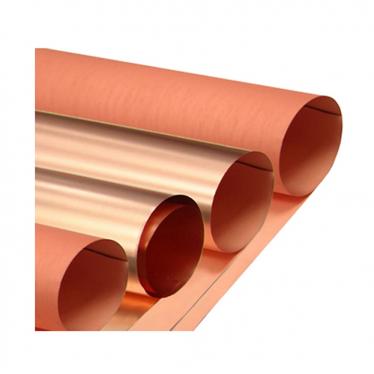
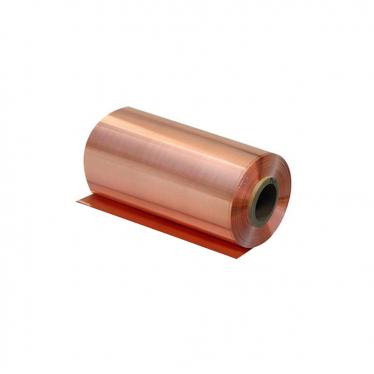
TOB-C08-S 8μm Double-Faced Smooth Copper Foil for Lithium-Ion Battery Anode Current Collectors
Product Overview and Ideal Applications
Copper foil is the standard negative current collector in lithium‑ion batteries, providing a conductive, mechanically stable substrate onto which anode active materials—graphite, hard carbon, silicon‑graphite composites—are coated. The TOB‑C08‑S is an ultra‑thin 8 µm electrodeposited copper foil engineered with a unique double‑faced smooth surface finish on both sides. Supplied in 300 mm width rolls, its areal density of 75–80 g/m² makes it one of the lightest commercially available battery‑grade copper foils, enabling higher gravimetric energy density in finished cells.
Unlike conventional electrodeposited copper foil that typically exhibits a smooth drum side and a rougher matte side, the TOB‑C08‑S is processed to achieve consistently low roughness and high surface tension on both faces. This symmetry is particularly valuable in two‑side coating processes, where the anode slurry is applied simultaneously to both sides of the foil in a single pass. A uniform surface finish on both sides eliminates the coating imbalance that can occur when one side wets differently from the other, leading to more uniform electrode thickness and better cell‑to‑cell consistency.
Ideal for:
- Battery manufacturers producing high‑energy‑density lithium‑ion cells (EV, consumer electronics) where every gram of inactive material matters.
- Double‑side coating lines that demand identical slurry wetting and adhesion on both faces of the current collector.
- Silicon‑graphite anode developers who need a smooth, defect‑free surface to accommodate the extreme volume changes of silicon without delamination.
- Any lab or pilot line transitioning from standard single‑side‑rough foil to a more advanced, symmetrical current collector for next‑generation cell designs.
Where This Copper Foil Fits in Anode Manufacturing
The TOB‑C08‑S enters the battery electrode production chain at the coating stage. After the anode slurry is prepared—typically a water‑based mixture of active material, carbon black, and CMC/SBR binder—it is deposited onto the copper foil using a slot‑die, doctor blade, or comma coater. The coated foil then passes through drying ovens and is calendared to the target density before being slit into individual electrode sheets.
For double‑side coating, the foil passes through a coater that applies the slurry to both sides simultaneously, or the foil is coated on one side, dried, turned over, and coated on the reverse side in a second pass. The TOB‑C08‑S’s double‑faced smoothness is particularly advantageous in these processes:
- Simultaneous two‑side coating: The identical surface finish on both faces ensures that the wetting, spreading, and drying behaviour of the anode slurry is symmetric, eliminating the curl that can occur when the two sides shrink differently during drying.
- Sequential two‑side coating: When the foil is coated on one side and then flipped, the second side’s coating quality is not compromised by a rough matte surface. This results in more uniform thickness and porosity across both electrode layers.
Beyond coating, the smooth surface facilitates clean ultrasonic or resistance welding of tabs onto the bare copper foil, as there is no rough surface to trap air or cause inconsistent electrical contact. The high purity and controlled impurity profile (Fe <10 ppm, Bi <2 ppm, Pb <5 ppm) further ensure that the welded joint is mechanically strong and electrochemically stable.
Material Properties and Technical Specifications
The following table presents the actual measured data for the TOB‑C08‑S copper foil. The purity limits are controlled to minimise electrochemical side reactions and ensure long‑term cell reliability.
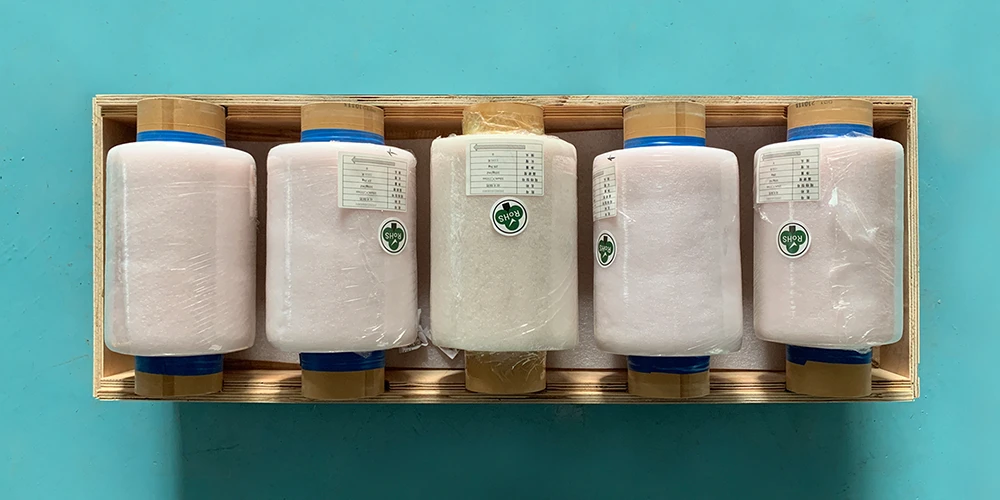
Width: 300mm, Lenght: 383m, Thicness: 8μm
|
Copper foil for battery anode substrate |
||
|
Item |
Data |
|
|
width (mm) |
300mm |
|
|
Thickness (μm) |
8 |
|
|
areal density (g/m2) |
75~80 |
|
|
Purity(%) More than 99.9% |
Cu ≥99.9% |
|
|
Fe < 0.0010% |
||
|
Bi < 0.00020% |
||
|
Pb < 0.0005% |
||
|
Tensile strength (MPa) |
≥294 |
|
|
Normal elongation(%) |
2.5 |
|
|
High temperature Tensile strength 180℃(MPa) |
≥147 |
|
|
High temperature elongation 180℃(%) |
2 |
|
Key characteristics derived from these specifications:
- Areal density (75–80 g/m²): Corresponds to a foil density close to that of pure copper (8.96 g/cm³), confirming the foil’s consistent thickness and high material quality. For a 8 µm foil, a theoretical areal density of 71.7 g/m² would be expected for solid copper; the actual 75–80 g/m² range accounts for minor surface roughness and measurement tolerances.
- Double‑faced smooth surface: Both sides of the foil are engineered to have extremely low roughness (typically Ra <0.3 µm), ensuring uniform slurry wetting, high adhesion, and consistent drying behaviour without the need for a primer or corona treatment.
- Tensile strength ≥294 MPa at room temperature: Sufficient to withstand the web‑handling tensions of typical laboratory and pilot‑scale coating lines without necking or tearing.
- High‑temperature mechanical retention: The tensile strength at 180 °C is ≥147 MPa, approximately 50 % of the room‑temperature value, which is adequate for the drying ovens used in electrode manufacturing.
- Impurity control: Fe, Bi, and Pb are kept at extremely low levels to avoid dissolution into the electrolyte, which could lead to metal dendrite growth and internal short circuits.
Engineering FAQ — Double‑Sided Smooth Copper Foil
Q1: Is the double‑sided smooth surface a result of a special manufacturing process?
Yes. While standard electrodeposited copper foil derives its dual texture from the difference between the drum side (smooth, in contact with the polished cathode drum) and the free side (matte, where crystal growth ends), TOB‑C08‑S is processed using a modified electrolyte and plating conditions—or a post‑treatment such as surface polishing—to achieve a smooth finish on both faces. TOB does not disclose the exact proprietary process.
Q2: Does the smooth surface affect the adhesion of the anode slurry compared to a rough matte side?
The smooth surface provides adequate adhesion through chemical bonding and van der Waals forces, but for certain binder systems (especially those relying heavily on mechanical interlocking), the peel strength may be slightly lower than on a rough matte surface. This can be compensated by increasing the binder content slightly or by applying a thin carbon primer. However, for most aqueous CMC/SBR formulations, the adhesion is more than sufficient and often results in more uniform coating because the slurry spreads evenly without “pooling” in the valleys of a rough surface.
Q3: Can I use this foil for silicon‑graphite anodes, where the volume change is very large?
Yes. The TOB‑C08‑S’s smooth surface and high purity are actually advantageous for silicon‑based anodes, because cracks and irregularities in the copper surface can act as stress concentrators during silicon expansion, leading to delamination. The uniform smoothness helps distribute the interfacial stress. Nevertheless, it is recommended to pair the foil with a robust binder (e.g., PAA or a cross‑linked CMC/SBR) and to test the adhesion under cycling conditions.
Q4: Is there any difference in welding compared to standard copper foil?
No significant difference. The smooth surface provides a clean, flat interface for ultrasonic or resistance welding. The high purity and low impurity levels ensure a strong, low‑resistance joint. Standard welding parameters for 8 µm copper foil can be used; simply verify the joint quality with a peel test on the first samples.
Q5: How should I store an opened roll of this foil to prevent oxidation?
Copper oxidises slowly in ambient air. After opening, reseal the roll tightly in its original plastic bag with a fresh desiccant pack, and store in a dry cabinet (<40 % RH). If the roll is to be stored for more than a few weeks, consider placing it in a nitrogen‑purged container. If a light tarnish appears, a brief dip in dilute citric acid by a deionised‑water rinse can restore the surface, but this should be validated for your process.
tob.amy@tobmachine.com | +86 181 2071 5609
You May Also Need
- TOB‑PET‑Cu PET Composite Copper Foil (Cu‑PET‑Cu) — A three‑layer composite current collector with a PET insulating core sandwiched between two copper films, reducing weight and improving safety by acting as an internal fuse under abuse conditions.
- TOB‑C‑Cu Conductive Carbon‑Coated Copper Foil for Anode Substrates — A copper foil with a uniform conductive carbon layer that enhances adhesion to the anode active material, reduces interfacial resistance, and improves cycle life, especially for silicon‑based anodes.
- TOB‑Al‑12 12µm Aluminum Foil for Lithium Battery Cathodes — A lightweight, high‑purity aluminium foil with a thickness of 12 µm, designed for cathode current collectors in high‑energy‑density lithium‑ion cells. Excellent conductivity and surface uniformity for slurry coating.
Previous:
Lithium Ion Battery Copper Foil 9um- 200mmNext:
8 Microns Double-side Smooth Copper Foil for Lithium Ion Battery
If you are interested in our products and want to know more details,please leave a message here,we will reply you as soon as we can.

 subscribe to us