Chinese
 français
 Deutsch
 italiano
 español
 português
 Nederlands
 日本語
日本語 한국의
한국의




Categories
new blog
- Tabless Cylindrical Battery Manufacturing Guide
- China Power Battery Market Report 2026 H1: Six Trends Reshaping Battery Equipment Demand
- Turnkey Solid-State Battery Lab Setup Guide
- Conductive Materials for Lithium Batteries: CNT vs Graphene Guide
- Step-by-Step Guide to Partnering with a Sodium-Ion Battery Technology Developer in China
The Difference Between Sodium ion Battery and Lithium ion Battery
Dec 24 , 2021
The theoretical basis and battery structure of sodium ion battery (Na-ion batteries) and lithium ion battery are very similar. Liquid sodium-ion batteries (like solid-state lithium-ion batteries, are also being investigated) are composed of positive electrode, negative electrode, current collector, electrolyte, and battery separator.
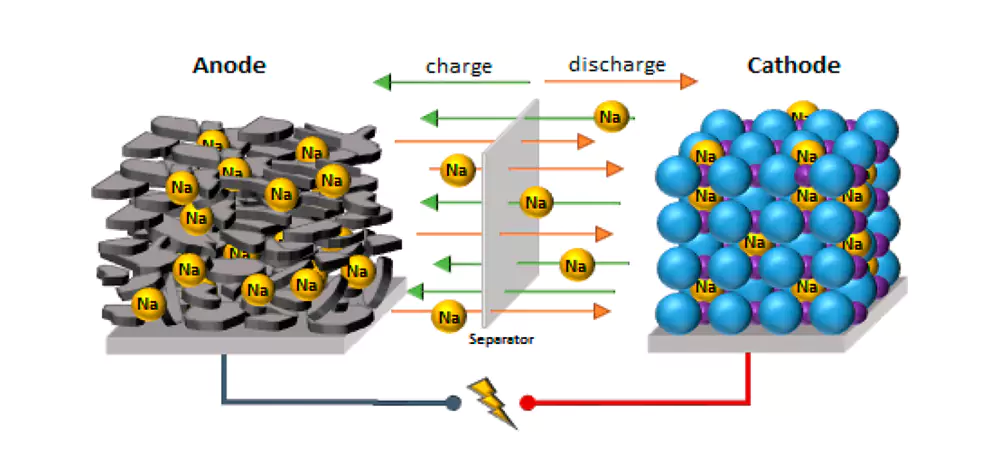
Among them, electrolyte and separator basically follow the lithium ion battery system; Aluminum foilcan be used for both anode and cathode of the current collector, while copper foil is needed for the anode of the lithium-ion battery (because sodium ions do not react with aluminum ions at the anode), which also reduces the cost of thecurrent collector.
Due to the difference in the characteristics of sodium ion and lithium ion, the cathode and anode materials of sodium ion need to choose the material suitable for sodium ion migration, which is also the core of sodium ion battery technology. At present, there are three main cathode materials for sodium ion batteries:Layered transition metal sodium oxide, Prussian blue, Polyanionic sodium ion compounds; Sodium ion batteries anode materials are mainly divided into four categories:carbon anode materials,conversion anode materials,titanate anode materials and alloy anode materials. subscribe to us