Chinese
 français
 Deutsch
 italiano
 español
 português
 Nederlands
 日本語
 한국의




- Home
- >
- Coin Cell Equipment
- >
- Lab Coater
- >
- High Precision Slot Die Coating Machine
Categories
Hot Products
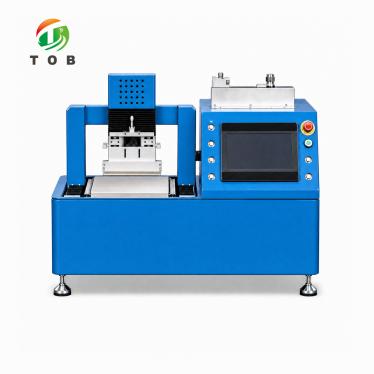
Loading...
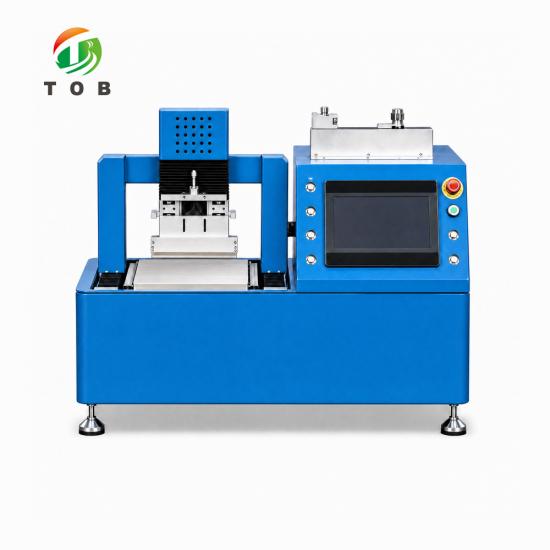
High Precision Slot Die Coating Machine
Brand:
TOB NEW ENERGYitem no.:
TOB-EFCA300X200order(moq):
1 setPayment:
L/C, T/Tproduct origin:
Chinashipping port:
XIAMEN
High Precision Slot Die Coating Machine - TOB-EFCA300X200
One syringe pump feeds the die: 300 mm stroke, 200 mm coating width, dry film 10 to 250 μm, on a plate heated to 150 °C
Product Overview and Ideal Applications
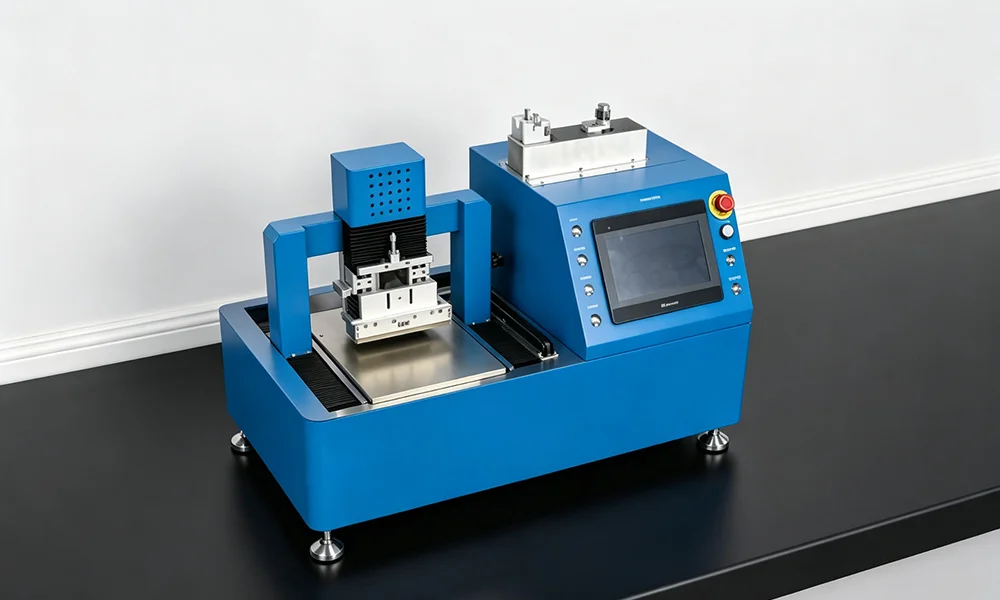
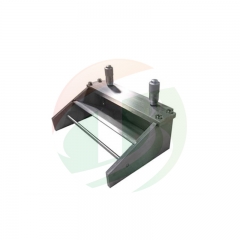
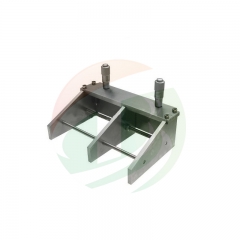
The TOB-EFCA300X200 is a slot die coating machine that lays a single thin film onto sheet substrates. One high precision syringe pump feeds the die, the die is carried across a heated vacuum plate by a servo motor, and the sheet is held flat by vacuum for the whole stroke instead of being taped or clamped down.
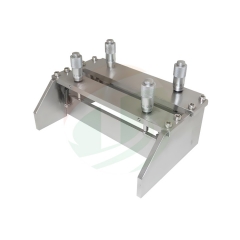
It is built from four parts: the slot die head, the coating platform, the feeding system and the control system. The carriage covers a 300 mm stroke at a speed set steplessly in the touch screen. The gap between die and plate is set on a micrometer across 0 to 5 mm, and the shim inside the die fixes the wet gap the slurry passes through. Pump capacity is selectable, and the pump is specified to hold a steady rate at the low end, which is where thin films are run.
Ideal for:
- Ceramic thin films, where the slip has to be laid at an even wet thickness before it is dried and fired.
- Crystalline thin films, where the layer thickness decides how the crystal grows.
- Battery material films, run with LFP and similar slurries at coating speeds up to 120 mm/s.
- Special nanometre thin films, where the thin end of the 10 to 250 μm range is the working point.
This is a slot die instrument for sheet substrates, not a roll to roll production coater: the sheet has to sit flat on the 385 x 300 mm plate and hold its shape under vacuum. If the sheet is wider than 200 mm and the run needs a longer carriage, the lab slot die coater with an 800 mm stroke is the same method with more travel, and for continuous coating off a roll rather than sheet by sheet, the roll to roll coating machine is the machine type one step up from this bench.
Complete Specifications
The 19 specifications are grouped by what they constrain: how the film is formed, how the substrate is held, and what the machine needs from the room.
1. Coating and Feeding
| Parameter | TOB-EFCA300X200 |
|---|---|
| Coating method | Slot die coating |
| Feeding method | High precision syringe pump, capacity selectable |
| Coating speed | 0 to 120 mm/s (for example with LFP slurry) |
| Coating drive | Servo motor, speed set steplessly in the touch screen |
| Coating width | 200 mm |
| Effective stroke | 300 mm |
| Die to plate distance | 0 to 5 mm, adjustable |
| Die adjustment | Micrometer adjustment |
| Accuracy | ±3 μm (optional 1 μm dial indicator) |
| Dry film thickness | 10 to 250 μm |
2. Substrate, Heating and Vacuum
| Parameter | TOB-EFCA300X200 |
|---|---|
| Vacuum plate | Aluminium vacuum plate |
| Vacuum plate size | L 385 mm x W 300 mm x H 29 mm |
| Substrate fixing | Vacuum hold |
| Vacuum source | External |
| Maximum substrate heating temperature | Room temperature to 150 °C, digital temperature controller, ±2 °C |
3. Power, Weight and Installation
| Parameter | TOB-EFCA300X200 |
|---|---|
| Power supply | 220 V / 50 Hz |
| Power | 2.5 kW |
| Weight | 110 kg |
| Dimensions | L 1000 mm x W 600 mm x H 710 mm |
Dimensions describe the machine as supplied. The vacuum line is external, so the pump and its hose sit outside the 1000 x 600 mm footprint.
Why One Pump Is Enough for a Single Layer
A single layer film needs one metered stream. The pump pushes the slurry into the die, the shim sets the wet gap it leaves through, and the carriage carries that gap across the plate at a steady speed. Nothing in that chain gets better with a second pump, because there is no second stream to meter.
Where a second pump earns its place is a stack that has to form wet on wet, with two materials that cannot be mixed before the die. If the film is one material at one thickness, a second pump would be a control with nothing to control.
One pump also means one number to calibrate. Every run starts from the same flow setting, and a thicker film is a larger number on that same setting rather than a fresh balance between two flows that drift apart with wear.
Low flow is where a metering pump is tested. A 10 μm layer over a 200 mm width uses very little slurry per second, and a pump that cannot hold a steady rate that small delivers a film that runs thick in places and thin in others. The syringe pump here is specified for that low-rate range, which is why the dry film range starts at 10 μm rather than at a value a peristaltic pump could manage.
The shim, not the pump, is what decides which slurries the machine can run. Several thicknesses are available for the same die, so a low viscosity nanometre film and a thicker ceramic slip are both run on this machine by changing a shim rather than a head.
If the work later moves to a two layer stack, the dual layer version is the same bench, the same plate, the same stroke and the same controls, with a second pump and a two inlet die. Buying that once costs less than converting this machine later, so it is worth deciding before the order rather than after.
Key Engineering Characteristics
- One pump, one die. A single metered stream reaches the slot, so the film thickness is set by one flow rather than by the balance between two.
- Large-area uniform heating. The plate heats over its full area to ±2 °C, which is what holds a 10 μm target across the stroke.
- Servo carriage. 0 to 120 mm/s set steplessly in the screen, so a thin layer can be run slower without touching the shim.
- Micrometer die gap. 0 to 5 mm on a micrometer, so the gap is a number that can be written down and repeated on the next run.
- Stainless die body. Resists corrosion from the slurry and keeps its shape above a plate running at 150 °C.
- Replaceable shims. Several thicknesses fit the same die, which is how one machine covers a range of slurry viscosities.
- Vacuum hold, not clamps. The sheet is held flat without anything pressing on its edges, and it does not deform while held.
- Integrated feeding. Pump, carriage and plate temperature start from one screen instead of three switches.
Operating Recommendations, Maintenance and Safety
1. Operating limits
- Never put hands or any other part of the body into the moving parts or the working zone while the machine is running. Keep to one operator at a time: two people at the machine is how the second one is injured by a carriage they did not start.
- The machine is not to be dismantled by outside technicians or by anyone not designated for the task.
2. Maintenance
- Wipe the machine regularly with a soft cloth dampened with alcohol to keep the surfaces clean.
- Oil the moving parts so that the carriage keeps running smoothly.
- If the machine is to stand idle for a long period, clean the surfaces of the moving parts and spray them with rust preventive oil.
- Check screws, nuts, pins and other fasteners at regular intervals and tighten anything that has worked loose, to prevent both quality faults and personal injury.
Engineering FAQ
Q1: Is this a single layer machine?
Yes. One die, one inlet, one syringe pump. The film is a single layer of one material, and the thickness is set by that one flow together with the shim and the carriage speed.
Q2: Can it be turned into a two layer machine later?
That is a question to settle before the order rather than after. The plate, the carriage, the stroke and the controls are the same as on the dual layer version; what differ are the die and the number of pumps. Tell us if a second layer is on the roadmap and we will quote the dual layer machine instead, which is cheaper than changing this one.
Q3: What sets the dry film thickness?
Three settings, working together: shim thickness, pump flow and carriage speed. The plate temperature acts on how the film dries, not on the wet gap. The stated range is 10 to 250 μm with an accuracy of ±3 μm.
Q4: How is the die to plate gap set?
On a micrometer, across 0 to 5 mm. The gap is set with the carriage parked, and it is a number you can write into a run sheet and repeat. An optional 1 μm dial indicator is available where the layer has to be checked finer than the base tolerance.
Q5: Does the machine dry the film?
It heats the substrate, not the air. The plate runs from room temperature to 150 °C and dries the film from below while the sheet sits on it, but there is no separate drying tunnel on this machine.
Q6: What sheet size fits, and what does the machine need from the room?
The plate is 385 x 300 mm, the coating width is 200 mm and the stroke is 300 mm, so the sheet has to sit flat inside that plate and hold its shape under vacuum. From the room it needs 220 V / 50 Hz at 2.5 kW, an external vacuum source, and floor or bench space for a 1000 x 600 x 710 mm machine weighing 110 kg.
Send us the slurry viscosity and the dry film thickness you need, and we will confirm the shim thickness and the pump capacity against them before the order is placed.
tob.amy@tobmachine.com | +86 181 2071 5609
Reviewed by: Science Wang, Six Sigma Black Belt, Battery Lines | Last updated: 2026-10-22
Previous:
Lab Slot Die Coater with 800mm Stroke For Battery Electrode CoatingNext:
High Precision Dual Layer Slot Die Coating Machine
If you are interested in our products and want to know more details,please leave a message here,we will reply you as soon as we can.

 subscribe to us