Chinese
 français
 Deutsch
 italiano
 español
 português
 Nederlands
 日本語
 한국의




- Home
- >
- Coin Cell Equipment
- >
- Lab Coater
- >
- High Precision Dual Layer Slot Die Coating Machine
Categories
Hot Products
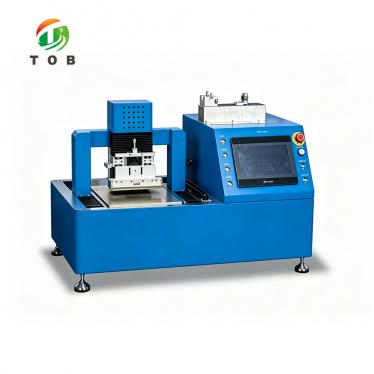
Loading...
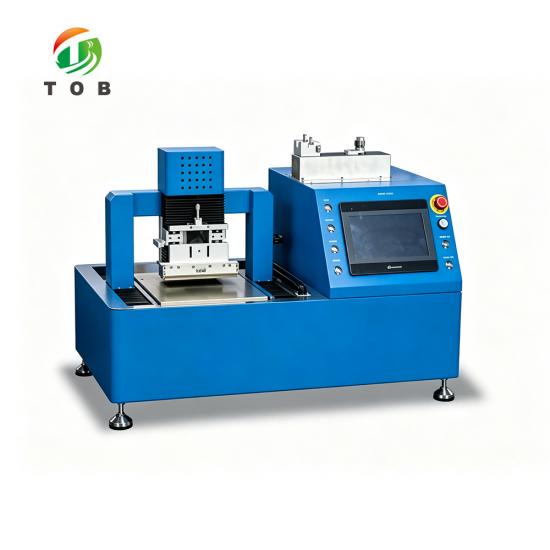
High Precision Dual Layer Slot Die Coating Machine
Brand:
TOB NEW ENERGYitem no.:
TOB-EFCB300X200order(moq):
1 setPayment:
L/C, T/Tproduct origin:
Chinashipping port:
XIAMEN
High Precision Dual Layer Slot Die Coating Machine - TOB-EFCB300X200
Two syringe pumps feed one slot die: 300 mm stroke, 200 mm coating width, dry film 10 to 250 μm, on a plate heated to 150 °C
Product Overview and Ideal Applications
The TOB-EFCB300X200 is a slot die coating machine that lays thin films onto sheet substrates. Two syringe pumps feed one die, so a two layer stack leaves the slot in a single pass instead of two, and the substrate is held on a vacuum plate heated to 150 °C for the whole stroke.
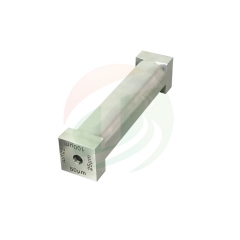
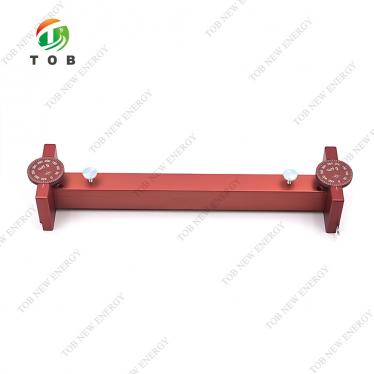
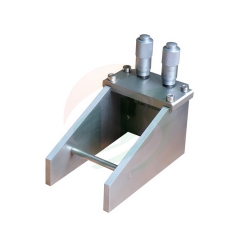
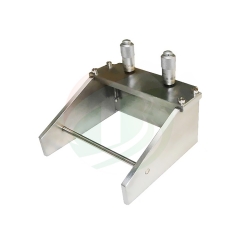
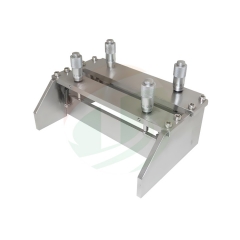
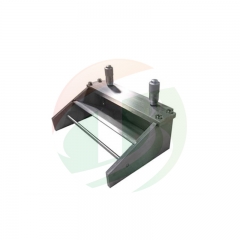
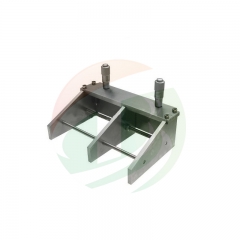
It is built from four parts: the slot die head, the coating platform, the feeding system and the control system. A servo motor carries the die over a 300 mm stroke at a speed set in the touch screen. The gap between die and plate is set with a micrometer across 0 to 5 mm, and the shim inside the die fixes the wet gap the slurry passes through.
Ideal for:
- Ceramic thin films, where the slip has to be laid at an even wet thickness before it is dried and fired.
- Crystalline thin films, where the layer thickness decides how the crystal grows.
- Battery material films, run with LFP and similar slurries at coating speeds up to 120 mm/s.
- Special nanometre thin films, where the thin end of the 10 to 250 μm range is the working point.
This is a slot die instrument for sheet substrates, not a roll to roll production coater: the sheet has to sit flat on the 385 x 300 mm plate and hold its shape under vacuum. If the film is cast with a blade instead of a die, the automatic film coating and drying machine is the same bench format with a doctor blade. If the layer is single and the substrate is wider than 200 mm, the lab slot die coater with 800 mm stroke is the longer machine in the range.
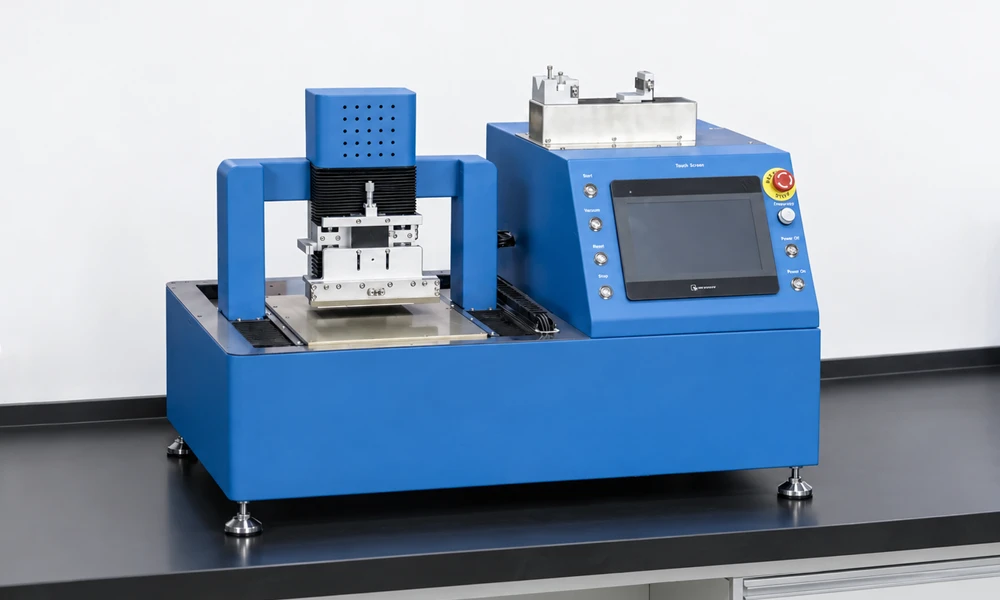
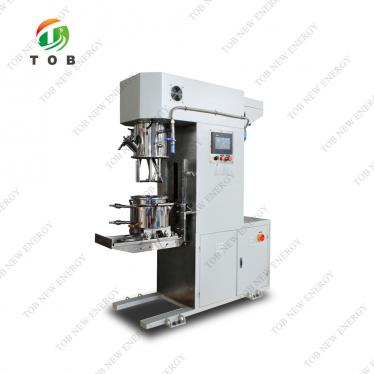
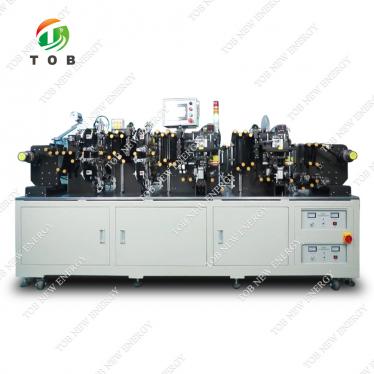
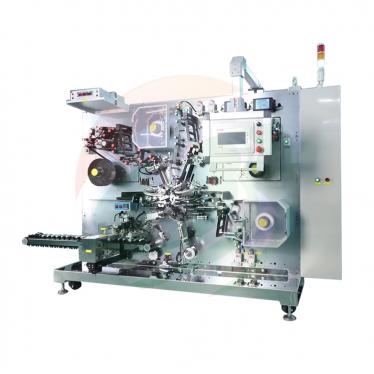
The TOB-EFCB300X200 on a bench in a battery laboratory.
Complete Specifications
The 19 specifications are grouped by what they constrain: how the film is formed, how the substrate is held, and what the machine asks of the room it is installed in.
1. Coating and Feeding
| Parameter | TOB-EFCB300X200 |
|---|---|
| Coating method | Dual layer slot die coating |
| Feeding method | 2 high precision syringe pumps, capacity selectable |
| Coating speed | 0 to 120 mm/s (for example with LFP slurry) |
| Coating drive | Servo motor, speed set steplessly in the touch screen |
| Coating width | 200 mm |
| Effective stroke | 300 mm |
| Die to plate distance | 0 to 5 mm, adjustable |
| Die adjustment | Micrometer adjustment |
| Accuracy | ±3 μm (optional 1 μm dial indicator) |
| Dry film thickness | 10 to 250 μm |
2. Substrate, Heating and Vacuum
| Parameter | TOB-EFCB300X200 |
|---|---|
| Vacuum plate | Aluminium vacuum plate |
| Vacuum plate size | L 385 mm x W 300 mm x H 29 mm |
| Substrate fixing | Vacuum hold |
| Vacuum source | External |
| Maximum substrate heating temperature | Room temperature to 150 °C, digital temperature controller, ±2 °C |
3. Power, Weight and Installation
| Parameter | TOB-EFCB300X200 |
|---|---|
| Power supply | 220 V / 50 Hz |
| Power | 2.5 kW |
| Weight | 110 kg |
| Dimensions | L 1000 mm x W 600 mm x H 710 mm |
Dimensions describe the machine as supplied. The vacuum source is external, so the pump and its hose sit outside the 1000 x 600 mm footprint.
Why Two Layers Through One Die Changes the Run
A single layer machine builds the same stack in two passes. Between them the first layer has to be dried, handled and re-aligned, and each of those steps is a chance for the second layer to sit slightly off the first. Feeding both layers through one slot removes the drying step and the re-alignment with it: the two layers are positioned relative to each other by the die, not by the operator.
Each pump is set on its own, so the two layers do not have to be the same thickness. The ratio between them is a pump setting, and changing a ratio that way costs a minute rather than a shim change.
The shim decides which slurries the machine can run. Several thicknesses fit the same die, so a low viscosity nanometre film and a thicker ceramic slip are both run on this machine by changing a shim rather than a head.
Low flow is where a syringe pump earns its price. A thin layer over a 200 mm track consumes very little slurry per second, and a pump that cannot hold a steady flow that small delivers a film that is thicker in some places than others. These pumps are specified for that low-rate range, which is the part of the 10 to 250 μm span that is hardest to hold.
Heat arrives from below, through the plate and the substrate, so the film skins from the substrate side up while the solvent leaves from the top. A plate held to ±2 °C is what keeps that front moving evenly across the width of the coating.
Where the layer is built by withdrawal rather than by a metered slot, the dip coater with constant temperature oven is the other method in the range.
Key Engineering Characteristics
- Two pumps, one die. Each layer is metered by its own syringe pump and the two meet inside the head, so the stack is formed once at the slot instead of being built in two passes with a drying step in between.
- Large-area uniform heating. The plate heats across its whole area to ±2 °C, which is what holds a 10 μm target from one end of the 300 mm stroke to the other; a cold band would show up as a thicker patch in the film.
- Servo carriage, stepless speed. 0 to 120 mm/s is set in the touch screen with no fixed steps, so the same shim can be run slower for a thin layer without changing hardware.
- Micrometer die gap. The distance between die and plate is set on a micrometer across 0 to 5 mm, so the gap is a number that can be written on a label and repeated by the next operator.
- Stainless die body. The head sits a few millimetres above a plate running at up to 150 °C, and it has to keep its shape there and resist the corrosion that comes with these slurries.
- Replaceable shims. Several thicknesses fit the same die, which is how one machine covers a spread of slurry viscosities without a second head.
- Vacuum hold, not clamps. Nothing presses on the edges of the sheet and nothing has to be taped down, so the full 200 mm width stays available and the substrate does not deform while it is held.
- Integrated feeding. Pumps, carriage and plate temperature are started and set from one screen rather than three separate switches, which is what makes a recipe reproducible.
Operating Recommendations, Maintenance and Safety
1. Before and during a coating run
Connect the vacuum line before the first sheet goes on; without it the plate holds nothing and the die will drag the substrate. Set the die to plate gap on the micrometer with the carriage parked, fit the shim chosen for the slurry, then load both syringes and purge until neither line carries air. Run the first pass on a scrap sheet at the speed you intend to use, measure the dried film, and correct with pump flow rather than with the shim: the shim sets the wet gap and is not meant to be changed mid-run.
The plate stays at temperature after the carriage stops. Move samples with tweezers rather than fingers, and give the plate time to cool before changing anything inside the die area.
2. Maintenance and safety
- Clean the die after every run. Slurry left in the slot dries and changes the gap on the next start, which shows up as a step in the film rather than as an obvious fault.
- Flush both pumps. Push the solvent used in the slurry through each line before the machine is left for more than a day.
- Wipe the plate. Use a soft cloth dampened with alcohol once the plate has cooled; a dried speck under the sheet shows up as a thin patch in the coating.
- Keep the vacuum surface flat. A raised particle between plate and substrate lifts the sheet locally and the film thins over that spot.
- Handle shims with care. A bent shim cannot be straightened back to a known gap, and a damaged edge leaves a streak along the coating.
- Solvent vapour is not removed by the machine. Run it under the lab extraction that your solvent requires, and wear gloves and eye protection when handling slurries.
Engineering FAQ
Q1: Why two pumps instead of mixing the two layers before the die?
Because the two layers are usually different materials at different thicknesses. Two pumps let each flow be set on its own and keep the materials apart until they meet at the slot, so the layer boundary is placed by the die rather than by how well two slurries were stirred together.
Q2: Does the machine dry the film?
It heats the substrate, not the air. The plate runs from room temperature to 150 °C, so the film dries from below while the sheet sits on it, but there is no separate drying tunnel and no air flow system. Very low boiling solvents will skin quickly at 150 °C; high boiling ones may need more time on the plate or a separate oven.
Q3: Can I run a single layer on it?
The die and the feeding system are built for two layers. Whether a single layer run is practical depends on the shim and how the inlet is configured, so tell us the target and we confirm the setup before the order rather than after it.
Q4: What actually sets the dry film thickness?
Three things, in this order: the shim thickness, the pump flow and the carriage speed. Plate temperature is a fourth variable, but it acts on drying rather than on the wet gap, so it is tuned after the other three are fixed.
Q5: What substrate size fits, and what has to be true of it?
The plate is L 385 mm x W 300 mm, the coating width is 200 mm and the stroke is 300 mm. The sheet has to be flat and rigid enough to sit on the plate and hold its shape under vacuum; a limp film will not hold and the die will not clear it.
Q6: What does the machine need from the room?
A 220 V / 50 Hz supply at 2.5 kW, an external vacuum line, and a bench that carries 110 kg over a footprint of L 1000 mm x W 600 mm x H 710 mm. The vacuum source is not part of the machine, so plan that connection before installation.
Send us the two layer thicknesses, the slurry viscosity and the size of your largest sheet, and we will confirm the shim thickness, the pump capacity and whether the sheet fits the plate before you order.
tob.amy@tobmachine.com | +86 181 2071 5609
Reviewed by: Science Wang, Six Sigma Black Belt, Battery Lines | Last updated: 2026-10-22
Previous:
High Precision Slot Die Coating MachineNext:
Automatic Film Coating and Drying Machine, 300 and 400 mm Stroke
If you are interested in our products and want to know more details,please leave a message here,we will reply you as soon as we can.

 subscribe to us