Chinese
 français
 Deutsch
 italiano
 español
 português
 Nederlands
 日本語
日本語 한국의
한국의




- Home
- >
- Pouch Cell Assembly Equipment
- >
- Pouch Cell Stacking Machine
- >
- Semi-auto Battery Electrode Stacking Machine for Lithium Pouch Cell
Categories
Hot Products
Loading...
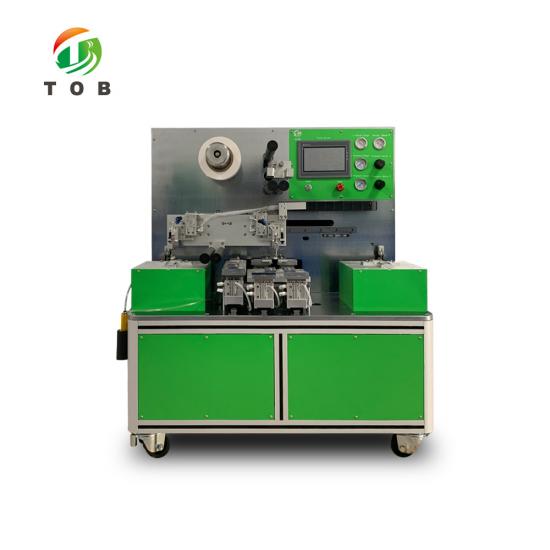
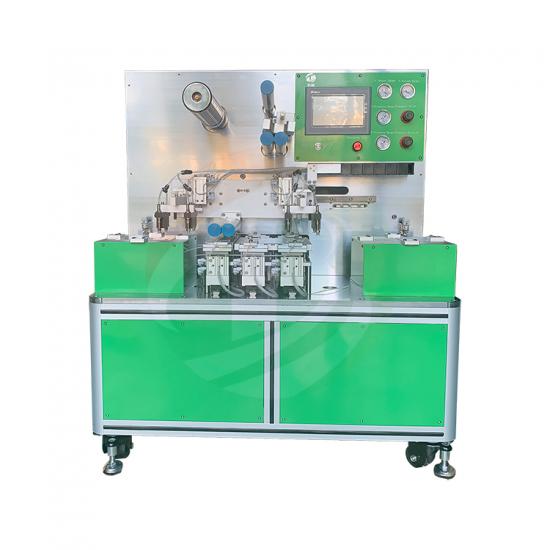
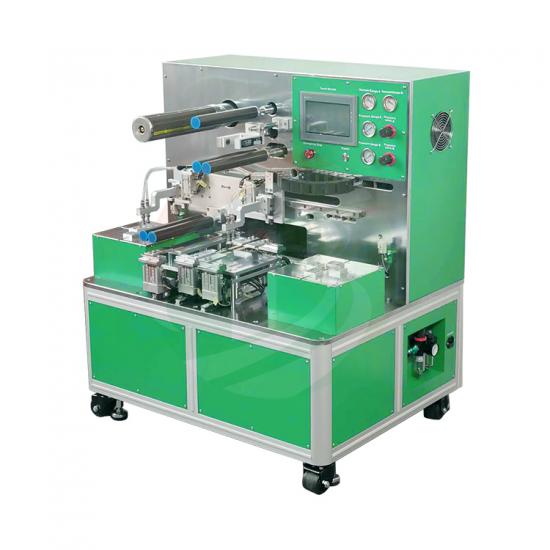
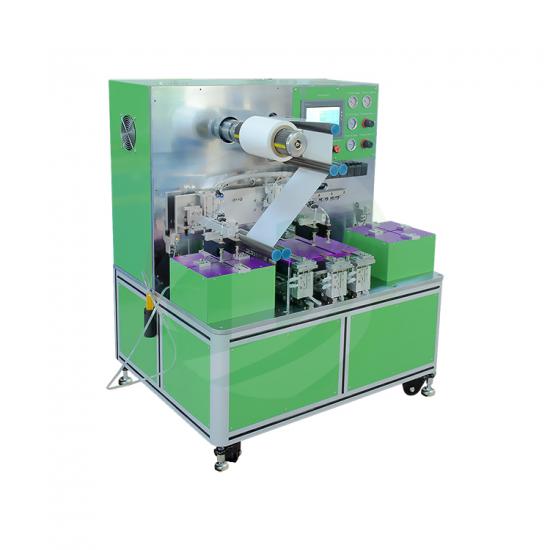
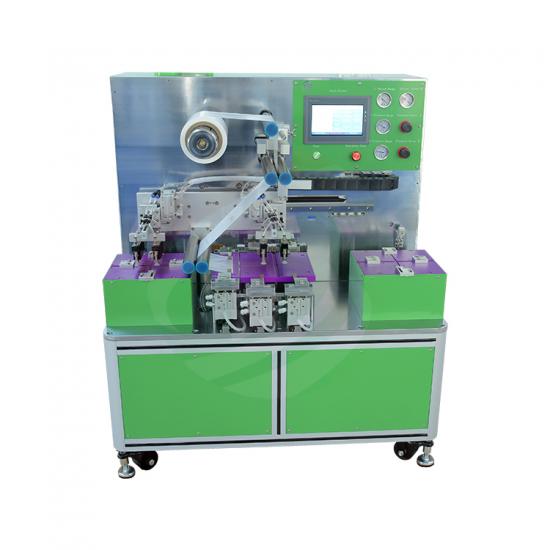
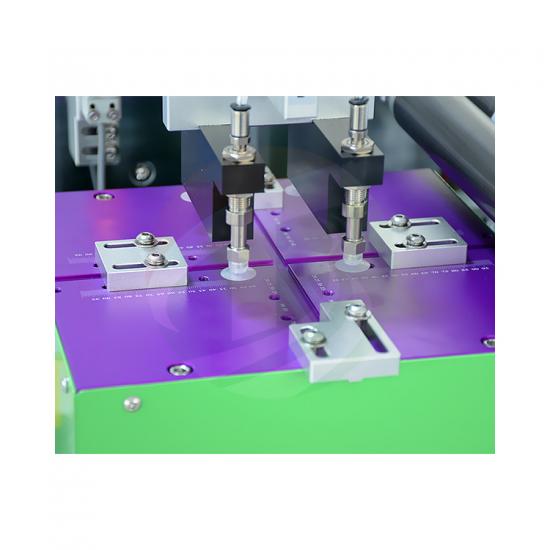
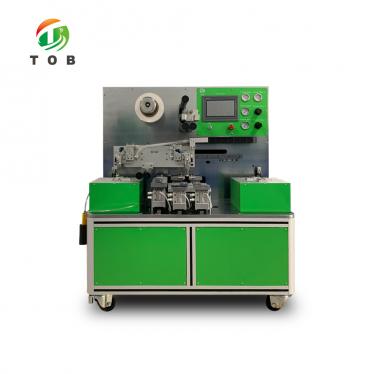
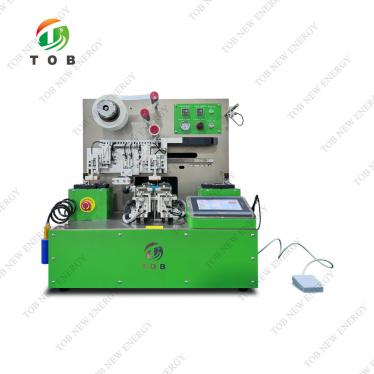
Semi-auto Battery Electrode Stacking Machine for Lithium Pouch Cell
Brand:
TOB NEW ENERGYitem no.:
TOB-BDP200-Corder(moq):
1setPayment:
L/C,T/Tproduct origin:
Chinashipping port:
XIAMEN
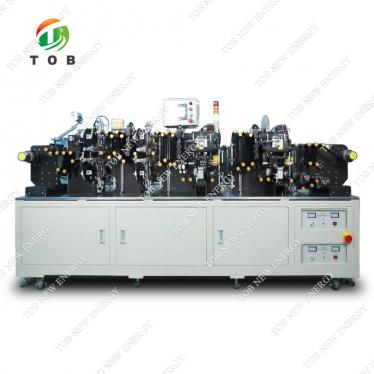
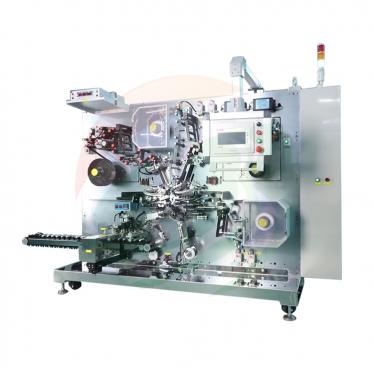
Semi-Automatic Battery Electrode Stacking Machine for Lithium Pouch Cell | TOB-BDP200-C
Product Overview and Ideal Applications
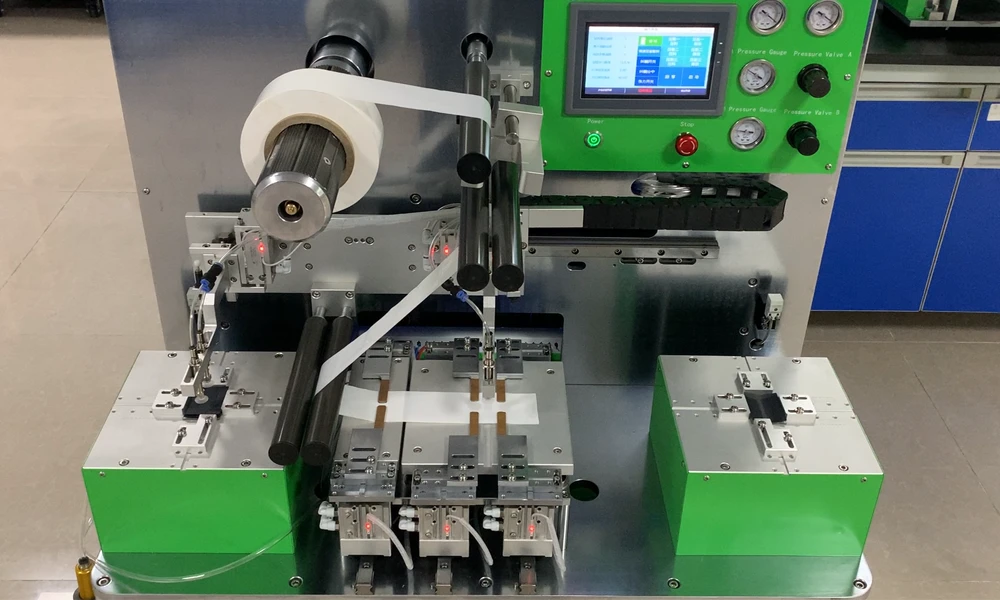
A Z-type (Z-fold) stacking machine assembles the internal structure of a pouch-type lithium-ion cell by folding a continuous separator strip in a zigzag (Z) pattern, with cathode and anode electrode sheets interleaved between the separator layers. The TOB-BDP200-C is a semi-automatic electrode stacking machine for lithium pouch cells that combines manual electrode loading with a fully automatic stacking process. After the operator loads the electrode sheets, the machine automatically corrects the electrode position, applies the separator in a Z-fold pattern, and stacks the layers to the preset count—delivering high stacking efficiency and high stacking accuracy with minimal operator involvement.
The TOB-BDP200-C is designed for cells up to a maximum of 200 × 200 mm (including tabs), with a stacking range from a minimum of 36 × 36 mm. The stacking thickness can reach 30 mm, and the number of stacking layers is programmable up to 500. A single cantilever structure supports the stacking platform, while a servo motor provides automatic constant-tension control of the separator roll, and a photoelectric sensor provides automatic deviation correction of the separator web. These design elements work together to maintain the ±0.3 mm stacking uniformity that is essential for a consistent, short-circuit-free electrode stack.
Ideal for:
- Pouch cell R&D laboratories developing stacking-type (Z-fold) lithium-ion cells.
- Sample and pilot production of stacking pouch cells, where the semi-automatic operation balances throughput with operator flexibility.
- Battery manufacturers evaluating the stacking process for new cell formats, where the adjustable fixture accommodates a wide range of cell sizes (36 × 36 mm to 200 × 200 mm).
- Research groups comparing stacked vs. wound electrode architectures for lithium-ion, sodium-ion, or solid-state cells.
Where Z-Type Stacking Fits in Pouch Cell Manufacturing
In the manufacturing of pouch-type lithium-ion cells, the electrode stack is assembled by one of two main processes: winding (jelly-roll) or stacking. Stacking is preferred for high-power and large-format cells because it provides better electrode alignment, more uniform current distribution, and improved rate capability compared to wound cells. The Z-type (Z-fold) process is the most common stacking method: a continuous separator strip is folded back and forth in a zigzag pattern, and the cathode and anode sheets are placed between the folds, so that each electrode sheet is separated from the next by a single separator layer.
The process sequence with the TOB-BDP200-C is:
- Manual electrode loading: The operator loads the cathode and anode sheets into the loading positions. The design allows manual loading of the electrode, by automatic position correction.
- Automatic position correction: The machine corrects the electrode position using the positioning system, ensuring each sheet is accurately aligned before stacking.
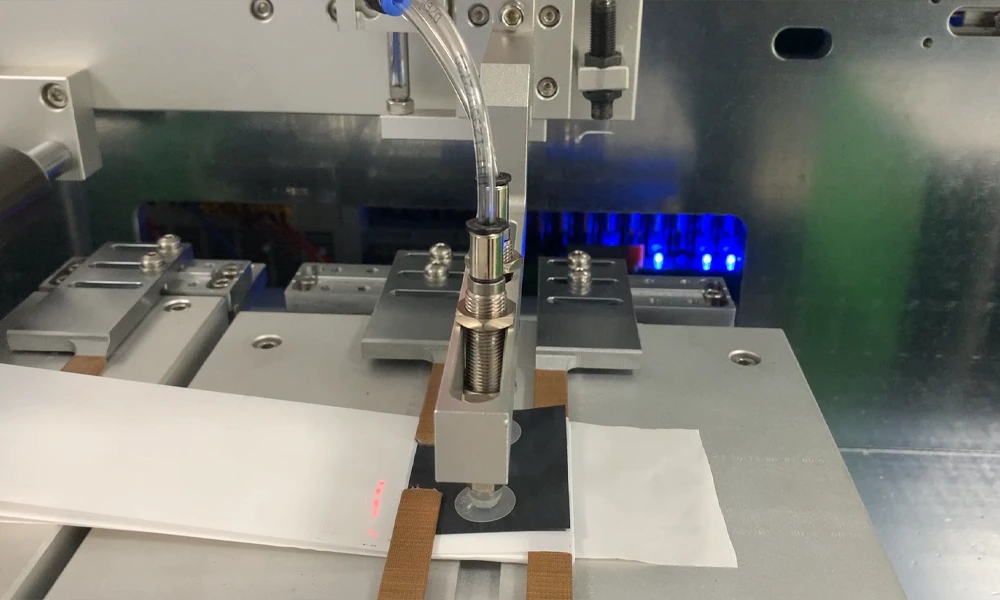
- Automatic Z-type stacking: A robotic hand automatically picks up each electrode sheet and places it onto the stacking platform while the separator is folded in a Z pattern around it. The stacking continues until the preset number of layers is reached.
- Stack completion: The finished electrode-separator stack is removed, ready for tab welding and pouch packaging.
The separator handling is critical to the stacking quality: the TOB-BDP200-C uses a servo motor for automatic constant-tension control of the separator roll, and a photoelectric sensor for automatic deviation correction. This prevents the separator from wrinkling, stretching, or drifting laterally during the Z-fold, which would otherwise create alignment errors or damage the separator.
How the Semi-Automatic Z-Type Stacking System Operates
The TOB-BDP200-C combines a semi-automatic electrode feeding process with a fully automatic stacking mechanism:
- Manual electrode loading: The operator places the cathode and anode electrode sheets into the designated loading positions. The machine is designed so that electrode loading is manual, while the subsequent position correction and stacking are fully automatic.
- Automatic electrode position correction: The loaded electrode sheets are automatically corrected to the precise stacking position. The left-right movement is controlled by a pulse motor, providing precise and convenient fine adjustment.
- Automatic suction and placement: A robotic hand automatically picks up each electrode sheet from the loading position (using vacuum suction) and transports it to the stacking platform. The robotic hand places the electrode onto the correct position in the stack.
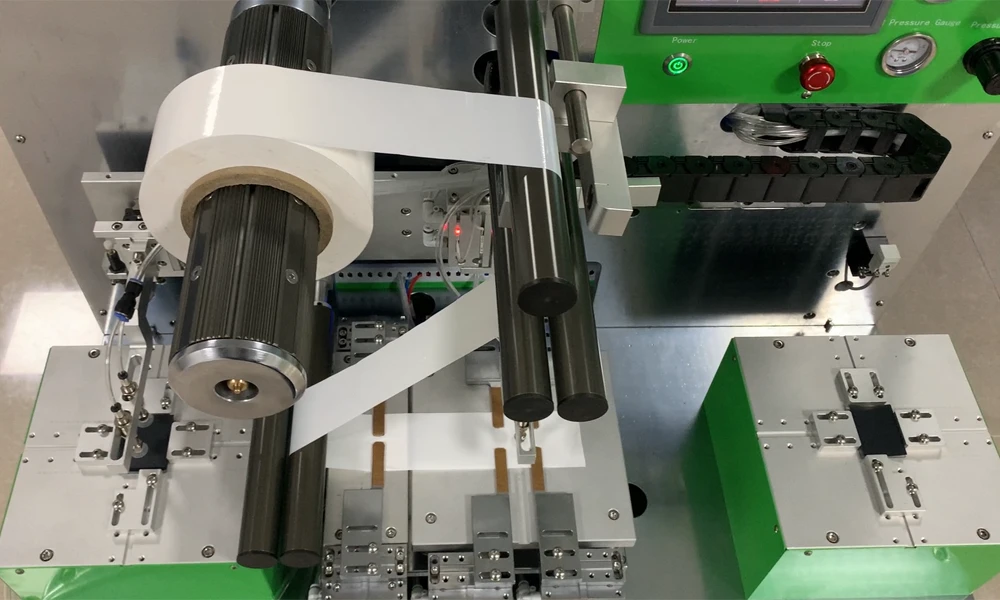
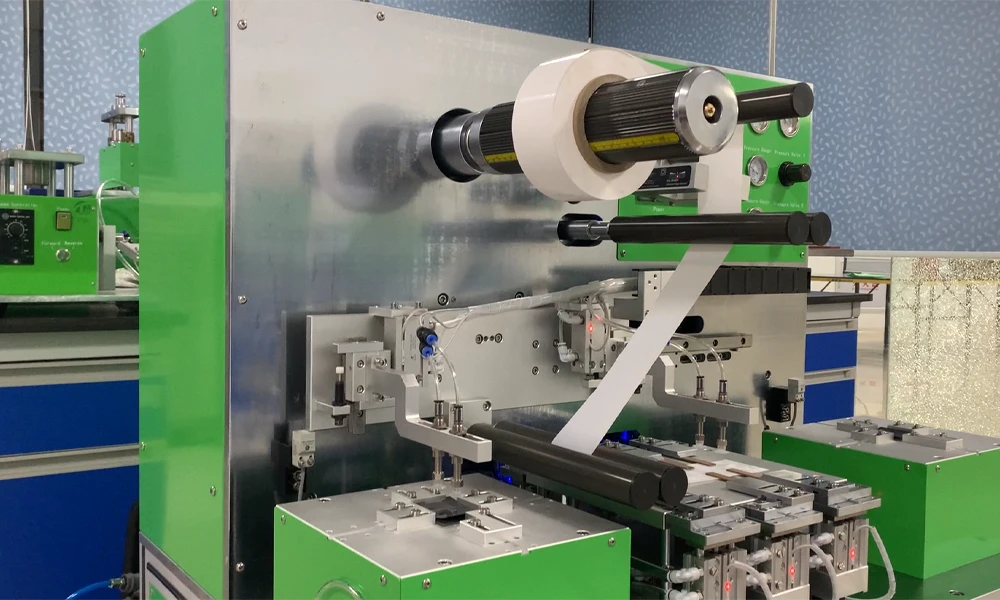
- Z-type separator folding: The separator is unwound from the roll and folded in a Z pattern around the stacked electrodes. The separator roll is mounted on a 3-inch air-shaft-clamped core, with a maximum roll diameter of φ250 mm. The servo motor provides automatic constant-tension control of the separator, and the photoelectric sensor provides automatic deviation correction—together preventing wrinkles, stretching, and lateral drift of the separator web.
- Layer counting and completion: The number of stacked layers is controlled automatically according to the preset setting (maximum 500 layers). When the preset layer count is reached, the stacking process stops automatically, and the finished stack is removed for the next process step.
Control system:
The machine is controlled by a PLC with an HMI (human-machine interface), making operation and maintenance easy. The number of stacking layers can be programmed on the HMI, and the PLC automatically controls the stacking sequence. The machine operates on single-phase AC220V±10% (110V AC customizable), 50/60 Hz, with a power consumption of 0.6 kW, and requires compressed air at 0.5–0.8 MPa.
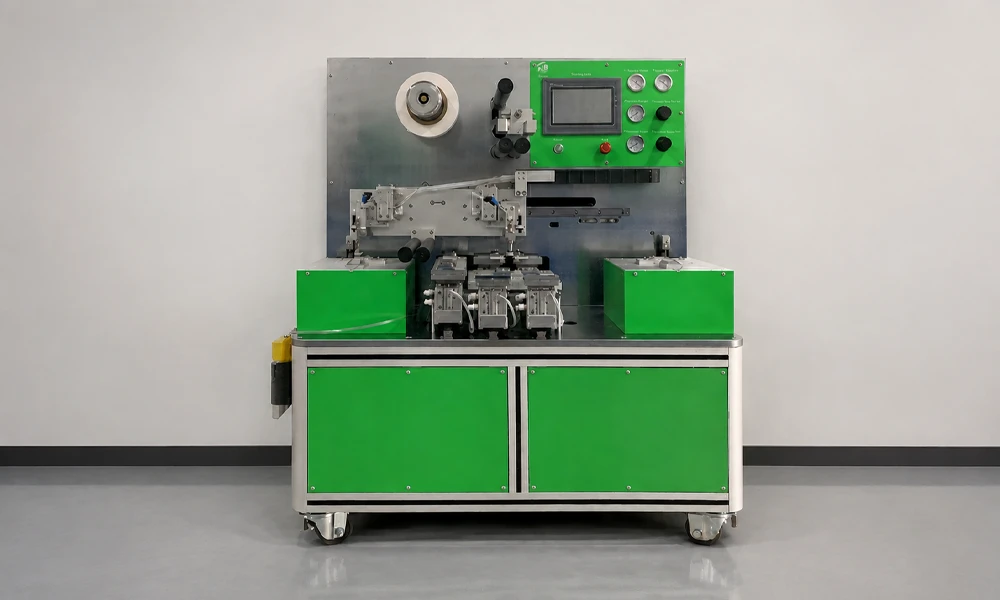
Key Engineering Characteristics of the TOB-BDP200-C
-
Semi-Automatic Operation with Fully Automatic Stacking
The operator only loads the electrode sheets manually; the position correction, suction, placement, separator folding, and layer counting are all automatic. This design delivers the throughput and consistency of an automatic process while retaining the operator flexibility needed in R&D and sample production. -
Z-Type Stacking with High Accuracy (±0.3 mm Uniformity)
The Z-fold separator process with interleaved electrode sheets achieves a stacking uniformity of ≤ ±0.3 mm. This accuracy is critical for preventing electrode misalignment, which could otherwise cause internal short circuits or uneven current distribution in the finished cell. -
Wide Stacking Range (36 × 36 mm to 200 × 200 mm)
The machine stacks cells from a minimum of 36 × 36 mm to a maximum of 200 × 200 mm (including tabs), with the fixture adjustable to accommodate different sizes. The compatible design and large adjustment range make the TOB-BDP200-C suitable for a wide range of pouch cell formats in development. -
Programmable Stacking Layers (Max. 500)
The stacking layer count is controlled automatically according to the preset setting, with a maximum of 500 layers. The stacking thickness can reach 30 mm. This programmability allows the operator to define the stack configuration for different cell designs and repeat it consistently. -
Servo Constant-Tension and Photoelectric Deviation Correction for the Separator
The separator roll is unwound under automatic servo constant-tension control, and the separator web is corrected by automatic photoelectric deviation control. These two systems prevent separator wrinkles, stretching, and lateral drift during the Z-fold, which are the most common sources of stacking defects. -
Precise Pulse-Motor Fine Adjustment
The left-right movement of the stacking mechanism is controlled by a pulse motor, providing precise and convenient fine adjustment. This allows the electrode placement position to be tuned accurately for different cell sizes. -
Single Cantilever Structure with Compact Footprint
The single cantilever structure supports the stacking platform and provides easy operator access, while the compact equipment size (L1000 × W780 × H1050 mm) and weight (285 kg net, 356 kg gross) allow installation in a standard laboratory or pilot-line bay.
Technical Specifications
| Parameter | Specification |
| Model | Semi-auto stacking machine TOB-BDP200-C |
| Stacking Type | Z Type |
| Operate Method | Manual feed, robot hand take stacking material, automatic full separator, automatic deviation correction and constant tension control |
| Stacking Accuracy | Uniformity ≤ ±0.3 mm |
| Stacking Range | Battery Min. L36 mm × W36 mm, Max. L200 mm × W200 mm (include tab) |
| Stacking Thickness | Max 30 mm |
| Stacking Layer | Max 500, can be set |
| Separator Roller Diameter | Max φ250 mm |
| Separator Core Diameter | 3-inch roll core with air shaft clamping |
| Power Supply | Single phase AC220V ±10 % (110V AC customized), 50 Hz/60 Hz |
| Power | 0.6 kW |
| Compressed Air Source | 0.5–0.8 MPa |
| Equipment Size | L1000 × W780 × H1050 mm |
| Packing Size | L1200 × W1180 × H1300 mm |
| Equipment Weight | 285 kg |
| Gross Weight | 356 kg |
| Remark |
1. Suggest using temperature 25 ± 3 °C, humidity 30–90 RH, no vibration and electromagnetic interference; 2. Roller separator automatic servo constant tension control; 3. Separator automatic photoelectric correction control |
Recommended Operating Conditions
The following operating conditions are recommended to achieve the specified stacking accuracy and reliable machine operation:
- Temperature: 25 ± 3 °C. Maintain a stable ambient temperature to prevent thermal expansion or contraction of the electrode sheets and separator, which would affect the stacking alignment.
- Humidity: 30–90 % RH. Maintain the relative humidity within the specified range. For moisture-sensitive electrode materials, a lower humidity (dry room or glovebox environment) may be required per the material specifications.
- Vibration and electromagnetic interference: The machine should be installed away from strong vibration sources and electromagnetic interference, which could affect the precision of the servo and pulse-motor positioning systems.
Practical Operation Recommendations
- Electrode loading: Load the cathode and anode sheets into the correct loading positions, ensuring they are placed flat and within the alignment guides. The automatic position correction will fine-tune the alignment before stacking.
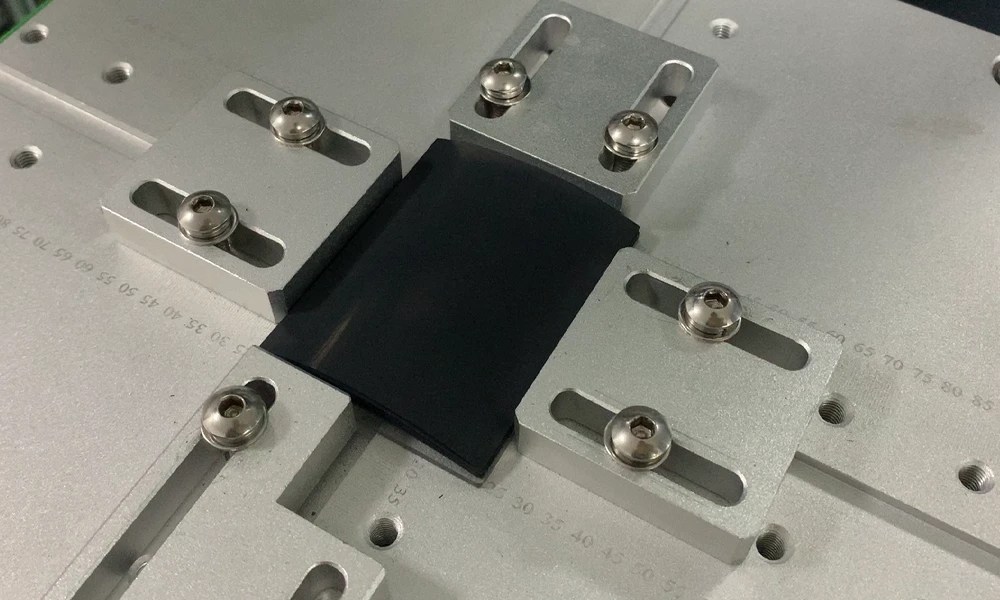
- Fixture adjustment: When changing the cell size, adjust the positioning fixture to match the new cell dimensions. The compatible design allows a wide range of sizes (36 × 36 mm to 200 × 200 mm) by adjusting the fixture.
- Separator roll installation: Mount the separator roll on the 3-inch air shaft core and inflate the air shaft to clamp the roll securely. Verify that the separator roll diameter does not exceed φ250 mm. Thread the separator through the guide and tension-control rollers.
- Layer count setting: Program the required number of stacking layers on the HMI (maximum 500). Verify that the stacking thickness does not exceed 30 mm.
- Maintenance: Keep the stacking platform, the robotic hand suction cups, and the separator guide rollers clean. Periodically check the servo and pulse-motor systems for alignment and calibration. Maintain the recommended ambient conditions to preserve stacking accuracy.
Engineering FAQ
Q1: What is the difference between Z-type stacking and winding for pouch cells?
Z-type stacking folds a continuous separator in a zigzag pattern with cathode and anode sheets interleaved between the folds, producing a stack with alternating electrode-separator layers. Winding rolls the electrodes and separator into a jelly-roll. Stacking provides better electrode alignment and more uniform current distribution, which improves rate capability and reduces local current density—advantages that are important for high-power and large-format cells.
Q2: What is the maximum cell size and stacking layer count?
The stacking range is from a minimum of 36 × 36 mm to a maximum of 200 × 200 mm (including tabs). The maximum stacking thickness is 30 mm, and the maximum stacking layer count is 500 (programmable). Different cell sizes within this range are accommodated by adjusting the positioning fixture.
Q3: How does the machine ensure the separator is applied without wrinkles or misalignment?
The separator is unwound under automatic servo constant-tension control, which prevents stretching or slack, and the separator web is corrected by an automatic photoelectric deviation-correction system, which maintains the separator centred during the Z-fold. Together, these two systems prevent the wrinkles, stretching, and lateral drift that are the most common sources of stacking defects.
Q4: Can the TOB-BDP200-C stack solid-state electrolyte sheets in addition to conventional electrodes?
The machine is designed for conventional electrode sheets and separator material. The vacuum suction robotic hand and the Z-type stacking mechanism can handle rigid or semi-rigid sheets within the specified size and weight range. Whether a solid-state electrolyte sheet can be stacked depends on its mechanical properties (flatness, brittleness, and weight). Contact TOB to discuss compatibility for specific solid-state materials.
Q5: What utilities are required for installation?
The machine requires: single-phase AC220V ±10 % power (110V AC customizable), 50/60 Hz, with a power consumption of 0.6 kW; and compressed air at 0.5–0.8 MPa. The recommended ambient conditions are 25 ± 3 °C, 30–90 % RH, and an environment free from vibration and electromagnetic interference.
Ready to produce accurate, high-quality Z-type electrode stacks for your pouch cell development? Request a quotation for the TOB-BDP200-C, specifying your cell size and stacking-layer configuration. Our stacking-process engineers can also advise on fixture adjustment and separator selection for your specific cell design.
tob.amy@tobmachine.com | +86 181 2071 5609
You May Also Need
- Automatic Battery Electrode Stacking Machine for Lithium Pouch Cell — A fully automatic electrode stacking machine for higher-throughput pouch cell production. Complements the semi-automatic TOB-BDP200-C by providing a fully automated solution when production volumes increase.
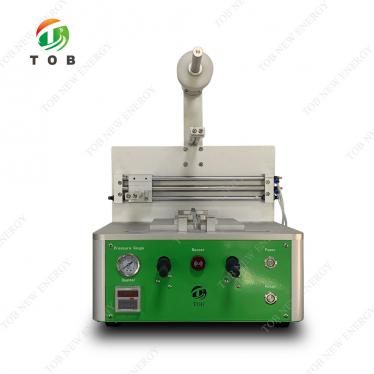
- Semi-Auto Battery Electrode Stacking Machine — A semi-automatic stacking machine in the TOB stacking product family. Provides an alternative semi-auto configuration with different capacity or format options for pouch cell electrode stacking.
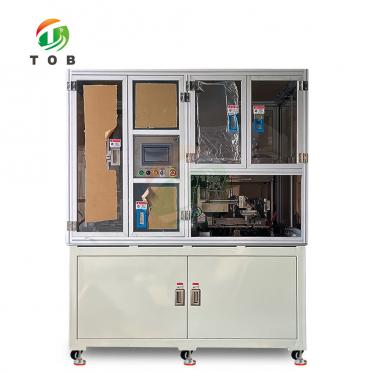
- Battery Stacking Machine for Pouch Cell — A battery stacking machine for pouch cell production. Complements the TOB-BDP200-C by offering an additional stacking platform for different pouch cell sizes or production requirements.
Previous:
TOB Semi-automatic Battery Electrode Stacking MachineNext:
Semi-auto Battery Electrode Stacking Machine
If you are interested in our products and want to know more details,please leave a message here,we will reply you as soon as we can.

 subscribe to us