Chinese
 français
 Deutsch
 italiano
 español
 português
 Nederlands
 日本語
日本語 한국의
한국의




- Home
- >
- Other Equipment
- >
- Ultrasonic Cleaner for Battery Lab
Categories
Hot Products
Loading...
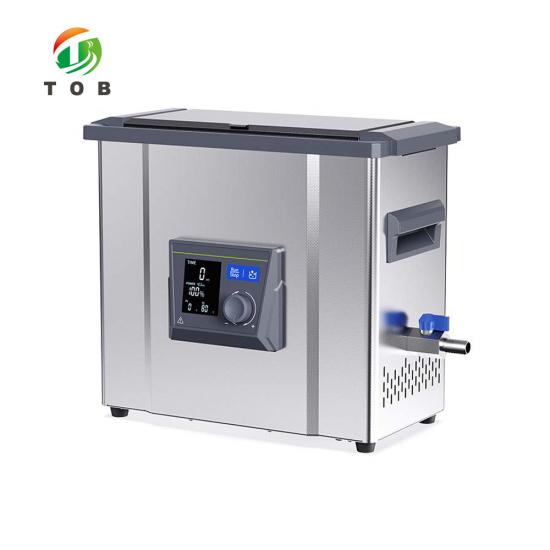
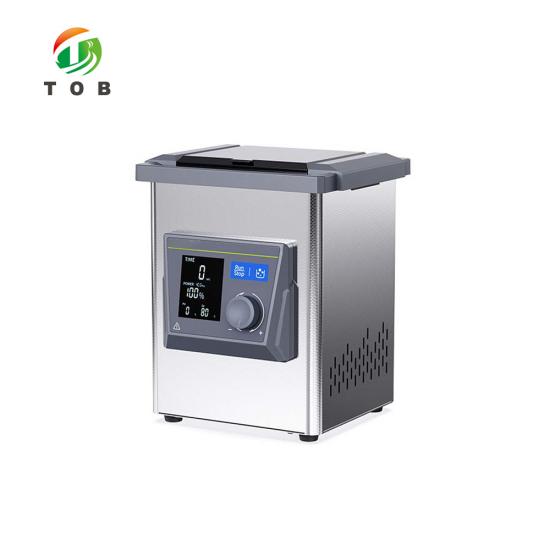
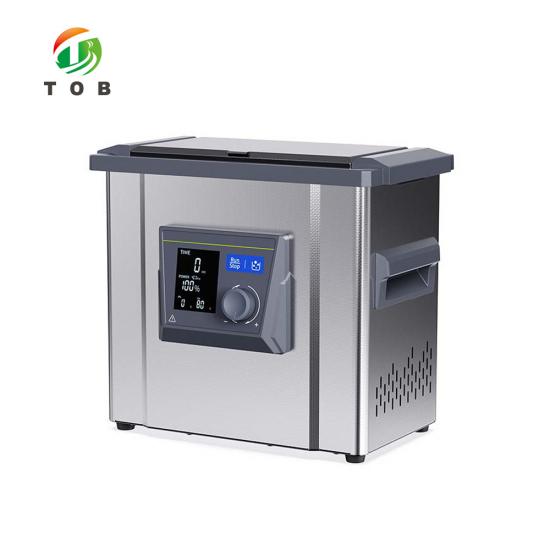
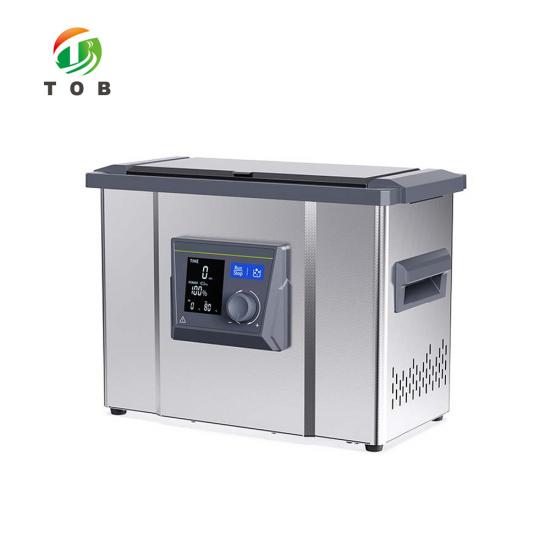
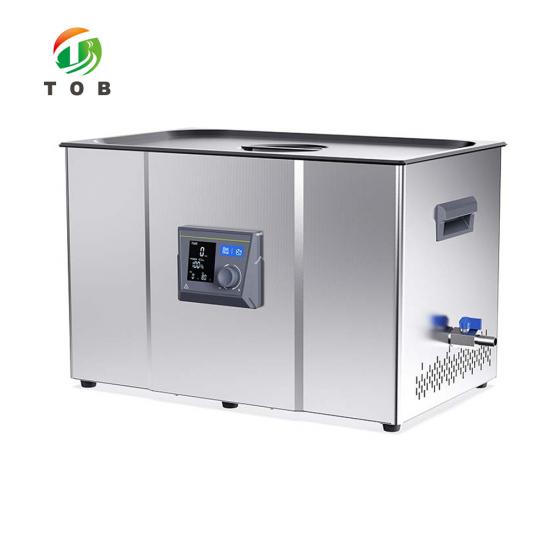
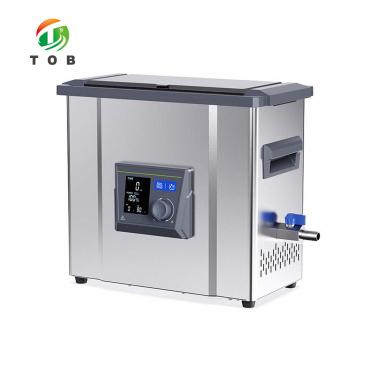
Ultrasonic Cleaner for Battery Lab
Brand:
TOB NEW ENERGYitem no.:
TOB-MUC-Eorder(moq):
1Payment:
L/C,T/Tproduct origin:
Chinashipping port:
XIAMEN
TOB-MUC-E Series Ultrasonic Cleaning Machines for Battery Laboratories and Electrode Preparation
Product Overview and Ideal Applications
The TOB‑MUC‑E series is a family of benchtop ultrasonic cleaning machines developed specifically for demanding laboratory environments, including the precision cleaning tasks required in lithium‑ion and solid‑state battery research. The machines use a composite ultrasonic generation technology that precisely controls high‑power ultrasound to optimise cavitation in the liquid medium. This enables the targeted removal of micron‑level contaminants—organic residues, particulate deposits—from micro‑pores, complex curved surfaces, and narrow gaps, without the need for harsh mechanical scrubbing.
Each model is equipped with a proprietary intelligent control system that automatically adjusts the ultrasonic parameters to match the load characteristics, ensuring that the acoustic energy is consistently focused and delivered to the cleaning bath. The ultrasonic output can be adjusted steplessly from 10 % to 100 % in 1 % increments, allowing the operator to select the exact intensity required for delicate components or for stubborn deposits. An integrated NTC‑sensor‑controlled PTC heating plate warms the cleaning liquid from room temperature to 80 °C, accelerating cleaning processes such as dissolution, extraction, and chemical reaction kinetics. A selectable degas function (intermittent operation with a maximum interval of 30 s) assists in removing dissolved air from the bath, restoring full cavitation intensity after fresh liquid is added or after prolonged use.
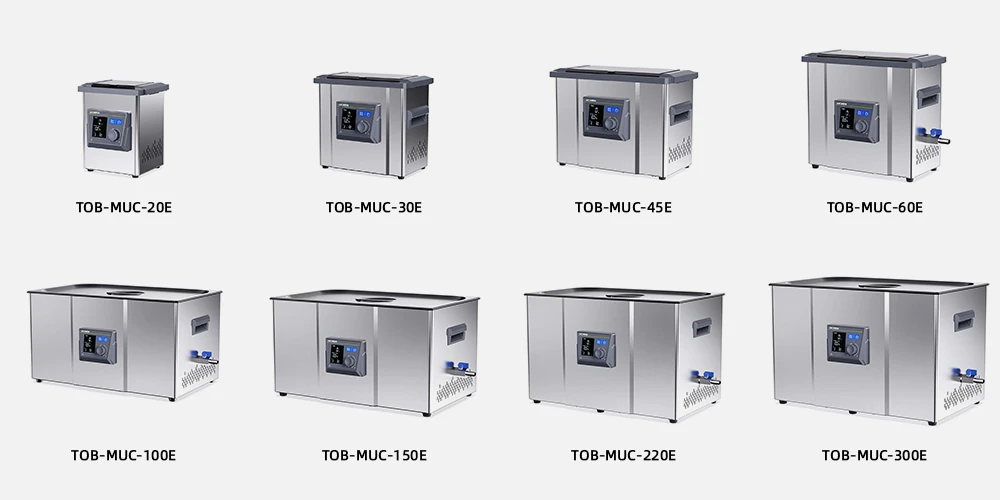
The series spans eight models with tank capacities from 2 L to 30 L and ultrasonic output powers from 60 W to 720 W. All models feature a 3‑inch backlit LCD display for real‑time monitoring of temperature, time, and power. The tanks are one‑piece press‑formed from 304 stainless steel (≥1.0 mm thick), with no welded seams, providing resistance to a wide range of pH (3–12). Models from 6 L upward are fitted with a 304 stainless‑steel drain valve and a silicone hose for safe, controlled draining of hot or chemically aggressive solutions.
Ideal for:
- Cleaning coin‑cell hardware (cases, springs, spacers), electrode discs, and current‑collector foils before cell assembly to remove cutting oils, dust, and adsorbed moisture.
- Removing dried electrode slurry residues from mixing vessels, doctor blades, slot‑die heads, and other battery coating machine components.
- Post‑synthesis rinsing of small batches of cathode or anode powders to remove residual salts or organic surfactants.
- General laboratory tasks such as degassing of HPLC solvents, dispersion of nanomaterials, and cleaning of glassware and small instruments.
Where Ultrasonic Cleaning Fits in Battery Cell Preparation
In battery research and small‑scale production, the cleanliness of every component directly influences the electrochemical results. The TOB‑MUC‑E series is used at several points in the workflow:
- Electrode substrate cleaning: Aluminium and copper foils, before being coated with slurry, may carry rolling oils or environmental contaminants. A brief ultrasonic treatment with a suitable solvent can improve surface uniformity and coating adhesion.
- Cell hardware preparation: Coin‑cell cases, springs, spacers, and O‑rings are often supplied with residual machining lubricants. Ultrasonic cleaning in a heated detergent or solvent bath removes these residues without scratching the polished sealing surfaces, helping to ensure a reliable cell seal and consistent internal resistance.
- Coating equipment maintenance: Doctor blades, comma bars, and slot‑die lips accumulate dried electrode slurry that can affect coating quality. Immersing these components in a compatible solvent inside the ultrasonic bath dislodges residues from edges and narrow channels that are difficult to reach by hand.
- General labware cleaning: Mixing beakers, syringes, and spatulas used with NMP‑ or water‑based slurries can be cleaned ultrasonically, reducing the risk of cross‑contamination between different material batches.
Because the cleaning parameters (power, temperature, time) can be precisely set and varied, the same machine can handle both delicate separator membranes (at low power) and heavily soiled equipment parts (at high power).
How the Ultrasonic Cleaner Operates
The TOB‑MUC‑E series generates and controls ultrasonic energy according to the following principles, as described by its manufacturer:
- Ultrasound generation: The machine employs a composite ultrasonic generation technology that converts electrical power into high‑frequency (approximately 40 kHz) mechanical vibrations. These vibrations are transmitted into the liquid in the tank.
- Cavitation effect: The high‑frequency vibrations create alternating high‑pressure and low‑pressure cycles in the liquid. During the low‑pressure phase, microscopic vapour bubbles form; during the high‑pressure phase, these bubbles collapse violently. This process, known as cavitation, produces localised shock waves that dislodge soil particles from surfaces. The manufacturer states that the system is designed to optimise cavitation in the liquid medium, enabling the targeted removal of organic residues and particulate deposits from complex geometries.
- Intelligent power control: A proprietary intelligent control system monitors the load conditions and automatically adjusts the ultrasonic parameters to maintain resonance and efficient energy transfer. The user can further refine the cavitation intensity by adjusting the ultrasonic power steplessly from 10 % to 100 % in 1 % increments.
- Heating and degassing: An NTC temperature sensor and a PTC heating plate work together to warm the cleaning liquid to a set temperature (up to 80 °C), which can accelerate cleaning. A degas function, when activated, causes the ultrasound to pulse at intervals (maximum 30 s between pulses), allowing dissolved air to escape from the liquid so that cavitation efficiency is restored after the bath has been freshly filled or after extended use.
Key Features
The following features are listed by the manufacturer and are common to the TOB‑MUC‑E series.
- High‑definition LCD display - A 3‑inch backlit LCD screen shows real‑time operating information—temperature, remaining time, and power level—so the user can monitor the cleaning process at a glance.
- Seamless 304 stainless‑steel tank - The inner tank is formed from a single sheet of 304 stainless steel (≥1.0 mm) by one‑piece press‑forming, with no welded seams. It resists a broad pH range (3–12) and is built to withstand long‑term use without deformation. This design is essential for battery labs that use a variety of cleaning agents, from mild alkaline detergents to organic solvents.
- Stepless ultrasonic power adjustment (10 %–100 % in 1 % increments) - The ultrasonic output can be finely tuned, allowing the user to select the precise intensity needed for different cleaning tasks: low power for delicate separator films or small components, high power for removing stubborn dried slurry from coating equipment.
- NTC‑controlled PTC heating (RT–80 °C) - An NTC sensor monitors the liquid temperature while a PTC ceramic heating plate provides uniform warming. The controlled heating accelerates the dissolution of soluble contaminants and increases the effectiveness of many cleaning chemicals.
- Degas function - This feature (intermittent operation, max. 30 s intervals) assists in removing dissolved air from fresh cleaning solutions, ensuring that the ultrasonic cavitation operates at full intensity from the beginning of the cycle.
- 304 stainless‑steel drain valve (models ≥ 6 L) - On the TOB‑MUC‑60E and larger units, a 304 stainless‑steel drain valve with an adjustable flow rate and an included silicone hose allows the operator to safely drain heated or chemically aggressive liquids directly into a waste container, avoiding the need to tilt the machine or manually siphon the bath.
- Robust construction and advanced circuitry - The manufacturer states that the electronic design uses imported chip technology and an advanced circuit layout that improves the conversion efficiency of electrical energy into ultrasonic output, contributing to overall energy savings.
Complete Technical Specifications
The following table provides the technical parameters for all eight models in the TOB‑MUC‑E series.
|
Parameter |
TOB-MUC-20E |
TOB-MUC-30E |
TOB-MUC-45E |
TOB-MUC-60E |
|
Input Power Supply |
AC220V/50Hz |
AC220V/50Hz |
AC220V/50Hz |
AC220V/50Hz |
|
Total Power (W) |
180 |
330 |
480 |
540 |
|
Display Type |
LCD |
LCD |
LCD |
LCD |
|
Ultrasonic Power (W) |
60 |
120 |
180 |
240 |
|
Ultrasonic Frequency (KHz) |
40±2 |
40±2 |
40±2 |
40±2 |
|
Number of Transducers (pcs) |
1 |
2 |
3 |
4 |
|
Tank Capacity (L) |
2 |
3 |
4.5 |
6 |
|
Tank Dimensions (mm) |
150×140×100 |
240×140×100 |
300×150×100 |
300×150×150 |
|
Timer Range (min) |
0-120 |
0-120 |
0-120 |
0-120 |
|
Temperature Control Range (°C) |
RT-80 |
RT-80 |
RT-80 |
RT-80 |
|
Heating Power (W) |
100 |
200 |
300 |
300 |
|
Degassing Function |
Max. interval 30s, intermittent |
Max. interval 30s, intermittent |
Max. interval 30s, intermittent |
Max. interval 30s, intermittent |
|
Drain Valve |
No |
No |
No |
304 Stainless Steel Drain Valve |
|
Net Weight (Kg) |
2.3 |
3.3 |
4.5 |
5.9 |
|
External Dimensions (mm) |
194×192×231 |
267×186×251 |
344×209×250 |
344×210×303 |
|
Parameter |
TOB-MUC-100E |
TOB-MUC-150E |
TOB-MUC-220E |
TOB-MUC-300E |
|
Input Power Supply |
AC220V/50Hz |
AC220V/50Hz |
AC220V/50Hz |
AC220V/50Hz |
|
Total Power (W) |
760 |
880 |
1100 |
1320 |
|
Display Type |
LCD |
LCD |
LCD |
LCD |
|
Ultrasonic Power (W) |
360 |
480 |
600 |
720 |
|
Ultrasonic Frequency (KHz) |
40±2 |
40±2 |
40±2 |
40±2 |
|
Number of Transducers (pcs) |
6 |
8 |
10 |
12 |
|
Tank Capacity (L) |
10 |
15 |
22 |
30 |
|
Tank Dimensions (mm) |
300×240×150 |
330×300×150 |
500×300×150 |
500×300×200 |
|
Timer Range (min) |
0-120 |
0-120 |
0-120 |
0-120 |
|
Temperature Control Range (°C) |
RT-80 |
RT-80 |
RT-80 |
RT-80 |
|
Heating Power (W) |
400 |
400 |
500 |
600 |
|
Degassing Function |
Max. interval 30s, intermittent |
Max. interval 30s, intermittent |
Max. interval 30s, intermittent |
Max. interval 30s, intermittent |
|
Drain Valve |
304 Stainless Steel Drain Valve |
304 Stainless Steel Drain Valve |
304 Stainless Steel Drain Valve |
304 Stainless Steel Drain Valve |
|
Net Weight (Kg) |
7.9 |
9.7 |
12.5 |
14.3 |
|
External Dimensions (mm) |
346×300×303 |
365×356×294 |
540×357×295 |
540×359×345 |
Common Questions About Using the TOB‑MUC‑E Series in Battery Labs
Q1: Can the ultrasonic cleaner be used
with organic solvents such as NMP or ethanol?
Yes, the 304 stainless‑steel tank is chemically resistant to many organic
solvents. However, the user must follow safe laboratory practices for flammable
solvents. Use the heating function with caution and only at temperatures well
below the solvent’s flash point. Placing the solvent in a secondary container
(beaker) inside a water‑filled tank is a common approach to further reduce
risk.
Q2: What ultrasonic power level should be
used for cleaning thin electrode foils or separators?
Start with a low power setting (10 %–30 %) and a short cleaning time. The
stepless adjustment allows very fine control; the user can gradually increase
the power until effective cleaning is observed, while avoiding any mechanical
damage to the foil or film. Always test a small piece first.
Q3: How does the degas function work, and
when should it be used?
The degas mode pulses the ultrasound on and off (max. 30 s interval), allowing
dissolved air to rise and escape from the liquid. It is recommended to run a
degas cycle whenever fresh cleaning solution is added or when the bath has not
been used for an extended period, as dissolved gas dampens cavitation and
reduces cleaning efficiency.
Q4: Is it necessary to use the heating
function, or can the cleaner operate at room temperature?
Heating is optional. Many cleaning solutions work effectively at room
temperature. Heating is beneficial when the cleaning agent’s activity is
temperature‑dependent or when dissolving dried slurry residues. The user can
set the desired temperature and the controller will maintain it.
Ready to add consistent, adjustable ultrasonic cleaning to your battery laboratory workflow? Request a quotation for the TOB‑MUC‑E series in the tank size that fits your application. For advice on selecting the right model or configuring a cleaning protocol, contact our laboratory equipment team.
tob.amy@tobmachine.com | +86 181 2071 5609
Previous:
Ultrasonic Cell DisruptorNext:
Ultrasonic Cell Crusher
If you are interested in our products and want to know more details,please leave a message here,we will reply you as soon as we can.

 subscribe to us