Chinese
 français
 Deutsch
 italiano
 español
 português
 Nederlands
 日本語
 한국의




- Home
- >
- Cylindrical Cell Assembly Machine
- >
- Cylindrical Cell PVC Shrink Wrap Machine
- >
- Automatic Battery Shrink Wrap Machine for 21700 Cells
Categories
Hot Products
Loading...
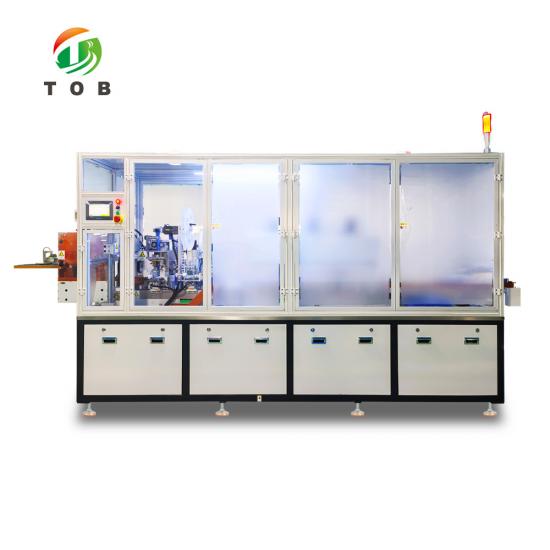
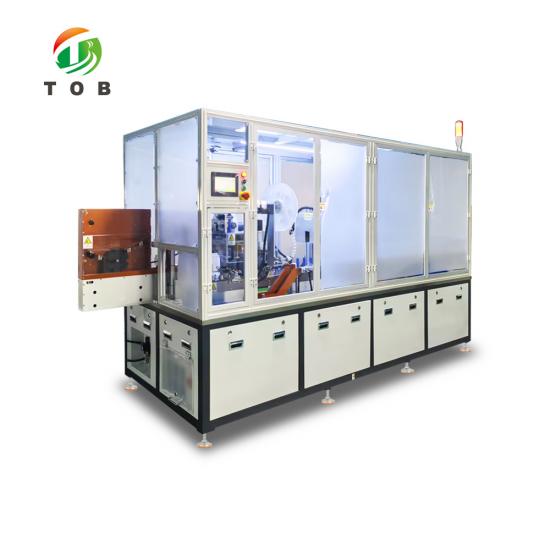
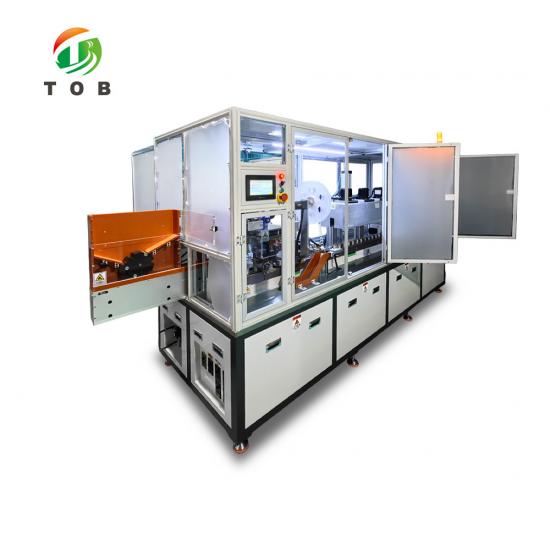
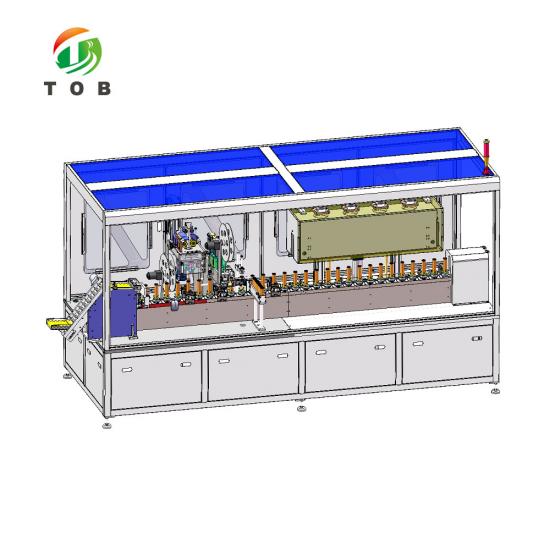
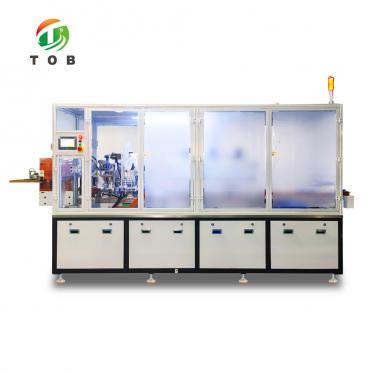
Automatic Battery Shrink Wrap Machine for 21700 Cells
Brand:
TOB NEW ENERGYitem no.:
TOB-AFC-21700-C1order(moq):
1 setPayment:
L/C,T/Tproduct origin:
Chinashipping port:
XIAMEN
Automatic Battery Shrink Wrap Machine for 21700 Cells - TOB-AFC-21700-C1
Sleeve, positive insulation pad and shrink in one chain: ring-cut sleeve to ±0.7 mm, pad-presence reject, 0 to 180 °C hot-air tunnel with cell rotation, 2 cells per minute inside a full guard
Product Overview and Ideal Applications
A 21700 cell leaves the line wearing three things: a film sleeve, a positive insulation pad and a shrink-fit surface. TOB-AFC-21700-C1 does all three on one chain: cells ride a stepper-driven chain on magnetic seats past the sleeve, pad, positioning and shrink stations, and are taken off by hand.
Sleeving and padding belong together because the pad sits inside the sleeve, not on top of it. The sleeve is ring-cut to ±0.7 mm and fed to a set height; the pad is punched from tape and dropped onto the positive end; a sensor checks it, and a cell without one is rejected before the tunnel. An unpadded cell that shrinks looks finished and fails later, at the pack.
The tunnel runs 0 to 180 °C with circulating hot air and turns each cell as it passes, so the sleeve shrinks evenly instead of creasing. Rated output is 2 cells a minute, 900 a day, inside a full mechanical guard. For 18650, the Heat Shrinking Machine For 18650 Cylindrical Battery and Supercapacitor is the same duty in the smaller format.
Ideal for:
- 21700 lines that sleeve and pad together
- packs needing a positive-end pad
- labs replacing hand sleeving
- plants needing a pad-presence reject
- tunnels that must stay under 50 °C outside
Figures are rated: 900 cells a day is 2 a minute over a 7.5 hour shift, and the 98% pass rate is a finished-cell figure, not the 99% equipment-caused scrap rate in the tables below.
Running: hopper, sleeve, pad punch, tunnel, discharge.
Tell us the cell format, sleeve material and wrap dimensions from your pack drawing. Our engineer will confirm the sleeve station, pad die and tunnel settings.
Complete the inquiry form below and our engineer will review your requirements. Prefer email? Contact tob.amy@tobmachine.com.
Complete Specifications
Three sets of figures matter on this machine: what it produces per shift, what the sleeve and the wrap have to measure, and what the line has to supply. They are separated below because they are checked at different stages, by different people.
1. Output and quality
| Item | Value | Note |
| Capacity per day | 900 cells or more | Rated, not measured |
| Capacity per minute | 2 cells or more | 2 per minute is 900 across a 7.5 hour shift |
| Pass rate | 98% or more | Finished cells |
| Yield | 99% | Scrap caused by the machine only |
| Availability | 95% or more | Downtime caused by the machine only |
| Guard | Fully enclosed mechanical guard | Whole machine |
98% pass rate and 99% yield are two different figures: the first counts every cell that leaves the machine, the second counts only cells the machine itself spoiled.
2. Sleeve, pad and wrap dimensions
| Item | Value | Note |
| Sleeve material | PET or PVC | Heat-shrink tube |
| Sleeve roll outer diameter | 420 mm max | |
| Sleeve width | 33.5 to 34.0 mm | Flat width as supplied |
| Sleeve thickness | 0.05 to 0.15 mm | |
| Sleeve cut accuracy | ±0.7 mm | Rotary ring cutter |
| Tunnel temperature | 0 to 180 °C, adjustable | Set to the shrink result you need |
| Top and bottom wrap width | 1.5 to 2.5 mm | After shrinking |
| Positive end wrap | 3 mm, +0.95 / -0.90 mm | As specified on the drawing |
| Negative end wrap | 2.5 mm, +1 / -1 mm | As specified on the drawing |
| Insulation pad | Punched from tape, placed on the positive end | Presence checked before the tunnel |
The wrap figures are quoted exactly as specified. The drawing that defines which datum each one is measured from is issued with the order.
3. Machine envelope and utilities
| Item | Value | Note |
| Dimensions (L x W x H) | 2750 x 930 x 1900 mm | Actual dimensions are adjusted to the final configuration |
| Power | 7 kW | |
| Supply | 220 / 380 to 400 V AC, three phase four wire plus earth, 50 Hz | |
| Voltage fluctuation | Less than ±10% | |
| Compressed air | 6 bar | Dry and filtered at the inlet |
| External surface temperature | Below 50 °C | Insulated outer panels |
| Structure | Aluminium and stainless steel, or plated for corrosion resistance | Ergonomic layout |
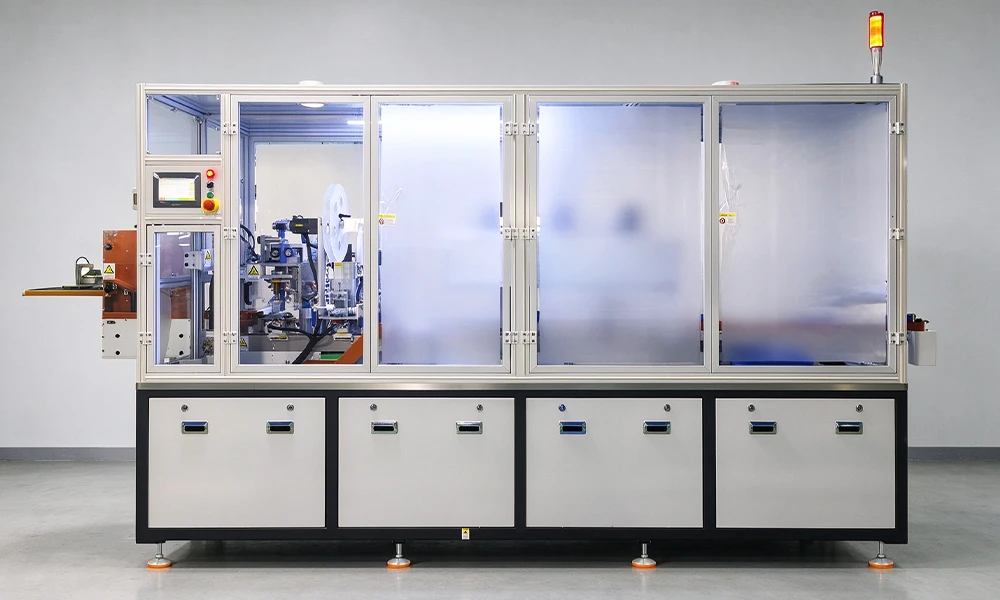
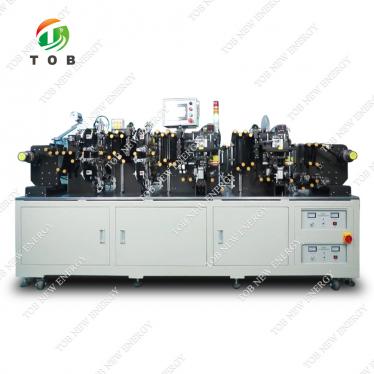
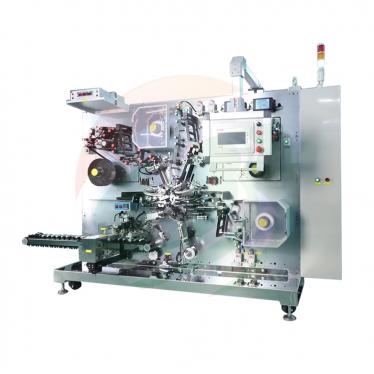
TOB-AFC-21700-C1: hopper at one end, sleeve and pad stations in the middle, shrink tunnel and discharge at the other, all behind a full guard.
How a Cell Moves Through the Machine
The sequence is fixed by the chain, not by the operator: hopper, magnetic seat, sleeve, pad, pad check, second positioning, shrink, discharge. Each station works while the chain is stopped and hands the cell to the next index, so a fault at one station stops the line rather than sending a half-finished cell down it.
1. Hopper, magnetic seats and step feed
Cells drop from the hopper onto a chain of link plates, each carrying a magnetic seat that holds the cell upright by its base. A stepper drives the chain in indexes, so the cell arrives at a station, stops, is worked on, and moves on. Nothing is carried by vacuum and nothing is gripped by the side wall, which is what keeps the sleeve from being marked before it is shrunk.
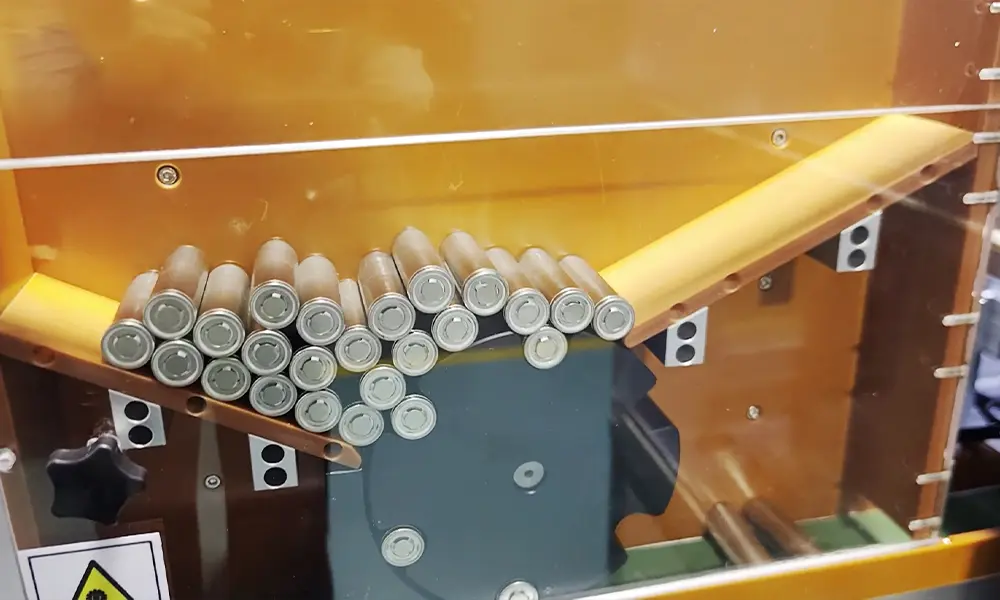
21700 cells are conveyed to the feeding conveyor belt via a feeding star wheel.
2. Sleeve station: unwind, ring cut, set height
The sleeve roll unwinds over guide rods and rollers into a rotary ring cutter driven by a stepper, with the blade guided by a bush so the cut stays square to the tube. A servo feed measures the length, so the sleeve is cut to a set height rather than to a fixed stroke. A pneumatic V-block closes on the cell to centre it under the cutter, and rolls are joined with tape at changeover so the line does not have to be re-threaded for every reel. The same duty on the smaller can is done by the PVC Film Shrink Packaging Machine For 18650 Cylindrical Battery, which shares the sleeve-and-shrink sequence at a different format.
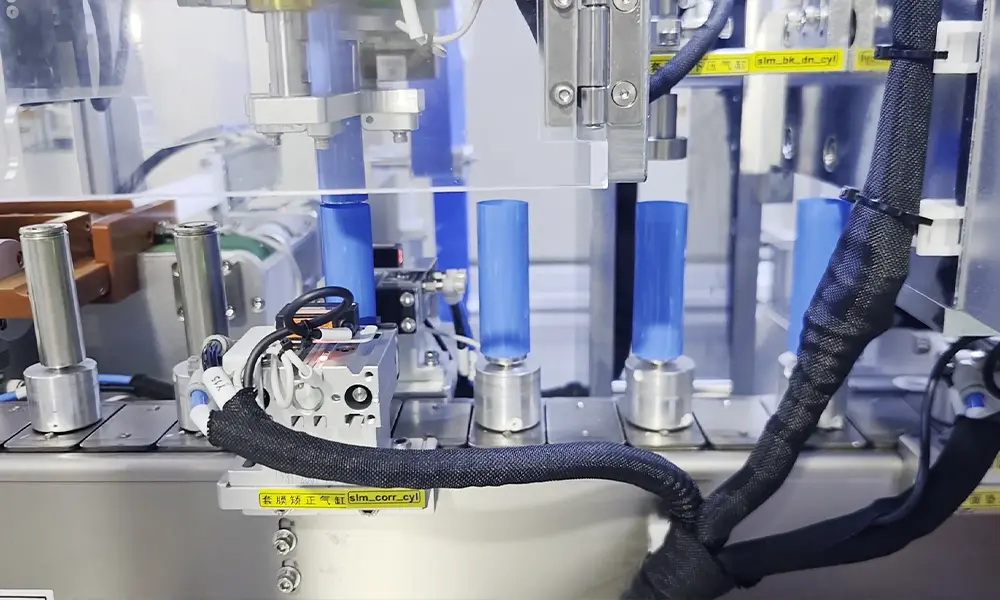
21700 cell being sleeved at the sleeve station
3. Pad punch, placement and presence check
Insulation tape is pulled by a stepper into a pneumatic punch die, and the punched pad drops onto the positive end of the cell waiting below. The scrap web is taken up on a rewind spindle, so the die does not choke on its own waste. A sensor then checks that a pad is present: a cell without one is rejected at the next index instead of being shrunk, because a missing pad cannot be seen once the sleeve has closed over the shoulder. Prismatic cells take a different route entirely: the Prismatic Cell Insulation Film Wrapping Machine wraps the case rather than sleeving a can.
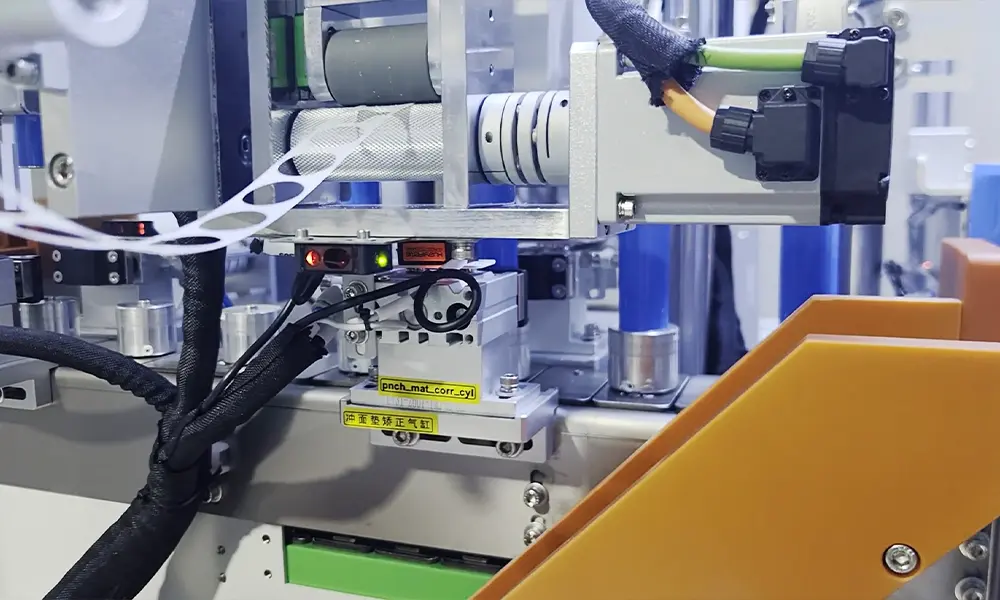
Pad station: the punched disc is placed on the positive end and checked before the cell moves on.
4. Second positioning before the tunnel
Before the cell enters the tunnel its position on the magnetic seat is corrected so the magnet holds the base on centre. Without that correction the film can reach the magnet during shrinking, and the bottom edge curls around the seat instead of around the cell: the cell comes out with a rolled bottom lip that no amount of tunnel tuning will fix.
5. Shrink tunnel with cell rotation
The tunnel distributes hot air around the chamber and holds the setpoint from 0 to 180 °C. As the chain passes through, each cell is rotated so every side of the sleeve sees the same air: a stationary cell shrinks on the side facing the nozzle first and creases on the other. The outer panels are insulated, and the surface you can touch stays below 50 °C.
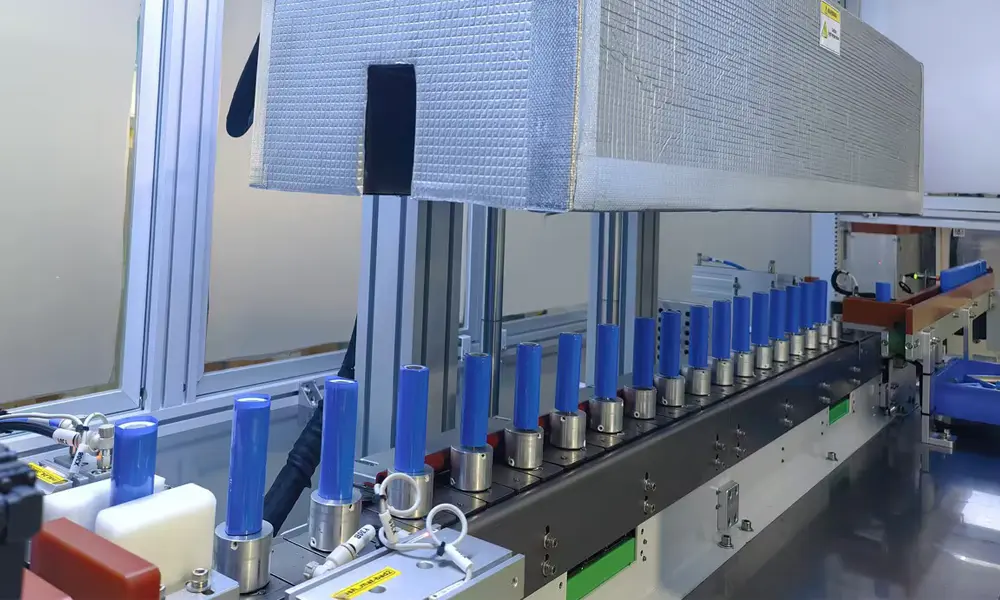
Shrink tunnel with the top cover open for demonstration; cells rotate as the chain carries them through.
Control System and Key Components
| Item | Brand / specification | Note |
| PLC | Mitsubishi / Panasonic / Keyence | Fixed at order |
| Pneumatic components | SMC / FESTO | Cylinders, valves, FRL |
| HMI | Chinese and English interface | Language set at order |
| Frame and covers | Aluminium and stainless steel, or plated for corrosion resistance | Full mechanical guard |
| Sleeve cutter | Rotary ring cutter, stepper driven, bush guided | Cut accuracy ±0.7 mm |
To meet delivery requirements the supplier reserves the right to substitute a component with an equivalent-grade part, provided the rated performance in the tables above is unchanged. Tell us at enquiry stage if your own qualification or spare-parts policy fixes a brand, and it will be confirmed in the order specification.
Key Engineering Characteristics
- Three operations on one chain. Sleeving, pad placement and shrinking are separate stations on a single stepper-driven chain, so a cell is never re-fixtured between them and the pad cannot be lost in a transfer.
- Sleeve cut to a set height, not a fixed stroke. A servo measures the length and a stepper drives the ring cutter, which is bush-guided so the blade stays square to the tube; the specified cut accuracy is ±0.7 mm.
- Pads punched in line from tape. The pad is produced at the machine from a roll rather than bought pre-cut, and the scrap web is rewound, so there is no bin of loose pads to run out of and no part number to match to a cell format.
- A reject, not a visual check. A sensor looks for the pad after placement and the cell is rejected before the tunnel. This is the difference between a machine that places pads and a machine that can prove it did.
- Second positioning protects the bottom wrap. The cell is re-centred on the magnetic seat before shrinking, so the film does not reach the magnet and curl around it.
- Rotation through the tunnel. Cells are turned as the chain passes, so the sleeve sees even air and shrinks evenly; the specified top and bottom wrap is 1.5 to 2.5 mm.
- Guarded and touch-safe. The whole machine is behind a mechanical guard, and the insulated outer panels stay below 50 °C while the tunnel runs at up to 180 °C.
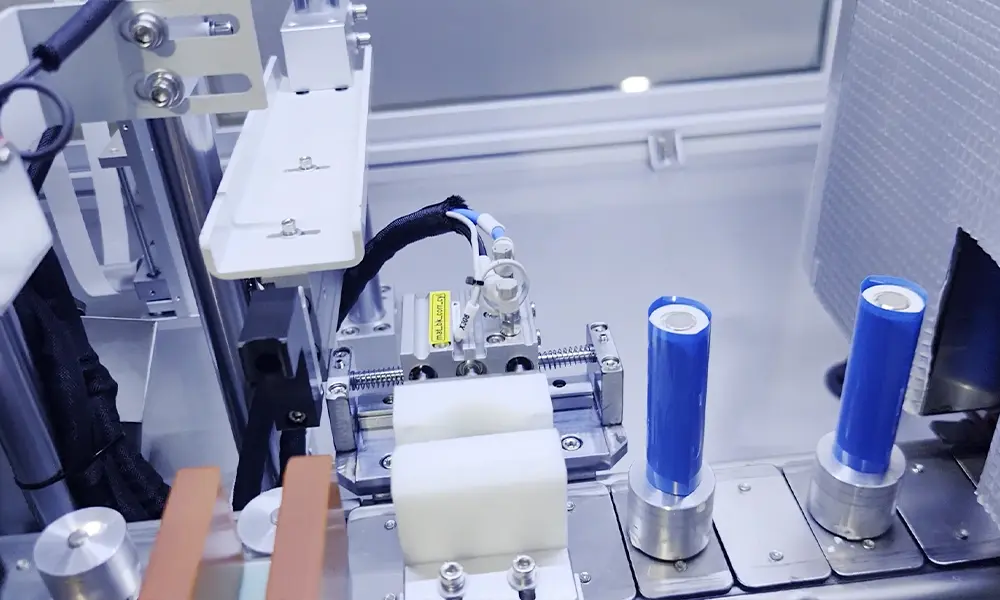
A cell that has passed the sleeve and pad stations, on its way into the tunnel.
Why the Pad and the Wrap Decide the Yield
Sleeving looks like the simple end of cell assembly, and it is where a surprising share of pack failures start. A sleeve that is 0.5 mm short at the shoulder leaves the aluminium edge exposed to a nickel strip; a pad that has slipped means the positive end is bare inside the pack; a bottom wrap that has rolled over the magnet means the cell sits proud in the holder. None of these show up on an electrical test at the end of the line, and all of them show up later.
That is the argument for doing the three operations on one chain rather than at three benches. Every transfer between fixtures is a chance for the pad to shift or the sleeve to be pushed up the can; keeping the cell on the same magnetic seat from hopper to tunnel removes those transfers entirely, at the cost of a machine that has to be changed over as a whole rather than station by station.
The pad station is worth its own paragraph because it is where cheap machines cut corners. Pre-cut pads are bought in bags and placed by hand or by a pick-and-place head; a roll of tape and a punch die makes the pad at the point of use, and because the punch is in the machine, the presence sensor can sit right after it. If the die jams or the tape runs out, the sensor sees bare cells and the reject fires, instead of the line quietly producing cells without pads.
The bottom wrap is a mechanical problem, not a tunnel problem. Film softens before it shrinks, so if the cell is off-centre on its seat the film sags towards the magnet and takes the shape of whatever it touches. Correcting the position before the tunnel is a two-second mechanical action, and it is the reason the second positioning station exists between the pad check and the oven.
What the machine does not do is equally clear. Two cells a minute is a finishing rate for a line that winds and assembles at a similar pace; it is not a high-speed packager, and a plant needing ten a minute is looking at a different class of machine. The tooling on this build is for the 21700 format, so a different can diameter is a question for the enquiry rather than a change part you can assume.
Changeover, Quality Checks and Safety
1. Changing a sleeve reel
Reels are joined with tape so the line does not have to be re-threaded at every change: stop at the splice, let the joint pass the cutter, and carry on. Keep the new reel within the specified 420 mm outer diameter, 33.5 to 34.0 mm width and 0.05 to 0.15 mm thickness; a wider tube will not sit in the guide, and a thicker one changes the cut quality without changing the setting.
2. What to check each shift
Measure the wrap on the first five cells: top and bottom 1.5 to 2.5 mm, positive end 3 mm with the +0.95 / -0.90 tolerance, negative end 2.5 mm with ±1 mm. Then break one cell open and confirm the pad is under the sleeve, not beside it. Log the tunnel setpoint against the batch, because the same setting will not give the same wrap on a different sleeve thickness.
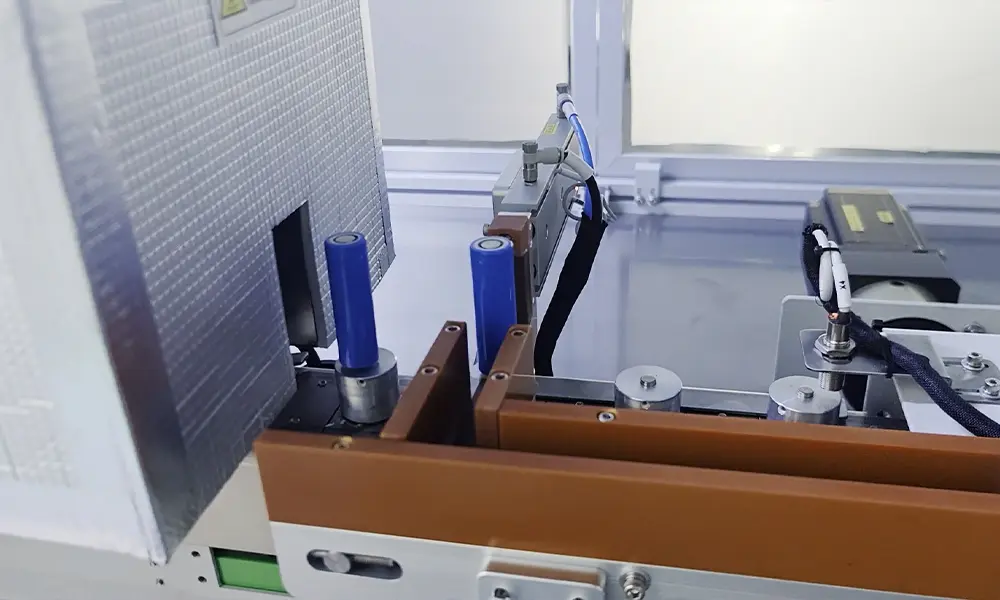
A cell straight out of the tunnel: the sleeve has closed over the pad and the wrap is set.
3. Safety and lockout
The machine runs on 7 kW at 220 or 380 to 400 V three phase, with 6 bar air, and the tunnel holds up to 180 °C. Isolate power and vent the air before reaching into any station, and do not run with guard panels removed: the guard is mechanical, and it is the only thing between an operator and a moving chain. The outer panels are insulated to stay below 50 °C, but the tunnel interior and the die area are not.
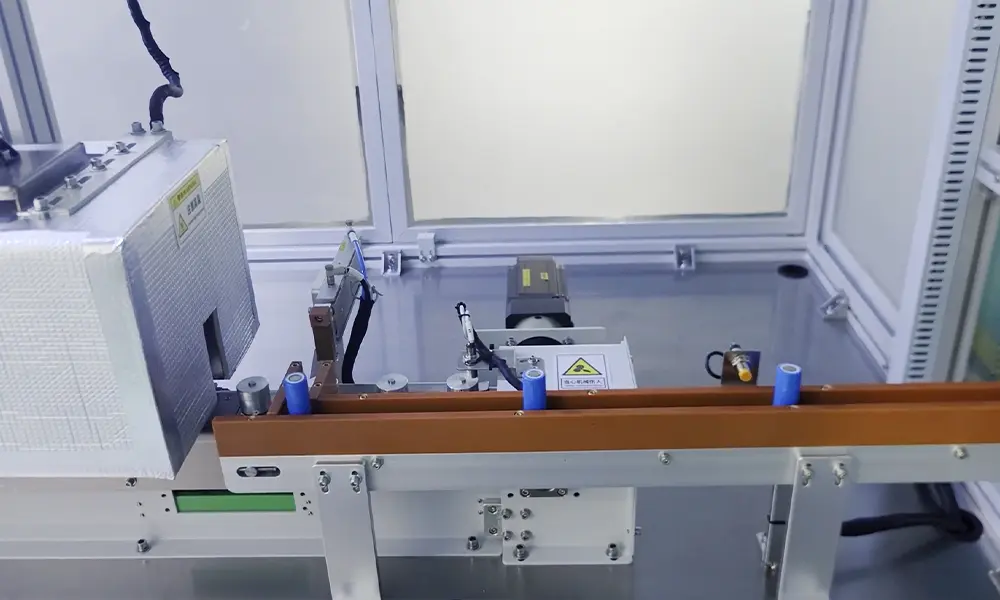
Discharge end: finished cells are collected by hand from the end of the chain.
Certification, Patents and Research Record
1. CE marking: what the certificate actually names
The 2024 CE files for this machine family are M.2024.206.C00042 under the Low Voltage Directive 2014/35/EU and M.2024.206.C00063 under the Machinery Directive 2006/42/EC with the EMC Directive 2014/30/EU, issued through CAC for a product described as a PVC shrinking machine. Their model column reads TOB-RS4015, TOB-AFC-C1, TOB-AFC-C2 and TOB-TMD-A26. It names the family designation TOB-AFC-C1, not the 21700-qualified TOB-AFC-21700-C1 on this page. If your import requires the certificate to match the nameplate exactly, either the nameplate should carry the certified designation or the model has to be added to the file, and that is worth settling before the order rather than at customs.
2. Management system certificates

|

|
|
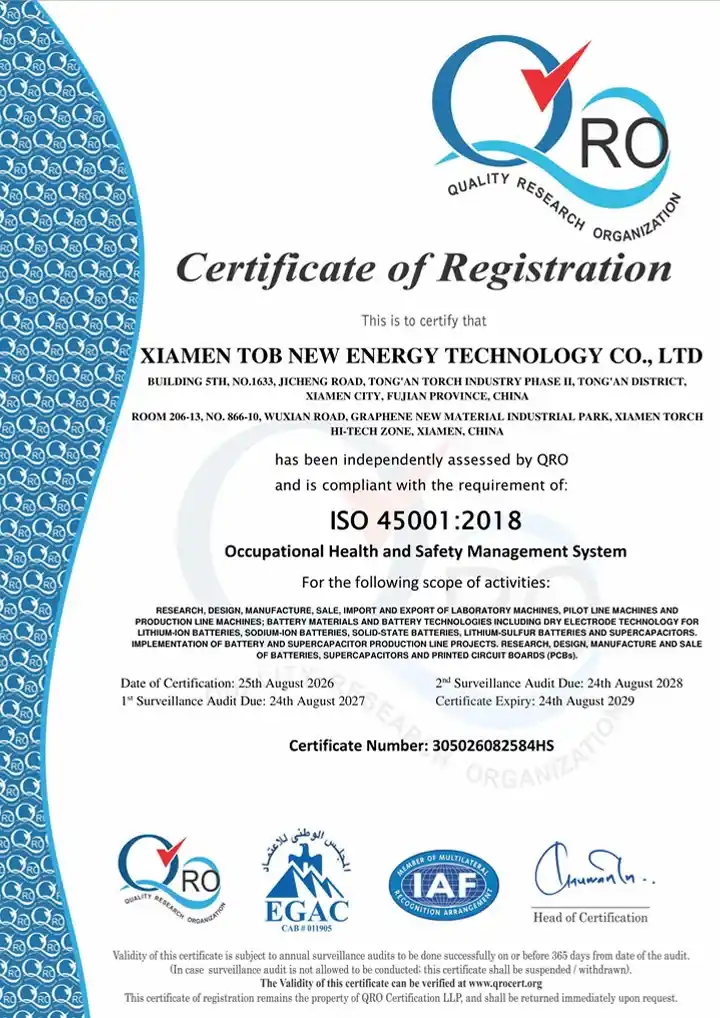
| ISO 9001: 3050260408100Q | ISO 14001: 305026082585E | ISO 45001: 305026082584HS |
ISO 9001 was issued on 8 April 2026 and is valid to 7 April 2029; 14001 and 45001 cover the same plant. These describe the factory, not the machine, and are listed apart from the CE files for that reason.
3. Patents
The company holds 55 Chinese patents. None of them is drawn on sleeve wrapping, pad punching or shrink tunnels, so nothing on this page rests on a patent claim; the engineering here is in the mechanism and the sequence, not in a protected feature.
4. Academic record
Our citation index holds 707 peer-reviewed records on equipment of this kind, 70 of which name a TOB model. None of the 707 names TOB-AFC-21700-C1, and we will not borrow a citation from a different machine to fill this space.
5. Cylindrical lines where this class of machine is used
- TOB delivers a 32140 tabless cylindrical cell production line with stainless steel cans in Europe: a cylindrical cell line where sleeving and shrinking close the assembly.
- cylindrical supercapacitor lab line project in Europe: a smaller cylindrical build where the same finishing step appears at lab scale.
Neither project page specifies TOB-AFC-21700-C1; they are shown as the kind of cylindrical line this machine is bought into, not as references for this model.
Engineering FAQ
Can it run PET as well as PVC sleeve?
Yes. The machine is specified for PET or PVC heat-shrink tube, and the tunnel is adjustable from 0 to 180 °C, which is the range you need to match the shrink curve of either material. Tell us which one you will run so the tunnel settings are set at commissioning rather than guessed.
Is the output 2 cells a minute or 900 cells a day?
They are the same rate written two ways: 2 cells a minute across a 7.5 hour shift is 900 cells. What changes the daily figure is uptime, not the machine's cycle, which is why the availability figure of 95% is quoted separately from the 2 per minute.
Does it place the insulation pad, or only sleeve the cell?
It punches the pad from tape and places it on the positive end, then checks that it is there before the cell reaches the tunnel. A cell with no pad is rejected, which is the part that matters more than the placement itself.
What sleeve do I need to buy?
A reel of at most 420 mm outer diameter, 33.5 to 34.0 mm flat width and 0.05 to 0.15 mm thickness. Those are the figures the unwind, the guide and the cutter are set for; a tube outside the width window will not track straight through the ring cutter.
Does the CE certificate name TOB-AFC-21700-C1?
It names TOB-AFC-C1 and TOB-AFC-C2 on the same files, which is the family designation without the 21700 qualifier. If your customs or customer requires a certificate whose model column matches the nameplate character for character, raise it with the enquiry so the nameplate and the file are aligned before shipment.
Can the same machine sleeve a different cell size?
The tooling on this build is for the 21700 format, and the sleeve width in the specification is matched to it. Other formats need to be discussed rather than assumed: send the can diameter and length and we will say whether it is a change part or a different build.
Send the cell format, the sleeve material and the wrap dimensions from your pack drawing, and we will confirm the sleeve station, the pad die and the tunnel settings.
Email: tob.amy@tobmachine.com | Mobile phone: +86-18120715609
Reviewed by: Pinery Gong, Battery Assembly & Yield Process | Last updated: 2026-11-18
If you are interested in our products and want to know more details,please leave a message here,we will reply you as soon as we can.




 subscribe to us