Chinese
 français
 Deutsch
 italiano
 español
 português
 Nederlands
 日本語
日本語 한국의
한국의




- Home
- >
- Pouch Cell Assembly Equipment
- >
- Pouch Cell Forming Machine
- >
- Automatic Continuous Pouch Cell Case Forming Machine
Categories
Hot Products
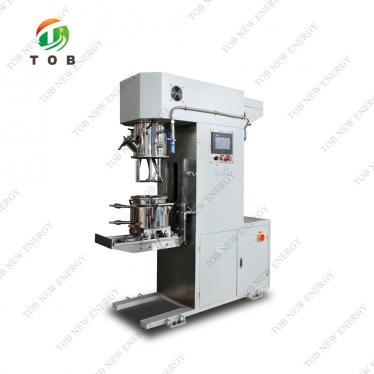
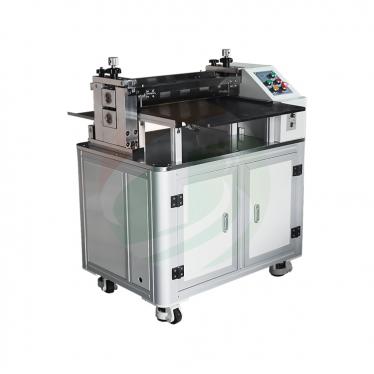
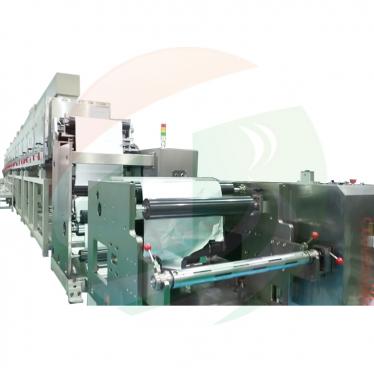
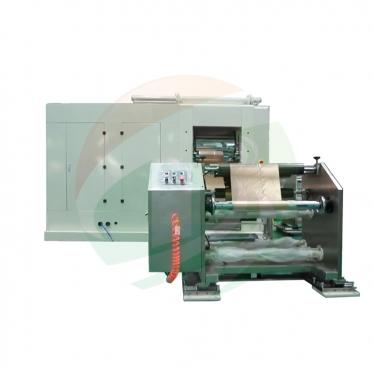
Loading...
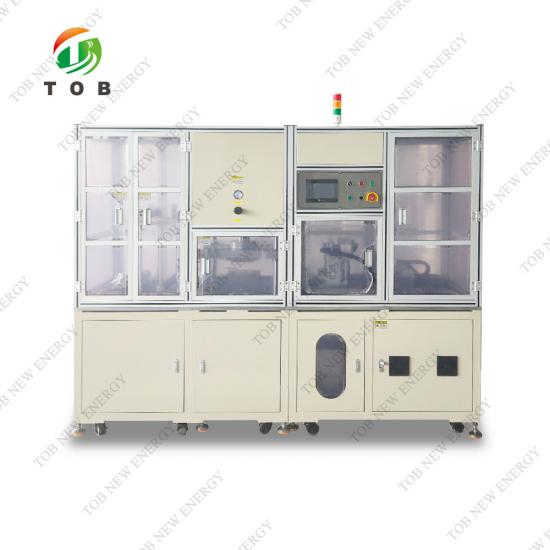
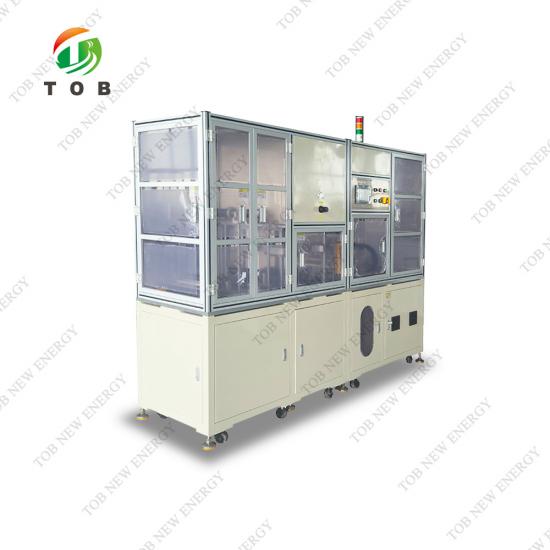
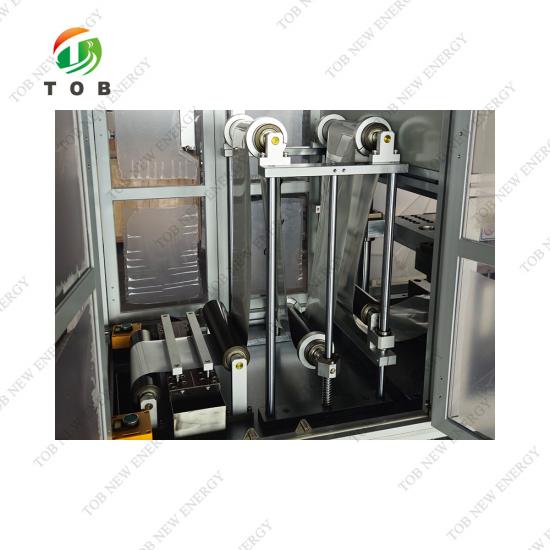
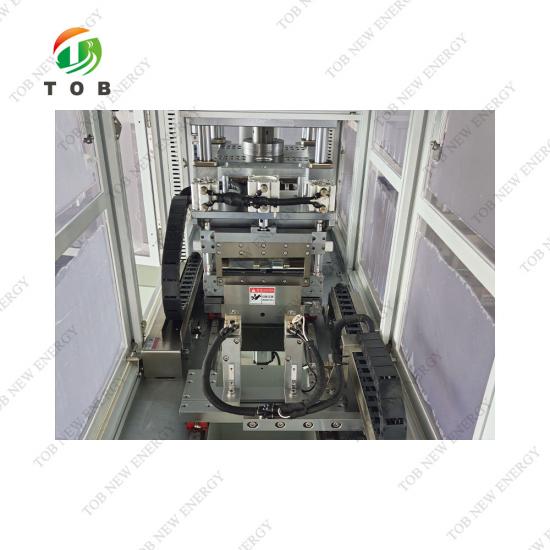
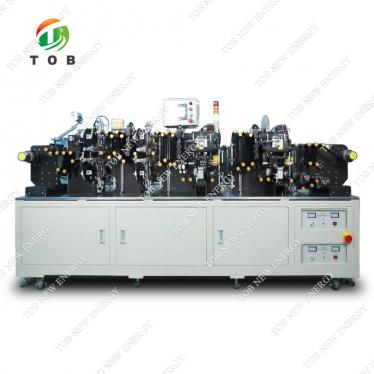
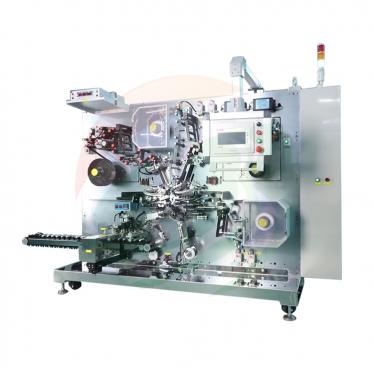
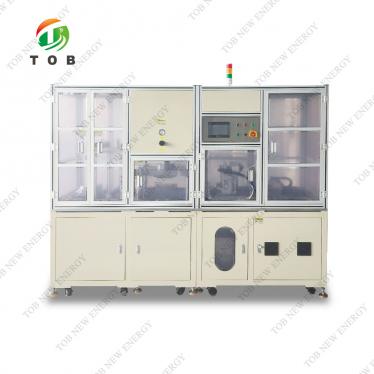
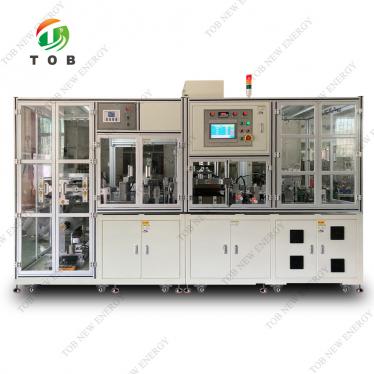
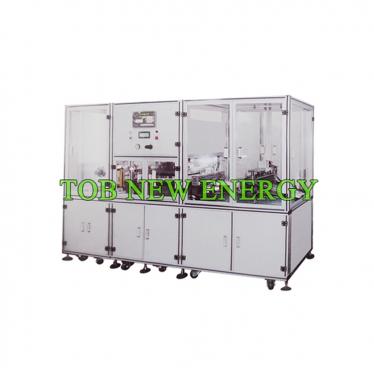
Automatic Continuous Pouch Cell Case Forming Machine
Brand:
TOB NEW ENERGYitem no.:
TOB-ZCY-002order(moq):
1setPayment:
L/C,T/Tproduct origin:
Chinashipping port:
XIAMEN
Automatic Continuous Pouch Cell Case Forming Machine for Aluminum-Laminated Film - TOB-ZCY-002
Product Overview and Ideal Applications
The TOB-ZCY-002 is an automatic continuous case forming machine designed and manufactured specifically for the aluminum-laminated film forming of polymer and pouch lithium batteries. It is built for continuous pocket forming (case forming or punching) of aluminum-laminated film in single-pocket or double-pocket configurations.
In pouch cell production, the aluminum-laminated film is the cell case. Before the electrode stack can be enclosed, the flat film must be formed into a pocket that will hold the stack, and the pocket geometry - length, width, depth, and edge margins - determines both the internal space available for the electrodes and the sealing edges available for the downstream sealing processes. The TOB-ZCY-002 performs this forming step on a continuous, roll-to-roll basis: the film is unwound from a roll, formed under a servo-controlled die, cut to the required size, and discharged, with the entire sequence running automatically after the operator presses the start button.
The machine is built around a servo forming system: the upper die closes on a gas-liquid rapid booster cylinder with a maximum output of 10 t, while the lower punch is driven by a servo motor and screw with a forming depth accuracy of ±0.1 mm across the four corners. The forming depth is adjustable from 0 to 15 mm on the touch screen, with a setting accuracy of 0.01 mm, and can be run in constant-force mode. Film tension is held by a floating constant-tension roller, and feeding is servo-controlled, so the formed pockets maintain their dimensional accuracy through the cut. The die set parallelism is held within 0.1 mm, and the finished pockets are produced with rounded corners, without wrinkles, pinholes, pits, scratches, cracks, or delamination.
The machine accommodates different products with simple adjustment: the film unwinding width covers 50 to 200 mm, the maximum film size is 200 mm by 200 mm (based on the maximum battery outline dimensions provided by the customer), and a format changeover is completed by one person within two hours. The TOB-ZCY-002 is therefore suitable both for production operations running a defined pouch format and for workshops that need to switch between several pouch formats.
Ideal for:
- Pouch cell manufacturers performing the case (pocket) forming step on a continuous production or pilot line.
- Battery research and development teams developing pouch cell designs, where pocket geometry, depth, and edge margins must be formed and verified.
- Small-batch and multi-format pouch cell producers who require fast format changeover (one person, within two hours).
- Producers of polymer and pouch lithium batteries using aluminum-laminated film in single-pocket or double-pocket formats.
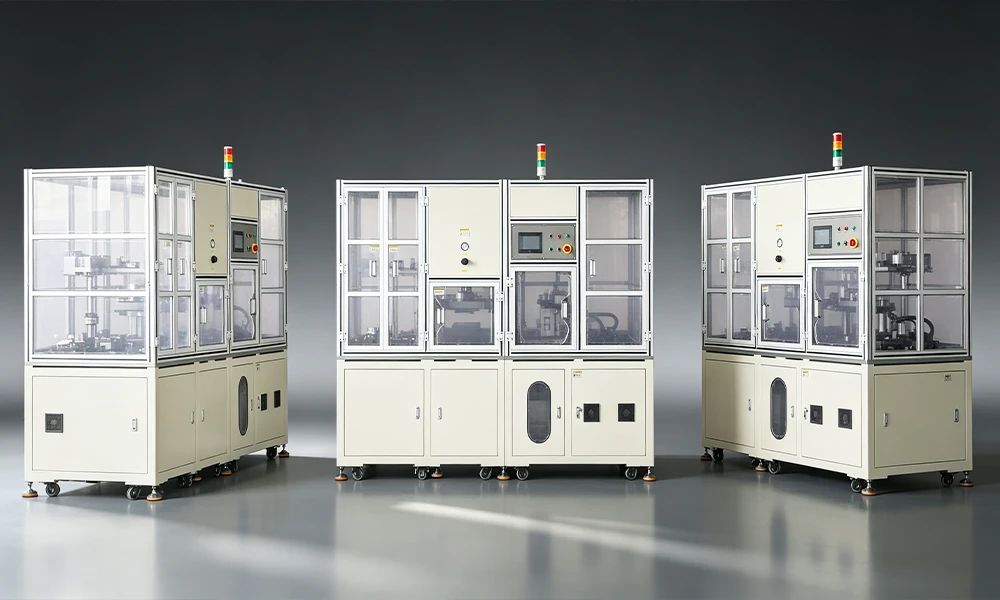
Where Case Forming Fits in Pouch Cell Production
In the pouch cell manufacturing sequence, case forming takes place after the aluminum-laminated film web has been slit to width and before the electrode stack is enclosed. The typical process context is:
- Film preparation: the aluminum-laminated film roll is slit to the required width.
- Case forming: the flat film is formed into pockets of the defined geometry - the step performed by the TOB-ZCY-002 - and cut to the required product size.
- Stack insertion: the electrode stack (assembled by stacking or winding) is placed into the formed pocket.
- Top-side sealing, electrolyte filling, formation, and secondary vacuum sealing complete the cell.
The forming step sets the dimensional foundation for everything that follows. A pocket formed with the correct depth gives the electrode stack its space and keeps the stack seated without compressing it; the side margins and top edge provide the surfaces that will later be heat-sealed; and the formed corner radii and wall quality determine whether the film can be sealed without wrinkles that would otherwise become leakage paths. This is why the pocket depth accuracy (±0.1 mm at the four corners), the formed outline dimension accuracy (±0.1 mm), and the surface quality requirements (no wrinkles, pinholes, pits, scratches, cracks, or delamination) are specified so tightly on the TOB-ZCY-002.
The continuous, roll-to-roll design of the machine supports this step at production rhythm: the film advances by servo after each forming stroke, the formed section is cut at the rear to the required size, and the finished pieces are discharged down the chute with the scrap collected separately.
How the TOB-ZCY-002 Operates
The working sequence of the TOB-ZCY-002 follows the continuous forming flow described for the machine:
- Roll loading: the aluminum-laminated film roll, slit to width, is placed on the unwind shaft (air-expanding shaft).
- Film threading: the film passes through the guide rollers, the punching die, and the feeding table, and is clamped on the feeding clamping cylinder.
- Start: the operator presses the start button, and the machine begins automatic operation.
- Forming: the upper die punches the pocket into the film with the servo-controlled forming system.
- Feeding: after the upper die completes the forming stroke, the feeding servo advances the film forward.
- Cutting: the formed film is cut at the rear to the required size.
- Collection: the cut pieces are collected in the turnover box.
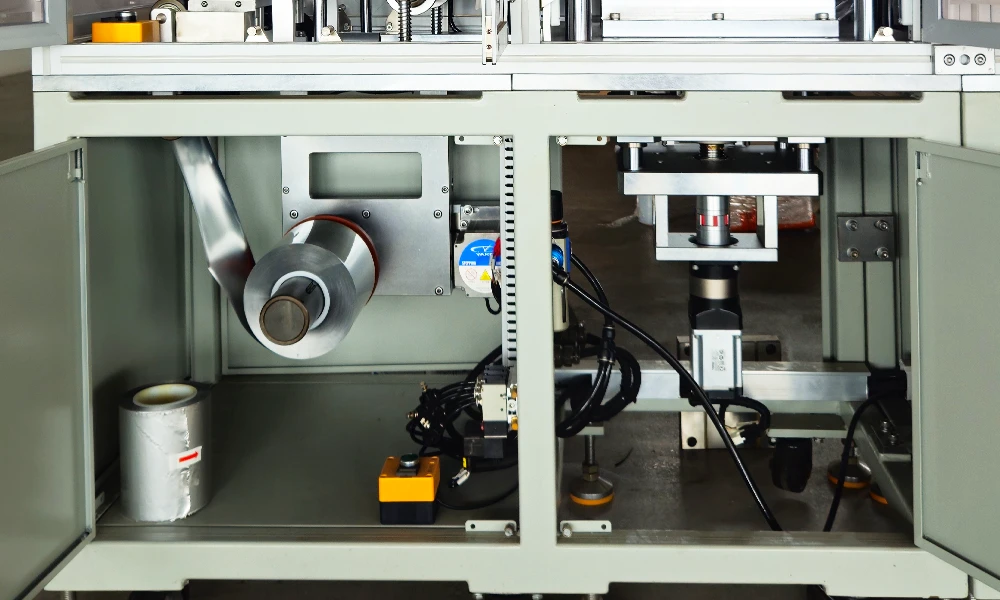
Functional Module Structure
1. Unwind section: unwinding uses a 3-inch air-expanding shaft. The unwind is motor-driven (active unwinding), and the unwinding speed is adjusted according to the position of the tension roller; the unwinding motor is adjustable.
2. Roller and floating roller section: the tension mechanism uses a floating constant-tension roller. The mechanism includes a film splicing device and an adjustment roller for the film feed height before forming.
3. Forming section: the upper part uses a gas-liquid rapid booster cylinder for die closing, with a maximum output of 10 t. The lower part uses a servo motor with screw drive for the up-stroke punch forming; the forming depth accuracy is ±0.1 mm, and the forming depth is adjustable from 0 to 15 mm on the touch screen. After forming, the product shows no fishtail lines or collapsed corners at any corner position or around the periphery. After the booster cylinder lifts, the maximum gap between the upper and lower die plates is 80 to 90 mm. The machine runs servo constant-force forming, and both single-pocket and double-pocket configurations are available.
4. Feeding section: a pull servo motor, positioned after the cutting blade, drives the screw for material pulling; the cut edge accuracy for the formed length is ±0.1 mm. The pulling mechanism is placed after the cutting blade to maintain continuous constant tension of the film and to minimize the number of accumulated products between the cutting blade and the die position, thereby ensuring cutting accuracy. Scrap cutting uses servo positioning cutting.
5. Die: refer to the die schematic drawing (figure supplied with the equipment).
6. Receiving device: the receiving device collects scrap and finished products separately. (Scrap refers to the material left between cells after cutting, once the top sealing edge dimension is met. It is generally ≤ 5 mm and is collected separately in the scrap box.)
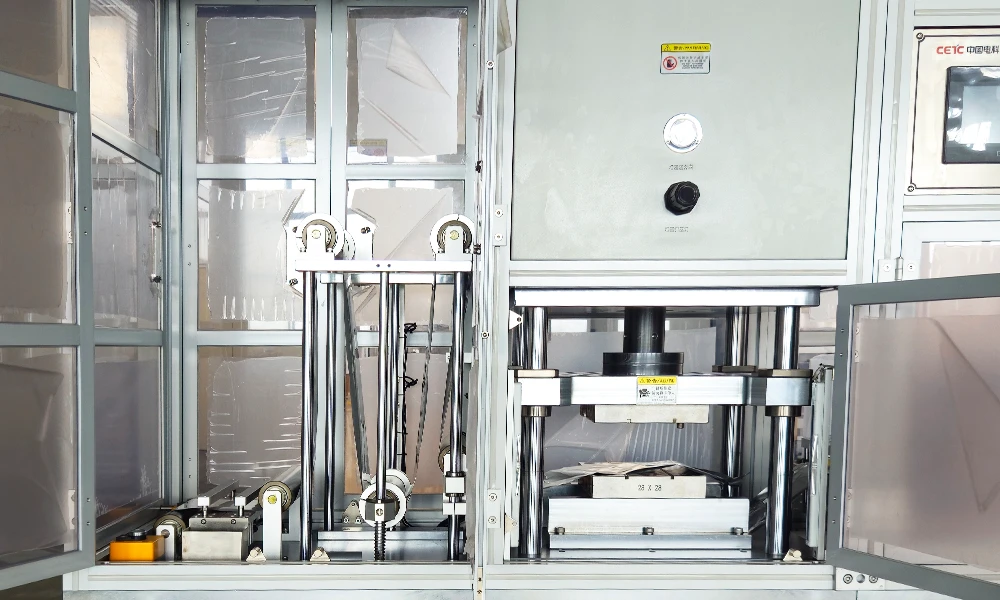
Control System
7.1 Control mode: PLC control, with 10 % of the I/O points reserved for future expansion.
7.2 Operator interface: friendly human-machine operation with comprehensive equipment status information for easy operation and maintenance. The system supports password-protected three-level permission management, recipes, production data statistics, and historical alarm records.
7.3 Operating modes: the system provides automatic operation, manual operation, and maintenance modes. In manual mode, individual moving parts can be operated separately. In maintenance mode, the moving parts are locked to improve equipment safety.
7.4 PLC control system:
- The machine provides multi-user management settings, with different users holding different equipment operation permissions.
- All action units are equipped with guards and a door access system; the machine cannot run when a door is open.
- The operation panel is a Chinese-language interface.
- The human-machine interface is designed for easy operation, with controls labeled for clarity. The display covers, but is not limited to: equipment control (OK quantity, NG quantity, total production, capacity, yield, utilization rate), equipment status, fault list and fault location, debugging functions, and system settings. Some display functions are readable or writable.
- No password or time-period locking function is added in the program.
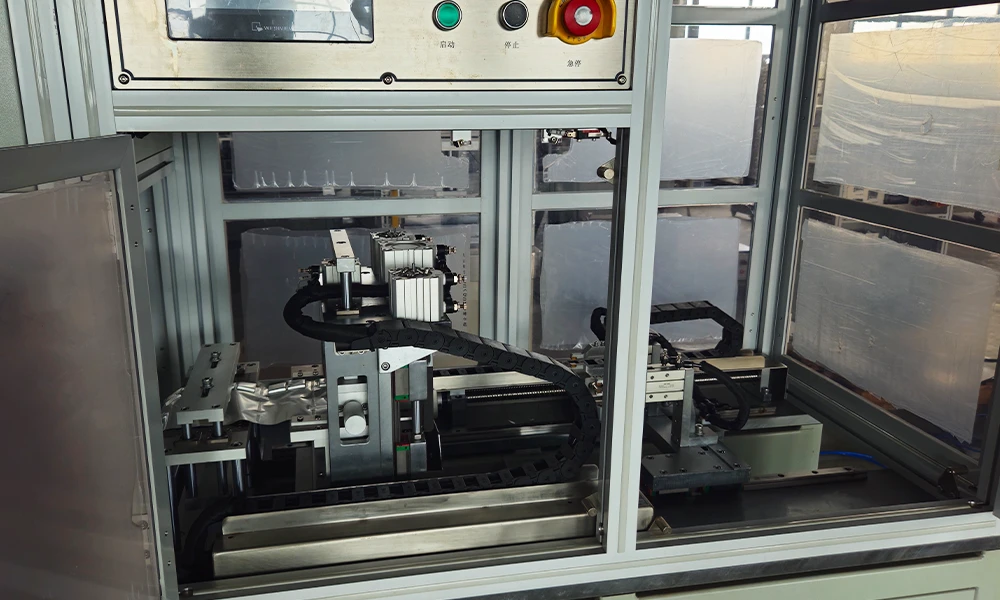
Key Engineering Characteristics of the TOB-ZCY-002
- Continuous Roll-to-Roll Forming - The film is unwound from the roll, formed, fed forward by servo, and cut at the rear in a continuous automatic flow. The machine requires only the initial roll loading and threading, after which it runs automatically until stopped - a design suited to continuous pouch cell production.
- Servo-Controlled Forming with Precise Depth Control - Forming depth is 0 to 15 mm, continuously adjustable by servo, with the touch screen allowing a setting accuracy of 0.01 mm. Pocket depth accuracy is ±0.1 mm at the four corners, and the formed outline dimension accuracy is ±0.1 mm. The 10 t gas-liquid booster cylinder closes the die, while the lower servo punch runs constant-force forming.
- Stable Die Set with High Parallelism - The die set parallelism is ≤ 0.1 mm, which supports uniform pocket depth and wall quality across the formed part. The die life is rated at 1,000,000 cycles.
- Floating Constant-Tension Film Control - Film tension is controlled by a floating roller, and the unwind speed follows the tension roller position. This maintains stable tension through forming, feeding, and cutting, protecting the thin film from stretching and misalignment. The mechanism includes a film splicing device and a feed-height adjustment roller.
- Servo Feeding with Accurate Cutting - Feeding is servo-controlled (set on the touch screen) with a feeding accuracy of ±0.2 mm, and the top edge cutting accuracy is ±0.1 mm. The pulling mechanism is positioned after the cutting blade, keeping tension constant and minimizing accumulated material between the blade and the die to protect cutting accuracy. Scrap cutting uses servo positioning cutting.
- Clean, Defect-Free Pocket Appearance - The formed pockets are specified with rounded corners, no wrinkles or pinholes, and a smooth surface free of pits, scratches, cracks, and delamination. The forming system is configured to run without fishtail lines or collapsed corners at the corners and periphery.
- Flexible Production: Single or Double Pocket, Fast Changeover - The machine forms single-pocket or double-pocket products, handles film widths from 50 to 200 mm, and completes a format changeover with one person within two hours - supporting both fixed-format production and multi-format workshops.
- Separated Scrap and Product Collection - The receiving device separates scrap from finished products: the finished parts are discharged through the chute for manual retrieval from the material box, while the scrap (generally ≤ 5 mm of material left between cells) is collected separately in the scrap box, keeping the working area organized.
- Production Monitoring and Data Functions - The PLC control system provides OK/NG counts, total production, capacity, yield, and utilization rate displays, along with equipment status, fault list and fault location, recipes, production statistics, and historical alarm records - supporting production management and traceability.
- Safety-Oriented Design - All action units are fitted with guards and a door access system that prevents the machine from running when a door is open, and the maintenance mode locks moving parts during service.
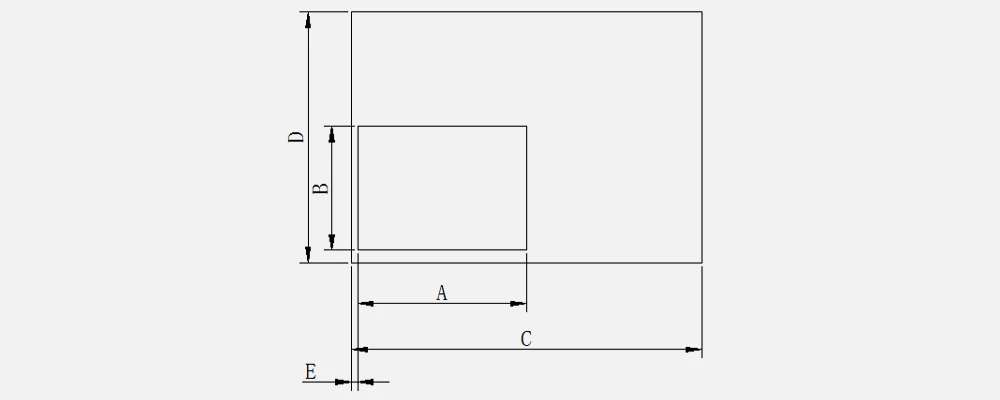
Formed Film Product Specifications
| No. | Item | Size (mm) | Accuracy | Remark |
| A | Pocket length | 20-200 | ±0.1 mm | |
| B | Pocket width | 20-150 | ±0.5 mm | |
| C | Product total length | 400 | ±0.1 mm | |
| D | Side margin width | 40-100 | ±0.5 mm | |
| E | Top edge | 2-20 | ±0.2 mm | |
| T | Pocket forming depth | 0-15 | ±0.1 mm |
Main Technical Parameters
| Item | Specification |
| Equipment model | TOB-ZCY-002 |
| Discharge mode | One-out-one (one formed part per machine cycle) |
| Loading mode | Roll loading, motor unwinding, tension controlled by tension roller |
| Film roll dimensions | Width (max) 200 mm, inner diameter 3 inches, outer diameter < 400 mm |
| Film tension | Aluminum-laminated film tension control, using a floating roller for tension control |
| Unloading mode | Chute discharge (scrap collected separately), manual retrieval from the material box |
| Max film size | Length 200 mm, width 200 mm (based on the maximum battery outline dimensions provided by the customer) |
| Pocket appearance | Rounded corners, smooth, no wrinkles, no pinholes; smooth surface without pits, scratches, cracks, and delamination |
| Feeding mode | Servo feeding (set on the touch screen) |
| Equipment capacity | ≥ 150 cells/day (based on 8 hours, excluding loading and unloading time) |
| Equipment yield | ≥ 99 % (defects caused by equipment only) |
| Equipment failure rate | ≤ 2 % (failures caused by equipment; regular maintenance and pre-production preparation not included) |
| Format changeover | Completed by 1 person within 2 hours |
| Pocket forming depth | 0-15 mm, servo continuously adjustable |
| Pocket depth accuracy | ± 0.1 mm (four corners); touch screen setting accuracy 0.01 mm |
| Formed outline dimension accuracy | ± 0.1 mm |
| Forming pressure | Max 10 t, continuously adjustable |
| Forming mode | Servo forming |
| Pocket depth adjustment | Servo adjustment of the die forming depth |
| Die life | 1,000,000 cycles |
| Punch pressure range | Max 3 t, continuously adjustable |
| Die set parallelism | ≤ 0.1 mm |
| Top edge width | ≥ 2 mm |
| Top edge accuracy | ≤ ± 0.2 mm |
| Feeding accuracy | ± 0.2 mm |
| Top edge cutting accuracy | ± 0.1 mm |
| Film unwinding width | 50-200 mm |
| Product overall length accuracy | ≤ ± 0.1 mm |
| Film cutting blade effective cutting range | ≤ 300 mm |
| Film cutting blade service life | ≥ 1,000,000 cycles (resharpenable) |
| Forming method | One-out-one |
Equipment Configuration List (Module BOM)
The machine is composed of: unwind mechanism, roller and floating roller mechanism, forming mechanism (including die), feeding structure, and receiving device.
Main Component Brands
| Item | Brand | Specification | Quantity | Remark |
| PLC | Panasonic | 60-point | 1 | 10 % of I/O points reserved for future expansion |
| Touch screen | Weinview | 7-inch | 1 | |
| Servo | Panasonic + Inovance | 0.4/1.5 kW | 3 | Two sets of 400 W, one set of 1.0 kW |
| Cylinder | AirTac | Bore 63 mm and other sizes | 14 in total | |
| Solenoid valve | AirTac | 4V210 and others | 10 | |
| Button | Domestic | dia. 22 mm | 6 | |
| Safety light curtain | Panasonic | 8-beam | 1 |
Remark: For reasons of delivery time, the supplier has the right to select components of other brands of equivalent grade according to market supply, without prior notice to the customer.
Equipment Dimensions and Installation
| Item | Specification |
| Overall dimensions (L x W x H) | Approx. 2250 x 650 x 1900 mm (subject to actual design) |
| Weight | Approx. 1.5 t |
| Installation requirements | 220 V / 50 Hz, single phase; compressed air source: 0.5-0.6 MPa (stable at 0.5 MPa); air consumption: 0.04 m³/min; power: 2.5 kW |
| Equipment color | International warm gray 1C (baked enamel finish; can follow a color sample provided by the customer) |
Installation Environment Requirements and Supporting Facilities
| Item | Requirement |
| Ambient temperature | 15 °C - 35 °C |
| Relative humidity | ≤ 70 %, no condensation, no flammable or corrosive gases |
| Cleanliness | Class 100,000 |
| Main power | AC 220 V ± 10 %, 50 Hz |
| Compressed air | Pressure ≥ 0.6 MPa, flow 1 m³/min, port outer diameter 10 mm quick connector |
| Compressed air quality | A. Max particle diameter ≤ 1 µm, max particle concentration < 1 mg/m³; B. Max pressure dew point: 0 °C; C. Oil content: ≤ 5 mg/m³ |
Practical Operation Recommendations
- Film roll preparation: the film roll must be slit to width before loading. The machine accepts roll widths from 50 to 200 mm, with a 3-inch inner diameter and an outer diameter below 400 mm. Verify the roll before loading, since a roll wound with uneven tension will disturb the floating-roller tension control.
- Threading: pass the film through the guide rollers, the punching die, and the feeding table, and clamp it on the feeding clamping cylinder. Correct threading is the basis for accurate feeding and cutting throughout the run.
- Depth setting: set the forming depth on the touch screen within the 0 to 15 mm range. The setting accuracy is 0.01 mm, and the forming depth can be adjusted by servo while the machine runs the die, so depth optimization for a new film specification can be done without changing hardware.
- Tension check: monitor the floating roller position during the first products of each run. The unwind speed should adjust with the tension roller position; if the film shows wrinkles or misalignment at the die, verify the tension condition before continuing.
- Single or double pocket: confirm the pocket configuration required by the cell design, and verify the die setup before production. The machine supports both configurations.
- Scrap handling: check the scrap box periodically. Scrap is generally 5 mm or less per cut, but the box should be emptied at a defined interval to keep the discharge chute clear.
- Format changeover: plan changeovers assuming one person and two hours, as specified. Use the recipe function to store parameters per format, reducing the setup time on repeat runs.
- Air supply: the machine consumes approximately 0.04 m³/min of compressed air during operation. Verify that the supply is stable at 0.5 MPa (within the 0.5-0.6 MPa range) and that the air quality meets the specified particle, dew point, and oil content limits.
Engineering FAQ
Q1: What pocket dimensions can the TOB-ZCY-002 form?
The formed film product specification covers a pocket length of 20 to 200 mm, a pocket width of 20 to 150 mm, a product total length of 400 mm, a side margin width of 40 to 100 mm, a top edge of 2 to 20 mm, and a pocket forming depth of 0 to 15 mm. The corresponding accuracies are ±0.1 mm (pocket length, product total length, pocket depth), ±0.5 mm (pocket width, side margin width), and ±0.2 mm (top edge). The maximum film size is 200 mm by 200 mm, based on the maximum battery outline dimensions provided by the customer.
Q2: Can the machine form both single pockets and double pockets?
Yes. Both single-pocket and double-pocket configurations are available, and the feeding and cutting sections handle the formed parts in a continuous roll-to-roll flow with separated scrap collection.
Q3: How is the forming depth adjusted, and what is its accuracy?
The forming depth is 0 to 15 mm, continuously adjustable by servo, and is set on the touch screen with a setting accuracy of 0.01 mm. The pocket depth accuracy is ±0.1 mm at the four corners. The lower punch is driven by a servo motor and screw for constant-force forming, while the upper die is closed by a gas-liquid rapid booster cylinder with a maximum output of 10 t.
Q4: What production performance does the machine offer?
The equipment capacity is ≥ 150 cells/day (based on 8 hours, excluding loading and unloading time). The equipment yield is ≥ 99 %, based on defects caused by the equipment only, and the equipment failure rate is ≤ 2 %, covering failures caused by the equipment and excluding regular maintenance and pre-production preparation. Format changeover is completed by one person within two hours.
Q5: How are the scrap and the finished parts handled?
The receiving device collects scrap and finished products separately. The finished parts are discharged through the chute and retrieved manually from the material box. The scrap - the material left between cells after cutting, generally ≤ 5 mm - is collected separately in the scrap box. Scrap cutting uses servo positioning cutting.
Q6: What utilities and environment does the machine require?
Installation requires 220 V / 50 Hz single-phase power (power 2.5 kW) and a compressed air source of 0.5-0.6 MPa, stable at 0.5 MPa, with an air consumption of approximately 0.04 m³/min. The environment must be 15 °C to 35 °C, with relative humidity ≤ 70 % without condensation, no flammable or corrosive gases, and Class 100,000 cleanliness. The compressed air must meet the specified particle, dew point, and oil content limits, and the facility compressed air supply is specified at ≥ 0.6 MPa and 1 m³/min at a 10 mm quick connector.
Q7: What safety features does the machine provide?
All action units are equipped with guards and a door access system; the machine cannot run when a door is open. The control system provides automatic, manual, and maintenance modes, with maintenance mode locking the moving parts during service. A Panasonic safety light curtain is fitted as a standard component, and the system provides multi-user management with different operation permissions for different users.
Q8: How is the machine controlled and monitored?
The machine uses a Panasonic PLC (60-point, with 10 % of I/O points reserved for future expansion) and a 7-inch Weinview touch screen. The HMI supports password-protected three-level permission management, recipes, production data statistics, and historical alarm records, and displays equipment control data (OK quantity, NG quantity, total production, capacity, yield, utilization rate), equipment status, fault list and location, debugging functions, and system settings.
Ready to add continuous, precision case forming to your pouch cell production line? Request a quotation for the TOB-ZCY-002 with your film roll specification (width, inner and outer diameter) and your pocket drawing. Our pouch cell equipment engineers can advise on die configuration, feeding parameters, and format changeover planning for your cell designs.
tob.amy@tobmachine.com | +86 181 2071 5609
You May Also Need
▶ Auto Pouch Cell Case Forming Machine for Aluminum-Laminated Film - An automatic case forming machine for aluminum-laminated film. An alternative TOB forming solution for pouch cell case production; compare with the TOB-ZCY-002 for the configuration that matches your pocket geometry and production rhythm.
▶ Lithium Pouch Cell Forming Machine - A forming machine for lithium pouch cells. A related TOB forming platform for pouch cell pocket production, complementing the TOB-ZCY-002 for different product specifications.
▶ Auto Top and Side Sealing Machine for Pouch Cell - An automatic top and side sealing machine for pouch cells. Complements the TOB-ZCY-002 downstream: the formed pocket from the case forming machine proceeds to top-side sealing as the cell assembly continues.
If you are interested in our products and want to know more details,please leave a message here,we will reply you as soon as we can.

 subscribe to us