Chinese
 français
 Deutsch
 italiano
 español
 português
 Nederlands
 日本語
日本語 한국의
한국의




- Tabless Cylindrical Battery Manufacturing Guide
- China Power Battery Market Report 2026 H1: Six Trends Reshaping Battery Equipment Demand
- Turnkey Solid-State Battery Lab Setup Guide
- Conductive Materials for Lithium Batteries: CNT vs Graphene Guide
- Step-by-Step Guide to Partnering with a Sodium-Ion Battery Technology Developer in China
High Temperature Resistant Battery Separator
The battery separator plays a major role in lithium ion battery conduction lithium ions and isolation between the positive and negative electrode electronic contact. It is an important component to support the battery to complete the electrochemical process of charge and discharge.
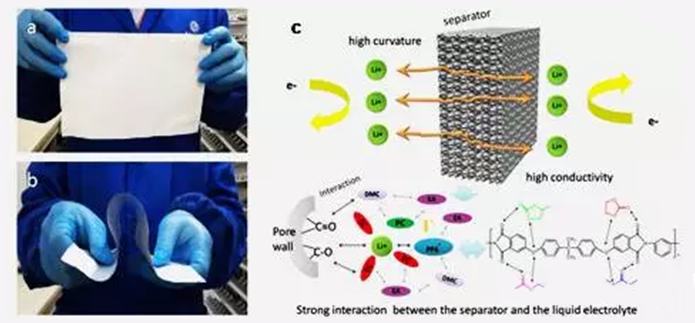
In the use of lithium batteries, when the battery overcharge or at higher temperatures, the separator need to have enough thermal stability (thermal deformation temperature > 200 ℃), to effectively isolate the battery positive and negative electrode contact, prevent short circuit, such as thermal runaway and even explosion accidents. Currently widely used polyolefin Separator, its melting point and low softening temperature (< 165 ℃), it is difficult to effectively guarantee the safety of the battery, and its low porosity and low surface energy, limiting the battery performance ratio. Therefore, it is very important to develop high safety high temperature Separator.
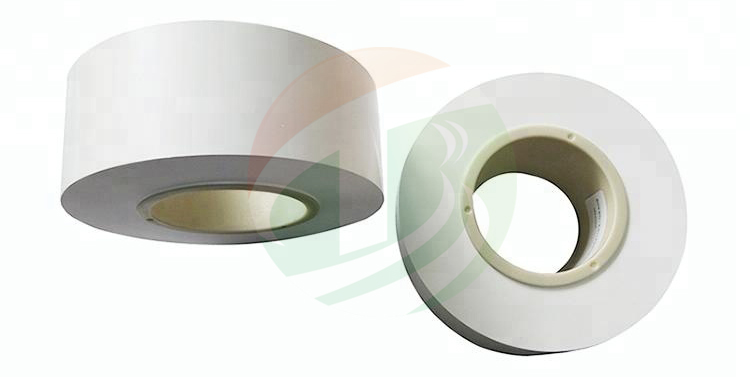
Xiamen TOB NEW ENERGY research department has developed a new type of high temperature resistant porous membrane by adopting the wet process primary molding technology, which is low-cost to prepare and easy to quantify production. Preliminary study results show that thermal deformation temperature of the Separator is much higher than 200 ℃, and the thermal stability of the commercialization of non-woven Separator, can effectively guarantee the battery safety.
 subscribe to us