Chinese
 français
 Deutsch
 italiano
 español
 português
 Nederlands
 日本語
日本語 한국의
한국의




- Tabless Cylindrical Battery Manufacturing Guide
- China Power Battery Market Report 2026 H1: Six Trends Reshaping Battery Equipment Demand
- Turnkey Solid-State Battery Lab Setup Guide
- Conductive Materials for Lithium Batteries: CNT vs Graphene Guide
- Step-by-Step Guide to Partnering with a Sodium-Ion Battery Technology Developer in China
Lithium Battery Cathode Materials
Professor GOODENOUGH, the father of lithium battery, has made a great contribution to the research of lithium battery cathode materials. In 1980, while working at the university of Oxford in the United Kingdom, he discovered that lithium cobalt oxide (LCO) could be used as a lithium cathode. In 1981, he mentioned the feasibility of lithium nickelate (LiNiO2, also known as LNO) as a cathode material in the LCO patent. In 1983, he made his first attempt to use lithium manganate (LMO) as a cathode material for lithium-ion batteries. In 1997, he developed lithium iron phosphate (LiFePO4, or LFP), which is the cathode material of olivine structure. In addition, to solve the problem of unstable properties of lithium nickelate, a large amount of research has been conducted in the area of doping modification by Prof. DAHN from Canada and Prof. Sumika kosuki from Japan. In 1997, toda applied for the first patent of lini1-x-ycoxalyo2 (NCA). In 1999, liu zhaolin and yu aishui et al. from the university of Singapore introduced Mn modification on the basis of lithium ni-co (lini1-x-ycoxmnyo2, namely ternary material and NCM).
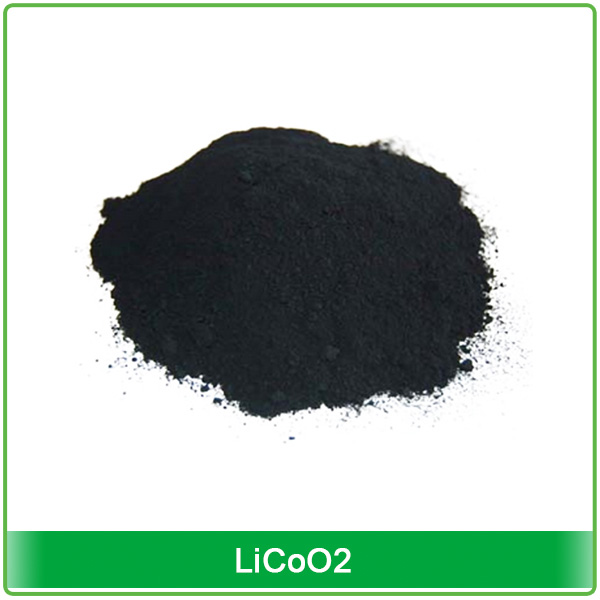
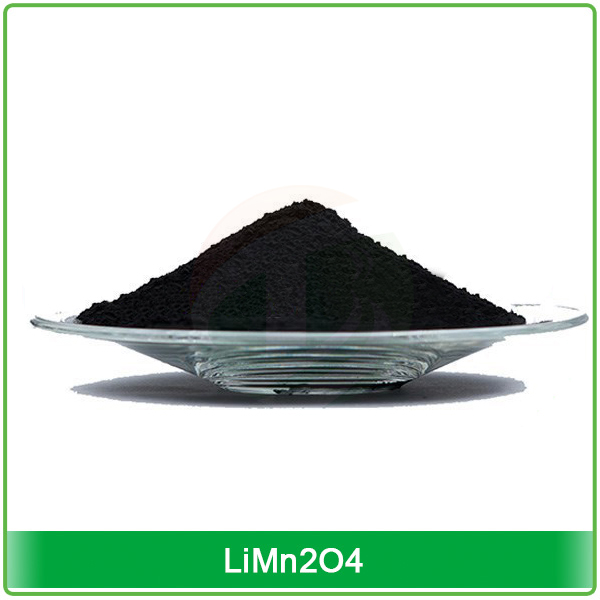
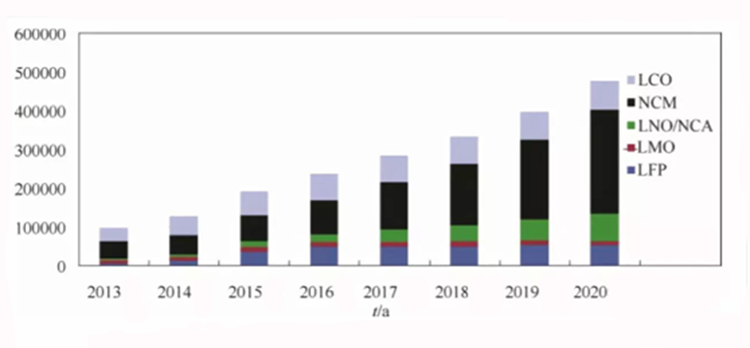
After nearly 30 years of rapid development, based on the above scientists research results. Lithium cobalt oxide, lithium manganese oxide, lithium nickel cobalt oxide (lini1-xcoxo2, also known as NC), lithium nickel cobalt manganese oxide, lithium nickel cobalt aluminate, lithium iron phosphate and other cathode materials have been industrialized, and have been expanded for many fields. With the demand of high energy density cathode materials for new energy vehicles, the nickel-cobalt lithium manganate ternary material has become the most important cathode material with the largest proportion.
 subscribe to us