Chinese
 français
 Deutsch
 italiano
 español
 português
 Nederlands
 日本語
日本語 한국의
한국의




- Home
- >
- Coin Cell Equipment
- >
- Lab Coater
- >
- 150mm Width Automatic Film Coater
Categories
Hot Products


Loading...
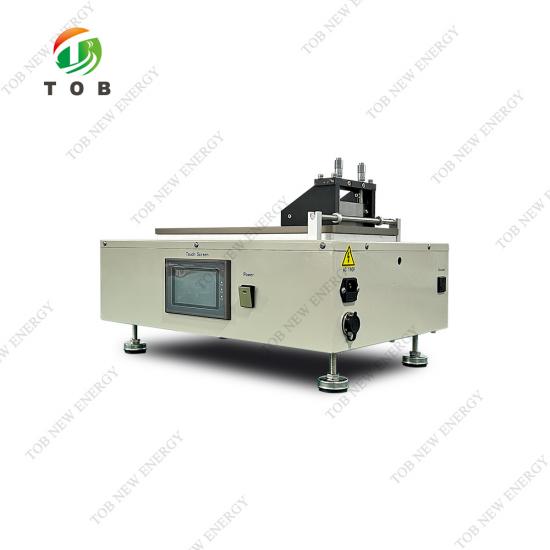
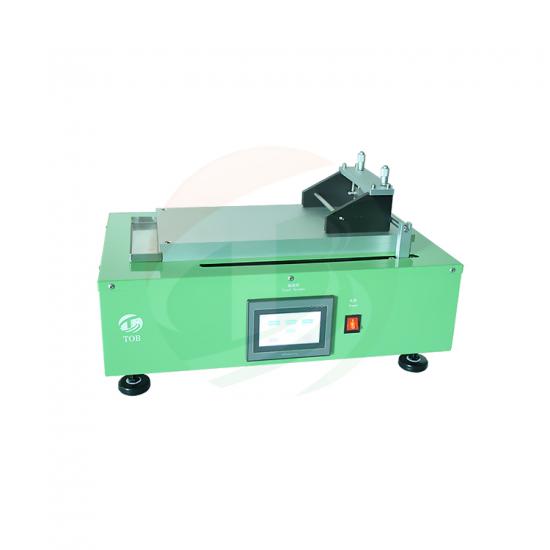
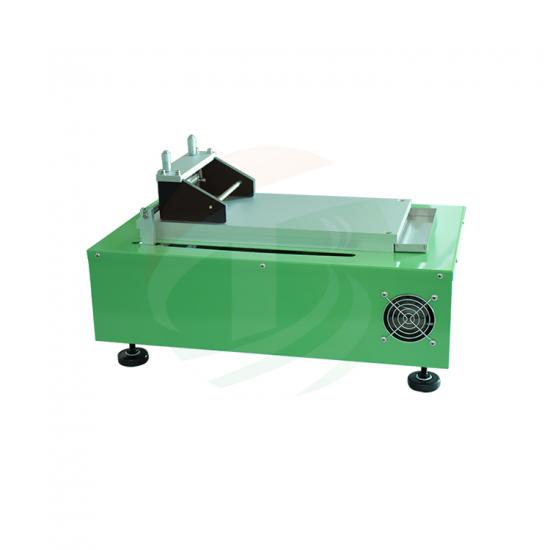
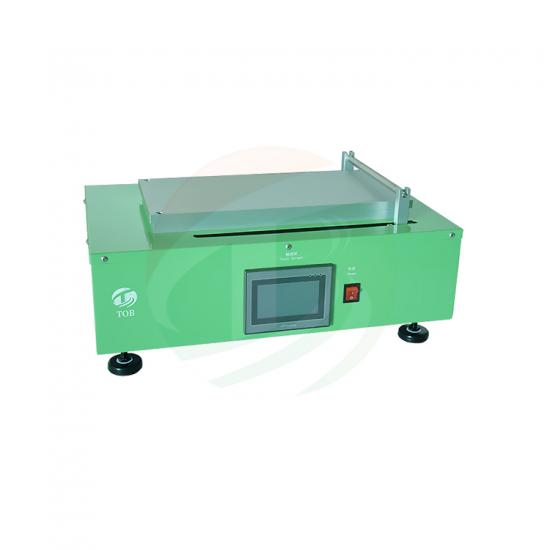
150mm Width Automatic Film Coater
Brand:
TOB NEW ENERGYitem no.:
TOB-TM300order(moq):
1Payment:
L/C,T/Tproduct origin:
Chinashipping port:
XIAMEN
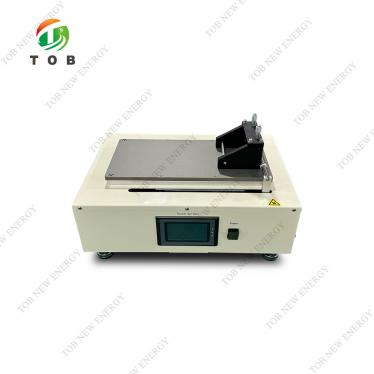
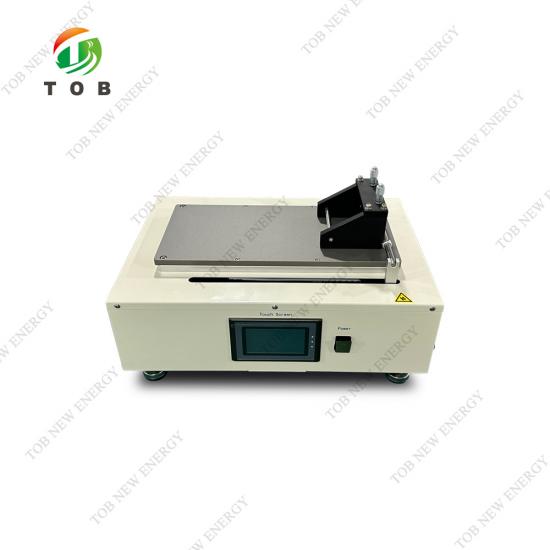
TOB-TM300 Automatic Film Coater with Vacuum Chuck and Adjustable Doctor Blade for Battery Electrode Coating
Product Overview and Ideal Applications
A film coater deposits a liquid slurry or solution onto a flat substrate and draws it into a uniform wet film of controlled thickness. The TOB‑TM300 automatic film coater performs this operation with a motorised traverse mechanism, a precision micrometer‑adjustable doctor blade, and a built‑in vacuum chuck that holds the substrate firmly in place during coating. These three elements—controlled speed, precise gap setting, and substrate immobilisation—combine to produce electrode films whose thickness and uniformity are reproducible from one coating to the next, independent of operator technique.
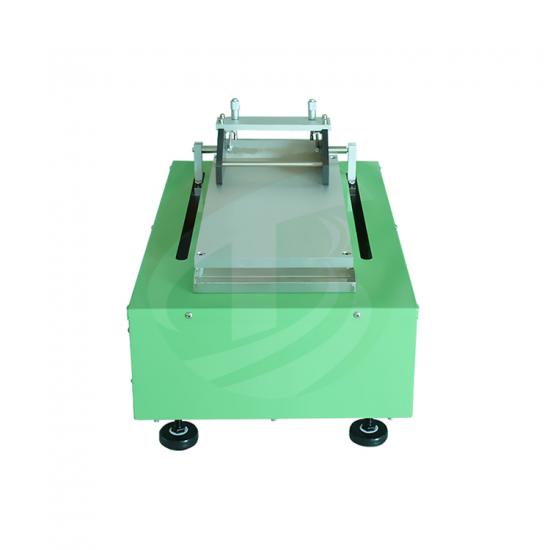
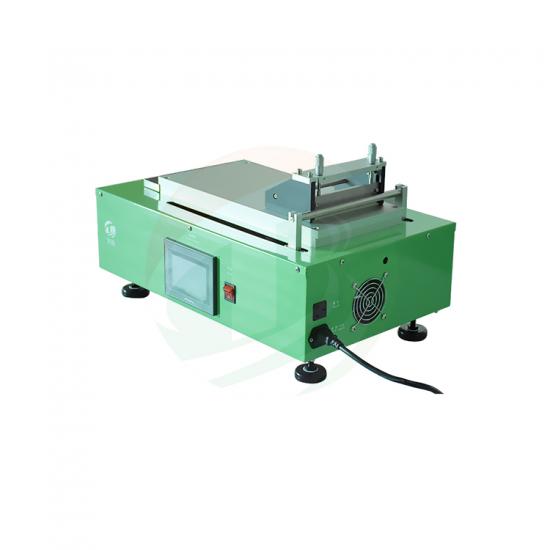
The TOB‑TM‑300 is built on an aluminium‑alloy vacuum platform (410 mm × 200 mm × 30 mm) that accommodates substrates up to 150 mm wide and 300 mm long. The doctor blade, included as standard, can be adjusted from 0.01 mm to 3.5 mm using a micrometer dial, covering the wet‑film thickness range required for both thin solid‑electrolyte layers and thick anode coatings. A traverse pusher moves the blade across the substrate at a constant speed adjustable from 0 to 100 mm/s, eliminating the speed variations and pauses that occur with hand‑drawn films. The unit operates on standard single‑phase mains (110 V or 208–240 V AC, 50/60 Hz) and consumes 200 W.
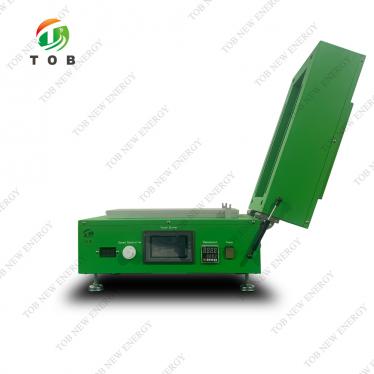
This model is supplied without a heating function. A separate heating lid (model TOB‑VFC‑150) is available for laboratories that need to dry the coated film directly on the machine.
Ideal for:
- Lithium‑ion battery R&D laboratories that produce cathode and anode electrode sheets for coin‑cell assembly and single‑layer pouch‑cell testing.
- Ceramic tape‑casting research, including the fabrication of solid‑electrolyte films for all‑solid‑state batteries.
- Development of nanostructured films, polymer membranes, and functional coatings where a flat, uniform wet film is the critical first step.
- Quality‑control checks on slurry rheology, where a standardised coating procedure reveals whether a new slurry formulation spreads and levels correctly.
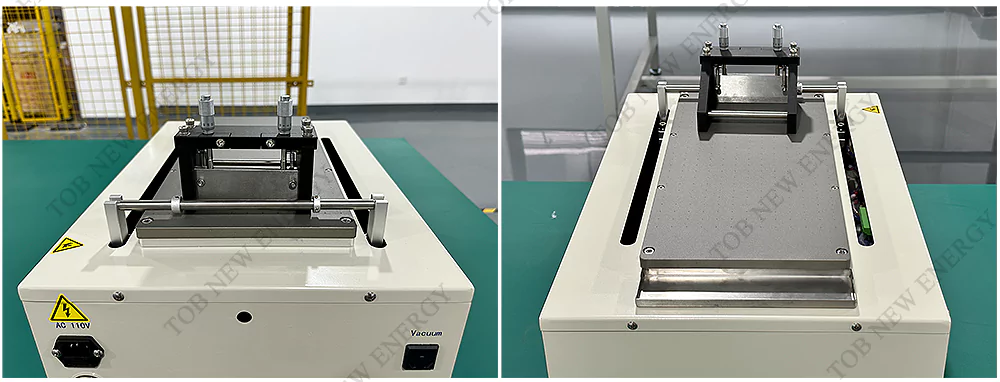
Where the Film Coater Fits in Electrode Manufacturing for Coin‑Cell and Pouch‑Cell Research
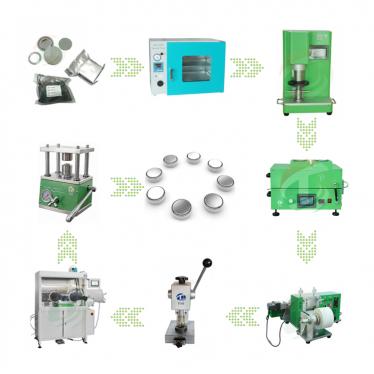
In a typical battery R&D workflow, electrode fabrication follows a sequence of steps:
- Slurry mixing – Active material, conductive carbon, and binder are dispersed in a planetary mixer.
- Film coating (the TOB‑TM300's role) – The slurry is deposited onto aluminium or copper foil held flat by the vacuum chuck. The doctor blade, set to a precise gap, meters the slurry into a uniform wet film as the traverse pusher drives the blade at constant speed.
- Drying – The wet electrode is transferred to an oven or placed under the optional heating lid (TOB‑VFC‑150) to evaporate the solvent.
- Calendaring – The dried electrode is compressed to the target density.
- Cell assembly – Electrode discs are punched, and coin or pouch cells are assembled.
The coating step determines the electrode's areal capacity and uniformity. A hand‑drawn film, even when carefully executed, inevitably contains variations in thickness and may exhibit streaks from momentary hesitations in the operator's stroke. The TOB‑TM300 removes this variability by driving the doctor blade at a pre‑set, constant speed across the full 300 mm stroke. The vacuum chuck, built into the aluminium platform, holds the foil absolutely flat without the need for adhesive tape—which can leave residue, deform under subsequent heating, and create localised thickness variations in the coating.
Because the TOB‑TM300 accepts substrates up to 150 mm wide, a single coated sheet can yield multiple coin‑cell electrodes (typically 10–15 discs of 12–16 mm diameter), all originating from the same film. This is particularly valuable for comparative studies, where all cells in an experimental set must share an identical electrode history.
How the Automatic Film Coater Operates
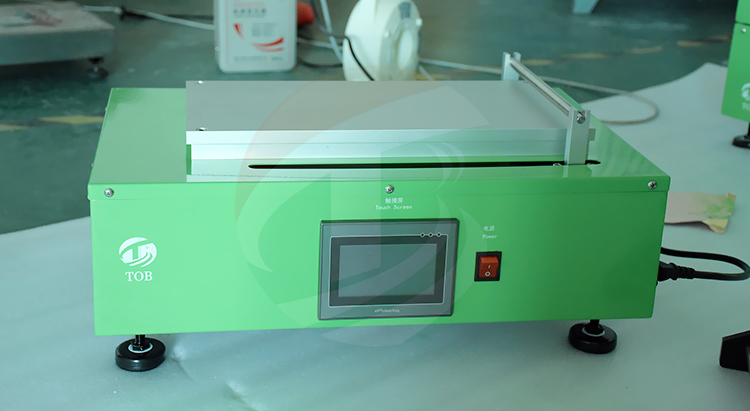
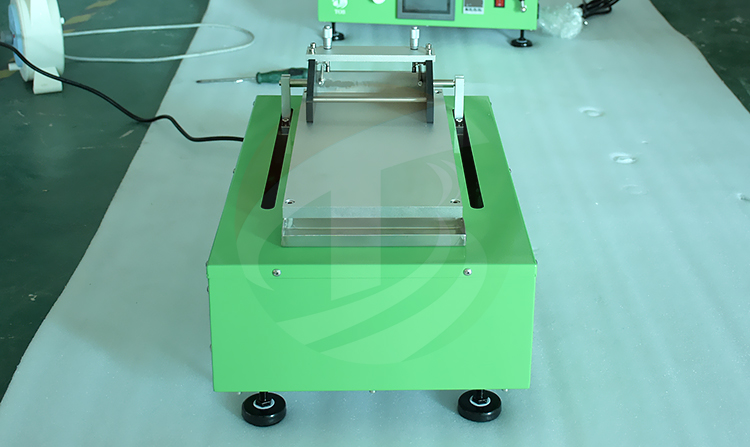
The TOB‑TM300 uses a motorised linear traverse to move the doctor blade across a stationary substrate. The key functional components are:
- Vacuum chuck: The aluminium‑alloy platform (410 mm × 200 mm) has a built‑in vacuum system that pulls the substrate sheet firmly against the flat surface. This prevents the foil from lifting, wrinkling, or shifting during coating, which is especially important for thin foils (≤ 15 µm) and for ceramic tape casting where the substrate may be a flexible polymer film.
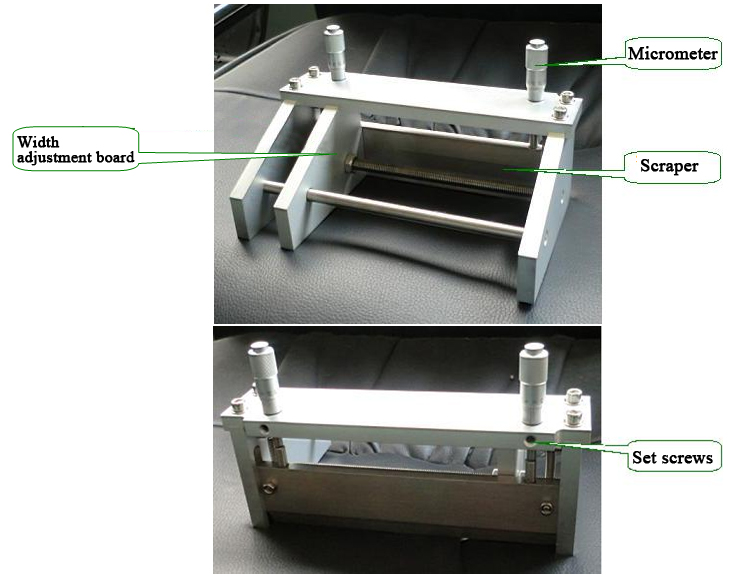
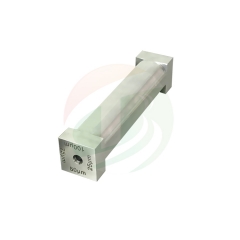
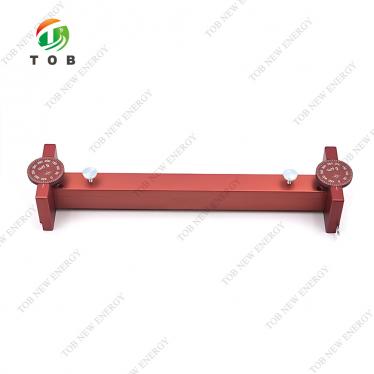
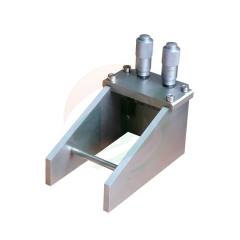
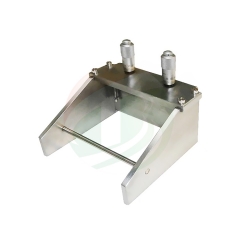
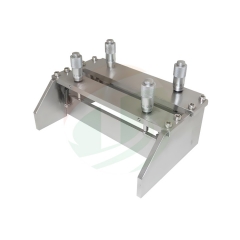
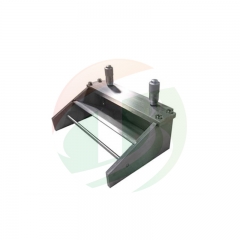
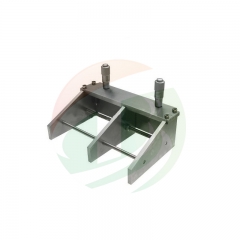
- Micrometer‑adjustable doctor blade: The included 150 mm‑wide film applicator can be set to any gap between 0.01 mm and 3.5 mm using a micrometer dial. The gap determines the wet‑film thickness, which in turn controls the dry‑film loading after solvent evaporation. Fixed‑thickness applicators can also be used on the same machine, offering additional flexibility.
- Traverse pusher and speed control: A pusher mechanism grips the doctor blade and drives it along the 300 mm stroke at a speed selected by the operator, from 0 to 100 mm/s. The traverse is smooth and reproducible, ensuring that the shear history experienced by the slurry is identical from one end of the substrate to the other. The speed accuracy is specified as 10 mm/s.
The operator places the substrate on the vacuum chuck, activates the vacuum, pours or dispenses a bead of slurry, and starts the traverse. The doctor blade spreads the slurry into a film of the set thickness. When the coating stroke is complete, the operator removes the blade, carefully lifts the coated substrate, and transfers it to a drying oven or to the optional heating lid.
Note: This model does not include an integrated heating or drying function. For laboratories that prefer to dry the electrode directly on the machine, TOB offers the TOB‑VFC‑150 heating lid as an accessory
 |
 |
Key Operating Characteristics
Based on the specifications and design of the TOB‑TM300, the following characteristics define its capabilities:
- Consistent coating speed: The motorised traverse at 0–100 mm/s ensures that the doctor blade moves at a steady velocity. This is particularly important for slurries that exhibit shear‑thinning or shear‑thickening behaviour, as a varying speed would produce a varying thickness along the coating length.
- Vacuum immobilisation of the substrate: The built‑in vacuum chuck eliminates the need for adhesive tapes, which can contaminate the substrate, leave residue after heating, and create thickness anomalies at the tape edges. The vacuum holds thin copper and aluminium foils perfectly flat, enabling uniform coating right up to the foil edges.
- Wide gap‑adjustment range (0.01–3.5 mm): The micrometer dial allows the operator to return to a previously determined gap setting with repeatable accuracy. This is essential for building a set of standard operating procedures for different slurry formulations, where the relationship between the doctor‑blade gap and the final dry‑film thickness must be established once and then relied upon.
- Compact laboratory footprint: At 550 mm × 310 mm × 330 mm and a net weight of 50 kg, the TOB‑TM‑300 can be placed on a standard laboratory bench. The machine can be operated inside a fume hood when coating with NMP‑based slurries, or inside a dry room for moisture‑sensitive materials.
- Compatible with fixed‑thickness applicators: In addition to the included micrometer‑adjustable blade, the TOB‑TM‑300 can accept fixed‑thickness applicators, such as four‑sided film applicators or wire‑wound rods, which are sometimes preferred for very thin coatings or for specific slurry types.
Complete Technical Specifications
The following table contains the specifications exactly as provided for the TOB‑TM300.
| Parameter | Specification |
| Model | Film Coater Machine TOB‑TM300 |
| Working Voltage | 110 V AC or 208–240 V AC, 50/60 Hz, Single Phase |
| Power | 200 W |
| Traverse Speed | 0–100 mm/s variable, Accuracy: 10 mm/s |
| Max Stroke | 300 mm |
| Max Coating Dimensions | 150 mm (W) × 300 mm (L) |
| Platform | Aluminium alloy flat vacuum chuck, Dimensions: 410 mm (L) × 200 mm (W) × 30 mm (H) |
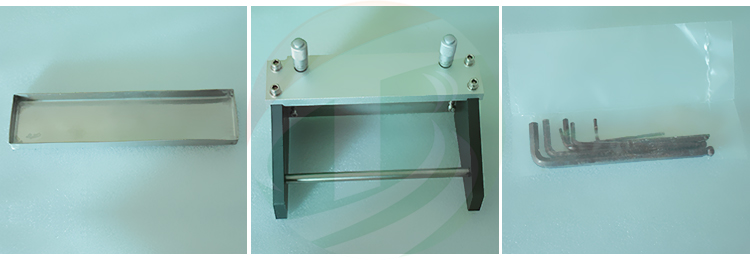
| Film Applicator | One 150 mm width Micrometer Adjustable Film Applicator included, adjustable thickness 0.01–3.5 mm. Traverse Pusher included |
| Product Dimensions | 550 mm (L) × 310 mm (W) × 330 mm (H) |
| Net Weight | 50 kg |
| Warranty | One year limited warranty with lifetime support |
Practical Coating Recommendations for Battery Electrodes
The following suggestions are based on experience with the TOB‑TM‑300 in battery electrode fabrication and will help users obtain consistent, high‑quality films.
- Foil preparation: Wipe the aluminium or copper foil with isopropyl alcohol before placing it on the vacuum chuck. Even invisible traces of rolling oil can cause the slurry to de‑wet or form craters.
- Vacuum setting: Use sufficient vacuum to hold the foil flat but avoid excessive vacuum on very thin foils (< 12 µm), which could imprint the texture of the chuck surface into the soft metal. A simple bleed valve in the vacuum line allows fine adjustment.
- Slurry degassing: Always degas the slurry under vacuum before coating. Air bubbles trapped in the slurry can burst during coating, leaving pinholes in the wet film that persist through drying.
- Doctor‑blade gap calibration: For a given slurry formulation, the dry‑film thickness can be estimated from the wet gap, the slurry solid content, and an empirical shrinkage factor. Calibrate the relationship by coating a test strip, measuring the dry thickness with a micrometer, and adjusting the gap if needed. Record the gap‑to‑dry‑thickness ratio for each slurry type.
- Cleaning: After each use, disassemble the doctor blade and clean it with the appropriate solvent (NMP for cathode slurries, deionised water for aqueous anode slurries). Wipe the vacuum chuck surface with a soft, solvent‑dampened cloth. Dried slurry residue on the chuck can prevent the next foil from lying perfectly flat.
- Drying: If using the optional TOB‑VFC‑150 heating lid, set the drying temperature to 60–80 °C for the first few minutes, then ramp to 100–120 °C. This two‑step profile prevents surface skinning and binder migration. If drying in an external oven, transfer the wet electrode carefully on a flat tray to avoid disturbing the film.
Ready to upgrade your electrode coating process from hand‑drawn films to a motorised, vacuum‑assisted coater that produces uniform, reproducible films? Request a quotation for the TOB‑TM‑300, or contact our application engineers to discuss whether the optional TOB‑VFC‑150 heating lid is recommended for your workflow.
tob.amy@tobmachine.com | +86 181 2071 5609
You May Also Need
- Vacuum Laboratory Slurry Filter — A vacuum‑assisted filtration unit that removes oversized particles and agglomerates from electrode slurry immediately before it is dispensed onto the TOB‑TM‑300. Passing the slurry through a fine filter mesh reduces coating defects such as streaks and pinholes in the finished electrode film.
- Digital Display Viscometer for Battery Slurry — A benchtop viscometer that measures the viscosity of electrode slurries across a wide range. Determining the slurry's rheological properties before coating helps the operator select the correct doctor‑blade gap and traverse speed on the TOB‑TM‑300 for optimal film uniformity.
- 200L Hot Roller Press Machine for Battery Electrode — A heated calender for densifying the dried electrode film produced by the TOB‑TM‑300. The roller press compresses the coated electrode to the target porosity and density, improving electrical conductivity and mechanical adhesion of the active layer to the current collector.
Previous:
Dip Coater with Constant Temperature OvenNext:
Laboratory Glass Coating Plate for Lithium Ion Battery Electrodes
If you are interested in our products and want to know more details,please leave a message here,we will reply you as soon as we can.

 subscribe to us