Chinese
 français
 Deutsch
 italiano
 español
 português
 Nederlands
 日本語
日本語 한국의
한국의




- Home
- >
- Battery Materials
- >
- Solid State Battery Material
- >
- LATP Powder Lithium Aluminum Titanium Phosphate Solid Electrolytes
Categories
Hot Products
Loading...
LATP Powder Lithium Aluminum Titanium Phosphate Solid Electrolytes
Brand:
TOB NEW ENERGYitem no.:
TOB-LATPorder(moq):
1 bagPayment:
L/C,T/Tproduct origin:
Chinashipping port:
XIAMEN
LATP Solid Electrolyte Powder for All-Solid-State Batteries | TOB-LATP
Product Overview and Ideal Applications
Lithium aluminum titanium phosphate, with the nominal composition Li₁.₃Al₀.₃Ti₁.₇(PO₄)₃ (LATP), is a NASICON‑type oxide solid electrolyte that has attracted intense interest for all‑solid‑state lithium‑ion batteries. Unlike sulfide‑based solid electrolytes, LATP is stable in ambient air, exhibits a wide electrochemical stability window against high‑voltage cathodes, and can be processed without the stringent moisture‑free environments required for sulfides. The TOB‑LATP powder is a high‑purity, sub‑micron‑sized material (D50 = 1.66 µm) specifically controlled for use as a solid electrolyte separator or as an ion‑conducting additive in composite cathodes.
The powder exhibits an ionic conductivity of 4.1 × 10⁻³ S/m at room temperature, a value competitive with other oxide solid electrolytes and sufficient for thin‑film electrolyte layers. Its composition and impurity profile are tightly controlled: the purity is ≥99.95 %, with critical metallic impurities such as Fe, Cu, Ni, Na, and K held to single‑digit or low‑tens ppm levels. This purity control is essential because even trace impurities can block lithium‑ion conduction pathways or promote electronic conductivity, which would degrade the cell's coulombic efficiency.
Ideal for:
- Research groups and pilot lines fabricating all‑solid‑state lithium‑ion cells using oxide solid electrolytes.
- Composite cathode development, where LATP powder is mixed with active material (e.g., NMC, LFP) to provide ionic percolation within the cathode layer.
- Solid electrolyte interlayer fabrication, where a thin, dense LATP pellet or tape‑cast film separates the cathode and anode.
- Any laboratory that requires an air‑stable, high‑purity lithium‑ion conductor that can be processed outside a glovebox during the initial preparation stages.
Where LATP Fits in All‑Solid‑State Battery Manufacturing
In an all‑solid‑state lithium‑ion cell, the traditional liquid electrolyte and porous separator are replaced by a dense, lithium‑ion‑conducting solid electrolyte layer. LATP can serve as that layer, or it can be used as an ion‑conducting component within the composite cathode. The typical process flow for a cell using LATP is:
- Electrolyte layer preparation: LATP powder is either pressed into a pellet at high pressure and sintered to near‑full density, or it is tape‑cast into a green film and co‑sintered with the electrode layers.
- Composite cathode fabrication: The cathode active material (e.g., NMC) is mixed with LATP powder, conductive carbon, and a binder, then coated onto a current collector or laminated with the electrolyte layer. The LATP provides a continuous lithium‑ion pathway from the active particles to the solid electrolyte separator.
- Cell assembly: The cathode‑electrolyte‑anode stack is assembled and, if necessary, heated under pressure to reduce interfacial resistance.
- Electrochemical testing: The cell is cycled to evaluate capacity, rate capability, and cycle life.
The TOB‑LATP powder enters the process at step 1 or step 2. Its sub‑micron particle size (D50 1.66 µm) allows it to be densely packed, which is critical for achieving high ionic conductivity in the sintered electrolyte layer. Its high purity and controlled stoichiometry ensure that the sintered pellet has the desired NASICON crystal structure with minimal secondary phases that would degrade lithium‑ion transport.
Processing considerations:
- Sintering temperature: LATP typically requires sintering at 800–1000 °C to achieve high relative density. However, at temperatures above 900 °C, LATP can react with certain cathode materials (e.g., NMC) to form resistive interfacial layers. A common strategy is to apply a thin buffer layer (e.g., LiNbO₃) on the cathode particles, or to use low‑temperature sintering aids.
- Moisture: Although LATP is air‑stable, it should be stored in a dry environment because adsorbed moisture can form Li₂CO₃ on the particle surface during subsequent heating, blocking lithium‑ion conduction.
- Density: The final electrolyte density target is typically >95 % of the theoretical density (approximately 2.9 g/cm³ for LATP). The fine particle size of TOB‑LATP facilitates this densification.
Material Properties and Key Specifications
Chemical and Structural Characteristics
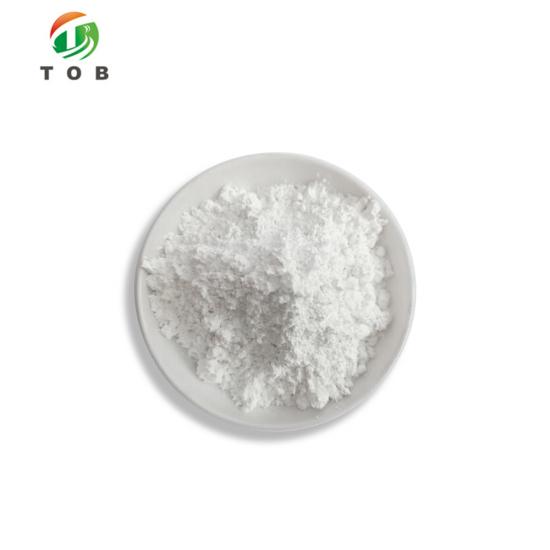
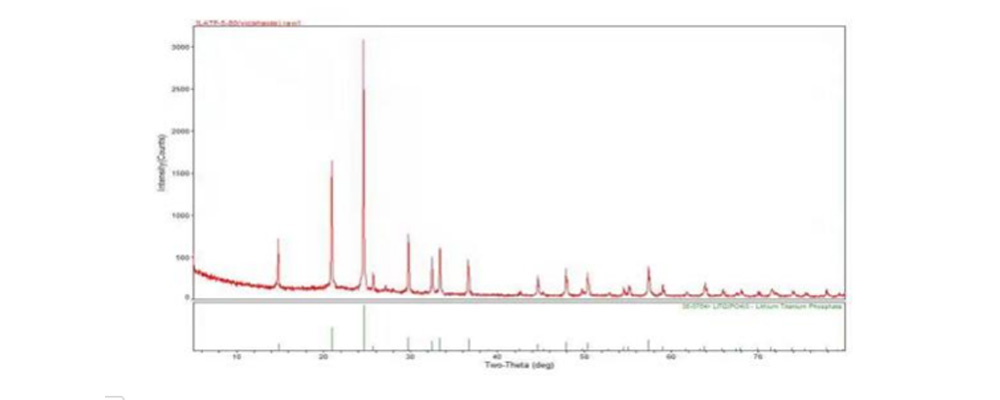
TOB‑LATP is a white powder with the nominal stoichiometry Li₁.₃Al₀.₃Ti₁.₇(PO₄)₃. The partial substitution of Ti⁴⁺ by Al³⁺ introduces lithium‑ion vacancies and expands the lattice, which significantly increases the ionic conductivity compared to un‑substituted LiTi₂(PO₄)₃. The material crystallizes in the rhombohedral NASICON structure (space group R‑3c), where lithium ions migrate through three‑dimensional channels formed by corner‑sharing PO₄ tetrahedra and TiO₆ octahedra.
The measured ionic conductivity of 4.1 × 10⁻³ S/m is representative of well‑sintered LATP and is sufficient for thin electrolyte layers (<50 µm) to achieve area‑specific resistances below 100 Ω·cm².
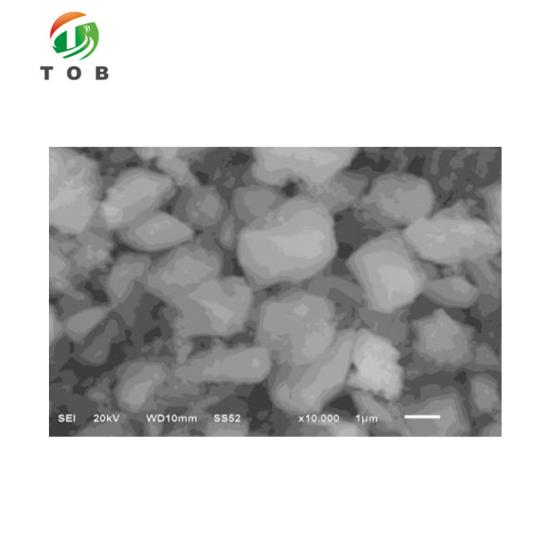
Particle Size and Morphology
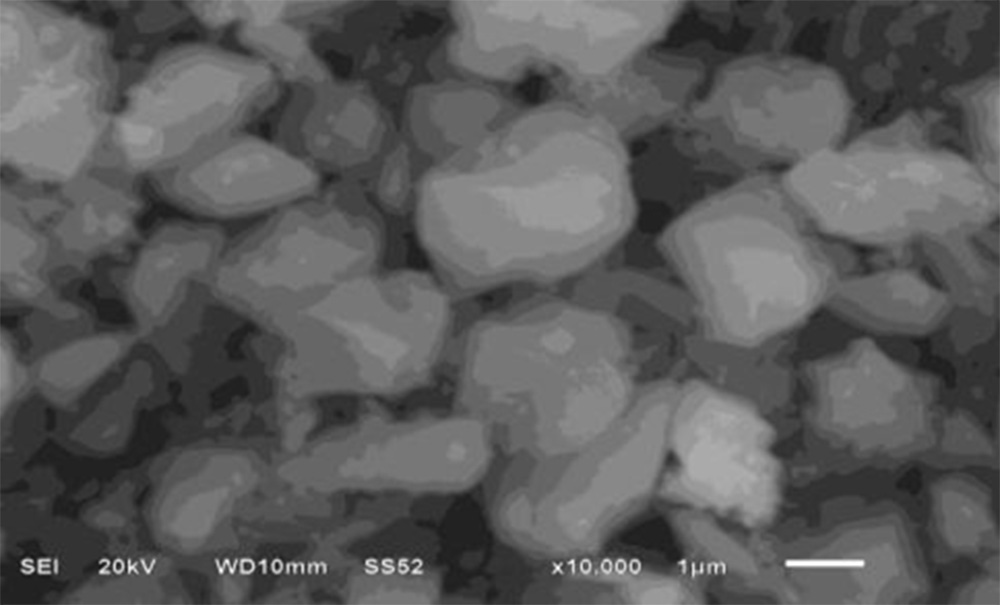
The D50 of 1.66 µm indicates a sub‑micron‑scale powder that can be readily dispersed and packed. The fine particle size enables:
- High green density during pellet pressing, reducing the required sintering temperature.
- Uniform distribution within a composite cathode, ensuring that every active material particle is within a few micrometres of an ion‑conducting pathway.
- Potential for tape casting of thin electrolyte films with smooth surfaces.
Purity and Impurity Control
The overall purity of the powder is ≥99.95 % (3N5 grade). The following table lists the maximum impurity concentrations (in ppm) guaranteed by TOB. These limits are among the key quality differentiators for battery‑grade solid electrolyte powders.
|
Element |
Fe |
Cu |
Ni |
Ca |
Na |
K |
Mg |
Si |
Zr |
|
Content |
10 |
6 |
5 |
7 |
6 |
5 |
10 |
15 |
10 |
- Iron (Fe) is limited to 10 ppm because iron ions can be reduced at the anode and form electronic conduction paths, effectively short‑circuiting the solid electrolyte.
- Sodium (Na) and Potassium (K) are closely monitored because they can compete with lithium for conduction sites and reduce the ionic transference number.
- Silicon (Si) at 15 ppm and Zirconium (Zr) at 10 ppm are tolerated at higher levels because they are more likely to form inert secondary phases that do not significantly affect conductivity.
Key Engineering Advantages of TOB‑LATP
1. High Purity (≥99.95%, 3N5) with Controlled Impurity Profile
The ultra‑low concentrations of Fe, Cu, Ni, Na, and K ensure that the sintered electrolyte pellet behaves as a nearly pure lithium‑ion conductor, with negligible electronic conductivity. This minimizes self‑discharge in the assembled cell and prevents internal short circuits.
2. Excellent Air Stability — Processable Outside Glovebox
Unlike sulfide solid electrolytes (e.g., LPSCl), LATP does not generate toxic H₂S gas on contact with moisture and can be handled in a standard dry room or even in ambient air for short periods. This dramatically simplifies tape casting, pellet pressing, and electrode coating steps, reducing capital investment in inert‑atmosphere equipment.
3. High Ionic Conductivity (4.1 × 10⁻³ S/m)
The conductivity is sufficient to enable electrolyte layers as thick as 50–100 µm without excessive ohmic drop, which means the electrolyte can be fabricated by scalable ceramic processing routes rather than by vacuum deposition.
4. NASICON Crystal Structure with Wide Electrochemical Stability Window
The structure is stable against high‑voltage cathodes (up to >4.5 V vs. Li⁺/Li), allowing it to be paired with high‑energy‑density cathode materials such as NMC811 or high‑voltage spinels without oxidative decomposition.
5. Sub‑Micron Particle Size (D50 = 1.66 µm) for Enhanced Sinterability
The fine particle size provides a high driving force for densification during sintering. When pressed into a pellet and sintered at 850–950 °C, the powder can achieve >95 % relative density with a short dwell time, reducing energy consumption and minimizing the risk of lithium loss by evaporation.
6. Pre‑Weighed Batch (1000 g) with Consistent Quality
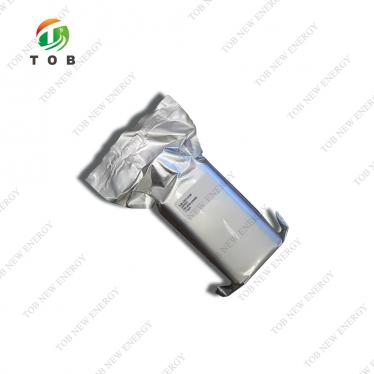
Each container holds 1000 g of LATP powder, enough for several research‑scale tape‑casting or pellet‑pressing campaigns. The batch‑to‑batch consistency in particle size and purity ensures reproducible electrochemical results.
Complete Technical Specifications
|
No |
Material name |
Purity(N) |
D50(um) |
Weight(g) |
|
1 |
Lithium Titanium Aluminum Phosphate [Li1.3Al0.3Ti1.7(PO4)3] powder |
3N5 |
1.66 |
1000 |
Composition and Purity
- Purity: ≥99.95 wt %
- Composition ratio (mol): Li : Al : Ti : P : O = 1.3 : 0.3 : 1.7 : 3 : 12
- Impurity content (max., in ppm):
|
Element |
Fe |
Cu |
Ni |
Ca |
Na |
K |
Mg |
Si |
Zr |
|
Content |
10 |
6 |
5 |
7 |
6 |
5 |
10 |
15 |
10 |
- Powder color: White
- Conductivity: K = 4.1 × 10⁻³ S/m
 |
 |
|
XRD |
SEM |
Engineering FAQ — LATP Solid Electrolyte Powder
Q1: What is the recommended sintering profile to achieve dense LATP electrolyte pellets?
A typical sintering profile is: uniaxial pressing of the dry powder at 200–400 MPa into a pellet, by sintering in a muffle furnace at 900 °C for 2–6 hours in air or oxygen. A heating rate of 2–5 °C/min is recommended to avoid cracking. To achieve >95 % density, a small amount of excess lithium (e.g., 2–5 % Li₂CO₃) may be added to compensate for lithium volatilization during high‑temperature sintering.
Q2: Can TOB‑LATP be used in direct contact with a lithium metal anode?
LATP is not stable in direct contact with metallic lithium. Lithium reduces Ti⁴⁺ to Ti³⁺, forming an electronically conductive interphase that shorts the cell. A common solution is to place a thin polymer or ceramic interlayer (e.g., LiPON, PEO‑based film) between the LATP and the lithium anode, or to use a lithium alloy or composite anode that buffers the reactivity.
Q3: How should I store the powder after opening?
Although LATP is air‑stable, it is hygroscopic. Store the opened container in a dry environment (<30 % RH) or inside a dry cabinet. Before use, it is recommended to dry the powder at 200 °C for 2 hours under vacuum to remove any adsorbed moisture, which would otherwise form Li₂CO₃ during sintering and increase grain‑boundary resistance.
Q4: Is this powder suitable for tape casting of thin electrolyte layers?
Yes. The sub‑micron particle size (D50 1.66 µm) is well suited for tape casting. A typical slurry formulation consists of LATP powder, a binder (PVB or ethyl cellulose), a plasticizer, and a solvent mixture (ethanol/toluene or MEK/ethanol). After casting and drying, the green tape can be sintered at the recommended profile to produce a dense, 20–100 µm thick electrolyte layer.
Ready to advance your all‑solid‑state battery research with a high‑purity, air‑stable solid electrolyte? Request a quotation for TOB‑LATP, or contact our solid‑state battery materials team for a recommendation on sintering aids and co‑sintering compatible cathode materials.
tob.amy@tobmachine.com | +86 181 2071 5609
You May Also Need
- TOB-LAGP Li₁.₅Al₀.₅Ge₁.₅P₃O₁₂ Solid Electrolyte Powder — A germanium‑based NASICON solid electrolyte with higher ionic conductivity than LATP, suitable for all‑solid‑state cells requiring lower electrolyte resistance.
- TOB-LLZO Li₇La₃Zr₂O₁₂ Garnet Solid Electrolyte Powder — A garnet‑type solid electrolyte with exceptional stability against metallic lithium, enabling direct lithium‑metal anode integration in solid‑state batteries.
- TOB-PIP40 Polyimide (PI) Separator for Solid‑State Batteries — A thermally stable, thin‑film separator compatible with oxide and sulfide solid electrolytes, providing mechanical reinforcement and dendrite suppression in multi‑layer solid‑state cells.
Previous:
LAGP Li1.5Al0.5Ge1.5P3O12 Powder Solid State Lithium Batteries ElectrolyteNext:
LATP Lithium Aluminum Titanium Phosphate Solid State Battery Electrolyte Sheet
If you are interested in our products and want to know more details,please leave a message here,we will reply you as soon as we can.

 subscribe to us