Chinese
 français
 Deutsch
 italiano
 español
 português
 Nederlands
 日本語
日本語 한국의
한국의




- Home
- >
- Battery Materials
- >
- Solid State Battery Material
- >
- LATP Lithium Aluminum Titanium Phosphate Solid State Battery Electrolyte Sheet
Categories
Hot Products
Loading...
LATP Lithium Aluminum Titanium Phosphate Solid State Battery Electrolyte Sheet
Brand:
TOB NEW ENERGYitem no.:
TOB-LATP-E01order(moq):
1Payment:
L/C,T/Tproduct origin:
Chinashipping port:
XIAMEN
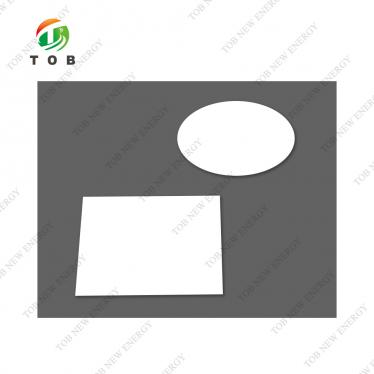
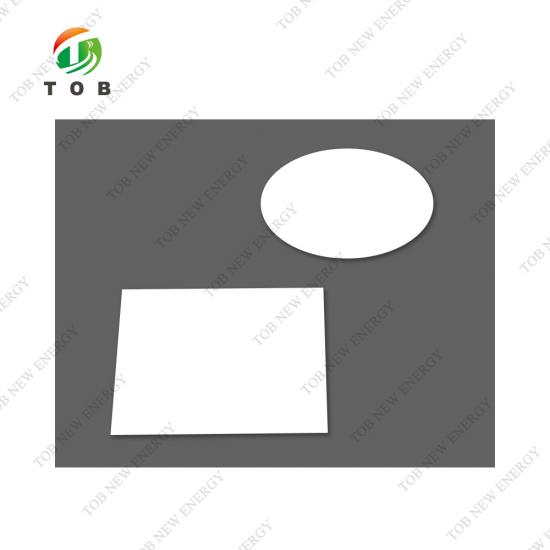
TOB-LATP-E01 Lithium Aluminum Titanium Phosphate (LATP) Solid-State Electrolyte Sheet for All-Solid-State Lithium-Ion Batteries
Product Overview and Ideal Applications
LATP (Li₁.₃Al₀.₃Ti₁.₇P₃O₁₂) is a NASICON‑type oxide solid electrolyte that combines excellent chemical and thermodynamic stability with exceptionally low raw‑material and preparation costs. The TOB‑LATP‑E01 is a pre‑sintered, ready‑to‑use solid electrolyte sheet supplied as a 12 mm‑diameter, 260 µm‑thick disc, eliminating the need for users to press and sinter electrolyte powder before cell assembly. For researchers and pilot lines that need a dense, uniform electrolyte membrane without investing in high‑temperature sintering equipment, the TOB‑LATP‑E01 shortens the path from powder formulation to a testable solid‑state cell.
Each TOB‑LATP‑E01 sheet is manufactured to a tight quality specification that is verified for every batch: a theoretical density of 2.94 g/cm³, with the delivered sheet achieving at least 2.793 g/cm³ (densification ≥ 95 %). The ionic conductivity at 25 °C is ≥ 0.45 mS/cm as measured by the AC impedance method, and the flexural strength is ≥ 130 MPa. The crystal phase is verified by XRD against PDF#35‑0754, and the micromorphology is inspected by SEM at 20,000× magnification with a tolerance of no more than three surface holes. These specifications ensure that the electrolyte sheet is mechanically robust enough to be handled during cell stacking, and ionically conductive enough to support practical discharge currents.
Ideal for:
- All‑solid‑state lithium‑ion battery research groups assembling coin‑cell or single‑layer pouch prototypes using a pre‑sintered oxide electrolyte.
- Lithium‑metal battery developers who require an electrolyte that is thermodynamically stable against metallic lithium and can be contacted directly with a lithium foil anode.
- Composite cathode development, where the electrolyte sheet serves as the separator layer between a composite cathode and the anode.
- Pilot lines evaluating the processability of oxide solid electrolytes before committing to in‑house pellet pressing and sintering capacity.
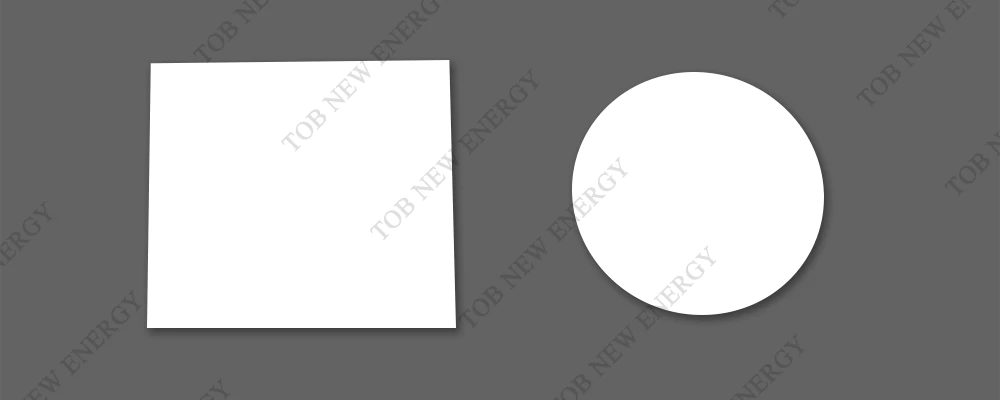
Where Pre‑Sintered LATP Sheets Fit in Solid‑State Battery Assembly
In a conventional solid‑state battery development workflow, the researcher must press the electrolyte powder into a green pellet and then sinter it at 1100–1200 °C to achieve the density and conductivity required for practical use. This sintering step is time‑consuming, requires a high‑temperature furnace, and is prone to lithium loss and cracking. The TOB‑LATP‑E01 eliminates this step by providing the finished electrolyte sheet directly.
The cell assembly process with the TOB‑LATP‑E01 becomes:
- Cathode preparation: The composite cathode (active material + LATP powder + conductive carbon + binder) is coated onto a current collector or pre‑pressed as a pellet.
- Electrolyte placement: The TOB‑LATP‑E01 sheet is placed between the cathode and the anode. Because the sheet is pre‑sintered and mechanically robust (flexural strength ≥ 130 MPa), it can be handled with tweezers and stacked without special tooling.
- Anode placement: A lithium metal foil or a composite anode is placed on the opposite face of the electrolyte sheet.
- Cell assembly: The stack is placed in a coin‑cell housing or a test fixture, and spring pressure is applied to ensure intimate contact between the layers.
- Testing: The cell is heated (if required for the application) and cycled to evaluate capacity, rate capability, and cycle life.
The LATP sheet is particularly attractive for cells using lithium‑metal anodes because LATP is stable against metallic lithium—no protective buffer layer is required at the electrolyte‑lithium interface. The 260 µm thickness provides a practical compromise between mechanical robustness (a thinner sheet would be more fragile during handling) and ionic resistance (a thicker sheet would add more ohmic drop). At a conductivity of ≥ 0.45 mS/cm, the area‑specific resistance of the 260 µm sheet is approximately 58 Ω·cm², which is acceptable for research‑scale cells and low‑to‑moderate current densities.
Technical Specifications
| Parameter | Specification |
| Model | TOB‑LATP‑E01 |
| Product Name | Lithium Aluminum Titanium Phosphate Solid State Battery Electrolyte Sheet |
| Chemical Formula | Li₁.₃Al₀.₃Ti₁.₇P₃O₁₂ |
| Conductivity | 2 × 10⁻⁴ S/cm |
| Theoretical Density | 2.94 g/cm³ |
| Shelf Life | 1 year |
Optional Specifications
| Specification | Description |
| 1. Square | 60 × 60 mm |
| 2. Single-Piece Packaging | Diameter 12 mm × 260 µm |
| 3. Other Sizes | Customizable |
Quality Inspection Standard
| Items | Qualification Standards | Unit | Detection Method |
| Thickness | 260 ± 10 | µm | Micrometer |
| Diameter | 12 ± 0.1 | mm | Vernier caliper |
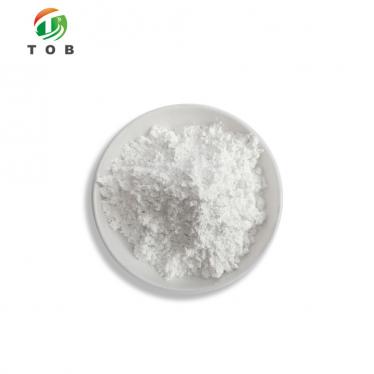
| Appearance | White, uniform color | / | Visual inspection |
| Main Crystal Phase | Consistent with the characteristic peak of PDF#35-0754 | / | XRD |
| Ceramic Sample Ion Conductivity @ 25 °C | ≥ 0.45 | mS/cm | AC impedance method |
| Flexural Strength | ≥ 130 | MPa | Three-point bending resistance |
| Density | ≥ 2.793 | g/cm³ | Drainage method |
| Densification | ≥ 95 | % | Density / theoretical density × 100 % |
| Micromorphology | Magnification 20,000, no more than 3 holes | / | SEM |
Key Quality Characteristics of the TOB‑LATP‑E01
- Pre‑Sintered and Ready to Use - The TOB‑LATP‑E01 is delivered as a dense, sintered electrolyte sheet, eliminating the need for powder pressing, high‑temperature sintering, and polishing in the user's laboratory. This removes the two most variable steps in solid‑state electrolyte preparation—sintering uniformity and surface finish—and allows the researcher to focus on the cell architecture and electrochemical testing.
- High Densification (≥ 95 %) - The measured density of ≥ 2.793 g/cm³ against a theoretical density of 2.94 g/cm³ corresponds to a relative density of at least 95 %. High densification is essential for an oxide solid electrolyte because residual porosity provides pathways for lithium dendrite growth and reduces the effective ionic conductivity. The tight density specification ensures that the sheet performs close to its intrinsic material limits.
- Verified Ionic Conductivity (≥ 0.45 mS/cm @ 25 °C) - Each batch is tested by the AC impedance method to confirm an ionic conductivity of at least 0.45 mS/cm at room temperature. This value is consistent with the overall conductivity of 2 × 10⁻⁴ S/cm stated for the material, and it is sufficient for research‑scale solid‑state cells and for evaluating new cathode chemistries at moderate current densities.
- Mechanical Robustness (Flexural Strength ≥ 130 MPa) - The flexural strength of at least 130 MPa means the 260 µm‑thick sheet can be handled with standard laboratory tweezers, stacked without chipping, and clamped in a coin‑cell housing without cracking. This mechanical integrity is a direct consequence of the high densification and the controlled microstructure verified by SEM.
- Controlled Micromorphology (≤ 3 Surface Holes at 20,000×) - The SEM inspection at 20,000× magnification verifies that the sheet surface contains no more than three holes in the inspected area. Surface porosity would create localised regions of high resistance and could act as initiation points for dendrite growth. The strict micromorphology limit ensures a smooth, dense surface for good contact with the electrodes.
- Verified Crystal Phase (PDF#35‑0754) - X‑ray diffraction confirms that the main crystal phase is consistent with the characteristic peaks of PDF#35‑0754, the standard reference pattern for NASICON‑type LATP. Phase purity is critical because impurity phases—such as AlPO₄ or TiO₂—would block lithium‑ion transport and reduce the effective conductivity.
- Long Shelf Life (1 Year) - The TOB‑LATP‑E01 has a stated shelf life of one year when stored under recommended conditions. LATP is air‑stable and does not require glovebox storage, but the sheet should be kept in a dry environment to prevent surface moisture adsorption, which could form a Li₂CO₃ layer that increases interfacial resistance during cell assembly.
Handling and Storage Recommendations
The following recommendations help users preserve the quality of the TOB‑LATP‑E01 sheets between receipt and cell assembly:
- Storage: Store the sheets in their sealed packaging in a dry environment (< 30 % RH). Although LATP is air‑stable, prolonged exposure to humidity can promote surface carbonate formation. The shelf life is one year under recommended storage conditions.
- Handling: Handle the sheet with clean tweezers or powder‑free gloves. Avoid touching the flat faces with bare fingers, as skin oils can create a non‑conductive film at the electrode‑electrolyte interface.
- Pre‑assembly drying: If the sheets have been stored for several months or exposed to a humid environment, dry them at 200 °C for 1–2 hours under vacuum or dry air before cell assembly. This removes any adsorbed surface moisture.
- Cell assembly: Place the sheet between the cathode and anode and apply uniform spring pressure. Because the sheet is 260 µm thick and mechanically robust, it does not require a supporting frame. For cells that will be cycled at elevated temperature, verify that the temperature does not exceed the stability range of the LATP material and the other cell components.
Comparison: TOB‑LATP‑E01 Sheet vs. LATP Powder
| Feature | TOB‑LATP‑E01 (Pre‑Sintered Sheet) | LATP Powder (e.g., TOB‑LATP) |
| Form | Sintered disc, ready to use | Powder, requires pressing and sintering |
| Densification | ≥ 95 % (delivered) | Achieved by the user during sintering |
| Sintering furnace required | No | Yes (1100–1200 °C) |
| Time to testable cell | Immediate (hours) | Days (pressing, sintering, polishing) |
| Thickness | 260 µm (fixed) | User-controlled |
| Diameter | 12 mm (standard); 60 × 60 mm square; custom | User-controlled |
| Process risk | Transferred to TOB (batch-tested) | Transferred to the user |
| Typical user | Cell-assembly-focused research groups | Materials-synthesis-focused groups with furnace capacity |
Why choose the pre‑sintered sheet?
If the research goal is to evaluate a cathode material, an electrolyte‑cathode interface, or a cell architecture, the TOB‑LATP‑E01 removes the variability introduced by in‑house sintering. Every sheet has been sintered under controlled conditions, density‑tested, conductivity‑tested, and phase‑verified, so the electrochemical results obtained from the cell reflect the materials under study rather than the quality of a manually sintered pellet. For groups that do not yet have a high‑temperature furnace, or that want to avoid the multi‑day sintering process, the sheet is the faster and more repeatable path to a testable solid‑state cell.
Engineering FAQ
Q1: Can the TOB‑LATP‑E01 sheet be used directly with a lithium metal anode, or is a buffer layer required?
LATP is stable against metallic lithium under most practical conditions, and the TOB‑LATP‑E01 sheet can be contacted directly with a lithium foil anode. However, at very high current densities, the Li⁺/Ti⁴⁺ redox reaction at the LATP‑lithium interface can introduce electronic conductivity. For most research‑scale tests at moderate current densities, direct contact is acceptable. If the cell will be cycled aggressively, a thin polymer or LiPON interlayer between the LATP sheet and the lithium anode can be added for additional stability.
Q2: What is the area‑specific resistance (ASR) of the 260 µm sheet?
The ASR is calculated as thickness divided by conductivity. At a conductivity of 0.45 mS/cm (the batch acceptance threshold) and a thickness of 260 µm (0.026 cm), the ASR is approximately 58 Ω·cm². At the material's typical conductivity of 2 × 10⁻⁴ S/cm, the ASR would be approximately 130 Ω·cm². This resistance is acceptable for research cells operating at low to moderate current densities, but it must be considered when designing the cell's operating current.
Q3: Can the sheet be cut to a smaller size for use in a specific coin‑cell housing?
The standard 12 mm disc is designed for CR2032 and similar coin‑cell housings. If a different diameter is required, the sheet can be cut, but cutting a sintered ceramic requires care. A diamond scribe or a precision wafer cutter is recommended to avoid edge cracking. Alternatively, TOB can supply custom‑sized sheets (including the 60 × 60 mm square format) to match your cell design—contact us with your dimensions.
Q4: How should the surface of the sheet be prepared before cell assembly?
The TOB‑LATP‑E01 is supplied with a smooth, polished surface suitable for direct use. If the sheet has been stored for an extended period, gently polish the two flat faces with fine SiC paper (e.g., P2000) or a polishing cloth with diamond paste to remove any surface contamination layer, then rinse with isopropanol and dry. This step is optional for freshly received sheets but recommended for sheets that have been stored for several months.
Q5: Can this electrolyte sheet be used at elevated temperatures (e.g., 60–80 °C) for solid‑state cell testing?
Yes. LATP is stable at elevated temperatures, and operating the cell at 60–80 °C is a common strategy to reduce the electrolyte's area‑specific resistance and improve the electrode‑electrolyte interfacial kinetics. Ensure that the cell fixture and the other cell components (cathode binder, lithium anode, current collectors) are rated for the operating temperature.
Ready to accelerate your solid‑state battery research with a pre‑sintered, batch‑tested electrolyte sheet? Request a quotation for the TOB‑LATP‑E01 in the standard 12 mm disc, the 60 × 60 mm square, or a custom size. Our solid‑state battery materials team can also advise on compatible cathode and anode materials for your cell design.
tob.amy@tobmachine.com | +86 181 2071 5609
You May Also Need
- LAGP Li₁.₅Al₀.₅Ge₁.₅P₃O₁₂ Solid Electrolyte Powder — A germanium‑based NASICON solid electrolyte powder with higher ionic conductivity than LATP. Suitable for users who prefer to press and sinter their own electrolyte membranes for custom thickness or diameter.
- LLZO Li₇La₃Zr₂O₁₂ Garnet Solid Electrolyte Powder — A garnet‑type solid electrolyte powder with exceptional stability against metallic lithium, enabling direct lithium‑anode contact without a buffer layer. An alternative material system to LATP for all‑solid‑state cell development.
- LPSCl Lithium Phosphorus Sulfur Chloride Solid Electrolyte Powder — A sulfide‑class solid electrolyte with ultra‑high ionic conductivity (10⁻³–10⁻² S/cm), enabling cold‑pressed cell assembly without sintering. Requires moisture‑free handling but offers the highest room‑temperature conductivity among solid electrolytes.
Previous:
LATP Powder Lithium Aluminum Titanium Phosphate Solid ElectrolytesNext:
LLZO Li7La3Zr2O12 Lithium Lanthanum Zirconate Solid Electrolyte
If you are interested in our products and want to know more details,please leave a message here,we will reply you as soon as we can.

 subscribe to us