Chinese
 français
 Deutsch
 italiano
 español
 português
 Nederlands
 日本語
日本語 한국의
한국의




- Home
- >
- Pouch Cell Assembly Equipment
- >
- Pouch Cell Forming Machine
- >
- Pneumatic Pouch Cell Forming Machine
Categories
Hot Products
Loading...
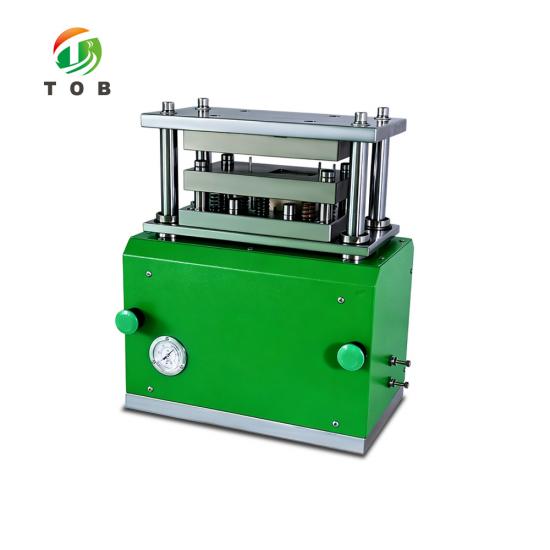
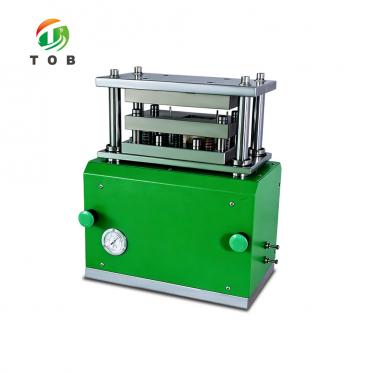
Pneumatic Pouch Cell Forming Machine
Brand:
TOB NEW ENERGYitem no.:
TOB-QCK65order(moq):
1setPayment:
L/C,T/Tproduct origin:
Chinashipping port:
XIAMEN
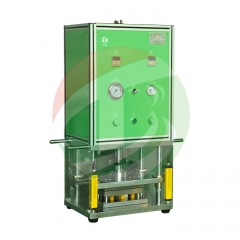
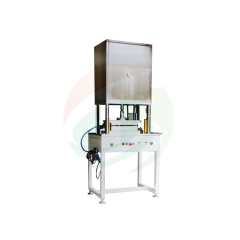
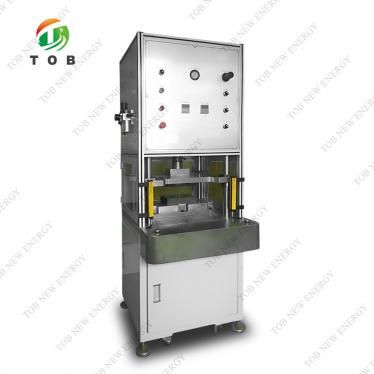
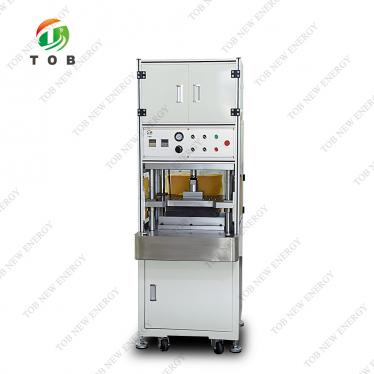
Pneumatic Pouch Cell Forming Machine for Aluminum Laminated Film — TOB-QCK65
Product Overview and Ideal Applications
A pouch cell forming machine—also known as a pouch cell case forming or punching machine—shapes a flat sheet of aluminum laminated film (pouch film) into a three-dimensional pocket that will hold the electrode stack of a pouch-type lithium-ion battery. The forming step is critical because the depth, edge quality, and corner integrity of the formed pocket determine how well the electrode stack fits, how much electrolyte the pouch can retain, and whether the final cell will be free of wrinkles, pinholes, or leakage paths.
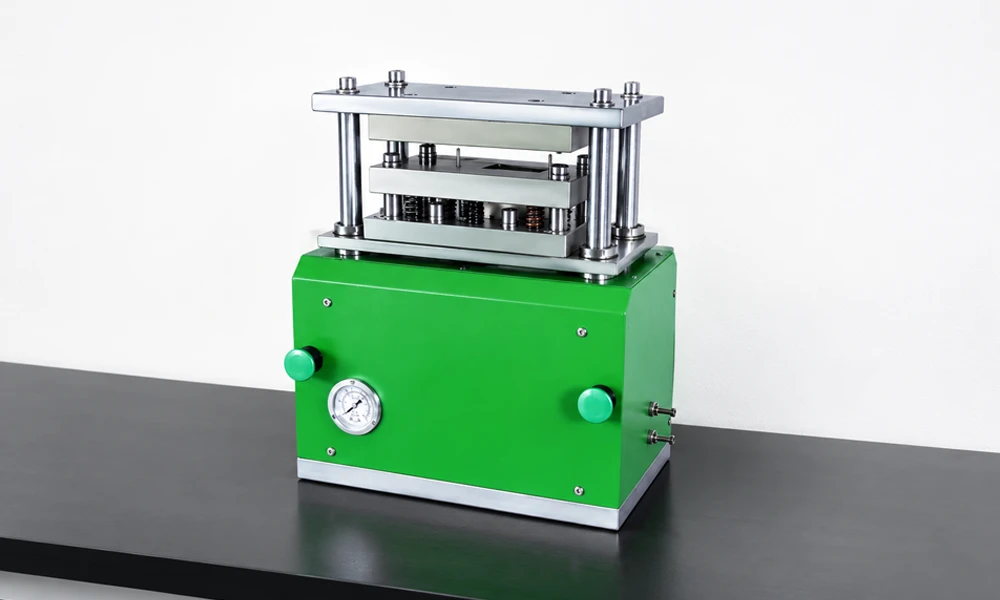
The TOB-QCK65 is a pneumatic, bench-mounted pouch cell forming machine designed for laboratory R&D and sample preparation. It uses a four-pillar structure that provides smooth, high-precision vertical travel for the forming platen. The machine forms flat aluminum laminated film sheets (0.1–0.2 mm thickness) into pockets with a maximum forming length of 65 mm and a width of up to 50 mm, with a punch depth of up to 6 mm. The forming pressure is adjustable up to a maximum of 1 ton (at 0.5 MPa compressed air), and the forming speed is also adjustable, allowing the operator to optimise the forming conditions for different film grades and pocket depths.
The machine is cylinder-driven and requires no electrical connection—only compressed air—making it safe and convenient for use in a glovebox or dry-room environment. The mold is precision-designed so that the formed product has no "crow's feet" (wrinkles) or collapse at the corners. The mold is made of Japanese-imported mold material and high-strength chrome steel, with environmentally friendly plating and baking finish on the surfaces. With a compact footprint (360 × 230 × 340 mm) and a weight of about 45 kg, the TOB-QCK65 fits easily on a laboratory bench.
Ideal for:
- Battery R&D laboratories preparing single-layer pouch cell housings from aluminum laminated film for coin-cell-like pouch or small-format pouch cell testing.
- Sample preparation for material evaluation, where a consistent, wrinkle-free pouch pocket is required to isolate the effect of the electrode or electrolyte under study.
- Pilot lines and university laboratories that need a compact, pneumatic-only forming station that can be operated inside a dry room or glovebox without electrical connections.
- Any researcher who has experienced wrinkled or collapsed pouch corners after manual pocket forming and needs a precise, reproducible forming tool.
Where the Pouch Forming Step Fits in Pouch Cell Manufacturing
In the production of a pouch-type lithium-ion cell, the aluminum laminated film must first be shaped into a pocket before the electrode stack is inserted. The process sequence is:
- Film preparation: The aluminum laminated film (a multilayer structure of outer nylon/polyester, middle aluminum foil, and inner polypropylene (PP) heat-seal layer) is cut into sheets of the required size.
- Pouch forming (the TOB-QCK65's role): The flat film is placed between the forming die and punch, and under pneumatic pressure, a pocket is formed to the required depth. This pocket will accommodate the electrode stack.
- Electrode stack insertion: The cathode-separator-anode stack is placed into the formed pocket.
- Electrolyte filling and sealing: Electrolyte is dispensed into the pocket, and the pouch is vacuum-sealed along the heat-seal edges.
- Formation and degassing: The cell is charged to form the SEI, then degassed and re-sealed.
The quality of the forming step directly affects the downstream process: a pocket that is too shallow will compress the electrode stack and may cause internal short circuits; a pocket with wrinkled corners ("crow's feet") can create stress points that crack the aluminum layer during sealing or cycling, leading to electrolyte leakage. The TOB-QCK65's precision mold design prevents these defects, producing a clean pocket with intact PP layer (no wrinkles) and undamaged corners.
How the Pneumatic Pouch Forming Machine Operates
The TOB-QCK65 uses a pneumatic cylinder to drive the forming platen, requiring no electrical power. The operating principle is straightforward:
-
Mold installation: The forming mold (die and punch) is installed on the machine. The TOB-QCK65 features easy mold replacement and adjustable forming depth, allowing the operator to switch between different pocket sizes and depths quickly.
-
Film loading: A sheet of aluminum laminated film (required to be 160 mm long × 105 mm wide for the standard configuration) is placed on the forming die.
-
Forming: Compressed air (up to 0.5 MPa, providing a maximum forming pressure of 1 ton) drives the platen downward. The punch presses the film into the die cavity, forming the three-dimensional pocket. The forming pressure and speed are both adjustable, allowing the operator to optimise the forming conditions for the specific film thickness (0.1–0.2 mm) and the target pocket depth (≤6 mm).
-
Release: After the forming stroke, the platen retracts, and the formed pocket is removed from the die.
The four-pillar frame structure ensures that the platen travels smoothly and with high precision in the vertical direction, maintaining the alignment of the punch and die during the forming stroke. This precision is reflected in the forming accuracy of ±0.05 mm, which ensures consistent pocket depth across multiple formed pouches.
Because the machine is pneumatic-only, it can be operated inside a glovebox or dry room where electrical equipment is avoided for safety or atmosphere-purity reasons. The compact size (360 × 230 × 340 mm) and 45 kg weight allow it to be placed inside a large glovebox or on a dry-room workbench.
Key Engineering Characteristics of the TOB-QCK65
-
Four-Pillar Structure for High-Precision Travel - The four-pillar frame guides the forming platen with smooth, high-precision vertical movement. This ensures that the punch and die remain aligned throughout the forming stroke, producing consistent pocket depth and clean edges.
-
Precision Mold Design — No Crow's Feet or Corner Collapse - The mold is precision-engineered so that the formed pouch has no "crow's feet" (wrinkles) at the corners and no collapse of the pocket walls. The specification requires that the pocket is not damaged and the PP layer is not wrinkled after forming—a quality standard that protects the pouch's heat-seal integrity.
-
Japanese-Imported Mold Material and High-Strength Chrome Steel - The mold is manufactured from Japanese-imported mold material and high-strength chrome steel, providing the hardness, wear resistance, and dimensional stability needed for repeated forming cycles. The surfaces are treated with environmentally friendly plating and baking finish for corrosion resistance and smooth release of the film.
-
Adjustable Forming Pressure and Speed - The forming pressure is adjustable up to a maximum of 1 ton (at 0.5 MPa compressed air), and the forming speed is also adjustable. This flexibility allows the operator to optimise the forming conditions for different film grades, thicknesses (0.1–0.2 mm), and pocket depths (≤6 mm), reducing the risk of film thinning or cracking at deep-draw regions.
-
Pneumatic-Only Operation — No Electricity Required - The cylinder-driven design requires only compressed air, with no electrical connection. This makes the TOB-QCK65 safe and convenient for operation in a glovebox or dry-room environment, and it simplifies installation—no power outlet is needed.
-
Easy Mold Replacement and Depth Adjustment - The mold can be replaced easily, and the forming depth is adjustable, allowing the machine to accommodate different pouch cell sizes within the 65 mm length and 50 mm width limit. Custom mold configurations can be provided according to requirements.
-
Compact, Bench-Mounted Design - With dimensions of 360 × 230 × 340 mm and a weight of about 45 kg, the TOB-QCK65 fits on a standard laboratory bench and can be moved between workstations as needed. The production capacity of 200–400 pieces per hour is appropriate for R&D and sample preparation workloads.
Complete Technical Specifications
The following table contains the specifications exactly as provided for the TOB-QCK65.
| Parameter | Specification |
|---|---|
| Model | TOB-QCK65 Pneumatic Pouch Cell Forming Machine |
| Aluminum Laminated Film | 0.1–0.2 mm |
| Suitable Size | Aluminum laminated film with a maximum length of 65 mm and a width of up to 50 mm (customizable according to requirements). The punching depth is ≤ 6 mm; the aluminum plastic film is required to be 160 mm long and 105 mm wide. Pocket is not damaged, PP layer is not wrinkled. |
| Equipment Capacity | 200–400 pcs/h |
| Forming Pressure | Max. 1 T (0.5 MPa compressed air), adjustable |
| Weight | About 45 kg |
| Dimension | About 360 × 230 × 340 mm (L × W × H) |
| Forming Accuracy | ±0.05 mm |
| Warranty | One year limited warranty and lifetime support |
Note: The aluminum plastic film is required to be 160 mm long and 105 mm wide for the standard configuration, within which a pocket of up to 65 mm length and 50 mm width can be formed to a maximum depth of 6 mm.
Practical Operation Recommendations
- Compressed air supply: The machine requires compressed air at up to 0.5 MPa to achieve the maximum forming pressure of 1 ton. Ensure the air supply is clean, dry, and regulated. A filter-regulator unit is recommended to maintain consistent pressure and protect the pneumatic components.
- Mold selection: Install the mold that matches the target pocket dimensions. The forming depth is adjustable; set it to slightly more than the desired pocket depth to account for film spring-back, and verify with a depth gauge.
- Film placement: Position the aluminum laminated film (160 × 105 mm for the standard configuration) centrally on the forming die to ensure uniform forming on all sides. Misalignment will produce asymmetric pockets and may cause corner defects.
- Pressure and speed adjustment: For a given film grade, start with a moderate forming pressure and speed, and observe the formed pocket. If the corners wrinkle, reduce the forming speed or increase the pressure slightly. If the film thins or cracks at the deep-draw corners, reduce the forming depth or pressure. Record the optimal settings for each film type.
- Cleaning and maintenance: Clean the mold surface after each session to remove any film residue or dust. The chrome-steel mold surface should be wiped with a lint-free cloth. Periodically check the pneumatic connections and the four-pillar guides for wear and lubrication.
Engineering FAQ
Q1: Can the TOB-QCK65 be used inside a glovebox?
Yes. The TOB-QCK65 is pneumatic-only and requires no electrical connection, making it suitable for operation inside a glovebox or dry room. The compact footprint (360 × 230 × 340 mm) and 45 kg weight allow it to be placed inside a moderate-sized glovebox. Only a compressed air supply is required; ensure the air line is routed through the glovebox feedthrough with an appropriate fitting.
Q2: What is the maximum pocket depth that can be formed?
The maximum punching depth is ≤ 6 mm, as specified. Within this limit, the forming depth is adjustable. The aluminum laminated film thickness range is 0.1–0.2 mm. For deep pockets near 6 mm, the film grade and the forming pressure/speed must be optimised to avoid thinning or cracking at the corners.
Q3: How do I change the mold for a different pocket size?
The mold is installed on the machine and can be replaced easily. Loosen the mold-retention mechanism, remove the current mold, install the new mold, and re-tighten. Then adjust the forming depth to the required value. The forming depth adjustment mechanism allows the punch travel to be set precisely for the new pocket depth.
Custom mold configurations within the 65 mm × 50 mm limit can be provided on request.
Q4: Why are the corners of my formed pouch wrinkling ("crow's feet")?
Corner wrinkling can result from excessive forming speed, insufficient pressure, or a film that is too thick relative to the pocket depth. Reduce the forming speed, increase the forming pressure within the 1-ton limit, or reduce the pocket depth. The TOB-QCK65's precision mold design is specifically intended to prevent crow's feet, so if wrinkling occurs, the forming parameters should be adjusted first.
Q5: What film size is required for the standard configuration?
The aluminum plastic film is required to be 160 mm long and 105 mm wide for the standard configuration. This film size accommodates a formed pocket of up to 65 mm length and 50 mm width, with sufficient surrounding film for the heat-seal margins. If your film size differs, confirm compatibility with TOB before ordering.
Ready to produce clean, wrinkle-free pouch cell pockets for your battery research? Request a quotation for the TOB-QCK65, specifying your aluminum laminated film size and target pocket depth. Our pouch-cell process engineers can also advise on mold configurations for custom pocket dimensions.
tob.amy@tobmachine.com| +86 181 2071 5609
You May Also Need
-
Automatic Pouch Cell Case Forming Machine for Aluminum Laminated Film — An automatic pouch cell case forming machine for higher-throughput production. Complements the TOB-QCK65 by providing an automated forming solution when sample volumes exceed the capacity of the manual pneumatic machine.
-
Lithium Pouch Cell Forming Machine — A pouch cell forming machine in the TOB pouch-forming product family. Provides an alternative forming platform with different capacity or configuration options for battery research and production.
-
400×300mm Pouch Cell Case Forming Machine — A larger-format pouch cell case forming machine capable of forming pockets up to 400 × 300 mm. Complements the TOB-QCK65 for large-format pouch cells, while the TOB-QCK65 handles small laboratory-scale pockets.
Previous:
Auto Pouch Cell Case Forming Machine for Aluminum Laminated FilmNext:
Lithium Pouch Cell Forming Machine
If you are interested in our products and want to know more details,please leave a message here,we will reply you as soon as we can.

 subscribe to us