Chinese
 français
 Deutsch
 italiano
 español
 português
 Nederlands
 日本語
 한국의




- Home
- >
- Other Equipment
- >
- Winding Cores Reels for Electrode Roll
Categories
Hot Products
Loading...
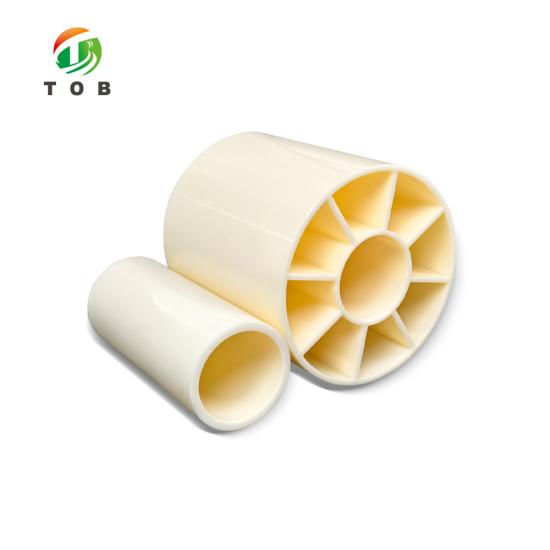


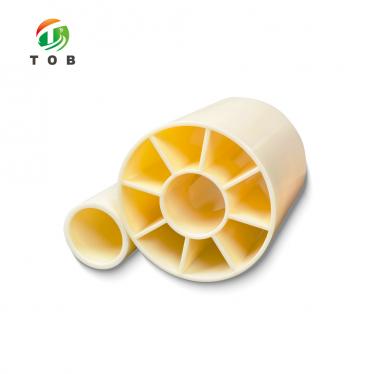
Winding Cores Reels for Electrode Roll
Brand:
TOB NEW ENERGYitem no.:
TOB-WR-Seriesorder(moq):
1Payment:
L/C, T/Tproduct origin:
Chinashipping port:
XIAMEN
Winding Cores Reels for Electrode Roll - TOB-WR Series
1 to 8 inch bores, 4 to 3000 mm lengths, with diameter, eccentricity and straightness held to about half the tolerance quoted for the same size elsewhere
Product Overview and Ideal Applications
An electrode roll is only as true as the core it is wound on. The core is the rotating reference for the unwind stand, the calender and the slitter, and whatever error the core carries goes straight into the roll as runout, edge wander or a tension ripple that surfaces later as coating thickness variation. The TOB-WR series is the core we supply for that job: 1 to 8 inch bores, 4 to 3000 mm lengths, and four tolerances - outer diameter, bore, eccentricity and straightness - held tighter than the cores usually quoted at the same nominal size.
The series is built for repeat use rather than one trip through the line. Bores from 1 inch to 8 inch cover the mandrels on a lab coater and on a production winder alike; lengths from 4 mm to 3000 mm cover everything from a short cut length to a full-width production core. Where no standard size fits, bore, wall thickness and length are made to order, which is how a good share of the cores shown on this page leave the workshop.
Ideal for:
- Electrode coating lines, where the roll unwinds under tension and any core error becomes web wander at the coating gap
- Calenders and rolling presses, where the electrode is re-wound onto a core after compaction
- Slitting and cutting, where the finished narrow roll has to run true on a fresh core
- Vacuum drying, where the roll is baked on its core and re-used afterwards
- Lab coaters running 1 inch or 3 inch mandrels, and pilot lines moving between both
- Research groups handling short cut lengths, where a 3000 mm core is not the answer
This page covers the core itself, not the hardware around it. The shaft, chuck or expanding mandrel that carries the core belongs to the machine: if you need that side of the line, the automatic winding and unwinding device for battery electrode roll processing is the page to read. A core also cannot correct a web that is already wandering - it can only avoid adding to it.
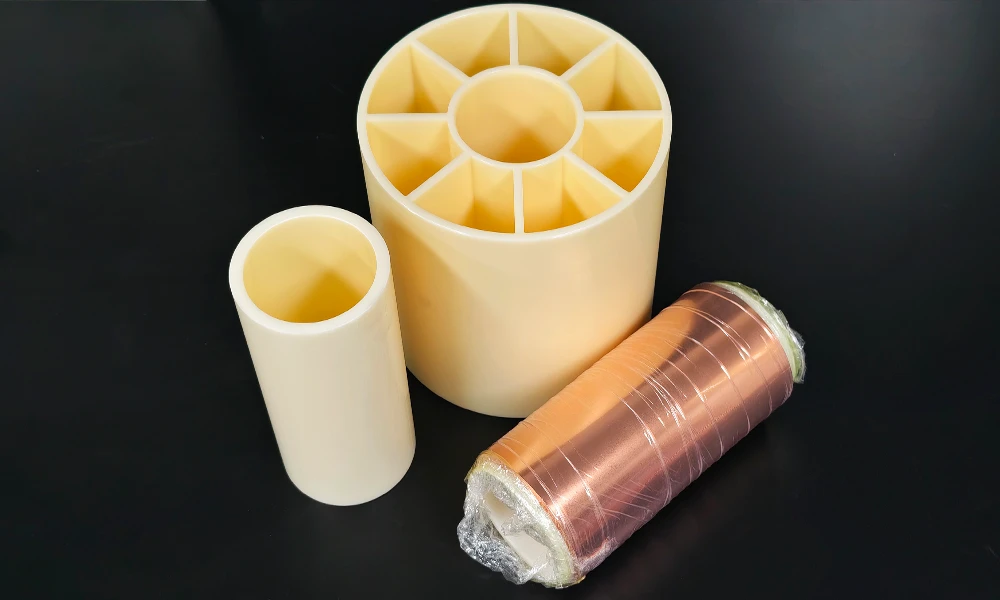
A copper foil roll wound on one of our small cores, next to two bare cores of different bores.
Complete Specifications
Three things decide whether a core is usable on your line: what it fits, what tolerance it holds, and what it is made of in the wall. The tables below cover the first two. The size envelope comes first, then the sizes we hold closest, then the tolerance table that separates this series from the cores usually quoted at the same nominal size.
1. Size Envelope
| Item | Range |
|---|---|
| Bore, inner diameter | 1 to 8 inch |
| Length | 4 to 3000 mm |
| Outer diameter and wall | Set by the bore you order; the sizes we hold most often are in the next table |
| Custom work | Bore, wall thickness and length outside the standard sizes can be made to order |
2. Sizes Held Most Often
| Bore, inner diameter | Wall thickness | Length |
|---|---|---|
| 76.5 mm | 6 mm | 45 / 64.5 / 77.5 mm |
| 76.8 mm | 8 mm | 35 to 2000 mm |
| 153 mm | 11.5 mm | 35 to 2000 mm |
These three are the sizes we make most often, not the limit of what we can make. A bore that is not on this list is a request, not a refusal.
3. Tolerance Against the Same Size Elsewhere
| Item | Unit | Other suppliers, 3 inch x 8.5 mm | TOB-WR, 3 inch x 8.5 mm |
|---|---|---|---|
| 1. Outer diameter | mm | 0.2 | 0.1 |
| 2. Inner diameter | mm | 0.4 | 0.25 |
| 3. Eccentricity | mm | 0.2 | 0.12 |
| 4. Straightness | mm per 600 mm | 0.52 | 0.2 |
All four figures are in mm and are quoted for the same nominal size, a 3 inch bore with an 8.5 mm wall. The left-hand column is the tolerance quoted for comparable cores from other suppliers; the right-hand column is what this series is inspected to. Both are worth checking against a sample before you commit to a production quantity.
4. Dimensions Used on This Page

Section through a core: D is the outer diameter the web is wound onto, d is the bore that has to fit your mandrel, L is the length.
| Outer diameter D | Inner diameter d | Length L |
|---|---|---|
| 258 / 200 / 150 | 76.5 | 500 ≤ L ≤ 800 |
| 258 | 152.7 | Under 300 |
Dimensions in mm. The 76.5 mm bore is listed against three outer diameters at a length of 500 to 800 mm; the 152.7 mm bore with a length under 300 mm. Tell us the bore you need and we will confirm the matching outer diameter in writing before the order is placed.
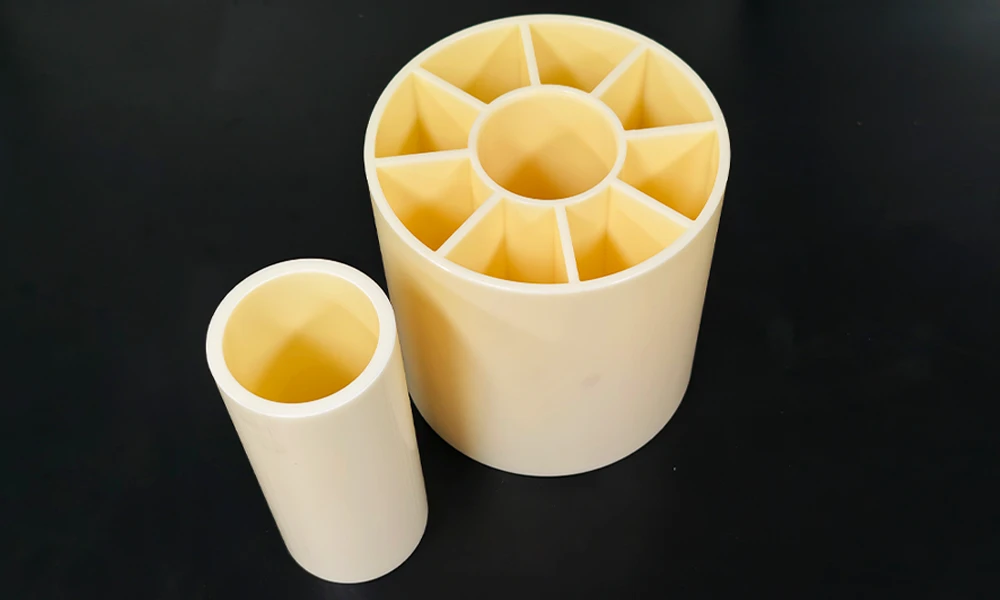
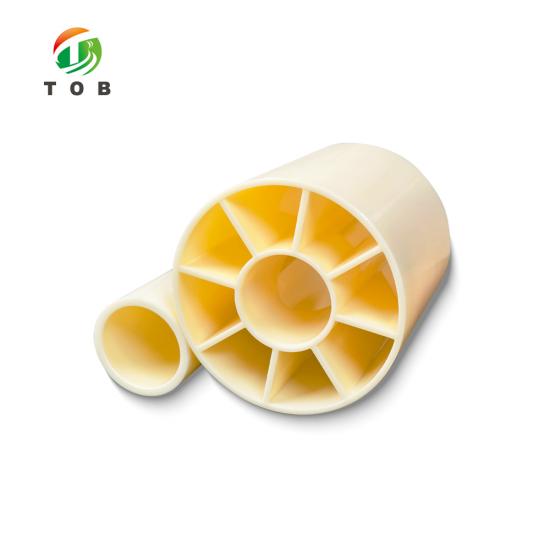
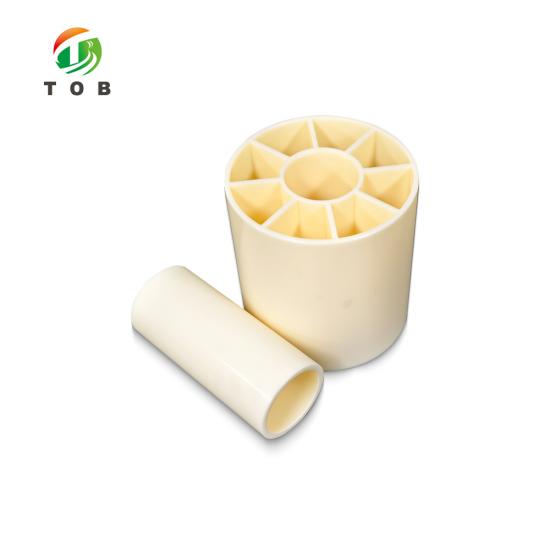
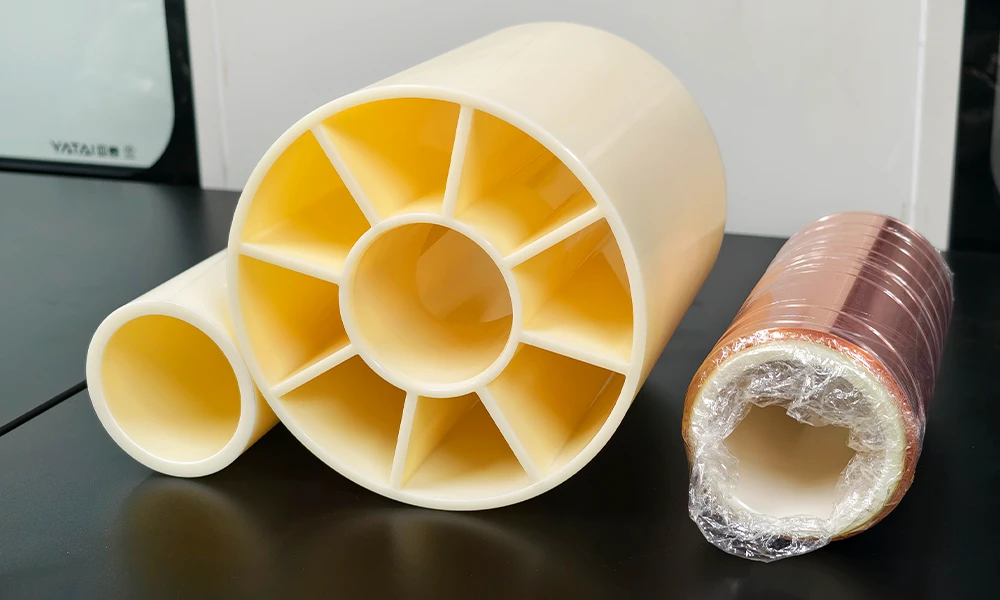
Two bores from the TOB-WR range, both ribbed inside. Bores, wall and length are made to the size you specify on the order.
Series Range and How to Specify It
A core order needs four numbers and one weight. The four numbers are bore, wall thickness, length and the tolerance you want inspected; the weight is the wound roll the core has to carry. Give us those five and the quotation comes back with a specific core, not a range for you to narrow down later.
- Bore - anywhere from 1 inch to 8 inch. The bore has to clear the mandrel when it is released and still hold the roll when it is loaded, which is why the bore tolerance is quoted at 0.25 mm and not 0.4 mm.
- Wall thickness - 6, 8 or 11.5 mm on the three standard bores. The wall carries the roll; a thin wall on a heavy roll deforms under tension and the deformation stays in the electrode after unwinding.
- Length - 4 mm to 3000 mm. Anything shorter than the web width leaves the edge unsupported; anything longer has to fit the machine's chuck envelope.
- Tolerance - the four figures in table 3 are what this series is inspected to. If your line needs one of them held closer, say which one and it becomes part of the quotation.
Nothing in the sizes above is fixed. Bores outside 1 to 8 inch, walls other than the three listed, and lengths outside 4 to 3000 mm are all made to order - that is the normal path for a line that has already been built around a particular mandrel.
Why Four Tolerances Decide the Roll, Not One
Most core orders are placed on one number: the bore. It is the number that has to fit the mandrel, so it is the number that gets checked. But the roll does not care only about the bore. What the coating gap sees is the outer surface of the wound roll, and that surface carries the sum of four separate errors - how round the outside is, how far the bore sits off centre, how straight the core is along its length, and how well the bore fits the shaft.
Eccentricity is the one that surprises people. It is the offset between the axis of the bore and the axis of the outer surface, so a core with 0.2 mm of eccentricity presents a surface that rises and falls by that amount once per revolution. On a coater running at speed, that is not a cosmetic defect: it is a periodic change in the web path, and it lands in the coating as a thickness ripple at the same frequency. Holding eccentricity at 0.12 mm instead of 0.2 mm removes roughly 40 per cent of that movement before the web ever sees it.
Straightness works differently. A core that is bowed along its length does not move the web up and down; it walks it sideways. The web guide then spends the run correcting a drift that the core keeps re-introducing, and the edge position at the slitter moves with it. This is why straightness is quoted per 600 mm rather than as a single figure - a bow is a rate, and the longer the core the more of it you accumulate. At 0.52 mm per 600 mm, a 2000 mm core can carry well over a millimetre of bow; at 0.2 mm per 600 mm it cannot.
The bore tolerance is a fit question, and both directions of error cost you. Too loose and the core slips on the mandrel under winding torque, which shows up as a step in the roll rather than a drift. Too tight and the core will not slide on cold, so the operator either forces it or warms it - and both damage the bore that the next inspection will measure. A 0.25 mm bore tolerance on a 3 inch core is tight enough to hold torque and loose enough to load by hand.
The comparison in table 3 is worth treating as a claim rather than a fact until you have measured it. The left-hand column is the tolerance quoted for comparable cores from other suppliers at the same nominal size; the right-hand column is what this series is inspected to. Order one of each, put a micrometer and a dial indicator on them, and the table either holds or it does not - which is a better basis for a production order than any catalogue.
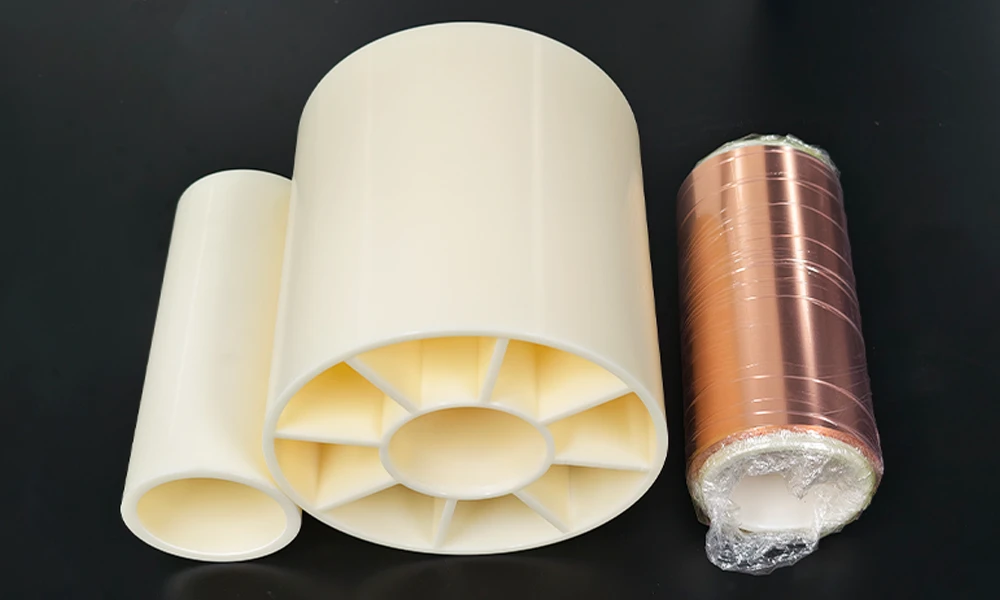
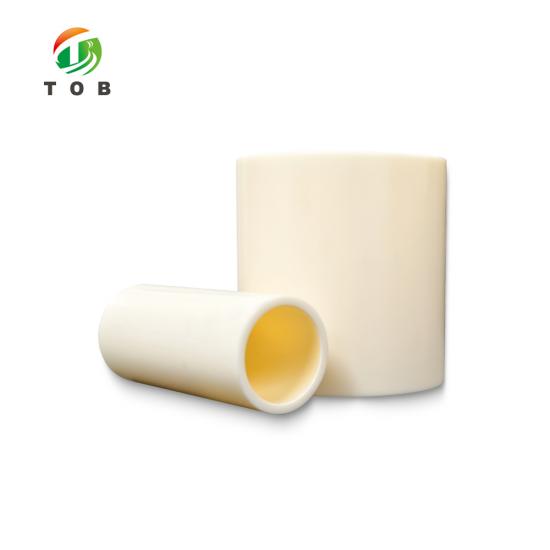
Core and roll side by side: the wall thickness you choose has to carry the roll, not just locate it.
Key Engineering Characteristics
- Bore range from 1 inch to 8 inch. One series covers a lab coater with a 1 inch mandrel and a production winder with a 6 or 8 inch shaft, so a pilot line does not have to change core supplier when it scales.
- Bore held to 0.25 mm at 3 inch. Tight enough to carry winding torque without slipping, loose enough that the core still slides onto the mandrel by hand.
- Outer diameter held to 0.1 mm. Half the tolerance quoted for the same size elsewhere, which is the figure that sets how much runout the roll starts with.
- Eccentricity held to 0.12 mm. The offset between bore axis and outer axis, inspected rather than assumed - it is the source of the once-per-revolution ripple a coater cannot remove downstream.
- Straightness held to 0.2 mm per 600 mm. A rate, not a total, so it scales with the core you order instead of hiding behind a short reference length.
- Three wall options, 4 mm to 3000 mm lengths. 6, 8 and 11.5 mm walls on the standard bores, with the length cut to the web width you run rather than to a stock size.
- Ribbed wall, several bore sizes. The internal ribs visible in the photographs are what keep the wall stiff at the weights these cores carry; the bore and rib pattern follow the size you order.
Handling, Storage and Inspection
1. Loading a core
- Measure before you load. The two numbers that matter are the bore and the outer diameter, and both are worth checking on the machine rather than trusting the label.
- Slide the core on by hand. If it needs force, look at the mandrel for burrs or dried slurry before you open up the bore - the bore is the one dimension you cannot put back.
- Seat the core fully against the chuck reference face. A core that is hanging off the end of the mandrel runs as if it were bent, whatever its straightness figure says.
- Keep a core on the same mandrel for the whole run. Moving it between chucks mid-roll reintroduces the fit error you started with.
- Spin the loaded core by hand once before you start. A visible wobble at low speed is cheaper to catch now than after 800 mm of coated electrode.
2. Storage and inspection
- Store on a rack, not on the floor. A core that has been walked on or rolled over carries a flat on its outer diameter, and no inspection catches it once the web is wound over it.
- Keep cores away from heat sources and out of direct sun. A core that has crept out of round in storage does not come back when it is loaded.
- Inspect before every reuse: bore with a plug gauge or caliper, outer diameter with a micrometer at two positions, and a straight edge along the length to catch a bow.
- Retire a core when the numbers move, not when it looks bad. A core that measures inside the four figures in table 3 is still doing its job even if the outside is scuffed.
Cores travel with the roll, not with the line. If the roll leaves the coating room for drying or for slitting, the battery electrode roll vacuum drying oven and the unwinding and rewinding device for coiled materials are the two pages that pick the roll up where this one stops.
The same pair end on. The roll's own core is visible inside the foil, which is the surface that decides how true the roll runs.
Engineering FAQ
Q1: My mandrel is 3 inch. Will a 76.5 mm bore fit?
Three inch is 76.2 mm, so a 76.5 mm bore gives about 0.15 mm of radial clearance - enough to slide on by hand, not enough to slip. The number to check is your mandrel, not the nominal size: if it measures oversize, the 0.25 mm bore tolerance starts to eat the clearance. Send us the measured mandrel diameter and the bore is quoted to suit it.
Q2: What does 0.12 mm of eccentricity actually do to my coating?
It puts a once-per-revolution movement of that size into the web path. At 0.12 mm instead of 0.2 mm you have removed about 40 per cent of the movement before the web guide or the coating gap has to deal with it. You will not see it on a single pass; you will see it as a periodic thickness band once the roll is run at speed.
Q3: Why is straightness quoted per 600 mm and not as a total?
Because a bow accumulates. A core that is straight within 0.2 mm over 600 mm can still be out by close to 0.7 mm over 2000 mm, and a single total figure would hide that. Quoting it per 600 mm tells you the rate, so you can work out what your own core length will do.
Q4: 6, 8 or 11.5 mm wall - how do I choose?
The wall carries the wound roll, so it follows the roll weight and the tension you wind at, not the mandrel. Tell us the roll weight, the web width and the tension and we will tell you which of the three is enough. Going thicker than you need costs you core weight on every roll you handle.
Q5: Can I order a bore that is not on your list?
Yes. The list covers 1 to 8 inch bores and 4 to 3000 mm lengths, and anything outside those is made to order. Custom work is the normal route for a line that was built around a particular mandrel rather than the other way round.
Q6: How do I check the tolerance claim before I commit to a production order?
Order one core of the size you need and measure it. Bore with a plug gauge or internal micrometer, outer diameter at two positions 90 degrees apart, eccentricity with a dial indicator on the outer surface while the core turns on its bore, straightness with a straight edge over the length. If the four figures in table 3 hold on the sample, they will hold on the order.
Tell us the bore, the wall and the length, and the weight of the roll you wind, and we will come back with one core specification and its tolerance, not a range.
Email: tob.amy@tobmachine.com | Phone and WhatsApp: +86 181 2071 5609
Reviewed by: Science Wang, Six Sigma Black Belt, Battery Lines | Last updated: 2026-10-26
If you are interested in our products and want to know more details,please leave a message here,we will reply you as soon as we can.






 subscribe to us